For forex traders, crypto users, and investors trying to trade GBP-related assets more effectively, understanding GBP moves means looking beyond current data to how markets interpret what comes next. Expectations often matter as much as the latest numbers, as traders reposition around future Bank of England decisions, inflation trends, and the broader economic outlook.
GBP performance also reflects how global markets compare the UK with other economies and how much support or pressure comes from the US dollar. When investors expect stronger UK conditions or better returns from UK assets, demand for GBP can rise; when uncertainty, risk aversion, or dollar strength increases, GBP can come under pressure. That is why this article focuses on the main drivers of GBP exchange rates, key currency comparisons, and practical ways to trade GBP-linked opportunities using USDT on Gate.com.
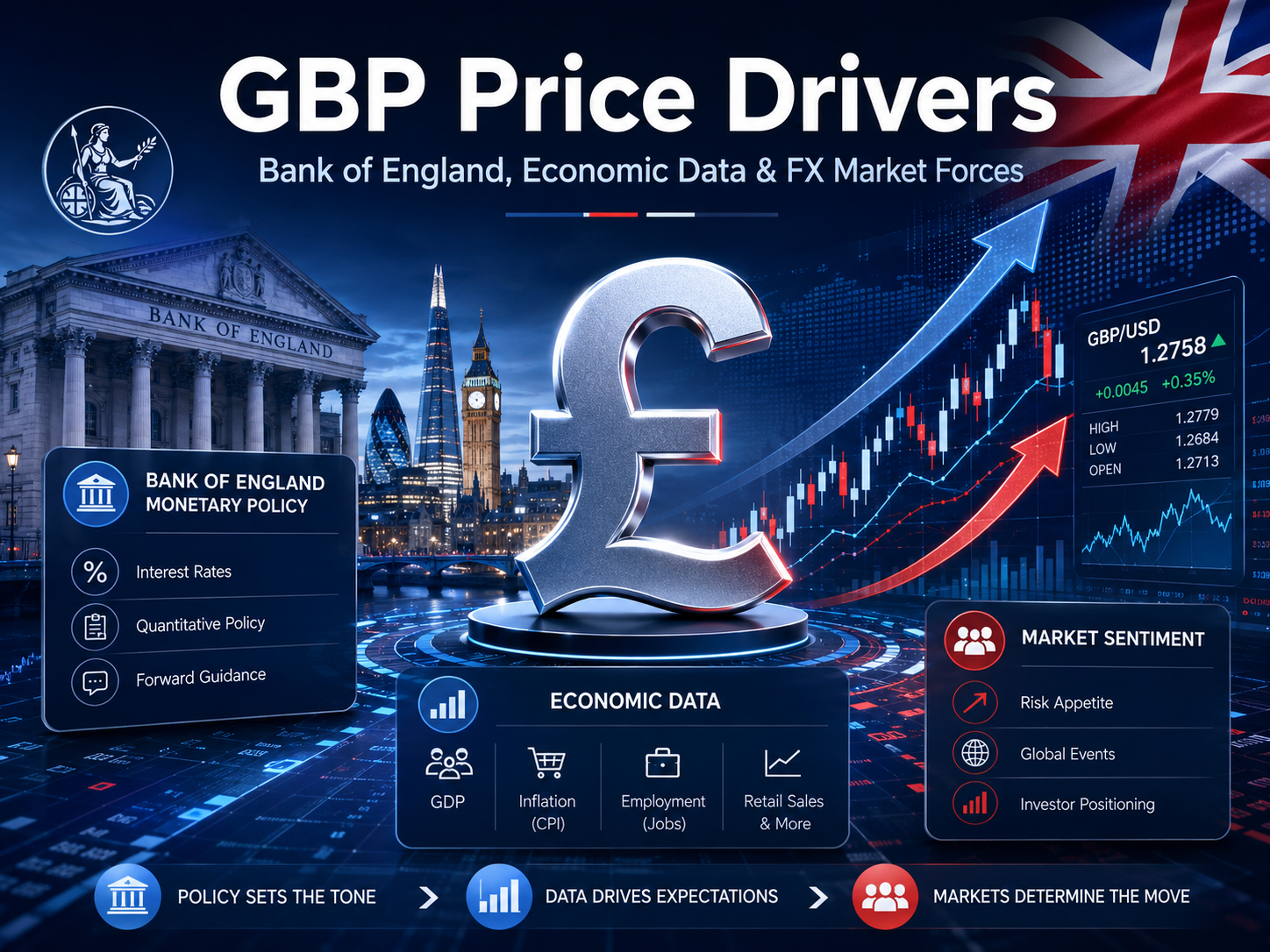
How Do Bank of England Interest Rates Affect GBP?
The Bank of England (BoE) interest rate policy is one of the most important drivers of GBP exchange rates. Changes in interest rates influence the attractiveness of UK assets and affect international capital flows.
When the Bank of England raises interest rates, investors often evaluate whether higher yields make GBP-denominated assets more attractive compared with other markets. If UK interest rates are expected to remain higher than those of other major economies, demand for GBP may increase.
However, higher interest rates do not always guarantee GBP strength. If rate hikes are viewed as a response to economic weakness or persistent inflation problems, markets may interpret them differently. Traders usually focus on the future policy outlook rather than a single rate decision.
| Factor |
Potential Impact on GBP |
| Higher rate expectations |
May increase GBP attractiveness |
| Lower rate expectations |
May reduce GBP yield advantage |
| Wider interest rate differential |
May attract capital inflows |
| Economic weakness leading to policy changes |
May pressure GBP |
The key driver is often not the rate change itself, but whether the decision is above or below market expectations.
Why Does UK Inflation Data Affect GBP Exchange Rates?
UK inflation data is one of the most closely watched indicators because it directly influences expectations for Bank of England monetary policy, and inflation and interest rates are closely related in how they shape currency values.
When inflation remains above the BoE’s 2% target, markets may expect tighter monetary policy for longer. This can support GBP by increasing expectations for higher interest rates.
On the other hand, if inflation declines faster than expected, traders may anticipate earlier rate cuts, which could reduce the relative attractiveness of GBP-denominated assets. Lower inflation in the UK than in other countries can also support a stronger GBP if it reinforces purchasing power and policy credibility.
Markets typically focus on the difference between actual inflation data and expectations. A lower-than-expected inflation reading can affect GBP even when inflation remains relatively elevated.
How Do UK Economic Data Releases Change GBP Market Expectations?
UK economic indicators provide insights into the health of the economy and influence how markets evaluate GBP.
Strong economic performance indicators can boost the value of the GBP by improving confidence in UK growth prospects, while weaker data may increase concerns about economic slowdown and reduce demand for GBP assets. Results from a large company can also shape sentiment when they point to broader economic strength. Since Brexit, the U.K. economy has underperformed growth in the U.S., which has sometimes weighed on GBP relative performance.
Key economic indicators affecting GBP include:
| Economic Data |
Impact on GBP |
| GDP Growth |
Shows overall economic performance |
| Employment Data |
Influences consumer strength and BoE policy expectations |
| PMI |
Reflects business activity trends |
| Retail Sales |
Indicates consumer spending conditions |
However, economic data does not always produce predictable GBP movements. Markets usually react based on whether the results are stronger or weaker than expectations, and traders also respond to expectations about future economic conditions.
The US dollar is an important external factor affecting GBP, especially through the GBP/USD exchange rate.
Because USD is the world’s primary reserve currency, changes in dollar strength often influence major currencies. As of April 2024, about $2.348 trillion U.S. dollars were in circulation. When the dollar strengthens, capital may flow toward USD assets, potentially putting pressure on GBP/USD.
Federal Reserve policy also affects GBP indirectly. Higher US interest rates can increase demand for USD assets, while expectations of monetary easing may weaken the dollar and provide support for other global currencies.
Therefore, GBP analysis requires not only understanding UK factors but also monitoring global dollar liquidity conditions and how it trades against two currencies, while noting that GBP remains important but accounts for about 4.7% of global currency reserves.
How Do UK Political Events and Policy Changes Affect GBP Volatility?
Political developments and government policies can influence GBP by changing market expectations for economic stability, fiscal management, and future growth.
Events such as general elections, government budget announcements, taxation policies, and trade decisions can affect investor confidence in UK assets. Political events and uncertainty can create volatility in currency value, while political stability supports investor confidence in GBP. When markets view policy decisions as supportive of economic stability, GBP may receive support. When uncertainty increases, investors may reduce exposure to GBP-denominated assets.
The UK’s post-Brexit economic relationship with other regions, especially the European Union, also remains an important long-term factor. Changes in trade conditions, regulatory policies, and international economic relationships can influence expectations for UK growth and capital flows. In the immediate aftermath of the vote, the pound fell over 8% within 24 hours and GBP/USD dropped to a 30-year low near 1.32.
Political factors usually do not determine GBP movements alone, but they can amplify exchange rate volatility when markets are already sensitive to economic or monetary policy changes. In the years since 2016, Britain has seen GBP/USD fluctuate between roughly 1.20 and 1.40; over the past post-referendum period, the currency weakened sharply, with GBP falling about 20% against USD after the Brexit vote, and it has remained volatile.
Global economic sentiment can influence GBP fluctuations because the currency market is closely connected to international capital flows and broader world developments.
During periods of strong risk appetite, investors may increase exposure to higher-yielding assets and currencies, which can support some non-USD currencies. During periods of market uncertainty, capital often moves toward traditional safe-haven assets such as the US dollar, which may create pressure on GBP.
Compared with currencies such as USD and JPY, GBP is generally not considered a primary safe-haven currency. As a result, global market movements can affect GBP through changes in investor positioning, liquidity conditions, and other macroeconomic forces.
Major global factors influencing GBP include:
| Global Factor |
Potential Impact on GBP |
| Global stock market performance |
Influences risk appetite |
| USD liquidity conditions |
Changes relative currency strength |
| Commodity price movements |
Affects global growth expectations |
| Economic uncertainty |
Influences capital allocation |
For GBP traders, monitoring global market conditions is important because exchange rates reflect both domestic and international factors. Market sentiment often drives short-term movements in GBP value, especially during risk-off periods.
How Is GBP Different From Other Major Currencies?
Different major currencies are driven by different economic systems and policy environments. Understanding these differences helps traders analyze why GBP may move differently from USD, EUR, or JPY.
GBP is primarily influenced by UK monetary policy, domestic economic conditions, and fiscal developments. Compared with USD, sterling is more directly affected by UK-specific economic factors, while USD is influenced by global reserve currency demand and Federal Reserve policy.
| Currency |
Main Price Drivers |
| GBP |
Bank of England policy, UK economic data, fiscal policy |
| USD |
Federal Reserve policy, global dollar demand, safe-haven flows |
| EUR |
European Central Bank policy, Eurozone economic conditions |
| JPY |
Bank of Japan policy, interest rate differences, risk sentiment |
GBP also has unique characteristics because the UK operates an independent monetary policy while maintaining strong financial connections with global markets. The UK also remains heavily linked to the euro through trade, with about 44% of U.K. exports going to the eurozone. That helps explain why moves in major european currencies can still influence GBP sentiment, while the japanese yen remains important in global reserve comparisons.
Gate users can access GBP-related trading products through supported markets while using USDT as a pricing or settlement currency.
For cryptocurrency users entering traditional financial markets, USDT can provide a familiar settlement method and reduce the need for direct fiat currency conversion. This allows users to participate in certain GBP-related markets through a digital asset-based trading environment.
However, USDT does not determine the value of GBP. GBP exchange rates are still influenced by global foreign exchange markets, including Bank of England policy, UK economic data, USD movements, liquidity conditions, and market expectations.
When trading GBP-related assets with USDT, users should understand the underlying product structure, pricing mechanism, market liquidity, and the factors that drive currency movements.
Summary
GBP exchange rate movements are shaped by a combination of monetary policy, economic fundamentals, global currency conditions, and market sentiment.
The Bank of England’s interest rate decisions, UK inflation trends, employment data, and economic growth indicators are among the most important domestic factors affecting GBP. At the same time, USD trends, global risk appetite, and international capital flows influence GBP’s relative performance.
Understanding GBP requires analyzing both UK-specific developments and broader global market conditions. Rather than relying on a single indicator, traders typically evaluate multiple factors to understand changes in GBP exchange rates.
FAQ
Why does GBP change in value every day?
GBP changes daily because currency values are determined by supply and demand in the forex market and fluctuate every day. The value of the British Pound is driven by shifts in buying and selling interest as traders react to economic data, central bank policies, capital flows, and global market sentiment.
Does a Bank of England rate hike always make GBP stronger?
A Bank of England rate hike may support GBP by increasing yield expectations, but the actual impact depends on economic conditions, market expectations, and global interest rate differences.
Which economic data releases affect GBP the most?
UK inflation, GDP growth, employment reports, PMI data, and retail sales are among the key economic indicators that can influence GBP market expectations.
What is the difference between GBP and GBP/USD?
GBP refers to the British pound currency, while GBP/USD is a foreign exchange pair showing the value of one British pound relative to the US dollar. For example, the relative value of GBP/USD can change sharply over decades: after the GFC, the course often fluctuated between 1.40 and 1.70, meaning one pound bought about $1.40 to $1.70, before September 2022 saw GBP fall to about $1.03, a 30-year low.
Why does a stronger US dollar affect GBP?
A stronger US dollar can pressure GBP/USD because investors may shift capital toward USD assets, although the impact depends on differences between UK and US economic conditions.
USDT can be used as a pricing or settlement currency for certain GBP-related trading products, but GBP value itself is determined by global foreign exchange market factors.