As Web3 and artificial intelligence continue to develop, digital identity is becoming an infrastructure level issue. In open networks, users can participate anonymously, but that anonymity also creates problems such as bot proliferation, duplicate identities, and imbalanced governance. As a result, building a trusted identity system in a decentralized environment has become a key focus for the industry.
At present, two main technical paths have emerged around this issue. One is the “Proof of Personhood” model represented by Worldcoin, which verifies real individuals through biometrics. The other is decentralized identity, DID, which builds identity through on-chain credentials and user controlled data. These two paths differ significantly in both design philosophy and technical implementation.
A Brief Look at Worldcoin and Decentralized Identity, DID
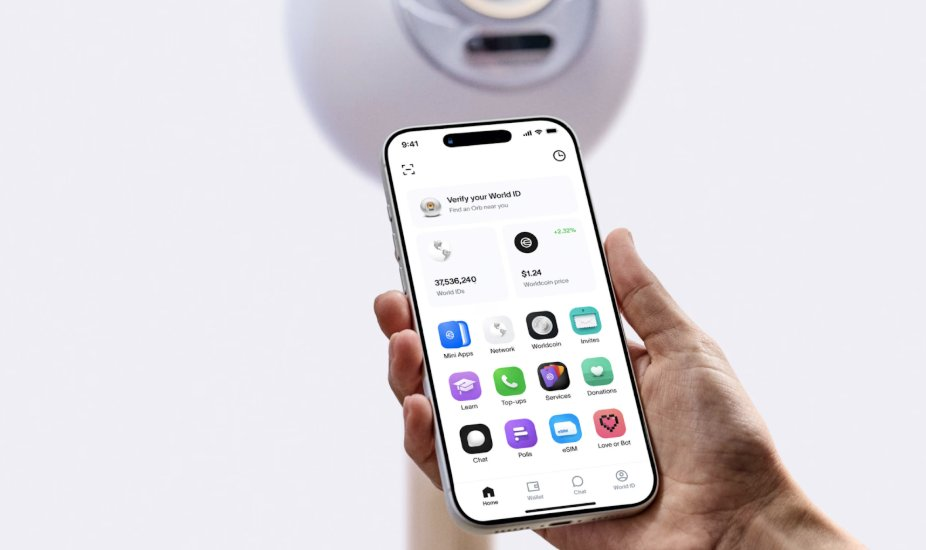
Worldcoin is a system that combines digital identity with cryptocurrency distribution. Its core component, World ID, is used to verify that a user is a real and unique human. The system generates an encrypted identity through iris scanning, creating a unified identity foundation on a global scale.
This mechanism is mainly used to prevent Sybil Attacks and to support scenarios that require “one person, one vote,” such as fair distribution and DAO voting.
Decentralized identity, DID, is an identity model based on blockchain or distributed systems that allows users to own and control their own identity data. DID is usually made up of multiple Verifiable Credentials, which can be issued by different organizations and selectively disclosed by users.
What Is the Core Difference Between Worldcoin and DID?
Worldcoin and DID are both used for identity verification, but their fundamental difference lies in what they are designed to verify. Worldcoin is centered on proving “you are a unique human,” while DID is centered on proving “what identity information or attributes you hold.”
This difference means Worldcoin focuses more on identity uniqueness and attack resistance, while DID focuses more on identity expression and data control.
Compared with traditional identity systems, DID does not rely on centralized platforms. Instead, it emphasizes user ownership of data and privacy control.
| Dimension |
Worldcoin |
Decentralized Identity, DID |
| Core goal |
Proof of unique personhood |
Data sovereignty and identity expression |
| Verification method |
Biometrics, iris scanning |
Credentials and signatures |
| Privacy model |
Encryption + zero knowledge proofs |
User controlled data |
| Attack resistance |
Strong, Sybil resistant |
Moderate |
| Use cases |
Voting, airdrops, anti bot systems |
Login, authentication, social |
How Do the Verification Methods of Worldcoin and DID Differ?
Worldcoin uses biometrics, generating a unique identity marker through iris scanning. This method relies on physical traits and emphasizes non replicability, enabling a strong form of identity uniqueness verification.
By contrast, DID does not rely on biometric traits. It verifies identity through cryptographic signatures and on-chain credentials. The trustworthiness of an identity comes from the source of the credential rather than the individual’s physical characteristics. This approach is more flexible, but it is relatively limited in preventing duplicate identities.
How Do the Privacy Models of Worldcoin and DID Differ?
In its privacy design, Worldcoin uses cryptographic hashes and zero knowledge proof technology to hide biometric data, allowing users to complete verification without exposing specific information. However, because it depends on biometrics, it still raises certain privacy concerns.
DID follows a “user controlled data” model, where users can decide when, to whom, and what information to disclose. This model emphasizes minimizing data disclosure and is better suited to scenarios that require multidimensional identity expression.
How Do the Use Cases of Worldcoin and DID Differ?
Worldcoin is better suited to scenarios that require strong identity uniqueness, such as airdrop distribution, anti bot systems, and DAO governance. In these settings, preventing one user from creating multiple identities is crucial.
DID is more suitable for identity presentation and data interaction scenarios, such as login systems, digital certificates, on-chain credit, and Web3 social networks. It functions more like an “identity container” that can carry different types of information.
Which Is More Scalable, Worldcoin or DID?
Worldcoin’s scalability depends heavily on the deployment of its hardware device, the Orb, which means its growth is constrained by real world conditions. Once the network is established, however, its identity trustworthiness can be relatively high.
DID scales more through software and protocols and can be integrated quickly into different applications, making it more flexible for ecosystem expansion. However, its identity uniqueness problem still needs to be supplemented by other mechanisms.
Conclusion
Worldcoin and DID represent two different development paths for digital identity. Worldcoin uses Proof of Personhood to solve the question of “whether one person is unique,” providing a foundation for fair distribution and governance. DID uses a decentralized credential system to solve the question of “how identity is expressed,” giving users control over their data.
In real world applications, the two models are more likely to complement each other than simply replace one another. As Web3 and AI continue to develop, future digital identity systems may combine both paths to achieve more complete functionality and stronger security.
FAQs
What Is the Biggest Difference Between Worldcoin and DID?
Worldcoin is used to prove “you are a unique human,” while DID is used to prove “what identity information you have.”
Is Worldcoin a DID?
Worldcoin can be viewed as a special type of identity protocol, but its core goal differs from traditional DID. It emphasizes uniqueness more than data control.
Can DID Prevent Bot Attacks?
DID itself does not have strong anti bot capabilities and usually needs to be combined with other mechanisms, such as identity verification or reputation systems.
Is Worldcoin More Secure?
Worldcoin is stronger at preventing duplicate identities, but its biometric approach also raises privacy discussions.
Can the Two Be Used Together?
Yes. Worldcoin can provide identity uniqueness, while DID can support identity data management. The two are complementary.