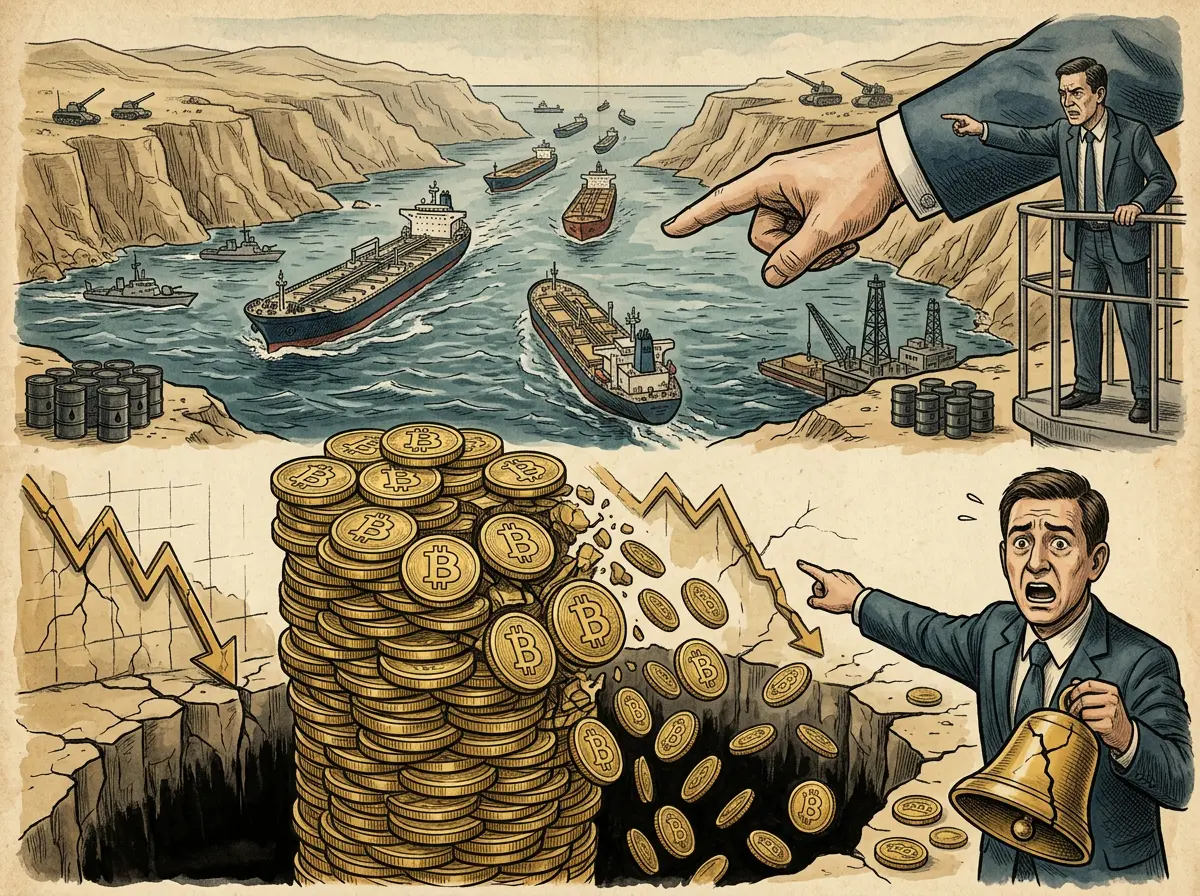
CITIC Securities released a report on June 8, warning that the oil market may be underestimating near- to mid-term risks, including the risk of the Strait of Hormuz being closed and weak U.S. drilling activity. On June 8 intraday, Brent crude rose to briefly break above $97 amid exchanges of missiles between Iran and Israel, and closed at around $94.25. As of the week of June 5, Bitcoin fell by nearly 18%.
Confirmed Oil Inventory and Supply Data
Based on publicly confirmed data from multiple institutions, the current oil supply situation includes the following confirmed indicators:
· U.S. crude oil inventories (including strategic petroleum reserves) have fallen to about 1.5 billion barrels, the lowest level since 2004 (reported by Reuters);
· Inventories in the Cushing, Oklahoma oil storage hub have dropped to 22.4 million barrels, nearing the minimum 20 million-barrel threshold needed to maintain efficient operations (reported by Reuters);
· Goldman’s data confirms that a one-month disruption of the Strait of Hormuz pipeline in April reduced global daily crude oil demand by 4 million to 5 million barrels (4% to 5% of global daily production);
· China’s seaborne crude oil import volume in May fell to 6.36 million barrels per day, the lowest level in nearly ten years.
Confirmed Assessments by Institutions and Analysts
Vanguard Group’s senior economist Adam Chicline confirmed that if Brent crude continues to hover around $120 within a year, it would reduce the U.S. GDP growth rate by about 0.4 percentage points. Exxon Mobil’s senior vice president Neil Chapman said in late May that, given inventories continuing to fall to historical lows, Brent crude prices could reach $150 to $160 per barrel.
CITIC Securities said that the forward oil curve has started to reflect higher future prices, indicating that market participants’ optimism about a rapid resolution of the Strait of Hormuz blockade situation is fading.
Frequently Asked Questions
How does rising oil prices create pressure on Bitcoin and Ethereum through the inflation transmission mechanism?
Based on the report’s transmission logic: long-term oil prices above $90 will raise inflation expectations → limit the Federal Reserve’s room to cut rates → keep bond yields elevated → risk assets, including crypto, face valuation pressure. The historical case in 2022 shows that after Brent crude broke above $120, the Federal Reserve raised rates by its largest amount in decades, and Bitcoin’s value fell by more than 50% that year; analysts point out that the direct pressure came from tighter liquidity rather than oil prices themselves.
U.S. crude inventories fell to the lowest since 2004—what does that mean for the oil market?
According to Reuters, U.S. crude oil inventories, including strategic petroleum reserves, fell to about 1.5 billion barrels (the lowest since 2004); Cushing, Oklahoma inventories (22.4 million barrels) are close to the minimum operating level of 20 million barrels. Analyses by CITIC Securities and Vitol Group indicate that inventory levels that are too low mean less buffer capacity; if there is procurement demand but physical supply is unavailable, oil prices could quickly gap higher.
What does CITIC Securities mean by “reopening the Strait of Hormuz takes 6 to 8 months”?
Toril Bosoni, head of the IEA’s Oil Industry and Markets, confirmed that even if the U.S. and Iran reach a ceasefire agreement, the Strait’s clearance and maritime security assessment takes time, so the Strait of Hormuz is expected to fully return to normal navigation only after 6 to 8 months. This means that even if geopolitical conditions ease, the real recovery of oil supply will not happen immediately.


