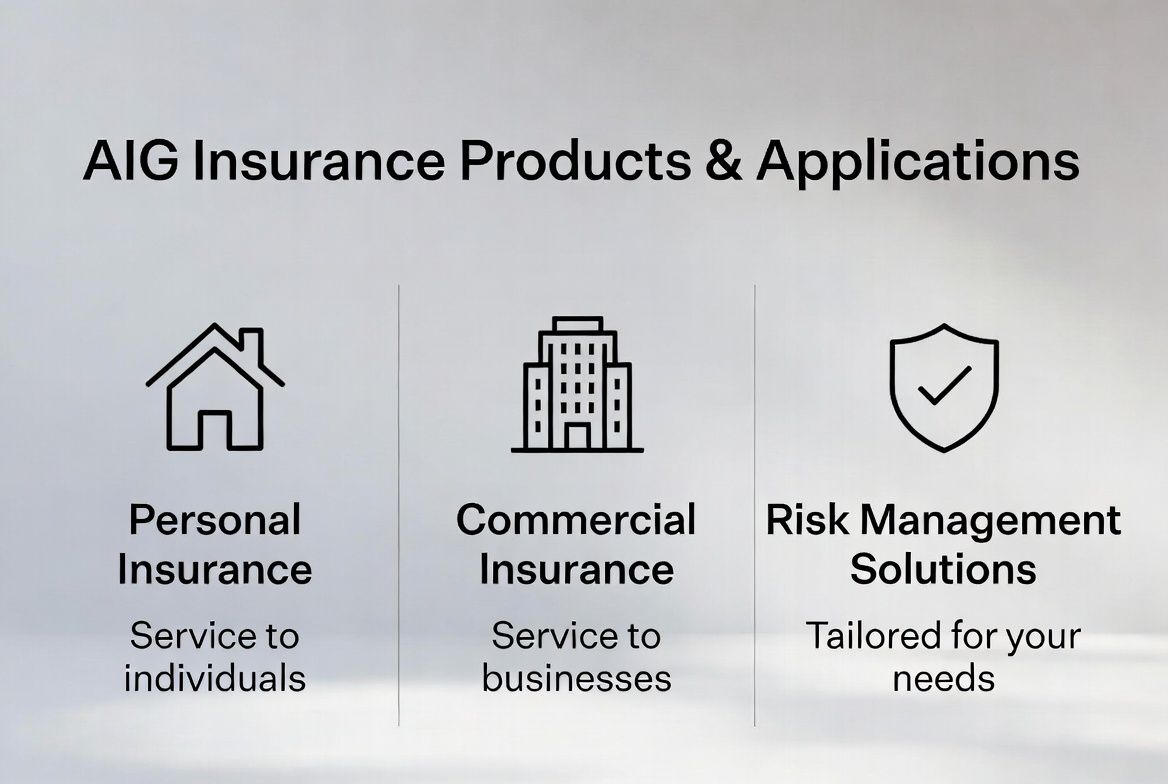
As a globally recognized insurance group, AIG (American International Group) has long focused on commercial insurance, property insurance, liability insurance, and risk management services. Unlike the traditional insurance company many people may have in mind, AIG serves a major customer base in the corporate market. Its business spans many sectors, including manufacturing, energy, aviation transport, financial services, and cross-border trade.
Understanding the real-world applications of AIG’s insurance products helps explain how the insurance industry supports modern economic activity. It also helps investors understand the long-term value of American International Group in the global insurance market.
Why AIG’s Insurance Services Matter
Modern society is full of uncertainty. From natural disasters to cyberattacks, from equipment failures to legal disputes, both individuals and businesses may face risks that are difficult to predict. Without insurance protection, many losses could directly affect business operations or even personal financial security.
AIG’s insurance services are essentially a risk transfer mechanism. By paying premiums, customers transfer part of their potential losses to the insurance company. When a covered risk occurs, the insurer assumes the compensation obligation, helping customers reduce the financial impact.
For businesses, insurance is not only a protection tool, but also a tool for operational management. When large companies develop long-term growth strategies, they often need insurance to cover various operational risks and ensure that their businesses can continue running steadily. For individual users, insurance can help protect homes, vehicles, and other important assets.
For this reason, the insurance industry has become an important part of the modern financial system, and AIG is one of its key participants.
How Corporate Clients Use AIG Commercial Insurance
Commercial insurance is one of AIG’s most representative business areas. Many large companies face complex risks in the course of their operations, and commercial insurance can help them reduce potential losses.
For example, manufacturers need to protect factory equipment and production facilities, logistics companies need to manage transportation risks, and technology companies need to address cybersecurity risks. Once these risks materialize, they may cause substantial economic losses, so businesses often purchase the appropriate insurance products for protection.
AIG can design insurance solutions based on the characteristics of different industries. For example, energy companies may need environmental liability insurance, airlines need aviation liability insurance, and multinational companies may need comprehensive insurance services covering multiple countries and regions. This specialized service capability gives AIG strong competitiveness in the corporate insurance market.
As global business activity becomes increasingly complex, corporate demand for risk management continues to rise. The importance of commercial insurance is also growing, making it one of AIG’s core markets for long-term development.
Application Scenarios for Property Insurance
Property insurance is one of the most basic types of insurance and is also an important product line for AIG.
For corporate clients, office buildings, factories, warehouses, equipment, and inventory are all important assets. If a fire, flood, storm, or other accident occurs, these assets may suffer major losses. Property insurance can provide financial compensation after such events, helping businesses resume operations.
In the personal market, homeowners insurance, auto insurance, and personal property insurance are also common application scenarios. Although AIG has become more focused on the corporate client market in recent years, property protection remains an important part of the overall insurance system.
As extreme weather events and natural disaster risks increase, businesses and individuals are paying more attention to property protection. This also makes property insurance a continuing source of important demand in the global insurance market.
How Liability Insurance Helps Businesses Manage Risk
In addition to protecting assets themselves, companies also need to manage legal liability risks that may arise during operations. This is another important application area for liability insurance.
For example, if a company’s product has quality problems, it may lead to consumer claims. Medical institutions may face medical liability disputes, while large engineering projects may involve risks of losses to third parties. Without liability insurance protection, these events could leave companies responsible for large compensation payments.
AIG has long been active in the liability insurance market and can provide companies with a range of solutions, including professional liability insurance, product liability insurance, and directors and officers liability insurance, also known as D&O insurance. Through these products, businesses can obtain financial support when facing lawsuits or compensation liabilities.
As regulatory environments change and legal risks increase, liability insurance has become an important part of many corporate risk management systems, and AIG has built deep professional experience in this field over time.
Why Global Companies Need Cross-Border Insurance Services
As globalization develops, more companies are operating across multiple countries and regions. However, legal systems, regulatory requirements, and risk environments vary significantly from one market to another, which continues to drive demand for cross-border insurance.
For example, a multinational manufacturing company may have its headquarters in the United States, sales offices in Europe, and production facilities in Asia. A company like this needs a unified risk management framework, not just insurance products from a single country.
One of AIG’s strengths is its global business network. The company can provide multinational enterprises with insurance solutions covering multiple regions and help clients coordinate protection needs across different markets. This capability is especially important for companies involved in international trade, cross-border investment, and global supply chains.
Therefore, as global business activity continues to expand, cross-border insurance services have become an important competitive advantage that distinguishes AIG from some regional insurance companies.
Why Demand for Risk Management Supports AIG’s Long-Term Growth
In the long run, the core driver of insurance industry growth is not any single product, but the continued expansion of risk management needs.
The risks facing modern businesses are constantly changing. In addition to traditional property losses and liability risks, emerging risks such as cybersecurity threats, supply chain disruptions, data breaches, and climate change are receiving increasing attention. These risks are often complex and global in nature, requiring support from professional insurance institutions.
AIG does more than sell insurance products. It also provides risk assessment and risk management services. By helping clients identify risks, quantify risks, and develop response plans, the company can build long-term relationships with its customers. This model allows insurance services to evolve from a simple claims payment mechanism into comprehensive risk management solutions.
As global economic activity continues to grow more complex, companies are expected to keep increasing their investment in risk management, and AIG is also likely to continue benefiting from this long-term industry trend.
Summary
AIG (American International Group)’s insurance products are widely used in corporate operations, property protection, liability management, and cross-border commercial activity. Through commercial insurance, property insurance, liability insurance, and global risk management services, AIG helps customers reduce operational uncertainty and strengthen their ability to withstand risk. As the global risk environment becomes increasingly complex and corporate demand for risk management continues to grow, insurance services are becoming more important, while AIG continues to play an important role in the global insurance market.
FAQs
What insurance products does AIG mainly provide?
AIG mainly provides commercial insurance, property insurance, liability insurance, and risk management-related services.
What types of businesses use AIG’s commercial insurance?
Manufacturers, energy companies, aviation transport companies, medical institutions, financial firms, and multinational corporations may all use AIG’s commercial insurance services.
What does property insurance mainly cover?
Property insurance mainly protects buildings, equipment, inventory, and other assets against losses caused by unexpected events.
What is the purpose of liability insurance?
Liability insurance helps businesses deal with lawsuits, third-party claims, and compensation liability risks that arise during operations.
Why do multinational companies need AIG’s insurance services?
Multinational companies usually need risk management solutions that cover multiple countries and regions, and AIG has a global insurance service network.
Why is risk management important to AIG?
Risk management is a core capability in the insurance business. It can affect underwriting quality, customer value, and the company’s long-term profitability.