The core value of blockchain domain names lies in transforming complex wallet addresses into human-readable names while extending their utility into payments, identity verification, and digital brand building. As Web3 identity systems continue to evolve, ENS and SNS have emerged as critical infrastructure within their respective ecosystems.
For users, understanding the differences between SNS and ENS not only helps in choosing the most suitable domain name system but also provides insight into the broader development trajectories of different blockchain ecosystems.
The Domain Name Differences Between SNS and ENS
Both SNS and ENS are blockchain-based naming systems, but they serve different blockchain ecosystems. ENS operates on the Ethereum network and provides on-chain identity services through .eth domains, while SNS runs on Solana and uses .sol domains for address mapping and digital identity management. Although their objectives are similar, they differ significantly in terms of technical architecture, user experience, and ecosystem environment.
ENS is built on Ethereum and primarily uses .eth domains. As one of the earliest blockchain naming protocols to achieve widespread adoption, ENS has become a key identity infrastructure layer within the Ethereum ecosystem. It is integrated with numerous wallets, DeFi protocols, NFT platforms, and social applications. As demand for Web3 identity continues to grow, ENS has expanded beyond address resolution into digital identity management and on-chain brand building.
SNS, by contrast, operates on the Solana network and primarily uses .sol domains. In addition to wallet address mapping, SNS supports text records, social profiles, and other forms of on-chain data storage. Benefiting from Solana's low transaction costs and high throughput, SNS has gained significant adoption in payments, NFT ecosystems, and community applications, gradually becoming an important component of Solana's identity layer.
From a functional perspective, SNS and ENS share the same overarching goal: to serve as identity gateways within their respective ecosystems. The primary differences are not in the domain services themselves, but rather in their underlying blockchain architectures, ecosystem environments, and user experiences.
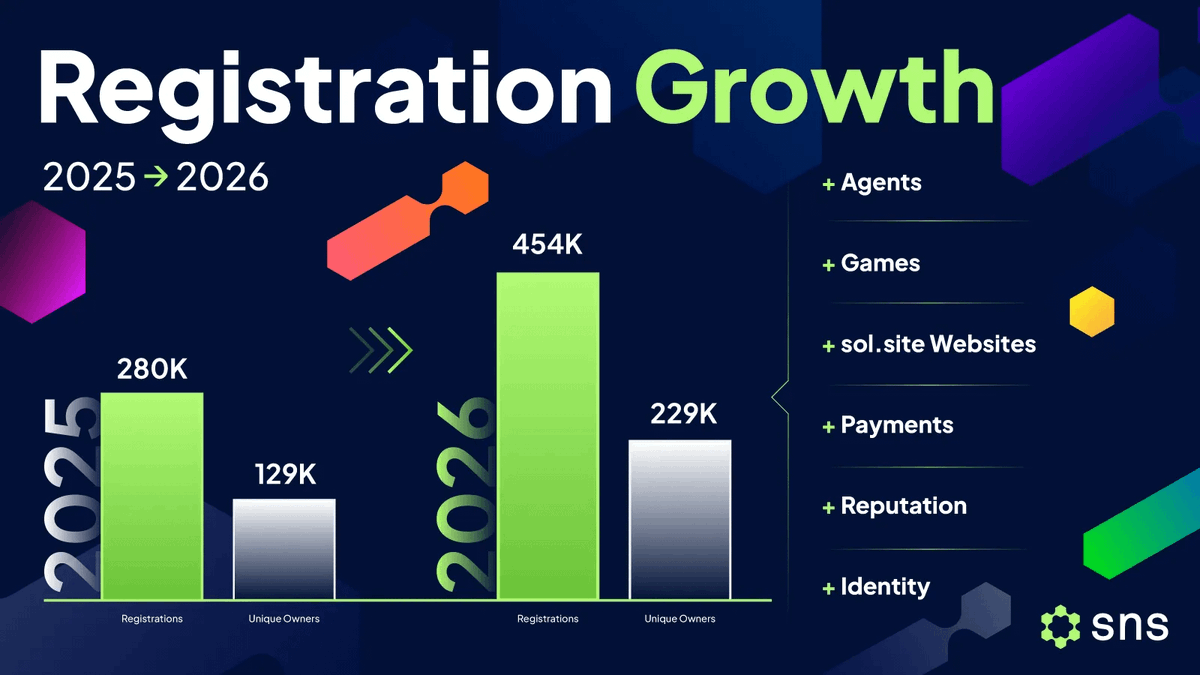
Source: sns.sol
Architectural Differences Between SNS and ENS
The most significant distinction between SNS and ENS stems from their underlying blockchain infrastructure.
ENS is built on Ethereum, with security derived from Ethereum's decentralized validator network and smart contract infrastructure. All ENS domain records are stored on the Ethereum blockchain, with ownership and resolution logic managed through smart contracts.
SNS operates on Solana and leverages Solana's high throughput and low transaction costs to facilitate domain management. Because Solana utilizes a different account model and execution architecture, SNS generally offers faster domain registration, updates, and resolution processes.
| Comparison Category |
SNS |
ENS |
| Underlying Network |
Solana |
Ethereum |
| Domain Extension |
.sol |
.eth |
| Data Storage |
Solana Accounts |
Ethereum Smart Contracts |
| Transaction Confirmation Speed |
Faster |
Relatively Slower |
| Transaction Costs |
Lower |
Higher |
Neither architecture is inherently superior. Rather, these differences reflect the distinct design philosophies and ecosystem priorities of Solana and Ethereum.
Differences in Domain Management Mechanisms
Both ENS and SNS employ on-chain ownership systems, but their implementation approaches differ.
ENS manages ownership, resolution records, and renewal mechanisms through smart contracts. Once users acquire a domain, they can configure address records, content records, and reverse resolution settings. ENS has developed a mature and standardized management framework over time.
SNS stores domain records within Solana accounts and supports tokenizing domains as NFTs. Once a domain is tokenized, ownership and control automatically transfer along with the NFT. This design creates tighter integration with Solana's NFT ecosystem.
For ordinary users, both systems provide effective domain registration and management capabilities. However, SNS offers a more direct connection between domain ownership and NFT-based digital assets.
Differences in Ecosystem Applications
The application ecosystems of ENS and SNS overlap in certain areas but emphasize different use cases.
ENS is widely used across Ethereum-based wallets, DAO governance systems, DeFi protocols, and Web3 social platforms. Many users view ENS domains as representations of their Ethereum identity and use them to showcase on-chain reputation and digital asset ownership.
SNS is more heavily integrated into Solana wallets, NFT projects, community organizations, and content platforms. Given Solana's strong presence in NFT markets and high-frequency transaction environments, SNS domains tend to have deeper integration within these sectors.
As cross-chain applications continue to emerge, both ENS and SNS are expanding beyond their native ecosystems in an effort to become broader Web3 identity layers.
User Experience Differences Between SNS and ENS
User experience is one of the most noticeable distinctions between SNS and ENS.
Because Solana offers low transaction fees and fast confirmation times, SNS domain registration, updates, and transfers can generally be completed quickly and efficiently. This advantage is particularly valuable for users who frequently interact with domain assets.
ENS, on the other hand, is influenced by Ethereum network conditions. During periods of congestion, users may encounter higher gas fees and slower transaction confirmations. Although Layer 2 solutions are helping address these issues, overall costs remain higher than those on Solana.
At the same time, ENS benefits from broader ecosystem support and stronger brand recognition. For users deeply involved in the Ethereum ecosystem, ENS continues to offer significant advantages in compatibility and adoption.
Differences in Market Positioning
From a market positioning perspective, ENS functions as the de facto identity standard for Ethereum, while SNS serves as foundational identity infrastructure for Solana.
ENS focuses on building an open identity network that enables users to carry identity information across multiple applications. As demand for Web3 social networks and digital identity solutions grows, ENS is increasingly evolving into a broader identity protocol.
SNS places greater emphasis on serving the Solana ecosystem directly, with strong integration into NFT applications, payments, and community platforms. As a result, SNS's growth is closely linked to the expansion of the Solana ecosystem itself.
Over the long term, ENS and SNS should not be viewed as direct competitors. Instead, they perform similar functions within different ecosystems. As demand for cross-chain identity solutions increases, the future may involve greater interoperability and complementarity rather than direct competition.
Conclusion
SNS and ENS are both critical components of blockchain identity infrastructure. Their shared objective is to improve address readability through blockchain-based domain names while supporting the development of digital identity systems.
ENS benefits from Ethereum's extensive ecosystem and mature identity standards, giving it a leading position in terms of industry influence and adoption. SNS, meanwhile, leverages Solana's high-performance infrastructure and active application ecosystem to deliver advantages in user experience and cost efficiency.
Although their development paths differ, both protocols are playing an important role in advancing the construction of the Web3 identity layer.
FAQ
What is the main difference between SNS and ENS?
SNS operates on the Solana network and uses .sol domains, while ENS operates on Ethereum and uses .eth domains. Each serves a different blockchain ecosystem.
Can both SNS and ENS be used for wallet transfers?
Yes. Both systems map wallet addresses to human-readable domain names, making transfers easier and reducing the likelihood of user errors.
Can SNS domains be converted into NFTs?
Yes. SNS supports tokenizing domains into NFTs that comply with the Metaplex standard, allowing them to be traded on compatible marketplaces.
Why is ENS more widely recognized than SNS?
ENS launched earlier and benefited from Ethereum's broader adoption, giving it stronger brand recognition within the blockchain identity sector.
Will SNS and ENS compete with each other?
They primarily serve different blockchain ecosystems. As cross-chain identity demand increases, they are more likely to become complementary rather than directly competitive.







