SubHub Airdrop Storm Incoming: A Comprehensive Guide to Claiming Free SUBHUB Tokens on October 17

Beginner
Quick Reads
Last Updated 2026-03-28 11:29:53
Reading Time: 1m
10.17 SubHub Airdrop Launch: This guide covers the SUBHUB project overview, airdrop eligibility, claiming procedures, and price prediction analysis; providing newcomers with clear guidance to participate in this opportunity.

SubHub Project Introduction: Why You Should Pay Attention
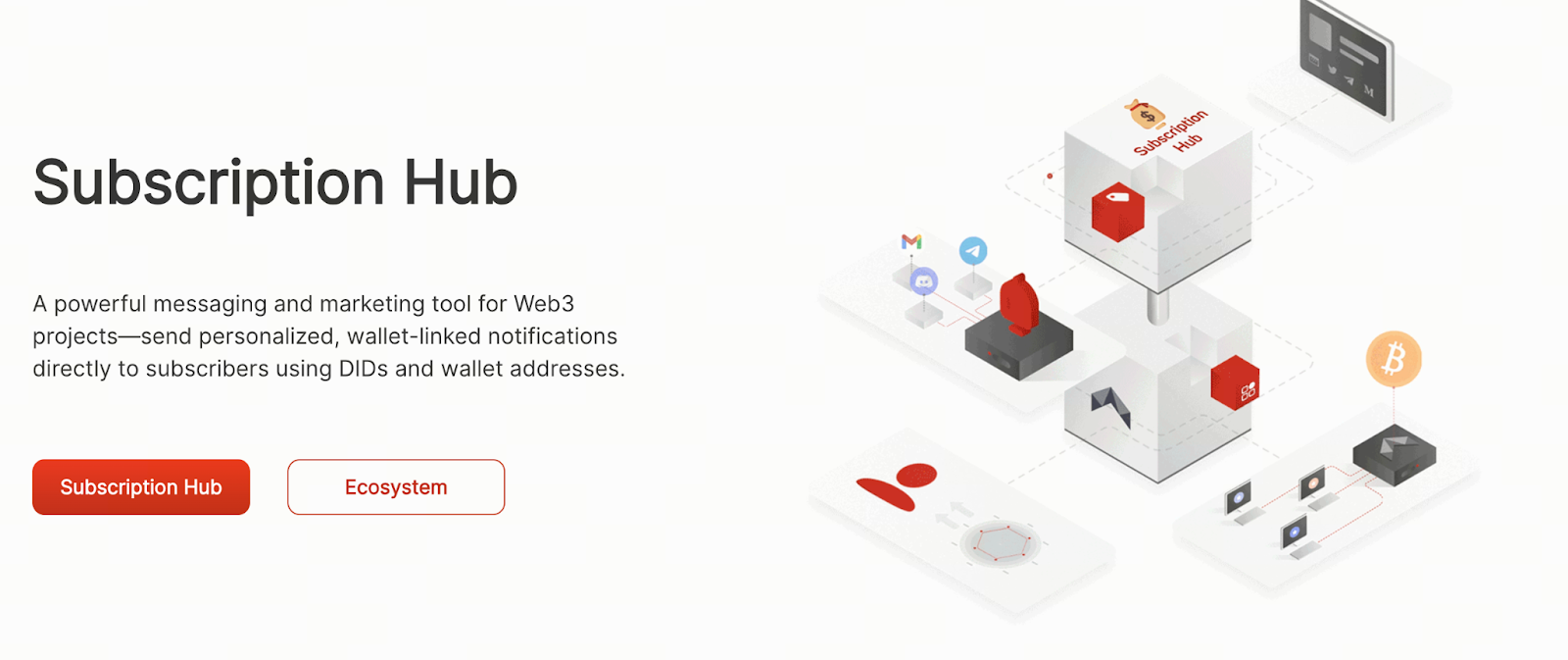

Image: https://sub-hub.ai/

SubHub (ticker: SUBHUB) is positioned as a Web3-native communications and marketing protocol, designed to build a decentralized bridge for engagement among blockchain projects, communities, and users. Key features include:

  • Connecting messages to wallet identities for secure wallet-to-wallet communication;
  • Incorporating token incentives to reward user participation, reading, and engagement;
  • Supporting multi-chain expansion for future cross-chain applications;
  • Enhancing trust and transparency via decentralized identity (DID).

From a market standpoint, marketing and user growth remain persistent challenges for Web3 projects. If SubHub’s model is successfully deployed, its value as a foundational infrastructure layer could be significant.

October 17: Key Milestones for Airdrop and Launch

According to official sources, October 17, 2025, marks a major milestone for SubHub:

  • Binance Alpha will debut SubHub and launch its airdrop event simultaneously;
  • The airdrop claims will operate on a "first come, first served" basis, with the claim window potentially open for just 24 hours;
  • Gate will also list the SUBHUB/USDT trading pair on the same date.

On this day, users can claim the airdrop and participate in secondary market trading.

Eligibility and Claim Process

Preparation Requirements

  • Hold sufficient Binance Alpha points and meet the official criteria;
  • Log in to your Binance account and access the Alpha event page in advance;
  • Be aware that the claim window is limited—once spots are filled, the event closes.

Claim Process

  • After the event opens on October 17, log in to the Binance Alpha page;
  • Locate the SubHub airdrop event and click “Claim”;
  • The system will deduct a set number of Alpha points (e.g., 15 points) as the eligibility threshold;
  • Your account will receive SUBHUB tokens automatically upon successful claim;
  • If you miss the window, your eligibility will be forfeited.

Tips

  • Log in ahead of time and ensure a stable internet connection;
  • Have your points ready to avoid missing out;
  • Remain calm and avoid excessive point farming.

Exchanges and Price Forecast

Exchanges

  • Gate: SUBHUB/USDT will launch concurrently, providing secondary market liquidity.
  • Binance Alpha: SubHub will debut here, allowing users to trade and claim the airdrop directly;

Price Forecast

Current market consensus expects SUBHUB’s initial price to range between $0.004 and $0.007. If the project ecosystem grows successfully, the mid-term price could surpass $0.01. Long-term performance will depend on partnership growth, market adoption, and tokenomics execution.

Risk Disclosure and Strategic Advice

  • Manage Positions: Only participate in the airdrop within your financial capacity—avoid over-investing;
  • Monitor Unlock Schedules: Team or investor token unlocks may trigger selling pressure;
  • Sharp price swings are typical on launch day;
  • Prioritize Project Execution: Token value ultimately hinges on ecosystem growth;
  • Stay Informed: Rules and timelines can change—rely on official announcements for updates.
Author: Max
Disclaimer
* The information is not intended to be and does not constitute financial advice or any other recommendation of any sort offered or endorsed by Gate.
* This article may not be reproduced, transmitted or copied without referencing Gate. Contravention is an infringement of Copyright Act and may be subject to legal action.

Related Articles

The ve(3,3) Flywheel Explained: How AERO Tokenomics Powers Aerodrome’s DeFi Economy
Beginner

The ve(3,3) Flywheel Explained: How AERO Tokenomics Powers Aerodrome’s DeFi Economy

In the competition for DeFi liquidity, high-inflation mining alone is no longer enough to build lasting advantages. Aerodrome applies the ve(3,3) economic model to redesign token emissions, voting mechanisms, and revenue distribution, creating a liquidity flywheel centered on governance and cash flow. This article examines AERO tokenomics, the veAERO locking mechanism, and protocol revenue models to explain how Aerodrome builds a sustainable DeFi economic system.
2026-03-25 06:41:58
AI-Native Settlement Layers: How United Stables Is Building the Next Financial Rail
Beginner

AI-Native Settlement Layers: How United Stables Is Building the Next Financial Rail

Stablecoins were originally designed as dollar substitutes within exchanges, primarily used for asset pricing and trade settlement. As on-chain financial ecosystems have matured, their role has expanded beyond simple payments to include collateral assets, cross-chain liquidity mediums, and unified settlement units. In particular, as AI systems and automated agents begin to participate directly in economic activity, demand has risen sharply for programmable value units capable of instant settlement. This shift is pushing stablecoins toward the role of foundational financial infrastructure.
2026-03-25 03:16:17
Aerodrome Tokenomics: How ve(3,3) Powers Base's Most Profitable DEX
Beginner

Aerodrome Tokenomics: How ve(3,3) Powers Base's Most Profitable DEX

AERO is the native token of Aerodrome Finance, a core decentralized exchange and liquidity protocol in the Base ecosystem. It is primarily used for liquidity incentives and ecosystem operations. veAERO is a governance NFT that users receive by locking AERO, representing both voting power and the right to share protocol revenue. Through a dual track structure of AERO as a utility token and veAERO as a governance credential, Aerodrome separates liquidity usage value from long term governance power, allowing participants to act as liquidity providers, governance decision makers, and revenue sharers within the same system.
2026-03-25 06:40:31
How is the price of PAXG determined? Pegging mechanism, trading depth, and influencing factors
Beginner

How is the price of PAXG determined? Pegging mechanism, trading depth, and influencing factors

PAXG (Pax Gold) is a tokenized asset backed by physical gold reserves, launched by fintech firm Paxos and issued as an ERC-20 token on the Ethereum blockchain. The core concept is to digitally represent real-world gold assets, allowing investors to hold and trade gold via the blockchain network. Because each PAXG token corresponds to a specific quantity of physical gold, its price is theoretically expected to closely track the global gold market.
2026-03-24 19:11:40
How Does PAXG Work? In-Depth Overview of the Physical Gold Tokenization Mechanism
Beginner

How Does PAXG Work? In-Depth Overview of the Physical Gold Tokenization Mechanism

PAXG (Pax Gold) is a tokenized asset backed by physical gold, issued by the fintech company Paxos and traded on the Ethereum blockchain as an ERC-20 token. The core concept is to tokenize physical gold on-chain, with each PAXG token representing ownership of a certain amount of gold. This structure enables investors to hold and trade gold in the form of a digital asset.
2026-03-24 19:12:51
Aster vs Hyperliquid: Which Perp DEX Will Prevail?
Beginner

Aster vs Hyperliquid: Which Perp DEX Will Prevail?

Aster and Hyperliquid are the two representative protocols of the "purpose-built L1 path" within the current decentralized perpetual exchange (Perp DEX) sector. As a pioneer in the field, Hyperliquid has built a deep liquidity moat through its highly mature order book architecture and strong community consensus. Conversely, Aster, as a rising challenger, seeks to leapfrog the competition in high-performance trading through more aggressive multi-chain aggregation logic, private transaction modules, and an underlying execution environment optimized for 2026 market demands.
2026-03-24 11:58:33





