The global energy system is undergoing a profound transformation. For decades, electricity supply mainly relied on centralized generation facilities such as large thermal power plants, hydropower stations, and nuclear power plants. However, with the widespread adoption of solar power, wind power, electric vehicles, and home energy storage devices, energy production and storage capacity is beginning to spread across homes, businesses, and communities. Traditional grid management models now face a new challenge: how to coordinate a vast number of distributed energy resources efficiently.
Against this backdrop, Virtual Power Plants(VPPs)have gradually become important infrastructure in the energy industry. A virtual power plant connects distributed energy devices through a digital platform, allowing them to participate in energy markets and grid dispatch much like a large power plant.
What Is a Virtual Power Plant(VPP)?
A Virtual Power Plant(VPP)is an energy system that uses software platforms and intelligent control technologies to aggregate and manage large numbers of Distributed Energy Resources(DERs). It is not a physical power plant, but a digital platform for coordinating and managing energy resources. Through real-time data collection, predictive analytics, and automated control, a VPP can integrate energy devices located in different places and turn them into a unified energy supply capability.
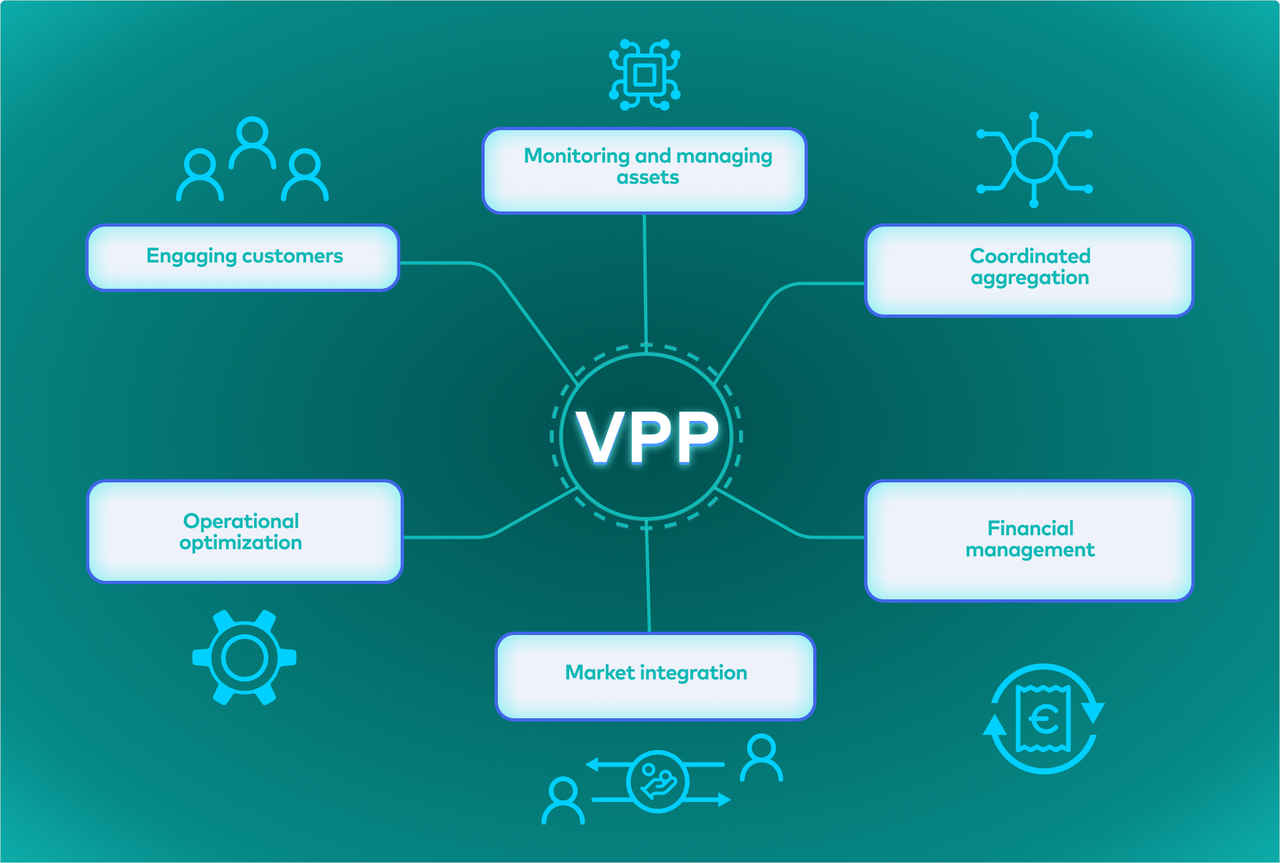
From the perspective of grid operations, a virtual power plant can provide regulation capabilities similar to those of a traditional large power plant, but its energy sources are more diverse and distributed.
The Background Behind Virtual Power Plants
Traditional power systems operate under a “centralized generation, transmission, distribution, and consumption” model. This model was effective in meeting energy demand during the industrial era, but as the share of renewable energy continues to rise, its limitations are becoming increasingly clear.
Solar and wind power are intermittent and variable, which means the grid needs more flexible regulation capabilities. At the same time, many households and businesses now own their own generation and storage devices, turning energy users from simple consumers into “prosumers.”
To coordinate these distributed resources, the energy industry began introducing the concept of virtual power plants, using digital tools to aggregate and manage energy devices and improve the overall operating efficiency of the energy system.
What Are the Core Components of a Virtual Power Plant?
A virtual power plant usually consists of several core modules that work together to coordinate and manage energy.
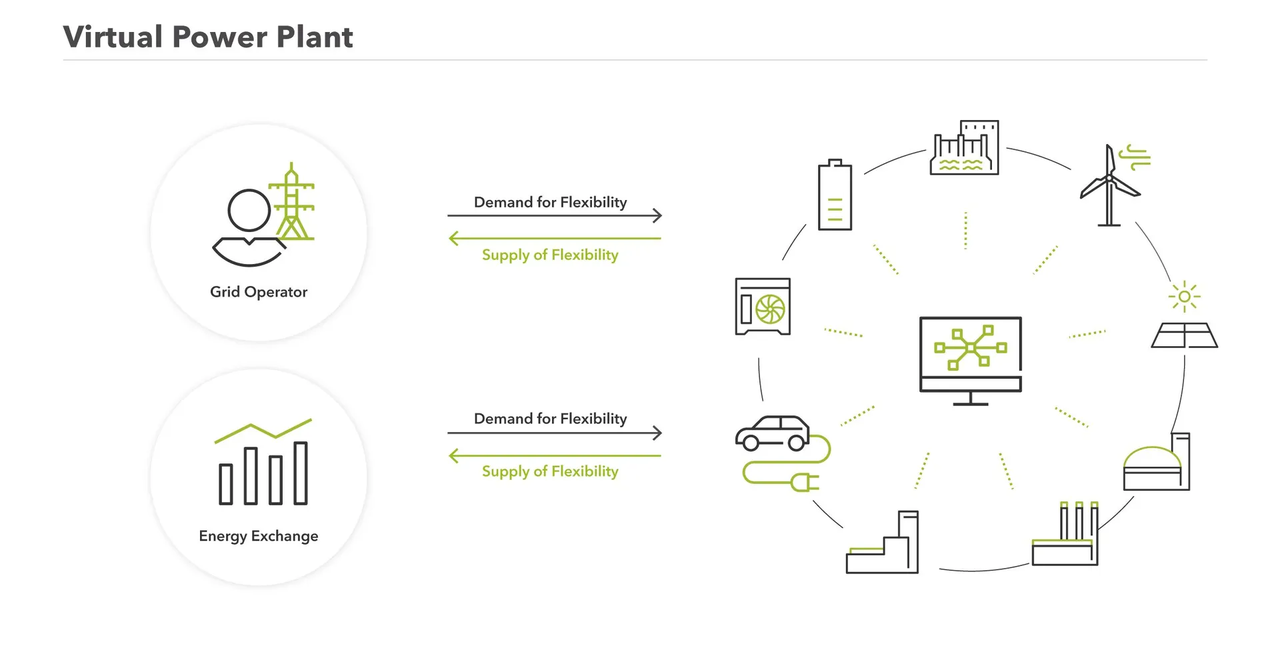
Distributed Energy Resources(DERs)
DERs are the most important foundation of a virtual power plant.
Common DERs include:
-
Rooftop solar systems
-
Wind power equipment
-
Home energy storage batteries
-
Commercial and industrial energy storage facilities
-
Electric vehicles and charging stations
-
Micro gas power generation equipment
Together, these devices form the energy supply capability of a virtual power plant.
Data Communication Network
A virtual power plant needs real-time access to device operating status, so it must have a stable data communication system.
Devices continuously upload information such as power generation, power consumption, energy storage status, and device health, providing the basis for dispatch decisions.
The energy management platform is responsible for analyzing data and executing dispatch decisions.
This platform usually uses artificial intelligence, big data analytics, and forecasting models to optimize energy resource allocation and improve overall efficiency.
How Does a Virtual Power Plant Work?
The operating logic of a virtual power plant can be understood in four steps: monitoring, analysis, coordination, and execution.
First, the system monitors the operating status and energy data of connected devices in real time.
Then, the platform analyzes weather forecasts, electricity demand, and pricing information to assess energy supply and demand over the coming period.
When electricity demand rises, the system coordinates energy storage devices to release power or dispatches EV batteries to support the grid.
When energy supply exceeds demand, the platform may arrange for energy storage devices to charge or guide users to adjust their electricity usage.
The entire process is usually handled by automated systems without manual intervention.
How Do Virtual Power Plants Participate in Electricity Markets?
Traditional energy markets are mainly open to large power generation companies, making it difficult for small and medium-sized energy devices to participate directly in trading.
Virtual power plants aggregate large numbers of small-scale devices into an energy capability large enough to enter energy markets.
In practice, VPPs can participate in:
Through these mechanisms, participants can earn returns based on their energy contributions, while the grid gains more flexible regulation resources.
What Are the Advantages of Virtual Power Plants?
Improving Energy Efficiency
Virtual power plants can optimize energy resource allocation, reduce energy waste, and improve overall power generation and consumption efficiency.
Strengthening Grid Stability
By coordinating large numbers of energy devices, a VPP can quickly provide support during peak demand or energy shortages.
Solar and wind power are variable, and virtual power plants can use energy storage systems to balance this variability and increase renewable energy utilization.
Reducing Pressure on Infrastructure Investment
Compared with building new large power plants, using existing distributed energy resources is often more cost-effective.
What Challenges Do Virtual Power Plants Face?
Although virtual power plants have broad development prospects, they still face several challenges.
First, the lack of unified standards between different devices may increase the complexity of connection and management.
Second, processing and securely managing massive amounts of energy data requires stronger technical support.
In addition, energy regulations vary across countries and regions, so virtual power plant business models also need to adapt to local market environments.
What Is the Relationship Between OpenVPP and Virtual Power Plants?
OpenVPP is a decentralized energy network built on the concept of virtual power plants.
Traditional virtual power plants are usually operated centrally by energy companies or utility institutions, while OpenVPP introduces an open network architecture through blockchain technology.
In the OpenVPP network, energy devices can not only participate in energy coordination, but also receive on-chain identities and digital incentive mechanisms.
This model expands virtual power plants from energy management tools into energy internet infrastructure, creating new possibilities for the future construction of on-chain energy assets and energy value networks.
How Is a Virtual Power Plant Different from a Traditional Power Plant?
| Comparison Dimension |
Virtual Power Plant(VPP) |
Traditional Power Plant |
| Infrastructure |
Aggregated distributed devices |
Centralized generation facilities |
| Power Sources |
Multiple energy resources |
Single or limited energy sources |
| Management Method |
Coordinated by software platform |
Centralized control |
| Scalability |
Strong |
Depends on new facilities |
| Energy Structure |
Flexible and diverse |
Relatively fixed |
| Level of Digitalization |
High |
Relatively low |
A virtual power plant does not replace traditional power plants. Instead, it serves as an important complement to modern energy systems, improving the flexibility and adaptability of the entire grid.
Conclusion
A Virtual Power Plant(VPP)is an energy management model that aggregates distributed energy resources through a digital platform. By connecting infrastructure such as solar power systems, energy storage devices, electric vehicles, and smart meters, a VPP can coordinate distributed energy capabilities and participate in grid dispatch and energy market operations.
As the global energy transition accelerates, virtual power plants are becoming an important part of smart grids and the energy internet. Their value lies not only in improving energy efficiency and grid stability, but also in laying the groundwork for future energy digitalization and networked energy assets.
FAQs
Does a Virtual Power Plant Generate Electricity?
A virtual power plant does not directly generate electricity on its own. Its role is to coordinate and manage existing energy devices, providing energy services by optimizing how those devices operate.
What Are Distributed Energy Resources(DERs)?
Distributed energy resources are small-scale energy devices located on the user side or near the distribution grid, including solar panels, energy storage batteries, electric vehicles, and small wind power facilities. These resources are the foundation of virtual power plants.
Why Are Virtual Power Plants Important?
Virtual power plants can improve energy efficiency, strengthen grid stability, and promote renewable energy development. As the share of new energy increases, virtual power plants are becoming an important part of modern energy systems.
What Is the Relationship Between Virtual Power Plants and Smart Grids?
Smart grids provide the data communication and control infrastructure for virtual power plants, while virtual power plants use these capabilities to coordinate energy resources. Together, they drive the digital development of energy systems.
Is OpenVPP a Virtual Power Plant?
OpenVPP is a decentralized energy network built on the concept of virtual power plants. Compared with traditional VPPs, OpenVPP introduces blockchain technology to enable energy device identity management, on-chain incentives, and energy value exchange.