Users who search for HOOLI usually try to understand how My Pet Hooligan builds its game economy, as well as the functional differences between HOOLI and KARRAT. Blockchain games usually need tokens to support user interaction and asset circulation, so HOOLI has a direct impact on the economic structure of My Pet Hooligan.
HOOLI’s mechanism usually involves game rewards, NFT asset trading, entertainment ecosystem interaction, and the division of roles within a dual-token system. Through HOOLI, My Pet Hooligan connects player behavior, on-chain assets, and entertainment content, creating a more complete game economy.
What Role Does HOOLI Play in My Pet Hooligan?
The core role of HOOLI is to support asset circulation and user interaction within the My Pet Hooligan game ecosystem. HOOLI is closer to a game ecosystem token than a network governance token.
My Pet Hooligan uses HOOLI to connect player behavior with the game economy. For example, when players complete in-game tasks, take part in entertainment activities, or interact with assets, they may earn or spend HOOLI.
Structurally, HOOLI’s functions mainly include:
The design of HOOLI centers on creating a sustainable game economy cycle. If the game ecosystem can maintain stable user activity, demand for HOOLI circulation will usually become more stable as well.
How Do Players Earn and Spend HOOLI?
The ways players earn HOOLI are usually directly connected to gameplay and ecosystem interaction. My Pet Hooligan creates token circulation channels through game activities and user participation.
First, players may earn HOOLI by completing game tasks, taking part in multiplayer competitions, or joining community activities. Then, some NFT asset interactions and ecosystem gameplay may also generate HOOLI rewards.
After that, HOOLI flows back into the game ecosystem. Players may use HOOLI to buy game assets, participate in entertainment interactions, or unlock certain features.
| Player Behavior |
Role of HOOLI |
| Completing tasks |
Earn rewards |
| Joining competitions |
Receive tokens |
| Buying assets |
Spend HOOLI |
| Community interaction |
Ecosystem circulation |
This circular structure helps My Pet Hooligan build ongoing game economy activity, rather than relying only on one-time NFT sales.
How Does HOOLI Support Game Asset Trading?
HOOLI serves partly as a medium of exchange for game assets, connecting NFT assets with the game economy. Blockchain game projects usually need tokens to support asset circulation; otherwise, NFTs may struggle to generate sustained trading demand.
My Pet Hooligan’s NFT assets may include characters, items, and entertainment collectibles. Some on-chain asset transactions may require HOOLI for payment or settlement.
Unlike traditional game markets, NFT assets in My Pet Hooligan are recorded on-chain. Players can have clearer ownership of digital assets, while HOOLI helps maintain the circulation relationship between those assets.
This mechanism means HOOLI is not merely a reward tool. Its more important role is to become a medium of exchange within the My Pet Hooligan game economy.
How Does HOOLI Connect the My Pet Hooligan Entertainment Ecosystem?
HOOLI’s design is not limited to the game itself. My Pet Hooligan is expanding into animation, AI virtual characters, and entertainment content, so HOOLI may also support certain entertainment interaction functions.
AI entertainment ecosystems usually require long-term user participation. My Pet Hooligan uses game characters, community activities, and entertainment content to strengthen user engagement, while HOOLI connects these scenarios.
Structurally, HOOLI’s ecosystem connection logic includes:
| Module |
Role of HOOLI |
| Game system |
User rewards |
| NFT assets |
Medium of exchange |
| Community interaction |
Activity incentives |
| Entertainment content |
User participation |
This structure helps My Pet Hooligan build a transmedia entertainment economy, rather than operating only around a single game system.
What Are the Differences Between HOOLI and KARRAT?
HOOLI and KARRAT have different roles. HOOLI is mainly responsible for the game economy, while KARRAT is more focused on infrastructure and network governance.
KARRAT supports Studio Chain’s gas and ecosystem governance functions, making it closer to an entertainment infrastructure token. HOOLI, by contrast, is more focused on the user layer and game layer.
From a token structure perspective, the dual-token model helps My Pet Hooligan separate different ecosystem needs. If every function were handled by a single token, blockchain game projects would usually face a higher risk of economic model confusion.
| Token |
Main Positioning |
| KARRAT |
Infrastructure and governance |
| HOOLI |
Game economy and interaction |
Unlike traditional single-token blockchain games, My Pet Hooligan uses KARRAT for the network layer and HOOLI for the game layer, reducing conflicts between different types of demand.
How Is HOOLI’s Token Circulation Mechanism Designed?
Officially released tokenomics show that HOOLI uses a fixed-supply model, with a total supply of 10 billion tokens. HOOLI’s token allocation mainly revolves around community incentives, liquidity support, and entertainment ecosystem expansion.
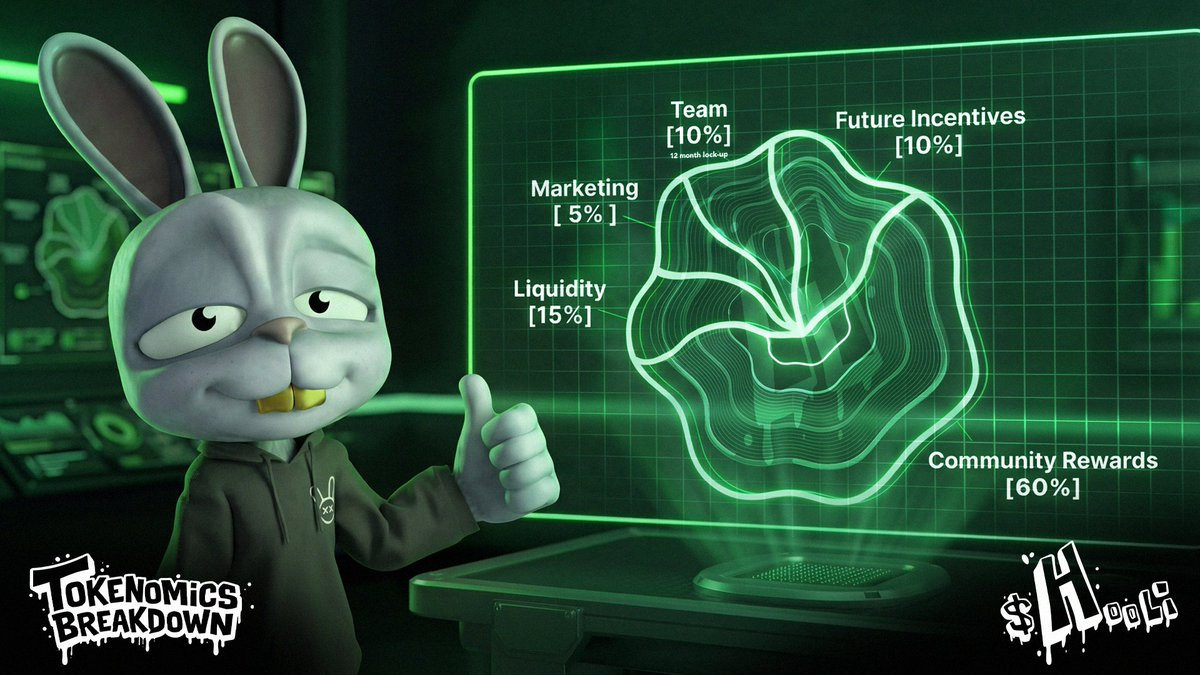
The currently disclosed HOOLI allocation structure includes:
| Allocation Category |
Percentage |
Main Use |
| Community Rewards |
60% |
Game rewards and community incentives |
| Liquidity |
15% |
Market liquidity support |
| Team |
10% |
Long-term team incentives |
| Future Incentives |
10% |
Future ecosystem expansion |
| Marketing |
5% |
Marketing and brand operations |
Official materials show that the Team allocation has a 12-month lock-up period. This design is mainly intended to reduce market selling pressure caused by concentrated short-term releases, while also strengthening the stability of long-term ecosystem operations.
Structurally, HOOLI’s economic model leans more toward a community-driven game economy. Community Rewards account for 60%, which means My Pet Hooligan places greater emphasis on user interaction, game participation, and long-term entertainment ecosystem expansion.
First, HOOLI enters players’ hands through game rewards. Players may then use HOOLI to buy NFT assets or participate in entertainment interactions. Eventually, part of the HOOLI flows back into the ecosystem, forming a continuous game economy cycle.
Why Does the Game Ecosystem Need a Dual-Token Structure?
The core purpose of a dual-token structure is to separate the needs of the network layer and the game layer. If a blockchain game has only one token, that token usually has to handle governance, gas, rewards, and trading functions at the same time.
My Pet Hooligan uses KARRAT to manage Studio Chain infrastructure, while HOOLI maintains the internal game economy. This model can reduce the risk of excessive inflation in a single-token system.
Structurally, the dual-token model also helps improve the flexibility of the economic model. The infrastructure layer and game layer usually face different types of demand, so their token models need to be designed separately.
This mechanism means HOOLI focuses more on user activity, while KARRAT focuses more on network operations and ecosystem governance.
What Limitations Does the HOOLI Token Model Face?
Blockchain game token models are usually affected by user activity. HOOLI also depends on the continued operation of the My Pet Hooligan game ecosystem.
The pace of game content updates will directly affect demand for HOOLI. If user participation declines, HOOLI’s circulation efficiency may also fall.
NFT market volatility can also affect HOOLI’s economic model. Some blockchain game projects rely too heavily on NFT trading revenue, making them vulnerable to market cycles.
My Pet Hooligan also needs to sustain entertainment content production over the long term. AI virtual characters, animated content, and multiplayer games all require relatively high operating costs, so the economic stability of HOOLI is directly related to the project’s content operation capabilities.
Conclusion
HOOLI is the core utility token in the My Pet Hooligan game ecosystem. It is mainly responsible for user rewards, asset circulation, and entertainment interaction. HOOLI and KARRAT respectively handle the game layer and infrastructure layer, forming a dual-token economic structure.
My Pet Hooligan drives HOOLI circulation through game tasks, NFT trading, and entertainment interaction. Compared with traditional blockchain game tokens, HOOLI places greater emphasis on long-term user participation within a transmedia entertainment ecosystem.
FAQs
What Is HOOLI?
HOOLI is the utility token in the My Pet Hooligan game ecosystem. It is mainly used for game rewards, NFT asset circulation, and entertainment interaction.
What Is the Difference Between HOOLI and KARRAT?
HOOLI is mainly responsible for the My Pet Hooligan game economy, while KARRAT mainly supports Studio Chain network infrastructure and governance.
What Is the Total Supply of HOOLI?
Officially released information shows that HOOLI has a total supply of 10 billion tokens and uses a fixed-supply model.
How Can Players Earn HOOLI?
Players can usually earn HOOLI through My Pet Hooligan game tasks, competitive activities, community interaction, and certain entertainment ecosystem activities.
Why Does HOOLI Need a Dual-Token Structure?
My Pet Hooligan uses a dual-token structure mainly to separate the needs of the infrastructure layer and the game layer, reducing the complexity of a single-token model.
Does HOOLI Affect NFT Asset Trading?
HOOLI may be used for some NFT asset transactions and ecosystem interactions within My Pet Hooligan, so it can affect the circulation efficiency of game assets.