In the past, market attention in the semiconductor industry was usually focused on chip companies themselves, such as NVIDIA, TSMC or Intel. But as advanced process technologies become increasingly complex, more capital is beginning to pay attention to the semiconductor equipment supply chain. This is especially true as AI chips move into the 3nm, 2nm and advanced packaging stages, where the importance of inspection equipment has risen sharply. Chip yield and defect control now directly affect the production efficiency of AI GPUs.
At a more fundamental level, KLA represents more than just an equipment company. It functions as quality control infrastructure within the modern chip manufacturing system. As AI, large models and data center expansion drive global demand for computing power, semiconductor inspection equipment is becoming an indispensable part of advanced manufacturing processes.
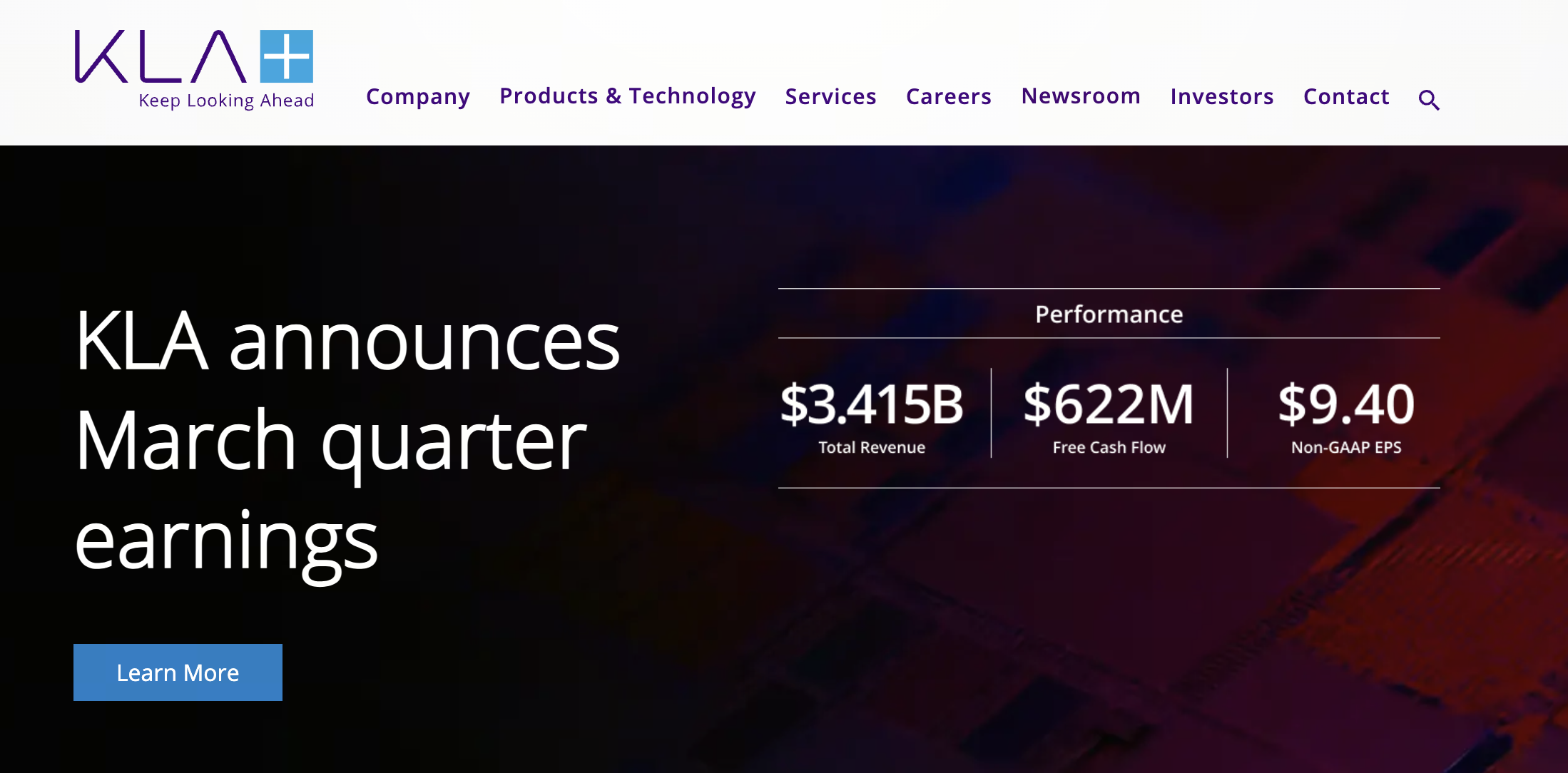
Source: kla.com
What Is KLA Corporation (KLAC)?
KLA Corporation is one of the world’s largest semiconductor inspection and metrology equipment companies. Its core business is helping wafer fabs identify microscopic defects during chip manufacturing and improve wafer production yield. Compared with traditional consumer electronics companies, KLA is closer to a provider of chip manufacturing infrastructure.
In the modern chip manufacturing process, wafers go through many complex steps, including lithography, deposition, etching and packaging. Even an extremely small defect can cause a chip to fail. As a result, the semiconductor industry requires large amounts of semiconductor inspection equipment and semiconductor metrology systems to ensure that advanced process nodes can run reliably.
As AI GPUs and high performance chips become more complex, KLA chip inspection systems and AI chip manufacturing workflows have gradually become topics of strong market interest. For advanced AI chips, even nanoscale errors can affect chip performance and power consumption.
Semiconductor Inspection and Metrology Systems Explained
KLA’s core logic is to help wafer fabs detect manufacturing defects through high precision inspection systems and improve chip production yield through metrology technology. Put simply, KLA does not directly manufacture chips. Instead, it helps chip companies ensure that wafer manufacturing can proceed in a stable and reliable way.
In the wafer inspection process, KLA equipment typically uses optical systems, electron beams and AI image analysis technology to scan wafer surfaces and identify possible defects. Tiny particles, line shifts or material abnormalities, for example, may all affect the final performance of advanced process chips.
As the industry enters the 3nm, 2nm and advanced packaging era, advanced process inspection technology and semiconductor metrology systems are becoming increasingly important. The smaller transistor sizes become, the lower the tolerance for manufacturing error. This means advanced AI chips will become even more dependent on inspection equipment.
KLA’s Role in the Semiconductor Supply Chain
In the global chip supply chain, KLA is mainly responsible for inspection and metrology. It does not directly participate in chip design or wafer manufacturing. Its core customers usually include major wafer fabs such as TSMC, Samsung and Intel.
The modern semiconductor supply chain is made up of many equipment segments. For example, ASML is responsible for lithography machines, Applied Materials provides deposition equipment, Lam Research provides etching equipment, and KLA is responsible for inspection systems. In this sense, the semiconductor equipment supply chain is a highly specialized and complex ecosystem.
Compared with other equipment companies, the differences between KLA and ASML, as well as the broader topic of advanced process equipment, have gradually become key areas of user interest. As AI chips become more complex, chip manufacturing is no longer simply about whether chips can be produced. It is also about whether high yield chips can be produced consistently, which further increases the importance of inspection equipment.
Why the AI Boom Has Brought Market Attention to KLAC
The AI boom is one of the important reasons KLAC has attracted market attention in recent years.
The development of large language models, AI agents and generative AI requires large quantities of GPUs and high performance chips. Advanced AI GPUs demand extremely high manufacturing precision. This means AI chips require not only advanced process nodes, but also more complex inspection systems.
At the same time, the development of HBM, or high bandwidth memory, and advanced packaging technology has also made AI chip manufacturing, HBM and advanced packaging important growth areas for the semiconductor equipment industry. Advanced packaging structures are more complex than traditional chips, so more inspection steps are needed to ensure chip reliability.
As global data centers continue to expand, demand for AI semiconductor equipment has also become a long term market focus. More investors are beginning to believe that the AI industry will not only drive growth for GPU companies, but will also support the long term expansion of the semiconductor equipment industry.
How KLAC Differs from ASML, AMAT and LRCX
Although KLAC, ASML, Applied Materials (AMAT) and Lam Research (LRCX) all belong to the semiconductor equipment industry, their roles in the supply chain are different.
ASML’s core business is EUV lithography machines, which are used to print chip patterns onto wafer surfaces. AMAT is more focused on deposition equipment and materials engineering, while LRCX is mainly responsible for etching equipment. KLA’s core focus, by contrast, is inspection and metrology systems.
This difference means the distinction between KLA and ASML is not really a matter of direct competition. It is more like collaboration between different equipment segments. Modern advanced process nodes require multiple equipment systems to work together, so the differences among semiconductor equipment companies essentially reflect the increasing complexity of chip manufacturing.
As the difficulty of manufacturing AI GPUs continues to rise, types of chip manufacturing equipment and the division of labor within advanced process equipment have also become important concepts for understanding the semiconductor industry.
Why Semiconductor Inspection Equipment Has High Barriers to Entry
The semiconductor inspection equipment industry is considered one of the most technically demanding industries in the world.
First, advanced process nodes require extremely high inspection precision. At the 3nm node, or future 2nm nodes, any tiny error can cause wafer failure. The technical barrier in chip inspection technology therefore comes from extremely high precision requirements.
Second, semiconductor equipment usually has to go through long customer qualification cycles. Major wafer fabs do not easily replace core equipment suppliers, because if equipment stability becomes a problem, it could directly affect wafer production lines worth tens of billions of dollars. As a result, the moat of semiconductor equipment companies usually comes from technology, customer relationships and long term industrial collaboration.
In addition, the research and development costs of advanced process equipment are extremely high, which is one reason the industry has long been dominated by a small number of companies. The entry barriers for advanced process equipment and the concentration of the global equipment industry have therefore become important long term market discussion topics.
KLAC’s Long Term Growth Logic and Potential Risks
An important part of KLAC’s long term growth logic comes from the continued increase in global chip complexity.
In the future, industries such as AI, large models, high performance computing and autonomous driving will all require more advanced chip structures. The more complex advanced process nodes become, the greater the demand for inspection systems. As a result, long term AI chip trends and semiconductor capital expenditure usually have a direct impact on KLA’s long term growth logic.
At the same time, the expansion of global wafer fab capital expenditure will also drive growth in the equipment industry. When TSMC, Intel or Samsung expands advanced process production lines, they usually need to purchase large amounts of inspection equipment at the same time.
However, the semiconductor equipment cycle also means the industry faces clear volatility risks. When global chip demand slows, wafer fabs may cut capital expenditure, which can affect equipment orders. In addition, geopolitical and supply chain risks may also influence the long term development of the global semiconductor equipment industry.
Summary
KLA is essentially an advanced equipment company that provides semiconductor inspection and metrology systems. Its core value lies in helping global wafer fabs improve chip yield and ensuring that advanced process nodes can operate reliably.
As AI GPUs, HBM and advanced packaging become increasingly complex, the importance of inspection equipment continues to rise. For modern AI chips, manufacturing precision has become an important factor affecting performance, power consumption and mass production capacity.
From a longer term perspective, KLA represents not only the semiconductor equipment industry itself, but also an important part of the global AI and high performance computing infrastructure. As advanced process technologies continue to upgrade, inspection systems will become an increasingly critical part of the future chip manufacturing system.
FAQs
What Kind of Company Is KLAC?
KLAC is the stock ticker for KLA Corporation, a company that mainly provides semiconductor inspection and metrology equipment.
Why Is KLA Considered Part of the Semiconductor Equipment Industry?
KLA belongs to the semiconductor equipment industry because it provides inspection systems and metrology equipment for wafer manufacturing, making it part of chip manufacturing infrastructure.
What Does Chip Inspection Equipment Do?
Chip inspection equipment is used to identify microscopic defects during wafer manufacturing and improve chip production yield.
Why Could AI Drive KLAC’s Growth?
The rising complexity of AI GPUs and advanced process technologies increases demand for wafer inspection and metrology.
What Is the Difference Between KLA and ASML?
ASML mainly produces lithography machines, while KLA focuses more on inspection and metrology systems.
Why Is Semiconductor Inspection Equipment Important?
Advanced process nodes require extremely high manufacturing precision, and any defect can affect chip performance and yield.
KLAC does not produce GPUs, but growing demand for NVIDIA’s AI chips can indirectly increase demand for advanced process inspection equipment.
Why Are Barriers High in the Semiconductor Equipment Industry?
Barriers are high because advanced equipment is difficult to develop, customer qualification cycles are long, and the industry requires many years of technical accumulation.