Top 7 Hardware Picks for Cryptocurrency Mining

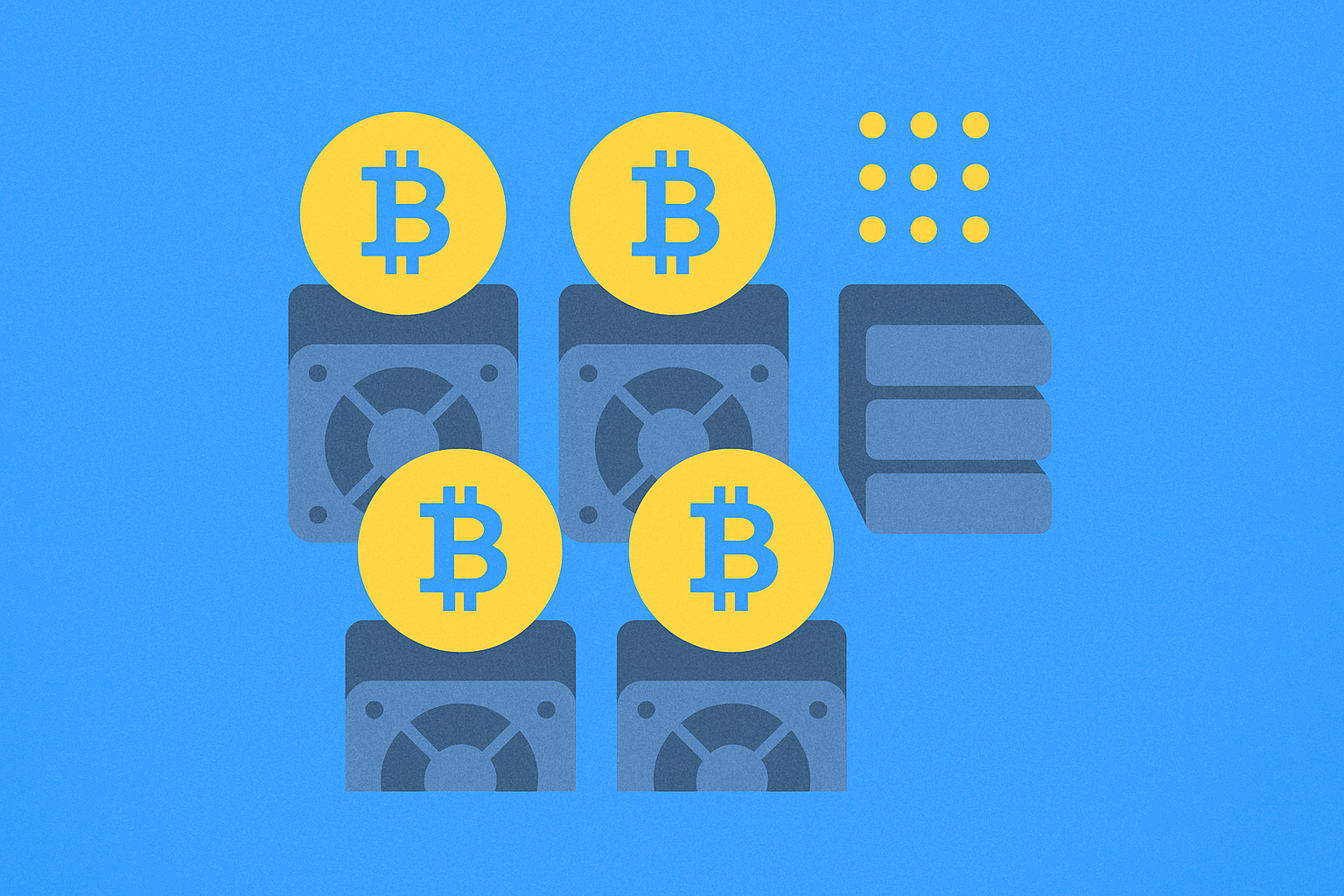
Top 7 Bitcoin Mining Machines
In cryptocurrency mining, selecting the right hardware dramatically impacts profitability. Bitcoin mining machine performance is evaluated by balancing power consumption, hash rate, and upfront investment. Below, we break down the features and use cases of seven highly rated mining hardware options, providing detailed insights.
1. Antminer S19 Pro
- Power consumption: 3.25 kW
- Hash rate: 110 TH/s
- Price range: approx. $10,000 – $19,600
Developed by Bitmain, this ASIC miner achieves excellent efficiency at 29.5J/TH. It uses a 7nm TSMC chipset, manufactured with the same advanced process technology found in the latest AMD Ryzen CPUs.
Its most notable features include dramatically shortened boot times and improved user experience thanks to the latest firmware. This results in a significant efficiency boost, making it highly regarded among professional mining operators. However, as of the latest market research, supply chain issues continue to limit its availability.
Though the initial investment is substantial, its outstanding power efficiency and hash rate performance make it a strong candidate for mid- to long-term ROI.
2. AvalonMiner 1246
- Power consumption: 3.43 kW
- Hash rate: 90 TH/s
- Price range: $4,000 – $5,300
Canaan Creative, a pioneer in China’s crypto mining industry, is known for releasing the world’s first dedicated ASIC Bitcoin miner in 2013. The company brings years of expertise and technical innovation to the table.
The AvalonMiner 1246 stands out for its robust design, featuring four integrated cooling fans. It achieves high power efficiency at 38J/TH but produces up to 75dB of noise, similar to urban traffic, so a dedicated space and soundproofing are essential.
It includes a one-year manufacturer warranty and an integrated AI microchip for stable, long-term operation. This balanced model is well suited for medium-scale mining operations.
3. AvalonMiner A1166 Pro
- Power consumption: 3.4 kW
- Hash rate: 81 TH/s
- Price range: $2,200 – $2,850
Delivering 42J/TH hash rate efficiency, this Bitcoin miner is extremely popular. It offers high dedicated mining performance at a price point similar to high-end PCs.
There are some trade-offs for the lower price. The warranty is only 180 days, and direct orders from the manufacturer require a minimum of five units. Five combined deliver a total of 405TH/s, enabling efficient mining farm builds.
This model is ideal for those prioritizing cost performance and planning multi-unit operations.
4. WhatsMiner M32-62T
- Power consumption: 3.348 kW
- Hash rate: 62 TH/s
- Price range: $1,075 – $1,400
This affordable Bitcoin miner comes from a newer manufacturer in the industry. It features Samsung’s 8nm chipset, leveraging state-of-the-art semiconductor process technology.
Its biggest advantage is its price—four to five times cheaper than top-tier ASIC miners—making it possible to start mining with minimal initial investment. It comes standard with a 180-day warranty and power supply unit, further reducing additional costs.
The M32 series offers three versions, with the highest delivering 66TH/s. This is a solid choice for those seeking short-term ROI or beginners entering mining.
5. WhatsMiner M30S++
- Power consumption: 3.472 kW
- Hash rate: 112 TH/s
- Price range: $9,900 – $14,000
Manufactured by MicroBT of China, the M30S++ delivers one of the highest hash rates available to retail buyers. With 112TH/s of processing power and power efficiency at 31J/TH, it offers both performance and energy savings.
Powered by Samsung’s advanced 8nm ASIC chipset, it balances high performance with efficiency. In regions with reasonable electricity rates—and depending on Bitcoin prices—payback is possible in approximately 10–12 months.
This model is best for enterprise-scale mining operations or advanced users demanding top-tier hardware. The significant upfront cost is justified by its long-term profitability and efficiency.
6. Ebang EBIT E11++
- Power consumption: 2 kW
- Hash rate: 44 TH/s
- Price range: $2,024
Ebang is recognized as a top-tier Chinese Bitcoin ASIC manufacturer. The latest E11++ features a classic, compact tube design with dual-sided intake and exhaust fans for effective cooling.
It runs on a 10nm chipset and includes a one-year warranty (six months on the device, one year for the controller). With power consumption of just 2kW, it’s a solid choice for those prioritizing energy savings.
Its hash rate efficiency is lower than models like the AvalonMiner A1166 Pro, so those seeking maximum performance should consider alternatives. For budget-conscious buyers or those focusing on low power consumption, it’s a practical option.
7. Bitmain Antminer S5
- Power consumption: 0.56 kW
- Hash rate: 1.15 TH/s
- Price range: approx. $500
Released in 2014, this legacy model is still effective thanks to its seamless integration with mining algorithms. It delivers energy efficiency at 0.51J/GH and low power usage.
Weighing just 2.5kg with an open-top design, it cools efficiently. Its maximum noise level of 65dB is relatively quiet, making it suitable for small spaces.
This entry-level model is ideal for anyone seeking minimal upfront investment or using mining for educational purposes. While it can’t match the performance of newer models, its low cost makes it appealing for first-time miners.
Essential Hardware for Bitcoin Mining
If you already have a high-performance PC, you can start mining with little extra cost. To use an existing PC as a mining rig, the following minimum hardware specs are recommended.
Basic Hardware Requirements
- CPU: Intel Celeron series or above. The CPU handles mining process control and data processing.
- Motherboard: B250 series or higher is recommended. If using multiple GPUs, the motherboard should have sufficient PCIe slots.
- GPU: Graphics cards equivalent to Nvidia GTX 1070 or AMD Vega 56 or better are recommended. The GPU performs the core mining computations.
High-End Build Options
For top performance in workstations, high-end gaming, or mining, the AMD Ryzen Threadripper 3970X is an excellent choice, offering 32 cores, 64 threads, 144MB cache, and power consumption capped at 280W.
The Nvidia RTX 3070 is a cost-effective option for GPU mining, balancing strong hash rate performance with power efficiency—a combination widely favored by miners.
Using an existing PC can dramatically reduce initial costs compared to dedicated ASIC miners, but keep in mind that power efficiency and hash rate are lower than with specialized hardware.
How Long Does It Take to Mine 1 Bitcoin?
The time needed to mine one Bitcoin depends on hardware performance, overall network difficulty, power costs, and other variables.
Hash Rate and Mining Duration
A mid-tier Bitcoin miner with a 50TH/s hash rate can, in theory, mine 1 BTC in about a year—assuming network difficulty remains stable. In practice, changes in difficulty will affect this timeframe.
Upgrading to higher-performance miners shortens the timeline. For example, machines with 100TH/s or more can mine 1 BTC faster.
Maximizing Mining Efficiency
To maximize mining efficiency, focus on these elements:
- Optimize Power Costs: Leverage low-cost electricity regions or off-peak hours to increase profitability.
- Set Up Adequate Cooling: Good cooling solutions maintain stable hardware performance.
- Join a Mining Pool: Pool participation offers more consistent returns than solo mining.
Before you begin, use a mining calculator to project profitability based on your hardware, electricity rates, and the current Bitcoin price.
Technical Overview of ASIC Miners
Bitcoin mining technology has evolved considerably since inception. Early miners used standard CPUs, but rapid innovation led to much more efficient hardware.
Evolution of Mining Technology
Initially, Bitcoin mining relied on CPU processing. As competition grew, GPUs took over due to their efficient parallel processing and far higher hash rates.
Dedicated ASIC (Application Specific Integrated Circuit) miners were later developed for even greater efficiency. Tailored for Bitcoin mining algorithms, ASICs deliver vastly superior performance compared to GPUs.
ASIC Miner Advantages
ASIC miners are built with specialized chips optimized for specific crypto mining algorithms, offering these key advantages:
- High Hash Rate: Achieve many times the hash rate of GPUs at the same power consumption
- Superior Power Efficiency: Lower electricity use per unit hash rate
- Stable Operation: Designed for mining, they run reliably for extended periods
Today, nearly all large-scale Bitcoin mining farms use ASIC miners. Even individual miners focused on profitability should consider ASICs.
How to Choose a Profitable Bitcoin Miner
In crypto mining, selecting the right hardware directly affects your payback period and long-term returns. The market offers a range of machines, each with unique strengths and use cases.
Latest High-Performance Models
According to market research, BitWats Bitcoin miners stand out for cost-effectiveness. For example, models around $5,000 reportedly deliver 360TH/s at only 550W, an energy efficiency that can significantly lower long-term operating costs.
Popular Models Compared
The WhatsMiner M30S++ and Antminer S19 Pro are top picks, favored by many miners for these reasons:
WhatsMiner M30S++ Highlights:
- Industry-leading 112TH/s hash rate
- Outstanding power efficiency at 31J/TH
- Stable performance with Samsung 8nm chipset
Antminer S19 Pro Highlights:
- High-performance 110TH/s hash rate
- Efficient at 29.5J/TH
- Bitmain’s trusted reliability and proven track record
Key Factors for Mining Hardware Selection
Evaluate these factors when choosing mining hardware:
- Initial Investment: Purchase price plus required peripherals
- Power Efficiency: Power consumption per hash rate (J/TH)
- Payback Period: Estimated ROI based on Bitcoin price and electricity costs
- Durability and Warranty: Manufacturer warranty and expected lifespan
- Availability: Stock status and delivery times
Balancing these considerations helps you select mining hardware that aligns with your investment goals.
ASIC Miner Profitability and Mining Pools
Understanding crypto mining profitability means looking beyond the specs of individual machines—you also need to understand mining pool structures and how revenue is divided.
Profitability of a Single Miner
Running a single ASIC miner like the AvalonMiner A1166 Pro (81TH/s) can yield around $23 per day (gross), depending on market conditions. However, this figure doesn’t account for equipment costs or power bills—actual net profit is lower once those are deducted.
Profitability depends on these factors:
- Bitcoin price
- Network-wide mining difficulty
- Power costs
- Mining pool fees
How Mining Pools Work
Mining pools let groups of miners combine processing power to add new blocks. Compared to solo mining, joining a pool offers these advantages:
- Steady Returns: Earn regular payouts even with a smaller hash rate
- Risk Diversification: Reduces the volatility of solo mining
- Operational Efficiency: Access to pool-optimized mining software
Block rewards are distributed among pool members based on each participant’s hash rate contribution.
Major Mining Pools
There are many mining pools worldwide, each with unique features and fee structures. Leading pools include:
- Major pools in Asia
- Antpool
- F2Pool
- ViaBTC
- Poolin
- Foundry USA
Location has little impact on mining pool efficiency, so you can join pools globally. Compare factors like fees, payment methods, and minimum payout thresholds when choosing a pool.
Mining Scam Risks
Recently, the rise of cloud mining and pool mining services in the DeFi and crypto space has also led to more scams. Be wary of offers with overly generous terms—many are fraudulent.
For example, the BitClub Network scam saw three individuals arrested for defrauding investors of $722 million in crypto.
These scams typically offer a share of mining capacity for an upfront fee but operate as Ponzi schemes—paying older investors with funds from new recruits.
When choosing a mining pool or cloud mining service, check:
- Provider reputation and track record
- Transparent revenue structure
- Realistic profit projections
- Clear contracts and fee structures
How to Choose the Best Crypto Mining Hardware
To succeed in crypto mining, you must evaluate efficiency, upfront costs, your operating environment, and other factors to choose hardware that fits your needs.
Budget-Friendly Choices
EBIT E11++ Highlights:
- Relatively new 10nm chipset
- Not as efficient as top models but provides satisfactory performance
- Available at a low price
- Energy-saving 2kW design reduces power bills
This model is a sensible pick for those seeking to minimize initial investment. While not the fastest, it’s a solid, cost-effective choice.
Compact and Low-Noise Choices
Bitmain Antminer S5 Highlights:
- Despite launching in 2014, remains practical today
- Compact (2.5kg) with efficient cooling
- Ideal for small spaces or low-power scenarios
- Affordable
- Relatively quiet at 65dB
This model is great for home mining or learning the basics. While it can’t match newer models for raw power, its low cost is perfect for hands-on experience.
Enterprise-Grade Choices
MicroBT M30S++ Highlights:
- Market-leading 112TH/s hash rate
- Outstanding efficiency at 31J/TH
- Best for full-scale Bitcoin mining operations
- High upfront cost ($9,900–$14,000)
- High power usage at 3.472kW
This model is recommended for businesses or advanced users demanding the best hardware. With the right setup, payback can be achieved in 10–12 months despite the high initial outlay.
Key Factors for Hardware Selection
Consider these points when choosing mining hardware:
- Budget: How much you can invest up front
- Operating Environment: Space, noise tolerance, cooling capacity
- Electricity Costs: Local rates and available capacity
- Technical Skill: Your mining experience and technical knowledge
- Investment Goals: Short-term profits vs. long-term business growth
- Risk Tolerance: How much risk you can accept
Weigh these factors and compare each model’s features to find the one best suited to your situation. Stay alert to market trends and Bitcoin price changes—flexibility is key to success.
FAQ
What is the best hardware for cryptocurrency mining?
ASIC miners are the best choice. For Bitcoin mining, the Antminer S21 Hyd offers excellent processing power and energy efficiency. GPU mining is also effective, but ASICs deliver better efficiency.
What’s the difference between GPU and ASIC mining?
GPU mining is versatile, supporting multiple cryptocurrencies. ASIC mining is optimized for specific algorithms—making it highly efficient but limited to certain blockchains. ASICs excel in efficiency and stability, while GPUs provide flexibility and support network decentralization.
How much does mining hardware cost up front?
ASIC miners cost several thousand to tens of thousands of dollars. GPUs start at a few hundred dollars, while CPUs are the least expensive. Your total investment depends on the hardware type and how many units you buy.
How should I evaluate power usage and profitability?
Profitability depends on power efficiency (J/TH) and hardware price. Newer models are more efficient, but older models are cheaper and may offer a quicker payback. In areas with low electricity costs, even lower-spec equipment can be profitable.
What hardware is recommended for mining beginners?
FPGA is a good option for beginners. It’s flexible, delivers strong performance, is easy to use, and consumes relatively little power—making it a cost-effective investment.
How should I cool and maintain mining hardware?
For cooling, use evaporative cooling walls, immersion cooling, or water-cooling systems. Maintenance involves regular servicing, monitoring temperatures, and checking exhaust systems. Large facilities should optimize power and cooling to extend hardware life and maximize performance.
Are Bitcoin and Ethereum mining hardware requirements different?
Yes, they differ significantly. Bitcoin mining requires dedicated ASIC hardware, while Ethereum was traditionally mined with GPUs. However, Ethereum switched from PoW to PoS in September 2022, so mining is no longer possible.
Share
Content
How to Buy Cryptocurrency


Trending Cryptocurrencies



How to Mine Ethereum in 2025: A Complete Guide for Beginners

Exploring the Crypto World: The Ultimate Mining Guide and Profit Secrets

From Zero to Hero – Mining Technology and Trends Analysis
Mining Strategies – Building Your Digital Gold Factory

Pi Network (PI): Mobile-Friendly Cryptocurrency for Global Adoption

Pi Network 2025: Latest Mining Updates and Mainnet Launch Progress

Comprehensive Guide to GURU Token

Comprehensive Guide to Token Generation Events

Everything About Moving Averages: The Foundation of Coin Price Analysis
Comprehensive Guide to Financial Freedom

Inside the New Product Lineup of a European Exchange: AI Trading Bots, Crypto Card, and More