Bitcoin Unit 'Satoshi': A Comprehensive Guide

What Is Satoshi?
Satoshi represents the smallest divisible unit of Bitcoin, equivalent to 0.00000001 BTC. In other words, one Bitcoin equals 100 million Satoshis. This microtransaction capability makes Bitcoin accessible for everyday purchases and small-value transfers. Beyond Satoshi, Bitcoin has other subdivisions including millibitcoin (0.001 BTC) and microbitcoin (0.000001 BTC), though Satoshi remains the most commonly referenced small unit.
The importance of Satoshi becomes particularly evident in the Lightning Network, where transactions can be processed in even smaller denominations, enabling faster and more efficient Bitcoin transfers. This scalability addresses one of the key challenges in cryptocurrency adoption: the ability to conduct micropayments without excessive transaction fees.
Cryptocurrency exchanges facilitate the conversion between Satoshis and fiat currencies, making it straightforward for users to buy or sell in these smaller denominations. As Bitcoin's block rewards continue to halve approximately every four years through the halving mechanism, future transactions are increasingly likely to be denominated in Satoshis rather than whole Bitcoins. This shift reflects the growing maturity of the Bitcoin ecosystem and its evolution toward practical, everyday usage.
The Debate: Redefining Bitcoin as Satoshi
In recent times, prominent Bitcoin advocate John Carvalho proposed a significant shift in how Bitcoin is measured and displayed. His suggestion involves eliminating decimal points and standardizing Bitcoin's denomination to Satoshi, its base unit. This proposal aims to align Bitcoin's measurement unit with its fundamental protocol structure, potentially making the system more intuitive for newcomers.
Carvalho argues that removing decimal dependence would reduce the cognitive effort required to understand Bitcoin transactions. By presenting values as whole numbers rather than fractions, users could more easily grasp transaction amounts and account balances. This clarity could enhance both cryptocurrency education and overall user experience, particularly for those unfamiliar with handling digital assets.
This isn't the first attempt to redefine Bitcoin's unit of measurement. Previously, Bitcoin supporter Jimmy Song introduced "BIP 176," proposing to measure Bitcoin in "bits" units. These recurring discussions reflect the community's ongoing effort to make Bitcoin more accessible and user-friendly.
However, the Bitcoin community remains divided on this issue. Cryptocurrency influencer Clara warns that redefining Bitcoin's unit could undermine its core narrative. Bitcoin's unique characteristic of having a fixed supply of 21 million coins contributes significantly to its value proposition. Shifting to Satoshi as the primary unit might dilute this scarcity perception, potentially affecting how investors and users perceive Bitcoin's fundamental value.
Additional concerns include user confusion and potential transaction errors during the transition period. Existing wallets, exchanges, and financial infrastructure are built around Bitcoin as the standard unit. Any modification could introduce unforeseen complications and require extensive system updates across the entire ecosystem.
Historical Background and Origin of the Term
The term "Satoshi" first emerged in Bitcoin community discussions around 2010. On November 15, 2010, a BitcoinTalk user named Ribuck proposed calling 1/100 of a Bitcoin (0.01 BTC) a "Satoshi." At that time, this represented the smallest unit displayed in the Bitcoin interface. Initially, this suggestion received limited attention from the community.
The concept gained renewed interest when Ribuck reintroduced it on February 10, 2011, this time receiving more positive feedback. The Bitcoin community gradually adopted the terminology, and it has since become the standard reference for Bitcoin's smallest unit. This grassroots naming process reflects the decentralized nature of Bitcoin's development and community governance.
Several factors have contributed to the increased usage of Satoshi in recent years. Platforms like Honeyminer began distributing mining rewards in Satoshi denominations, making the term more familiar to everyday users. The Lightning Network, which processes transactions in Satoshi units, has further popularized this measurement standard.
Community initiatives like the Lightning Torch, a Bitcoin transaction relay game, also played a role in familiarizing users with Satoshi as a practical unit of measurement. These developments demonstrate how technical terminology can evolve from niche community jargon into widely recognized standards through practical application and user adoption.
Practical Applications of Satoshi
Satoshi simplifies Bitcoin transactions by breaking them down into more manageable and comprehensible units for both users and merchants. Instead of dealing with confusing decimal numbers like 0.001 Bitcoin, transacting in Satoshi provides clearer, whole-number amounts that are easier to understand and verify. This clarity reduces user confusion and minimizes the risk of transaction errors.
As Bitcoin's value has increased substantially over the years, the appeal of Satoshi has grown correspondingly. This phenomenon parallels stock splits in traditional markets, where dividing shares makes them more accessible to a broader range of investors. Psychologically, owning a larger quantity of Satoshis can feel more satisfying than owning a small fraction of a Bitcoin, even when the actual value is identical.
This psychological factor plays a crucial role in attracting new cryptocurrency users who might be intimidated by Bitcoin's high price per unit. By framing investments in terms of thousands or millions of Satoshis rather than decimal fractions of Bitcoin, the barrier to entry appears lower and less daunting.
While Satoshi hasn't achieved universal adoption across all platforms and exchanges, its necessity becomes increasingly apparent as Bitcoin's price continues to rise. As Bitcoin surpassed the $100,000 milestone, discussions about standardizing Satoshi as the primary unit have intensified. This terminology shift could make Bitcoin transactions feel less burdensome and more accessible to mainstream users, potentially accelerating cryptocurrency adoption globally.
Current Value: How Much Is a Satoshi?
A Satoshi equals 0.00000001 Bitcoin, making it the fundamental building block of Bitcoin transactions. Similar to how fiat currencies like dollars, euros, and pounds are divided into smaller units (cents, centimes, pence), Bitcoin's divisibility into Satoshis ensures its utility across various transaction sizes. Importantly, the Satoshi value standard also applies to Bitcoin forks such as Bitcoin SV and Bitcoin Cash.
For new investors, Bitcoin's high unit price can seem prohibitive. However, purchasing in Satoshi denominations makes entry into cryptocurrency investment more accessible. When Bitcoin's price is converted to Satoshi terms, the per-unit cost becomes extremely low, making investment feel more attainable for those with limited capital.
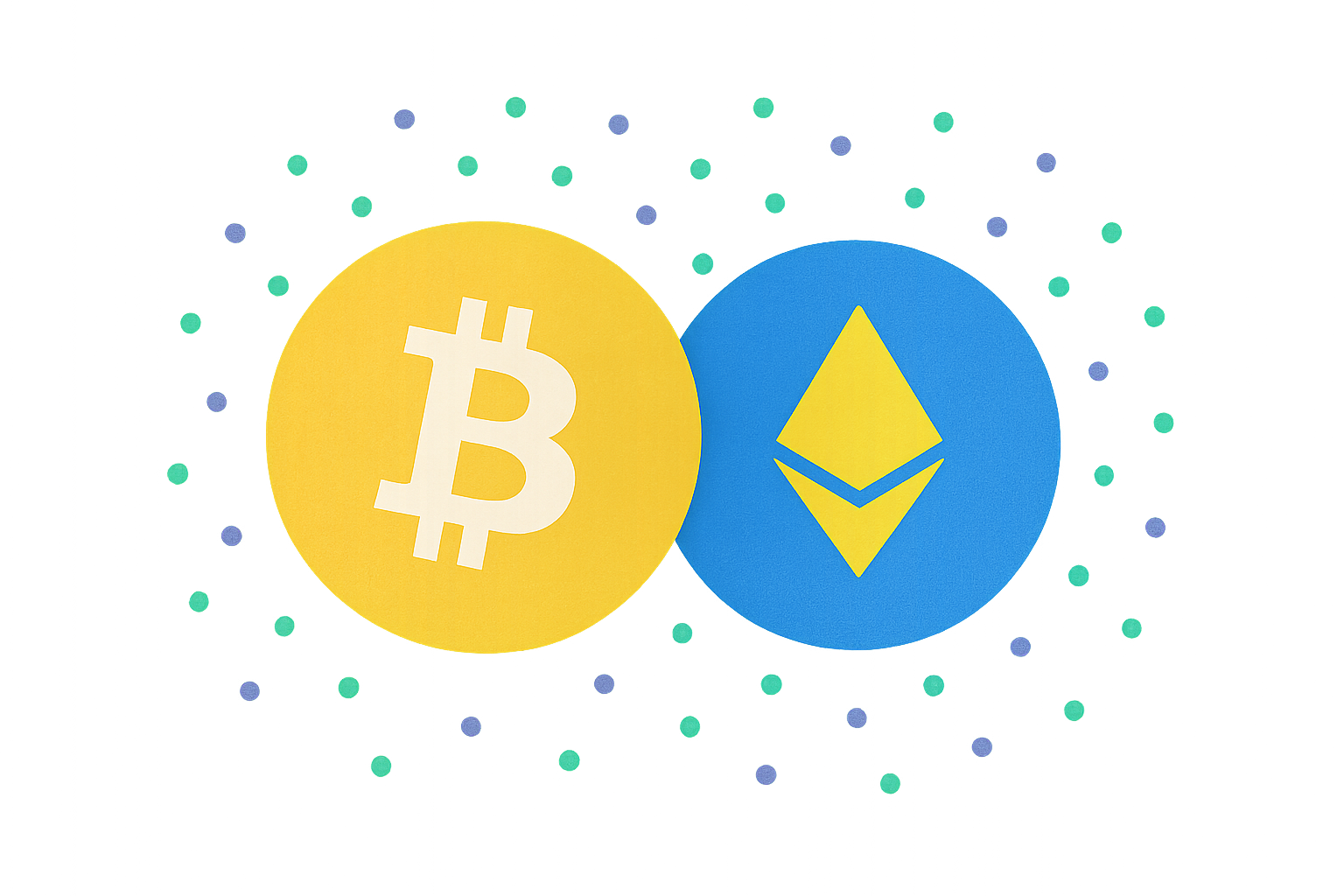
Bitcoin isn't unique in employing small unit denominations. Ethereum, the second-largest cryptocurrency by market capitalization, uses "Gwei" as its smallest unit. Gwei is named after Wei Dai, an early cryptocurrency developer whose work influenced the creation of digital currencies. This naming convention honors pioneers in the field while providing practical utility for microtransactions.
Satoshi vs. Gwei: A Comparison
Both Satoshi and Gwei serve as the smallest units of their respective cryptocurrencies, but they differ in several key aspects:
Cryptocurrency Foundation: Satoshi is Bitcoin's base unit, while Gwei belongs to Ethereum's ecosystem. This fundamental difference reflects the distinct architectures and purposes of these two leading cryptocurrencies.
Decimal Precision: One Satoshi equals 0.00000001 Bitcoin (8 decimal places), whereas one Gwei equals 0.000000001 Ethereum (9 decimal places, with 1 Gwei = 1,000,000,000 Wei). This extra decimal place in Ethereum's system provides additional flexibility for microtransactions.
Primary Use Cases: Satoshi primarily facilitates small Bitcoin transactions and enables fractional ownership of Bitcoin. Gwei, conversely, is commonly used to calculate and pay gas fees on the Ethereum network, which are the transaction costs required to execute smart contracts and transfers.
Naming Origin: Satoshi honors Bitcoin's pseudonymous creator, Satoshi Nakamoto, while Gwei derives from Wei Dai, a cryptography pioneer whose theoretical work on b-money influenced early cryptocurrency development.
Practical Function: Satoshi simplifies Bitcoin microtransactions, making small-value transfers more intuitive. Gwei makes Ethereum's gas fee structure more comprehensible, helping users understand transaction costs without dealing with extremely small decimal numbers.
Understanding these distinctions helps cryptocurrency users navigate different blockchain ecosystems more effectively and appreciate the unique characteristics of each network.
Bitcoin's History and the Significance of Satoshi
The Satoshi unit derives its name from Bitcoin's enigmatic creator, Satoshi Nakamoto, whose true identity remains unknown. Bitcoin was first introduced through Nakamoto's groundbreaking 2008 whitepaper, which outlined a peer-to-peer electronic cash system that would operate without central authority.
Before Bitcoin's emergence, several attempts at creating digital currencies existed, including b-money and Bit Gold. While these projects never fully materialized, many researchers believe Nakamoto drew inspiration from these early efforts in designing Bitcoin's architecture and economic model.
Bitcoin's practical significance became evident in 2010 when a user famously purchased two pizzas for 10,000 Bitcoin. This transaction marked the first real-world purchase using cryptocurrency, demonstrating Bitcoin's potential as a medium of exchange rather than merely a speculative asset.
As Bitcoin's value has grown exponentially over the years, surpassing $10,000 per coin and eventually reaching six-figure valuations, the importance of its smallest unit has increased proportionally. The Satoshi enables Bitcoin to function as both a store of value and a practical currency for everyday transactions, regardless of Bitcoin's price appreciation.
Why Satoshi Is Essential for Bitcoin's Future
Satoshi plays a crucial role in ensuring Bitcoin remains practical for everyday transactions despite significant price volatility. Bitcoin's blockchain technology solved the double-spending problem through its peer-to-peer ledger system and consensus mechanism, ensuring transaction security without requiring trusted intermediaries.
This innovation has made both Bitcoin and Satoshi essential for various use cases, from microtransactions to large-scale investments. The ability to transact in Satoshi denominations ensures Bitcoin's utility isn't limited by its per-unit price, maintaining its relevance as both a currency and an investment asset.
For Bitcoin to achieve its potential as the most widely used and recognized cryptocurrency, accessibility and practicality of Satoshi must continue to improve. This includes better user interface design in wallets and exchanges, clearer educational resources about Satoshi denominations, and potentially standardizing Satoshi as the default display unit.
As Bitcoin's adoption grows globally, the Satoshi unit will become increasingly important for enabling micropayments, facilitating cross-border remittances, and supporting the Lightning Network's rapid transaction capabilities. The future of Bitcoin as a global currency may well depend on how effectively the ecosystem promotes and implements Satoshi-based transactions.
Can You Buy a Fraction of Bitcoin?
Yes, purchasing fractional amounts of Bitcoin is not only possible but increasingly common. You can buy Bitcoin in Satoshi units, down to 0.00000001 Bitcoin. This fractional purchasing capability makes Bitcoin accessible to investors with varying budget levels, removing the misconception that one must buy a whole Bitcoin to participate in the cryptocurrency market.
For new investors, this approach significantly reduces the psychological and financial barriers to entry. Rather than needing tens of thousands of dollars to purchase a single Bitcoin, newcomers can start with modest amounts and gradually build their holdings over time.
In practical terms, most platforms require a minimum purchase amount due to deposit limits and transaction fees. Typically, purchasing a small fraction of Bitcoin might require approximately $20 or more, depending on the exchange's fee structure and minimum transaction requirements.
While Bitcoin has its own unique symbol (฿), Satoshi currently lacks a designated symbol, though various proposals have been suggested within the community. This absence hasn't hindered Satoshi's adoption, as the term itself has become widely recognized and understood among cryptocurrency users worldwide.
FAQ
What is Satoshi (sat)? What is its relationship with Bitcoin (BTC)?
Satoshi is the smallest unit of Bitcoin, equal to 0.00000001 BTC. Named after Bitcoin's creator Satoshi Nakamoto, one Bitcoin equals 100 million Satoshis. It enables micro-transactions and divisibility of BTC.
How many Satoshis equal 1 Bitcoin? What is the conversion formula?
1 Bitcoin equals 100,000,000 Satoshis. The conversion formula is: 1 BTC = 100,000,000 Satoshi, or 1 Satoshi = 0.00000001 BTC.
Why does Bitcoin need to design a minimum unit like Satoshi?
Bitcoin designed Satoshi as its minimum unit to enable precise transactions and micropayments. With 1 BTC equal to 100 million Satoshis, this subdivision allows for greater transaction flexibility and scalability across the network.
What is the origin of the name Satoshi?
Satoshi originates from Japanese culture, meaning 'wise star'. It refers to a person of great wisdom and talent, symbolizing guidance and brilliance in the digital currency space.
What are the practical application scenarios of Satoshi in actual transactions?
Satoshi enables micropayments and small-value transactions on the Bitcoin network. It allows users to send and receive minimal Bitcoin amounts, facilitating efficient small-scale trades and payments within the blockchain ecosystem.
How to view and transfer Satoshi in a wallet?
Open your Bitcoin wallet application, navigate to the Satoshi holdings section to view your balance. To transfer, select the send option, enter the recipient's address, specify the amount, and confirm the transaction to complete the transfer.
What are the characteristics of Satoshi compared to the smallest units of other cryptocurrencies?
Satoshi is Bitcoin's smallest unit, equal to 1/100,000,000 BTC, enabling precise micropayments and transactions. Its fixed divisibility and established standard make it more accessible for small-value transfers compared to other cryptocurrencies' base units.
Will Bitcoin have smaller units than Satoshi?
Yes, Bitcoin's protocol can be updated to create smaller units if needed. Currently, Satoshi is the smallest unit, but technically, Bitcoin can be subdivided further through protocol upgrades.
Share
Content
What Is Satoshi?
The Debate: Redefining Bitcoin as Satoshi
Historical Background and Origin of the Term
Practical Applications of Satoshi
Current Value: How Much Is a Satoshi?
Satoshi vs. Gwei: A Comparison
Bitcoin's History and the Significance of Satoshi
Why Satoshi Is Essential for Bitcoin's Future
Can You Buy a Fraction of Bitcoin?
FAQ
How to Buy Cryptocurrency


Trending Cryptocurrencies



How to Withdraw Money from Crypto Exchanges in 2025: A Beginner's Guide

5 ways to get Bitcoin for free in 2025: Newbie Guide

Treasure NFT Marketplace: A 2025 Guide for Web3 Gamers and Investors

What Is TOAD Coin and How Does Its Tokenomics Work?
Crypto Assets Beginner's Guide: How to Buy, Store, and Trade Your First Crypto Coin

What Is the Best AI Crypto in 2025?

What Do NGMI and WAGMI Mean in Crypto?

What Is a Physical Bitcoin and What Is Its Worth?

What is crypto scalping and how does it work
Meme coins are making headlines—are you a dog person or a cat person? Which is the better buy?

What is blockchain in simple terms