Cloud Mining: A Review of Leading Platforms

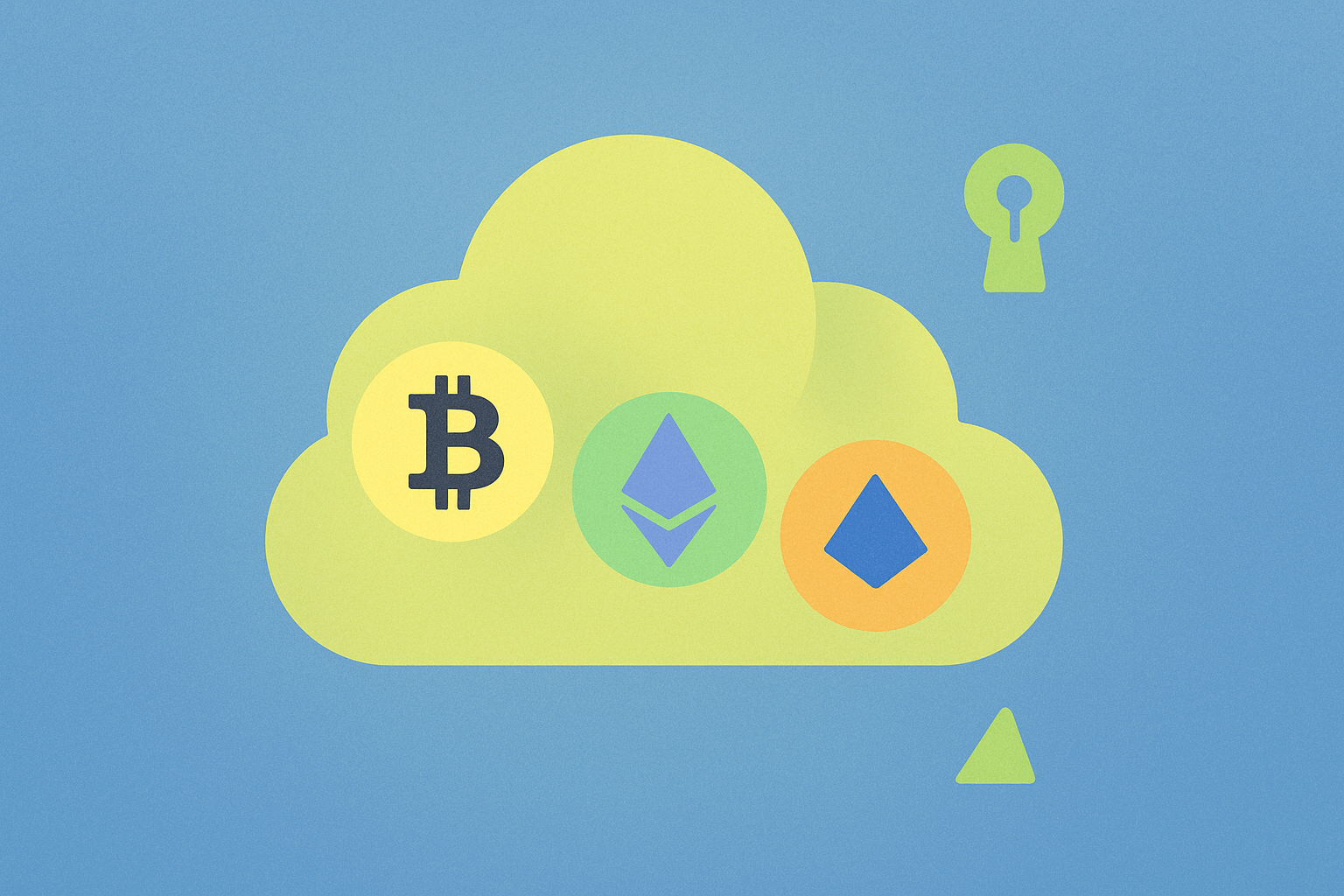
What Is Cloud Mining?
Cloud mining is a modern approach to cryptocurrency mining that enables users to access specialized hardware remotely. Unlike traditional mining—which requires buying and maintaining your own equipment—cloud mining lets you rent computing power from dedicated companies.
These resources may include GPU farms or specialized ASIC devices, which owners lease out to others. This model lowers the barrier to entry, allowing a wider range of users to participate in mining without large upfront investments in hardware and infrastructure.
How Cloud Mining Works
Participating in cloud mining typically involves a few essential steps:
- Provider Selection: Review the market and choose a reputable provider of computing power by comparing the terms offered by various platforms.
- Contract Agreement: Sign an agreement with your chosen company, specifying the amount of computing power rented and the contract duration.
- Activation: Once payment is made, you gain remote access to mining operations through a personal dashboard or dedicated application.
- Earnings Distribution: The mined cryptocurrency is allocated among participants based on the proportion of computing power they have rented.
Cloud Mining Profit Potential
Cloud mining can generate returns, but profitability depends on several factors. The most significant are the platform’s contract terms, the price trends of the mined cryptocurrency, network difficulty, and electricity costs—which are usually included in the rental price.
It’s important to recognize that cloud mining carries specific risks. Most providers that promise unrealistically high returns operate as financial pyramids or Ponzi schemes. To avoid falling victim to scams and protect your capital, carefully research each platform, check its reputation, and review real user feedback.
Cloud Mining vs. Mining with Your Own Equipment
Advantages of Cloud Mining
- Low Entry Barrier: No need for substantial initial capital to purchase expensive equipment; you can start with minimal investment.
- Simplicity: No need to set up or configure complex hardware yourself.
- No Maintenance: No requirement to perform maintenance, repairs, or hardware upgrades.
- Flexibility: You can stop mining anytime without dealing with hardware resale.
- Reduced Risk: Lower risk of loss due to increased network difficulty or cryptocurrency price drops.
Disadvantages of Cloud Mining
- Fraud Risk: High chance of encountering dishonest platforms and losing your funds.
- Limited Profit Potential: Returns are typically lower than with self-managed mining due to provider fees.
- Third-Party Reliance: Complete dependence on the service provider’s integrity and business practices.
Advantages of Mining with Your Own Equipment
- Full Control: Total oversight of your hardware and mining operations.
- Independence: No contracts or platform dependencies.
- Greater Profit Potential: Higher earnings by avoiding intermediaries and their fees.
Disadvantages of Mining with Your Own Equipment
- High Initial Costs: Significant capital needed to purchase quality hardware.
- Infrastructure Demands: Requires suitable space, good ventilation, and access to low-cost electricity.
- Technical Expertise Needed: Must learn how to configure and operate mining equipment.
- Liquidity Issues: Selling equipment can be challenging, especially for obsolete models, when exiting the business.
Cloud Mining: Review of the 13 Leading Platforms
1. Genesis Mining
Genesis Mining is a market leader in cloud mining. Founded during the crypto industry’s expansion, most of its mining farms are located in Iceland, leveraging cheap geothermal energy and natural cooling.
Platform Advantages:
- Extensive cryptocurrency selection, including Bitcoin, Ethereum, and other popular coins
- Support for privacy-focused coins
- Diverse contract options with a range of terms and capacities
- Consistent payouts and responsive customer support
Disadvantages:
- Profitability varies significantly between offers—requires careful analysis
- Contract terms may change periodically, affecting returns
2. NiceHash
NiceHash is recognized for its flexible approach to contracts. It operates as a marketplace for computing power, allowing direct interaction between buyers and sellers of hashrate.
Advantages:
- Flexible system enables you to tailor terms to your mining goals
- Compatible with various equipment types, including GPU and ASIC
Disadvantages:
- All payouts are exclusively in Bitcoin, which may not suit miners of other cryptocurrencies
- Relatively high platform fees
3. Kryptex
Kryptex offers a comprehensive solution, uniting all the online infrastructure required for mining within a single, intuitive application. It is particularly popular among users in Russia and the CIS.
Advantages:
- Beginner-friendly interface
- Multiple withdrawal options, including bank cards and e-wallets
- Low transaction fees and minimal withdrawal thresholds
- Partnerships with major banks for easy withdrawals
- Support for a broad range of mining algorithms
- Remote mining management tools
- Active, robust user community
Disadvantages:
- All mined coins are automatically converted to Bitcoin
- Basic statistics charts with limited analytics
4. Hashnest
Hashnest is one of the oldest and most reputable cloud mining services, owned by industry giant Bitmain. It launched early in the sector’s development.
Advantages:
- Strong credibility due to Bitmain’s backing
- Convenient mobile app for mining management anytime
- Open contract marketplace for user-to-user trading
Disadvantages:
- Interface may be complex for beginners
- Occasional technical issues with site accessibility
5. Eobot
Founded in California, Eobot is one of the earliest cloud mining platforms, offering both free and paid participation options.
Advantages:
- Strong focus on user data and fund security
- Integrated calculator for profitability estimation
- Wide selection of mineable cryptocurrencies
Disadvantages:
- No public details about founders or management
- Limited contract selection
6. Hashing24
Hashing24 began as a specialized platform focused on Bitcoin mining, known for stability and reliability.
Advantages:
- Lifetime contracts without expiration
- User-friendly, intuitive interface
- Efficient customer support
Disadvantages:
- Bitcoin is the only supported cryptocurrency
7. Bitland.pro
Bitland.pro attracts new users with a generous bonus program, granting 2,000 Gh/s of computing power as a welcome bonus.
Advantages:
- Fast withdrawals every 15 minutes
- Wide range of mineable cryptocurrencies
- Active referral program and loyalty bonuses
- Fully localized Russian interface
Disadvantages:
- Negative online reviews from users
- Some suspicion of fraudulent practices among users
8. Freemining.co
Freemining.co offers a distinctive business model, combining free plans with the option to upgrade to paid packages for increased returns.
Advantages:
- Attractive bonus and referral programs
- Fast processing and fund withdrawals
- Transparent, no-hidden-fee commission structure
Disadvantages:
- Very low income on the free plan
- Many negative user reviews
9. IQ Mining
IQ Mining offers cloud mining services with a selection of plans to suit different budgets and goals.
Advantages:
- Detailed projections of potential investment returns
- Fully localized Russian interface
- Frequent bonus programs and seasonal discounts
Disadvantages:
- Relatively high contract maintenance fees
10. ECOS
ECOS is a major mining operator with its own modern data center. It operates legally in Armenia’s Free Economic Zone, offering favorable tax treatment.
Advantages:
- Fully compliant, legal business model
- Wide range of pricing plans
- Competitively low service fees
- Fast and efficient earnings withdrawals
Disadvantages:
- Only Bitcoin mining is available
11. KuCoin Pool
KuCoin, a globally recognized crypto exchange, expanded its ecosystem with the launch of KuCoin Pool, allowing users to combine trading and mining in one platform.
Advantages:
- No extra fees for mining participation
- Strong trust from the crypto community
- Freedom from direct oversight by financial regulators
Disadvantages:
- No direct fiat withdrawal options
- Some restrictions for US-based users
- Support limited to two major cryptocurrencies
12. BeMine
BeMine introduces an innovative approach, combining the resources of professional data centers with private user participation. The platform enables users to rent shares of ASIC equipment and issues its own utility token, Pawā.
Advantages:
- Easy entry without buying a full ASIC
- Flexible options for purchasing hardware shares
- Highly energy-efficient equipment
- Extra discounts for payments made with the platform token
- Built-in calculator for profitability estimates
- Prompt user support via Telegram
Disadvantages:
- Customer service rated as average
13. Bitdeer
Bitdeer is a comprehensive mining ecosystem featuring an advanced hashrate marketplace and professional hosting for mining hardware. With a minimum deposit of $542, it is designed for more serious investors.
Advantages:
- Multi-functional hashrate marketplace with a wide variety of options
- Professional cloud hosting for personal mining hardware
- Full mobile support for iOS and Android
- Detailed, real-time statistics and analytics
Disadvantages:
- Relatively high entry threshold for beginners
Conclusion: Cloud Mining Outlook
Cloud mining can offer attractive investment opportunities if you thoroughly vet and select reputable platforms. It’s essential to analyze each service’s terms, review feedback from real users, and assess the company’s reputation.
Before starting, use a cloud mining profitability calculator to realistically evaluate potential returns, factoring in all fees and current network difficulty. Remember that crypto mining comes with inherent risks and challenges, including price volatility, shifting mining difficulty, and the risk of encountering fraudulent platforms.
Still, cloud mining serves as a simplified, accessible entry point for digital asset mining—especially for those unwilling to invest heavily in hardware and maintenance. The most important thing is to choose platforms wisely and diversify your risks.
FAQ
What is cloud mining, and how is it different from traditional mining?
Cloud mining lets you rent computing power from a provider to mine cryptocurrencies without buying hardware. Unlike traditional mining, it eliminates the need to set up and maintain mining rigs, lowering electricity and cooling costs.
Which cloud mining platforms are most reliable? How can you evaluate a platform’s safety?
Reliable cloud mining platforms include Binance, ICOMiner, and Globe Pool. To evaluate safety, consider the platform’s history, user reviews, and data protection measures. Choose providers with a strong reputation and transparent operations.
What is the typical cloud mining return? How do you calculate the payback period?
Cloud mining typically yields 6–12% annual returns, depending on configuration and market conditions. Payback periods range from one to two years, calculated by dividing your investment by average monthly earnings. Actual periods depend on platform fees and current crypto prices.
What are the main risks of cloud mining? How do you avoid scams?
The main risks are fraud and Ponzi schemes. Avoid them by choosing licensed, reputable platforms with strong user reviews and regulatory compliance. Always check user feedback and the platform’s regulatory status before investing.
How much starting capital is required for cloud mining? Is it suitable for small investors?
Cloud mining is accessible with minimal investment—starting from as little as a few dollars. Small investors can begin with modest sums to learn the process, then gradually increase their investment as they gain experience.
Cloud Mining: Best Platform Overview—What are the key pros and cons compared to mining pools?
Cloud mining is easier and requires less capital but offers less control. Mining pools provide more stable earnings and greater control over the mining process.
How do you choose the right cloud mining contract (hourly, daily, monthly)?
Select a contract based on your needs: hourly for short-term flexibility, daily for mid-term strategies, and monthly for long-term stability and better returns. Consider the current hashrate and electricity costs.
How are cloud mining platform fees structured? What hidden fees should you watch for?
Cloud mining platforms typically charge service fees (usually 20–30%), electricity fees, and withdrawal fees. Some require a minimum deposit. Always review all terms carefully before investing.
Share
Content
How to Buy Cryptocurrency


Trending Cryptocurrencies



XZXX: A Comprehensive Guide to the BRC-20 Meme Token in 2025

Bitcoin Fear and Greed Index: Market Sentiment Analysis for 2025

5 ways to get Bitcoin for free in 2025: Newbie Guide
Top Crypto ETFs to Watch in 2025: Navigating the Digital Asset Boom
Bitcoin Market Cap in 2025: Analysis and Trends for Investors

2025 Bitcoin Price Prediction: Trump's Tariffs' Impact on BTC

Best Crypto Exchanges for Beginners: Top 10 Picks in Recent Years

Top 6 Recommended Apps for AI Trading of Crypto Assets

What is MAN: Understanding Metropolitan Area Networks and Their Role in Modern Enterprise Infrastructure

What is SBR: A Comprehensive Guide to Sequencing Batch Reactor Technology and Its Applications in Wastewater Treatment

What is GTAI: A Comprehensive Guide to Graph-based Transformer Artificial Intelligence