Coin vs Token: Understanding the Key Differences
What Is a Coin?
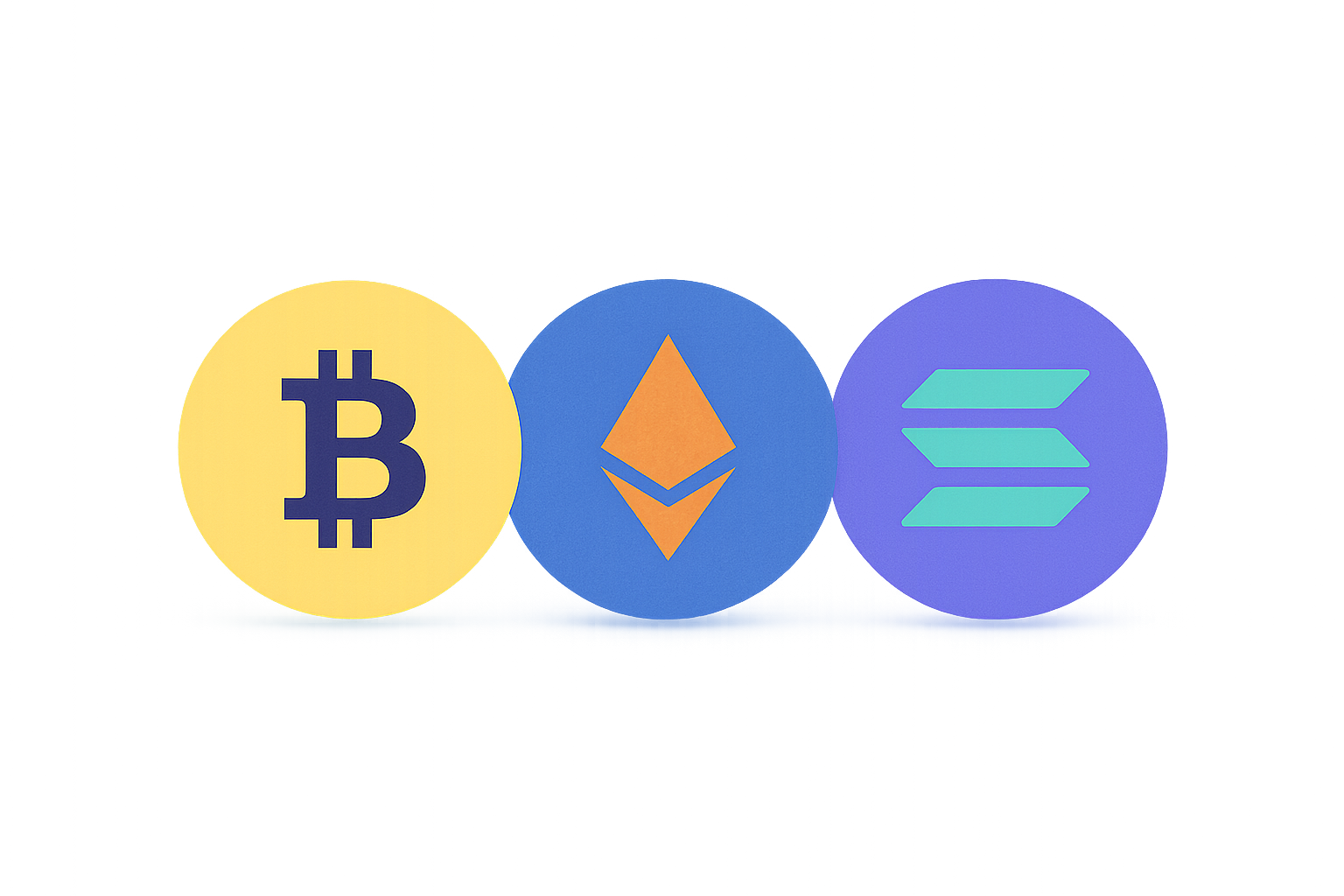
In the cryptocurrency ecosystem, a coin represents a digital asset that is native to its own blockchain. Unlike tokens, coins are not built on top of another blockchain but are integral to the blockchain itself. For example, Bitcoin is the native cryptocurrency of the Bitcoin blockchain, Ether is native to Ethereum, and Solana (SOL) is the native asset of the Solana blockchain.
Coins serve as the fundamental unit of value within their respective networks, functioning as both a medium of exchange and a means to incentivize network participants. They are created through the blockchain's consensus mechanism and are essential for the network's operation and security.
How Do Coins Work?
Coins are generated through various mechanisms depending on the blockchain architecture. Two widely adopted models for coin creation are the UTXO (Unspent Transaction Output) model and the Account model, each offering distinct approaches to transaction management and balance tracking.
UTXO Model
Cryptocurrencies like Bitcoin and Litecoin utilize the UTXO model for transaction processing. In this model, UTXOs are created whenever a transaction occurs. Miners generate transactions when they successfully mine a block, receiving compensation for their work in maintaining and updating the blockchain.
Each UTXO contains information about its value and can only be used once as an input in a new transaction. This mechanism serves as a critical safeguard against double-spending on the blockchain. When you spend cryptocurrency using the UTXO model, you're essentially consuming existing UTXOs and creating new ones, similar to breaking a large bill into smaller denominations.
Account Model
Cryptocurrencies such as Ethereum and BNB Chain employ the account model. In this system, accounts maintain a balance that increases or decreases with each transaction. When you send a transaction, the blockchain directly adjusts the account balances of both the sender and receiver.
This model is more intuitive for users familiar with traditional banking systems, as it maintains a running balance rather than tracking individual transaction outputs. The account model also facilitates more complex smart contract interactions and is generally more efficient for applications requiring frequent state changes.
What Are Coins Used For?
Coins serve multiple critical functions within blockchain ecosystems. When a new block is created, the node that mines or proposes the block receives coins as compensation for maintaining this distributed database. This reward system, known as block rewards or coinbase transactions, incentivizes network participants to secure the blockchain.
Another essential use of coins is paying for gas and transaction fees. Users pay both transaction fees and gas fees in the native coin of the blockchain they're using. For instance, Ethereum users pay gas fees in ETH, while Solana users pay in SOL. These fees compensate validators and miners for processing transactions and executing smart contracts, ensuring the network remains sustainable and secure.
Additionally, coins often serve as a store of value and medium of exchange, allowing users to transfer value globally without intermediaries. Some coins also enable staking, where holders can lock their coins to participate in network consensus and earn rewards.
Popular Coins
-
Bitcoin (BTC): The first cryptocurrency, originally designed as a medium of exchange. Over time, Bitcoin has evolved into a store of value, often referred to as "digital gold." Its limited supply of 21 million coins and decentralized nature make it attractive for long-term value preservation.
-
Ethereum (ETH): The native cryptocurrency of the Ethereum blockchain. ETH functions as gas for the Ethereum Virtual Machine, enabling developers to build complex decentralized applications. Following the transition to Proof of Stake, ETH also serves as a staking asset for network validators.
-
Solana (SOL): The native coin of the Solana network, known for its high transaction throughput and low fees. SOL is used to pay for gas and transaction fees on the network and can be staked to secure the blockchain.
-
Avalanche (AVAX): The native cryptocurrency of Avalanche, a Layer 0 protocol that enables the creation of custom blockchain networks. AVAX is used for transaction fees, staking, and governance within the Avalanche ecosystem.
-
Cosmos (ATOM): The native coin of Cosmos, a blockchain designed to enable inter-blockchain communication. ATOM is used for staking and governance, helping secure the Cosmos Hub and its connected chains.
What Is a Token?
Tokens represent a different approach to creating digital assets in the cryptocurrency space. Unlike coins, developers do not build tokens directly into a blockchain. Instead, they create tokens using smart contracts on existing blockchains. The characteristics and management of tokens are entirely determined by the developers who create them.
The most widely used token standard is ERC-20 for the Ethereum ecosystem and EVM-compatible chains. Other notable standards include BEP-20 for BNB Chain, SPL for Solana, and BRC-20 for Bitcoin. These standards ensure interoperability and compatibility across different applications and wallets.
Tokens are not limited to cryptocurrency applications. In the real world, property deeds, car ownership documents, and stock certificates can all be considered forms of tokens—representations of ownership or rights that can be transferred between parties.
How Do Tokens Work?
Founders typically create tokens with specific purposes in mind, tailoring them to fit the decentralized applications or ecosystems they're designed to serve. The flexibility of tokens allows developers to customize functionality without building an entirely new blockchain.
For ERC-20 tokens, the token logic exists within a smart contract. Ethereum addresses don't actually hold tokens in the traditional sense. Rather, the smart contract functions like an accountant's ledger, recording the balance of each address that owns tokens. When you transfer tokens, the smart contract updates these balances accordingly.
This architecture provides several advantages: tokens can be created quickly without the complexity of launching a new blockchain, they benefit from the security of established networks, and they can easily interact with other tokens and applications on the same blockchain. However, tokens are dependent on their underlying blockchain's performance and security.
Token Use Cases
Tokens serve diverse purposes across the cryptocurrency ecosystem:
-
Governance: Governance tokens grant holders decision-making power over protocols or applications. Token holders can vote on proposals, parameter changes, and the future direction of projects. This creates decentralized governance structures where communities collectively manage protocols.
-
Utility: Utility tokens provide holders with access to specific products or services within an ecosystem. They function as a form of digital access key, enabling users to interact with decentralized applications, pay for services, or unlock premium features.
-
Medium of Exchange: Some tokens serve as units to measure the value of goods and services, allowing parties to buy and sell within specific ecosystems. These tokens facilitate commerce within their respective platforms or communities.
-
Investment: Many tokens function as investment vehicles, though they may not generate income, interest, rent, or dividends like traditional securities. Investors acquire these tokens speculating on future value appreciation or ecosystem growth.
Popular Tokens
-
Chainlink (LINK): A blockchain-agnostic oracle service that provides real-world data to smart contracts. Chainlink enables smart contracts to interact with external data sources, APIs, and payment systems, making it essential infrastructure for DeFi applications.
-
The Graph (GRT): Often called the "Google of Web3," The Graph is a protocol for indexing and querying blockchain data. It allows developers to build efficient decentralized applications by providing organized access to blockchain information.
-
Render (RNDR): A project enabling users to trade GPU computing power in a decentralized marketplace. Render connects users who need rendering services with those who have spare GPU capacity, creating an efficient distributed rendering network.
-
Uniswap (UNI): The governance token of Uniswap, the most popular decentralized exchange on Ethereum. UNI grants holders governance rights over the protocol, allowing them to vote on fee structures, supported assets, and protocol upgrades.
-
Gala (GALA): A blockchain-based gaming platform where players can own, develop, and trade in-game assets as cryptocurrencies. Gala represents the growing intersection of gaming and blockchain technology, enabling true digital ownership of gaming assets.
Coin vs Token vs Traditional Finance
Traditional finance systems feature various forms of money due to their inherent complexity and the different roles money plays in the economy. However, these systems are largely centralized, with governments and central banks controlling monetary policy and currency issuance.
In contrast, coins built on blockchains exist on decentralized ledgers maintained by global communities. Blockchain technology allows anyone to participate in updating the ledger, but no single entity can exclude others from transacting or participating. This creates a more open and accessible financial system.
Traditional financial systems rely on trusted intermediaries like banks and payment processors to verify transactions and maintain account balances. Blockchain-based coins and tokens eliminate these intermediaries through cryptographic verification and distributed consensus, reducing costs and increasing transaction speed while maintaining security.
However, traditional finance offers certain advantages such as regulatory protection, fraud recovery mechanisms, and established legal frameworks. The cryptocurrency space is evolving to bridge these gaps while maintaining the benefits of decentralization.
What Are Stablecoins?
Despite their name, stablecoins are primarily tokens rather than coins. Developers create stablecoins on established blockchains to leverage existing infrastructure and security.
Mature blockchains already possess substantial ecosystems and infrastructure that enable users to comfortably use stablecoins. These include wallet support, exchange listings, and integration with decentralized applications. By building on proven networks, stablecoin issuers can focus on maintaining price stability rather than developing blockchain infrastructure.
Stablecoins aim to maintain a stable value, typically pegged to fiat currencies like the US dollar. They achieve this through various mechanisms including fiat collateralization, cryptocurrency over-collateralization, or algorithmic supply adjustments. This stability makes them useful for everyday transactions, as a store of value during market volatility, and as a bridge between traditional finance and cryptocurrency markets.
Understanding the Risks of Coins and Tokens
While coins and tokens may appear similar, they have significant differences that users should understand for safe trading. Coins generally benefit from the security and stability of their native blockchains, but they're also subject to network-specific risks such as consensus failures or protocol vulnerabilities.
Tokens carry additional risks beyond those of their underlying blockchains. Smart contract vulnerabilities can lead to token theft or loss, even if the underlying blockchain remains secure. Additionally, tokens depend on their projects' success and the continued operation of their smart contracts.
Both coins and tokens face market risks including price volatility, liquidity concerns, and regulatory uncertainty. Different jurisdictions may classify coins and tokens differently for regulatory purposes, affecting their legal status and tax treatment.
By staying informed about these distinctions and risks, investors and users can navigate the cryptocurrency space more safely and effectively. Understanding whether you're dealing with a coin or token helps assess the appropriate risk profile and security considerations for your activities.
FAQ
What is the basic difference between Coin and Token?
Coins are independent cryptocurrencies with their own blockchain, like Bitcoin. Tokens are digital assets built on existing blockchains, such as Ethereum, serving specific functions within their ecosystems.
Is Bitcoin a Coin or Token? What about Ethereum?
Bitcoin is a coin with its own blockchain. Ethereum is also a coin. Tokens are built on existing blockchains like Ethereum, such as ERC-20 tokens.
What are the technical differences between Token and Coin?
Coins operate on their own independent blockchain, while tokens are built on existing blockchains like Ethereum. Coins require their own network consensus mechanism, whereas tokens leverage the host blockchain's infrastructure and security.
How should I distinguish whether a crypto asset is a Coin or a Token?
The key difference lies in blockchain ownership. Coins have their own independent blockchains, like Bitcoin(BTC). Tokens operate on existing blockchains, such as tokens on Ethereum. Check if the asset runs its own chain or depends on another blockchain to determine its classification.
Do Coins and Tokens have differences in investment value?
Yes. Coins represent independent cryptocurrencies with standalone networks, typically offering direct utility and stronger market liquidity. Tokens exist on existing blockchains and derive value from their underlying projects and ecosystems. Generally, coins tend to show stronger price stability and wider adoption.
What are Utility Token and Security Token? Do they belong to Token?
Utility Token grants access to platform services and functions, while Security Token represents traditional securities ownership. Both are Token types but serve different purposes in blockchain ecosystems.
Why do some projects choose to issue tokens rather than create their own coins?
Projects prefer issuing tokens because they require lower development costs and technical barriers compared to creating independent blockchains. Tokens leverage existing blockchain infrastructure, enabling faster deployment, greater flexibility for feature expansion, and easier integration with decentralized ecosystems.
What is a Stablecoin, a Coin or a Token?
Stablecoins are tokens issued on existing blockchains like ERC-20. They maintain stable value by pegging to fiat currencies or other assets, rather than operating as independent blockchain networks like coins do.
Coin和Token在钱包存储上有区别吗?
有区别。Coin作为独立区块链的原生资产,需要该区块链的专用钱包存储;Token运行在现有区块链上(如以太坊),可用支持该区块链的通用钱包存储。两者的存储方式取决于其技术基础的差异。
What will be the future development trends of Coin and Token?
Future Coins and Tokens will be driven by AI tokens, real-world asset tokenization, and Layer 2 solutions. DePIN and modular blockchains will become key development directions, focusing on technological innovation and practical applications.
Share
Content
How to Buy Cryptocurrency


Trending Cryptocurrencies



XZXX: A Comprehensive Guide to the BRC-20 Meme Token in 2025

Survey Note: Detailed Analysis of the Best AI in 2025
Detailed Analysis of the Best 10 GameFi Projects to Play and Earn in 2025

Kaspa’s Journey: From BlockDAG Innovation to Market Buzz
Best Crypto Wallets 2025: How to Choose and Secure Your Digital Assets

Popular GameFi Games in 2025
Best Crypto Trading Bots for Automated Trading
Top 5 Tokens Recommended for DeFi Investment
What is Crypto? How to Explain Cryptocurrency to a Child
What Is a Crypto Scam? Common Fraud Schemes and How to Protect Yourself

How do derivatives market signals like funding rates and open interest predict crypto price movements in 2026?