DCB vs ATOM: A Comprehensive Comparison of Two Leading Blockchain Token Standards


Introduction: Investment Comparison Between DCB and ATOM
In the cryptocurrency market, the comparison between DCB vs ATOM has consistently been a topic investors cannot bypass. The two not only differ significantly in market capitalization ranking, application scenarios, and price performance, but also represent distinct positioning within the crypto asset landscape.
DCB (Decubate): Launched in 2021, it has gained market recognition by positioning itself as an all-in-one platform for Web3 success, offering cutting-edge DeFi solutions and empowering innovators within the decentralized economy.
ATOM (Cosmos): Since its launch in 2019, it has been recognized as a foundational infrastructure for blockchain interoperability, serving as one of the pioneering solutions for cross-chain communication through its Tendermint consensus and IBC protocol.
This article will comprehensively analyze the investment value comparison of DCB vs ATOM from the perspectives of historical price trends, supply mechanisms, institutional adoption, technical ecosystems, and future forecasts, attempting to answer the question investors care about most:
"Which is the better buy right now?"
I. Historical Price Comparison and Current Market Status
DCB and ATOM Historical Price Trends
- 2024: DCB reached a peak price of $0.19998 in March 2024, marking a significant high point during a period of elevated market activity. The token subsequently experienced substantial downward pressure.
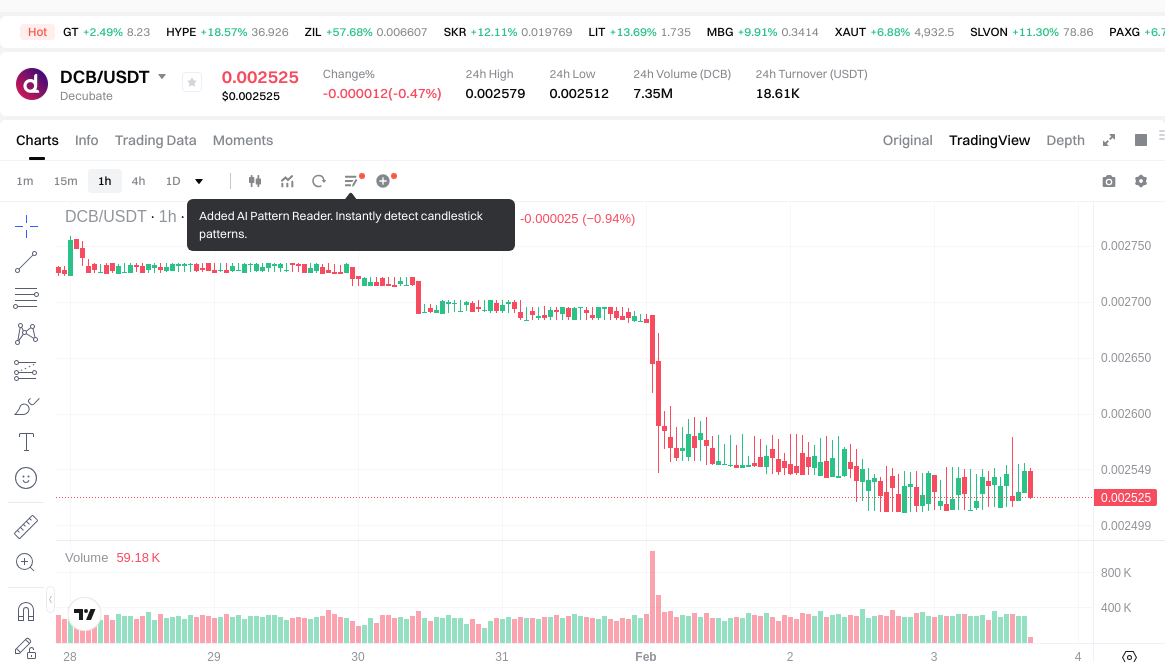
- 2025: DCB hit its historical low of $0.002467 in November 2025, reflecting prolonged bearish sentiment and reduced trading interest across lower-cap assets.
- 2022: ATOM achieved its historical high of $44.45 in January 2022, driven by growing adoption of the Cosmos ecosystem and increased investor attention to interoperability solutions.
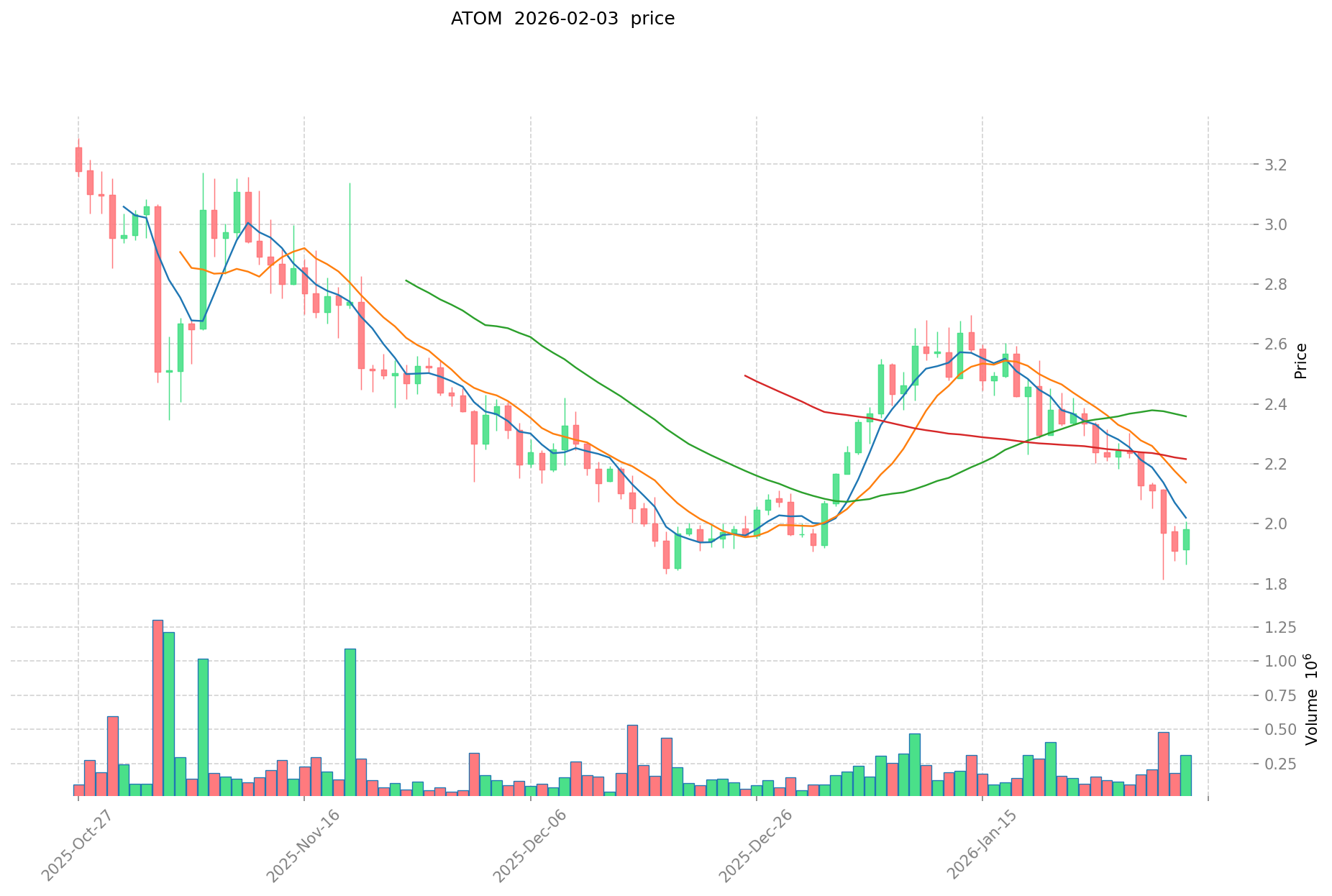
- 2020: ATOM recorded its historical low of $1.16 in March 2020, coinciding with broader market volatility during the early stages of the global pandemic.
- Comparative Analysis: During the market cycle from early 2024 to late 2025, DCB declined from its peak of $0.19998 to a low of $0.002467, representing a drop of approximately 98.8%. In contrast, ATOM experienced a decline from $44.45 to $1.16 over a longer timeframe, showing greater resilience relative to its initial valuation.
Current Market Conditions (February 3, 2026)
- DCB Current Price: $0.00255
- ATOM Current Price: $1.999
- 24-Hour Trading Volume: DCB recorded $18,607.04, while ATOM showed significantly higher liquidity with $240,584.49 in trading volume.
- Market Sentiment Index (Fear & Greed Index): 17 (Extreme Fear)
View real-time prices:
- Check DCB current price Market Price
- Check ATOM current price Market Price
II. Core Factors Influencing DCB vs ATOM Investment Value
Supply Mechanism Comparison (Tokenomics)
- DCB: Based on available information, DCB operates within the cryptocurrency ecosystem with value determined by market demand, scarcity, and utility factors. Specific supply mechanism details require further technical documentation review.
- ATOM: As the native token of the Cosmos network, ATOM features a dynamic supply model with staking rewards and inflationary mechanisms designed to incentivize network security and participation.
- 📌 Historical Pattern: Supply mechanisms have historically influenced price cycles through scarcity dynamics and token emission schedules, though specific historical data for DCB and ATOM comparison was not provided in the reference materials.
Institutional Adoption and Market Applications
- Institutional Holdings: Reference materials indicate strong investor interest in AI-driven solutions and biotechnology sectors, with successful funding rounds demonstrating institutional confidence. However, specific institutional holdings data for DCB and ATOM was not available in the provided materials.
- Enterprise Adoption: Application scenarios in cross-border payments, settlements, and investment portfolios require evaluation based on each token's technical infrastructure and ecosystem partnerships.
- National Policies: Regulatory attitudes vary across jurisdictions, with different countries maintaining distinct approaches to cryptocurrency oversight and adoption frameworks.
Technical Development and Ecosystem Building
- DCB Technical Development: The reference materials mention DCB in context of AI-driven pharmaceutical development, specifically noting collaboration with professionals in accelerating AI drug development processes.
- ATOM Technical Development: ATOM serves as the hub token for the Cosmos ecosystem, facilitating interoperability between independent blockchains through the Inter-Blockchain Communication (IBC) protocol.
- Ecosystem Comparison: Both tokens operate within distinct ecosystems - evaluation of DeFi integration, NFT platforms, payment solutions, and smart contract deployment requires analysis of each network's specific capabilities and adoption metrics.
Macroeconomic Factors and Market Cycles
- Performance in Inflationary Environments: Cryptocurrency assets generally exhibit varying responses to inflationary pressures based on their utility, adoption rates, and market positioning. Specific comparative performance data was not available in the reference materials.
- Macroeconomic Monetary Policy: Interest rate adjustments, US dollar index movements, and central bank policies influence cryptocurrency markets broadly, affecting both DCB and ATOM through liquidity conditions and risk appetite shifts.
- Geopolitical Factors: Cross-border transaction demands and international developments impact cryptocurrency adoption patterns, though specific regional effects on DCB and ATOM require market-specific analysis.
III. 2026-2031 Price Forecast: DCB vs ATOM
Short-term Forecast (2026)
- DCB: Conservative $0.00194425 - $0.002525 | Optimistic $0.002525 - $0.00340875
- ATOM: Conservative $1.86093 - $2.001 | Optimistic $2.001 - $2.10105
Medium-term Forecast (2028-2029)
- DCB may enter a gradual growth phase, with estimated price range of $0.00193425415625 - $0.005223469740937
- ATOM may enter a moderate expansion phase, with estimated price range of $1.430948866875 - $3.419725258125
- Key drivers: institutional capital inflows, ETF developments, ecosystem expansion
Long-term Forecast (2030-2031)
- DCB: Baseline scenario $0.002455216007664 - $0.004999712597425 | Optimistic scenario $0.005535396090006 - $0.006349634998729
- ATOM: Baseline scenario $1.724293384584375 - $3.054045062526562 | Optimistic scenario $3.185558964740625 - $3.145666414402359
Disclaimer
DCB:
| Year | Predicted High Price | Predicted Average Price | Predicted Low Price | Price Change |
|---|---|---|---|---|
| 2026 | 0.00340875 | 0.002525 | 0.00194425 | 0 |
| 2027 | 0.00358991875 | 0.002966875 | 0.00166145 | 16 |
| 2028 | 0.0041307800625 | 0.003278396875 | 0.00193425415625 | 28 |
| 2029 | 0.005223469740937 | 0.00370458846875 | 0.003074808429062 | 45 |
| 2030 | 0.005535396090006 | 0.004464029104843 | 0.002455216007664 | 75 |
| 2031 | 0.006349634998729 | 0.004999712597425 | 0.003599793070146 | 96 |
ATOM:
| Year | Predicted High Price | Predicted Average Price | Predicted Low Price | Price Change |
|---|---|---|---|---|
| 2026 | 2.10105 | 2.001 | 1.86093 | 0 |
| 2027 | 2.46123 | 2.051025 | 1.62030975 | 2 |
| 2028 | 2.594546625 | 2.2561275 | 2.188443675 | 12 |
| 2029 | 3.419725258125 | 2.4253370625 | 1.430948866875 | 21 |
| 2030 | 3.185558964740625 | 2.9225311603125 | 1.724293384584375 | 46 |
| 2031 | 3.145666414402359 | 3.054045062526562 | 1.985129290642265 | 52 |
IV. Investment Strategy Comparison: DCB vs ATOM
Long-term vs Short-term Investment Strategies
-
DCB: May suit investors focused on early-stage Web3 infrastructure opportunities and higher risk tolerance for emerging DeFi platforms. The token's positioning within decentralized economy solutions suggests potential alignment with investors seeking exposure to evolving Web3 ecosystems.
-
ATOM: May appeal to investors prioritizing established blockchain interoperability infrastructure and cross-chain communication protocols. The token's role within the Cosmos network positions it for consideration by those evaluating foundational layer infrastructure investments.
Risk Management and Asset Allocation
-
Conservative Investors: DCB 10-20% vs ATOM 80-90% - allocation weighted toward established infrastructure with demonstrated ecosystem development
-
Aggressive Investors: DCB 40-50% vs ATOM 50-60% - balanced exposure allowing participation in both emerging platforms and established networks
-
Hedging Tools: Stablecoin allocation for liquidity management, options strategies for downside protection, cross-asset portfolio diversification across multiple blockchain ecosystems
V. Potential Risk Comparison
Market Risks
-
DCB: Lower liquidity evidenced by 24-hour trading volume of $18,607.04 may result in increased price volatility and potential execution challenges during market stress periods. The token experienced significant drawdown of approximately 98.8% from peak to trough during 2024-2025.
-
ATOM: Demonstrated 24-hour trading volume of $240,584.49 indicates relatively higher liquidity compared to DCB. Historical price movements show substantial range between $1.16 and $44.45, reflecting sensitivity to broader market cycles and ecosystem adoption trends.
Technical Risks
-
DCB: Network scalability and platform stability considerations require evaluation based on infrastructure development progress. Ecosystem maturity and adoption metrics represent key technical risk factors.
-
ATOM: Interoperability protocol dependencies and cross-chain security considerations form primary technical risk areas. Network validator distribution and consensus mechanism resilience require ongoing monitoring.
Regulatory Risks
- Global regulatory frameworks continue evolving across jurisdictions, with varying approaches to cryptocurrency classification and oversight. Both DCB and ATOM face regulatory uncertainty dependent on their specific use cases, token economics, and jurisdictional operations. Cross-border transaction capabilities and decentralized governance structures may attract different regulatory scrutiny levels across markets.
VI. Conclusion: Which Is the Better Buy?
📌 Investment Value Summary:
-
DCB Characteristics: Positioning within Web3 infrastructure and DeFi solutions space; current price of $0.00255 represents significant distance from 2024 peak levels; forecast models suggest potential baseline range of $0.002455 - $0.006350 through 2031.
-
ATOM Characteristics: Established role in blockchain interoperability through Cosmos ecosystem; current price of $1.999 with higher trading liquidity; forecast models indicate potential baseline range of $1.724 - $3.145 through 2031; longer operational history since 2019.
✅ Investment Considerations:
-
New Investors: Consider starting with established infrastructure tokens demonstrating higher liquidity and longer operational track records. Prioritize understanding fundamental technology and ecosystem development before allocation decisions.
-
Experienced Investors: Evaluate portfolio diversification through allocation across different infrastructure layers and maturity stages. Consider technical fundamentals, ecosystem growth metrics, and risk-adjusted return profiles when determining position sizing.
-
Institutional Investors: Conduct comprehensive due diligence on governance structures, custody solutions, regulatory compliance frameworks, and liquidity provisions. Assess alignment with investment mandates and risk management requirements.
⚠️ Risk Disclosure: Cryptocurrency markets exhibit extreme volatility. Historical performance does not indicate future results. This content does not constitute investment advice. Conduct independent research and consult qualified financial advisors before making investment decisions.
VII. FAQ
Q1: What is the primary difference between DCB and ATOM in terms of their core value proposition?
DCB positions itself as a Web3 infrastructure platform focused on DeFi solutions and supporting decentralized economy innovators, while ATOM serves as the foundational token for blockchain interoperability through the Cosmos ecosystem. DCB launched in 2021 targeting emerging Web3 applications, whereas ATOM has operated since 2019 as established cross-chain communication infrastructure utilizing the IBC protocol and Tendermint consensus mechanism.
Q2: How do the current trading volumes of DCB and ATOM reflect their market liquidity?
DCB demonstrates significantly lower liquidity with 24-hour trading volume of $18,607.04, while ATOM shows substantially higher market activity at $240,584.49 in daily volume. This difference indicates ATOM provides easier entry and exit opportunities with reduced slippage risk, whereas DCB's lower liquidity may result in increased price volatility and potential execution challenges during periods of market stress or large order placement.
Q3: What are the recommended portfolio allocation strategies for DCB vs ATOM based on investor risk profiles?
Conservative investors should consider a 10-20% DCB allocation versus 80-90% ATOM weighting, prioritizing established infrastructure with demonstrated ecosystem development. Aggressive investors may pursue a more balanced 40-50% DCB versus 50-60% ATOM allocation, allowing participation in both emerging platforms and established networks. These allocations should be complemented with stablecoin reserves for liquidity management and cross-asset diversification across multiple blockchain ecosystems.
Q4: How have DCB and ATOM performed during historical market downturns?
DCB experienced a severe drawdown of approximately 98.8% from its March 2024 peak of $0.19998 to its November 2025 low of $0.002467, reflecting significant vulnerability during bearish market conditions. ATOM demonstrated greater relative resilience over its longer operational history, declining from $44.45 in January 2022 to $1.16 in March 2020, though this still represents substantial volatility. The difference suggests ATOM's established ecosystem and higher liquidity may provide better downside protection during market stress periods.
Q5: What are the key technical risk factors investors should monitor for DCB and ATOM?
For DCB, primary technical risks include network scalability capabilities, platform stability during high-usage periods, and ecosystem maturity relative to competing DeFi solutions. For ATOM, critical technical considerations involve interoperability protocol security across connected blockchains, validator network distribution to prevent centralization risks, and consensus mechanism resilience under various network conditions. Both tokens require ongoing monitoring of development progress, upgrade implementations, and security audit outcomes.
Q6: How do the price forecast models differ between DCB and ATOM through 2031?
DCB's baseline scenario projects a range from $0.002455 to $0.006350 by 2031, representing potential growth from current levels of $0.00255, with optimistic scenarios reaching $0.006350. ATOM's baseline forecast indicates a range from $1.724 to $3.145 by 2031 from its current price of $1.999, with optimistic projections reaching $3.146. Both forecast models suggest moderate growth potential, though DCB shows higher percentage growth potential from current levels while ATOM demonstrates more absolute price appreciation potential given its higher base valuation.
Q7: What regulatory risks should investors consider when comparing DCB and ATOM?
Both tokens face evolving global regulatory frameworks with varying approaches across jurisdictions regarding cryptocurrency classification and oversight. DCB's positioning in Web3 infrastructure and DeFi solutions may attract scrutiny related to securities regulations and decentralized finance compliance requirements. ATOM's role in cross-chain interoperability and its facilitation of value transfer across multiple blockchain networks may face regulatory examination regarding cross-border transaction monitoring and decentralized governance structures. Investors should monitor regulatory developments in key markets where they operate and maintain awareness of compliance requirements affecting token utility and trading access.
Q8: Which token is more suitable for institutional investment portfolios?
ATOM generally presents characteristics more aligned with institutional investment requirements, including higher trading liquidity ($240,584.49 daily volume), longer operational track record since 2019, and established role within a mature ecosystem. The token's interoperability infrastructure positioning and demonstrated resilience through market cycles may better satisfy institutional due diligence standards. DCB's lower liquidity and earlier development stage may present challenges for institutional allocations requiring significant position sizes and established custody solutions, though it could serve specialized venture-stage blockchain infrastructure allocations for institutions with appropriate risk tolerance and longer investment horizons.
Share
Content
Introduction: Investment Comparison Between DCB and ATOM
I. Historical Price Comparison and Current Market Status
II. Core Factors Influencing DCB vs ATOM Investment Value
III. 2026-2031 Price Forecast: DCB vs ATOM
IV. Investment Strategy Comparison: DCB vs ATOM
V. Potential Risk Comparison
VI. Conclusion: Which Is the Better Buy?
VII. FAQ
How to Buy Cryptocurrency


Trending Cryptocurrencies



2025 SUI coin: price, buying guide, and Staking rewards

How to Buy Crypto: A Step-by-Step Guide with Gate.com

HNT Price in 2025: Helium Network Token Value and Market Analysis

What is SwissCheese (SWCH) and How Does It Democratize Investment?
Cardano (ADA) Price Analysis and Outlook for 2025

How to Invest in Metaverse Crypto

Comprehensive Guide to SAFU: Secure Asset Fund for Users
Everything About the Ripple vs SEC Lawsuit
Games You Can Earn From – TOP 11 Games
Uncovering the Identity of Bitcoin's Creator, Satoshi Nakamoto

What is an Automated Market Maker and How Does It Work