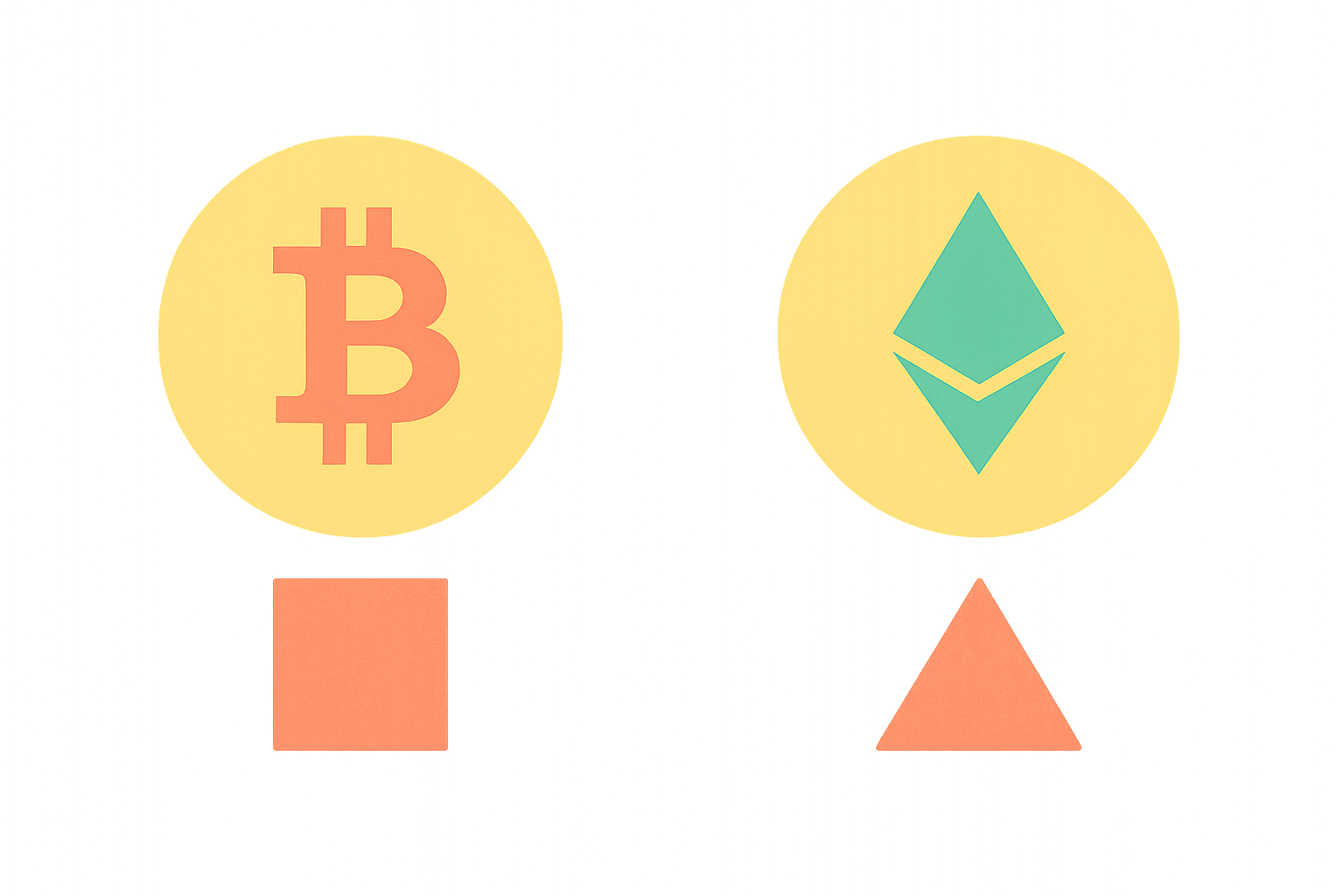
POW (Proof of Work) serves as a fundamental consensus algorithm in blockchain systems. This comprehensive guide explains the mining process, outlines the benefits and drawbacks, and compares POW to PoS in an accessible manner. Major cryptocurrencies like Bitcoin utilize POW. An essential resource for those new to the field.
What Is PoW (Proof of Work)?
PoW (Proof of Work) is a consensus algorithm used by blockchain networks and represents the earliest mechanism adopted in cryptocurrency. In PoW systems, miners compete using significant computational power to solve complex mathematical problems, adding new blocks to the blockchain. This process, known as "mining," rewards the fastest miner with the right to create the next block and earn cryptocurrency.
This competitive approach secures the network against fraud and attacks, ensuring that all transactions are reliably approved and the blockchain maintains high trustworthiness. PoW is the backbone of many major cryptocurrencies, including Bitcoin, and is vital for the security of decentralized networks.
Advantages of PoW
-
Enhanced Security: PoW demands intensive computation, making network attacks require extraordinary resources. This significantly raises the barrier for attackers to compromise the blockchain, resulting in much greater overall security. Large networks further increase these costs, making attacks virtually impossible.
-
Promotes Decentralization: PoW enables miners around the world to compete to generate blocks, naturally advancing network decentralization. This prevents any single entity or group from accumulating excessive power, helping realize a truly distributed network. Consequently, there is no single point of failure, and system resilience improves.
-
Transparency: Every blockchain transaction is recorded on a public ledger, accessible for verification by anyone. This high transparency makes it possible to detect fraudulent activity or tampering immediately. Ongoing mutual oversight among network participants safeguards the system's integrity.
Disadvantages of PoW
-
High Energy Consumption: PoW's demand for massive computational power results in significant electricity usage. Large mining operations can consume as much energy as a small city, raising environmental concerns. Addressing this challenge requires sustainable practices, such as renewable energy adoption.
-
Slower Transaction Speeds: Because block generation takes time, PoW blockchains tend to process transactions more slowly. For example, Bitcoin requires roughly 10 minutes to create a block, which can be inconvenient for instant settlements.
-
51% Attack Risk: Theoretically, if a malicious actor controls more than half of the network's computational power, they could alter the blockchain. While major networks make this prohibitively expensive, smaller networks remain at risk for such attacks.
What Is PoS (Proof of Stake)?
PoS (Proof of Stake) is a newer consensus algorithm attracting attention as an alternative to PoW. In PoS, nodes earn the right to generate blocks based on the amount of cryptocurrency they hold and stake. Participants with larger token holdings and greater stakes have higher chances to create new blocks.
Unlike PoW, PoS does not require vast computational resources. Block creation rights are allocated according to staked token amounts, and staking participants help secure the network in exchange for rewards. Recently, many blockchain projects have shifted from PoW to PoS for better energy efficiency and environmental sustainability—Ethereum is a prime example.
Advantages of PoS
-
Superior Energy Efficiency: PoS eliminates competition based on computational power, awarding block generation rights through staking. This drastically reduces electricity consumption compared to PoW, enabling sustainable and eco-friendly blockchain networks—an especially important benefit in the context of climate action.
-
Lower Centralization Risk: With block generation rights allocated by stake, anyone can theoretically participate, fostering decentralization. PoS does not require costly mining equipment, lowering barriers to entry and allowing more people to run network nodes. This helps prevent power concentration and supports more democratic network governance.
-
Improved Security: In PoS, attackers must stake large sums to compromise the network. Failed attacks may result in loss of staked funds, substantially reducing incentives for malicious activity. This built-in economic penalty bolsters network security.
Disadvantages of PoS
-
Wealth Concentration Risk: PoS selects participants based on stake, meaning individuals or organizations with larger holdings could gain outsized influence. This "rich get richer" dynamic may create unfairness in network governance. Over time, power can concentrate among early large holders, threatening decentralization.
-
Staking Lock Periods: To earn block creation rights, participants must stake tokens, often locking them for a set period. During this time, staked tokens cannot be traded freely, creating liquidity risks. In volatile markets, inability to move assets quickly can be a significant drawback.
-
Blockchain Upgrade Challenges: PoS protocol upgrades require consensus among staked participants. Achieving agreement among many participants can be slow and difficult, risking delays and hindering upgrades. This may slow technical progress and erode competitiveness.
Key Differences Between PoS and PoW
Difference 1: Mining Costs
PoW mining demands immense computational power and electricity. Miners use high-performance computers and ASICs (application-specific integrated circuits) to solve complex math problems and receive block rewards. Mining requires significant upfront investment in hardware and ongoing electricity costs, long viewed as an environmental issue. Large mining facilities also consume substantial power for cooling and operations.
PoS, on the other hand, does not require computing power for mining. Participants stake their cryptocurrency and receive rewards proportional to their holdings. No expensive hardware or high electricity usage is needed, lowering the entry barrier so even standard computers can participate. PoS is considered environmentally friendly. Ethereum's transition from PoW to PoS cut its power consumption by about 99.95%—a breakthrough for blockchain sustainability.
Difference 2: Centralization Risk
PoW can lead to the formation of large mining pools. These pools, with significant computational power, can dominate network operations. If a few major pools control most of the power, the risk of a 51% attack increases, undermining decentralization. In some cryptocurrencies, a handful of pools hold a majority of network power.
PoS allocates block generation rights by stake, theoretically decreasing centralization risk. While large holders can still exert influence, PoS lowers the barrier to entry by eliminating equipment requirements, enabling broader participation and further decentralization.
Difference 3: Scalability
PoW block generation relies on high computational power, which is physically limited and restricts scalability. For example, Bitcoin can process only about seven transactions per second, so congestion drives up fees and slows transactions. These limitations stem from PoW's block size and timing constraints.
PoS processing capacity does not depend on node stake amounts. Staking allows more participants to operate network nodes. Many scalability solutions, such as sharding and layer-2 protocols, are built around PoS, enabling major throughput improvements. Ethereum 2.0, for example, expects to process tens of thousands of transactions per second after its PoS transition and sharding implementation.
Major Cryptocurrencies Using PoS and PoW
Cryptocurrencies Using PoW
Bitcoin
Bitcoin, launched in 2009 by Satoshi Nakamoto, is the world's first cryptocurrency and the pioneer of blockchain technology. It uses the PoW consensus algorithm and remains the most widely recognized and used cryptocurrency worldwide. Bitcoin is decentralized, with no central authority. Miners across the globe secure the network, and its robust security and reliability have earned it the reputation of "digital gold." It continues to lead the market by capitalization and draws intense interest from institutional and retail investors alike.
Litecoin
Litecoin, developed as a Bitcoin derivative, targets faster transaction processing. It uses PoW with the Scrypt algorithm, unlike Bitcoin's SHA-256. Litecoin's block generation time is only 2.5 minutes—much shorter than Bitcoin's 10 minutes—enabling quicker transaction confirmations. Its total supply is four times larger than Bitcoin's, making it suitable for everyday payments. Known by the phrase "If Bitcoin is gold, Litecoin is silver," it remains a major cryptocurrency.
Monacoin
Monacoin is a Japanese cryptocurrency inspired by the "Monā" character from the internet forum "2channel." It uses PoW, and new MONA coins are issued through mining. Monacoin adopts the SHA-256 hash function like Bitcoin, but generates blocks every 1.5 minutes for faster transactions. In Japan, some merchants and online services accept Monacoin payments, and its community-driven culture sets it apart.
Cryptocurrencies Using PoS
Ethereum
Ethereum is a groundbreaking blockchain platform introduced in 2015. Initially based on PoW, it completed a major upgrade known as "The Merge" in September 2022 to transition to PoS. Ethereum's core innovation is its support for smart contracts—self-executing programs that power decentralized applications (DApps). This has spawned new sectors like DeFi and NFTs. Today, Ethereum is one of the most influential platforms in crypto, with a thriving ecosystem of developers and businesses.
Cardano
Cardano is a third-generation blockchain platform designed from academic research. It uses a proprietary PoS consensus algorithm called "Ouroboros," the first PoS protocol verified in peer-reviewed papers. Ouroboros balances security and scalability, and ADA holders support the network through staking. Cardano follows a phased upgrade strategy to build a sustainable and equitable blockchain ecosystem.
Solana
Solana is a cryptocurrency platform engineered for ultra-fast and low-cost transactions. It is rapidly expanding as a foundation for decentralized apps and DeFi. Solana uniquely combines PoS with "PoH (Proof of History)," which cryptographically verifies transaction order to streamline network synchronization and enable tens of thousands of transactions per second. Its performance has earned Solana the title "Ethereum killer," and many projects are growing within its ecosystem.
FAQ
What Are PoW and PoS? Summarize Their Basic Mechanisms.
PoW (Proof of Work) uses computational power for block generation, with miners competing to solve complex calculations. PoS (Proof of Stake) allocates rights based on asset holdings. PoW is costly and energy-intensive, while PoS is more efficient and lowers entry barriers.
What Are the Main Differences Between PoW and PoS? Compare Their Advantages and Disadvantages.
PoW achieves consensus through mining, consuming substantial electricity but providing strong security. PoS relies on staking, is more environmentally friendly, but risks wealth concentration. PoW is resilient against 51% attacks, while PoS allows for faster block creation.
Why Does PoW Use So Much Power? How Does PoS Achieve Energy Savings?
PoW depends on solving complex computational problems, which consumes massive electricity. PoS uses a random validator selection process, requiring minimal computation and reducing power usage by over 99%.
Which Is More Secure: PoW or PoS? What Are Their Security Strengths and Weaknesses?
PoW offers robust security and is highly resistant to 51% attacks. PoS faces risks from large holders potentially controlling the network. PoW is extremely tamper-resistant, while PoS benefits from lower environmental impact.
Why Did Bitcoin Choose PoW and Ethereum Choose PoS?
Bitcoin adopted PoW to prioritize decentralization and security. Ethereum switched to PoS to drastically reduce energy consumption and boost transaction speeds. These choices reflect different design objectives and technical backgrounds.
How Does PoS Address Wealth Concentration?
PoS mitigates wealth concentration by redistributing rewards and offering staking pools. Setting minimum staking requirements and promoting validator diversity lowers barriers and supports wider participation for true decentralization.
Will the Shift from PoW to PoS Continue?
Yes, the move from PoW to PoS will continue. PoS dramatically lowers energy consumption and enables more sustainable blockchain systems. Successful transitions by leading projects like Ethereum are accelerating this trend.
* The information is not intended to be and does not constitute financial advice or any other recommendation of any sort offered or endorsed by Gate.