This comprehensive analysis compares GOZ and BTC as cryptocurrency investment options, examining their distinct market positioning and performance characteristics. BTC stands as the leading digital asset with over $1.47 trillion market cap and 56.16% market dominance, while GOZ serves as a niche utility token for sports fan engagement with approximately $621,685 market cap. The article evaluates critical investment factors including historical price trends, supply mechanisms, institutional adoption rates, and technological ecosystems. Real-time data and price predictions through 2031 guide investor decision-making across different risk profiles. Detailed investment strategies and risk assessments help readers understand which asset aligns with their portfolio objectives, while addressing liquidity differences, regulatory considerations, and market volatility. This guide on Gate provides essential insights for both beginner and experienced cryptocurrency investors.
Introduction: GOZ vs BTC Investment Comparison
In the cryptocurrency market, the comparison between GOZ vs BTC remains a topic that investors cannot overlook. The two differ significantly in market cap ranking, application scenarios, and price performance, representing distinct positioning within the crypto asset landscape.
GOZ (GOZ): Launched in 2021, it has gained market recognition through its positioning as a blockchain-based fan engagement and rewards platform. As a utility token enabling Göztepe S.K. fans to participate in club decisions and access exclusive rewards, GOZ represents the intersection of sports entertainment and blockchain technology.
BTC (BTC): Since its inception in 2008, it has been regarded as digital gold and remains one of the cryptocurrencies with the highest trading volume and market capitalization globally. With a current market cap exceeding 1.47 trillion USD and a market dominance of 56.16%, BTC continues to serve as the benchmark for the entire crypto market.
This article will comprehensively analyze the investment value comparison between GOZ vs BTC through historical price trends, supply mechanisms, institutional adoption, technical ecosystems, and future predictions, attempting to answer the question that concerns investors most:
"Which is the better buy right now?"
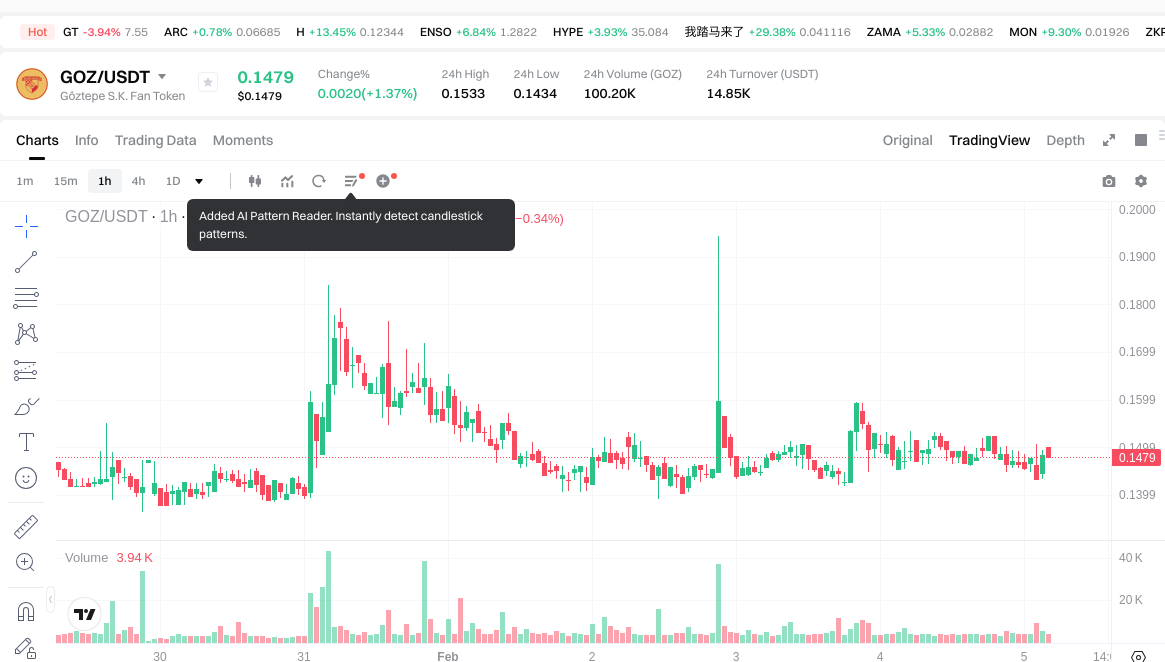
As of February 5, 2026, GOZ is priced at 0.1493 USD with a market cap of approximately 621,685 USD, ranking 2871 globally. In contrast, BTC is priced at 73,873.4 USD with a market cap of approximately 1.476 trillion USD, ranking first. The stark contrast in scale and positioning makes this comparison particularly meaningful for investors seeking to understand different risk-return profiles in the crypto space.
I. Historical Price Comparison and Current Market Status
GOZ (Coin A) and BTC (Coin B) Historical Price Trends
- 2022: GOZ reached a notable price level of $5.93 on March 22, 2022, marking a significant point in its trading history.
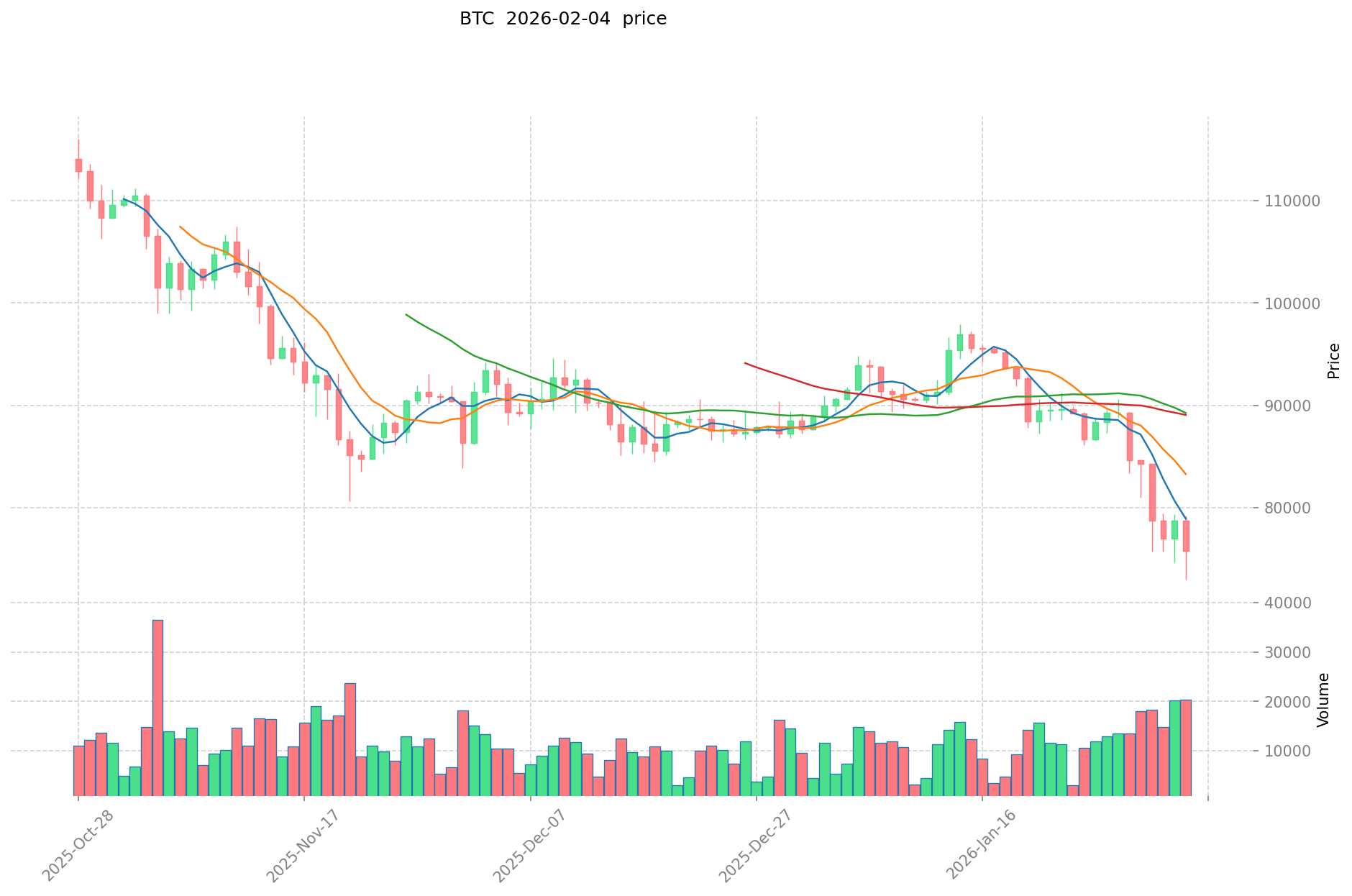
- 2025: BTC experienced substantial price movement, with its all-time high of $126,080 recorded on October 7, 2025, demonstrating strong market performance during this period.
- Comparative Analysis: During the recent market cycle, GOZ declined from its peak of $5.93 to a low of $0.118724 on December 19, 2025, while BTC demonstrated a different trajectory, showing a decline from its all-time high but maintaining a significantly higher absolute price level.
Current Market Situation (2026-02-05)
- GOZ Current Price: $0.1493
- BTC Current Price: $73,873.4
- 24-Hour Trading Volume: GOZ recorded $14,845.49 compared to BTC's $1,426,563,207.15
- Market Sentiment Index (Fear & Greed Index): 14 (Extreme Fear)
View Real-Time Prices:
- Check GOZ Current Price Market Price
- Check BTC Current Price Market Price
II. Core Factors Influencing GOZ vs BTC Investment Value
Supply Mechanism Comparison (Tokenomics)
-
BTC: Bitcoin operates on a fixed supply model with a maximum cap of 21 million coins. Its issuance follows a deflationary mechanism through halving events approximately every four years, reducing block rewards and creating scarcity over time.
-
GOZ: Specific supply mechanism details are not available in the reference materials.
-
📌 Historical Pattern: Bitcoin's halving mechanism has historically influenced price cycles, with supply reduction events often preceding periods of increased market attention and potential price appreciation.
Institutional Adoption and Market Application
-
Institutional Holdings: Bitcoin has gained substantial institutional favor, with investment firms, publicly traded companies, and financial institutions incorporating BTC into their portfolios and balance sheets.
-
Enterprise Adoption: Bitcoin has seen growing application in cross-border payments, settlement systems, and as a treasury reserve asset. Its acceptance by payment processors and integration into traditional financial infrastructure continues to expand.
-
Regulatory Landscape: Regulatory attitudes toward Bitcoin vary globally. Major jurisdictions have developed frameworks ranging from outright prohibition to comprehensive regulation, with some countries exploring Bitcoin as legal tender. The SEC's evaluation of Bitcoin-related investment products reflects ongoing regulatory evolution in developed markets.
Technology Development and Ecosystem Construction
-
BTC Technology Evolution: Bitcoin development focuses on enhancing security, scalability solutions like the Lightning Network for faster transactions, and improvements in energy efficiency. The network prioritizes stability and security over rapid feature expansion.
-
GOZ Technology Development: Information regarding GOZ's technological roadmap is not provided in available materials.
-
Ecosystem Comparison: Bitcoin's ecosystem encompasses layer-2 solutions, cross-chain interoperability projects, and growing integration with DeFi protocols. However, its primary use cases remain centered on value storage and transfer rather than complex smart contract functionality, which differentiates it from platforms with native smart contract capabilities.
Macroeconomic Environment and Market Cycles
-
Performance Under Inflation: Bitcoin has been positioned as a potential inflation hedge due to its fixed supply and decentralized nature. Its correlation with traditional inflation hedges remains an evolving area of market observation.
-
Macroeconomic Policy Impact: Bitcoin's price sensitivity to monetary policy variables including interest rate changes and dollar index movements has been observed in market behavior. Tightening monetary conditions and dollar strength have historically influenced crypto asset valuations.
-
Geopolitical Factors: Cross-border transaction demand, international sanctions environments, and capital flow restrictions in various jurisdictions can influence Bitcoin adoption patterns. Geopolitical uncertainty may drive interest in decentralized assets, though this relationship varies across different scenarios and time periods.
III. 2026-2031 Price Prediction: GOZ vs BTC
Short-term Prediction (2026)
- GOZ: Conservative $0.084-$0.148 | Optimistic $0.148-$0.185
- BTC: Conservative $61,287-$73,840 | Optimistic $73,840-$82,701
Mid-term Prediction (2028-2029)
- GOZ may enter a gradual growth phase, with estimated price range of $0.110-$0.240
- BTC may enter a consolidation and expansion phase, with estimated price range of $70,056-$119,302
- Key drivers: institutional capital inflow, ETF development, ecosystem expansion
Long-term Prediction (2030-2031)
- GOZ: Baseline scenario $0.126-$0.238 | Optimistic scenario $0.238-$0.283
- BTC: Baseline scenario $93,309-$126,334 | Optimistic scenario $126,334-$147,827
View detailed price predictions for GOZ and BTC
Disclaimer
GOZ:
| Year |
Predicted High Price |
Predicted Average Price |
Predicted Low Price |
Price Change |
| 2026 |
0.184875 |
0.1479 |
0.084303 |
0 |
| 2027 |
0.173043 |
0.1663875 |
0.084857625 |
11 |
| 2028 |
0.193475385 |
0.16971525 |
0.1103149125 |
13 |
| 2029 |
0.2397058191 |
0.1815953175 |
0.154356019875 |
21 |
| 2030 |
0.265419716058 |
0.2106505683 |
0.12639034098 |
41 |
| 2031 |
0.28326181919301 |
0.238035142179 |
0.16900495094709 |
59 |
BTC:
| Year |
Predicted High Price |
Predicted Average Price |
Predicted Low Price |
Price Change |
| 2026 |
82700.688 |
73839.9 |
61287.117 |
0 |
| 2027 |
94707.05574 |
78270.294 |
47744.87934 |
5 |
| 2028 |
94272.6556083 |
86488.67487 |
70055.8266447 |
17 |
| 2029 |
119302.478115678 |
90380.66523915 |
82246.4053676265 |
22 |
| 2030 |
147826.61606515374 |
104841.571677414 |
93308.99879289846 |
41 |
| 2031 |
136440.8213809865796 |
126334.09387128387 |
98540.5932196014186 |
71 |
IV. Investment Strategy Comparison: GOZ vs BTC
Long-term vs Short-term Investment Strategies
- GOZ: May be considered by investors exploring niche applications in sports fan engagement and blockchain-based loyalty programs, though with awareness of limited liquidity and market depth
- BTC: May appeal to investors seeking exposure to an established digital asset with higher liquidity, broader institutional recognition, and potential inflation-hedge characteristics
Risk Management and Asset Allocation
- Conservative Investors: GOZ: 5-10% vs BTC: 90-95% allocation within crypto portfolio allocation considerations
- Aggressive Investors: GOZ: 15-25% vs BTC: 75-85% for those exploring higher-volatility opportunities with appropriate risk tolerance
- Hedging Tools: Stablecoin allocation for liquidity management, options strategies where available, and cross-asset portfolio diversification
V. Potential Risk Comparison
Market Risks
- GOZ: Exposure to limited trading volume ($14,845.49 daily), lower market capitalization (approximately $621,685), and higher susceptibility to price volatility due to smaller market depth
- BTC: Subject to macro-driven volatility, correlation with traditional risk assets during certain market conditions, and sensitivity to monetary policy shifts and regulatory developments
Technical Risks
- GOZ: Information regarding network scalability and technical infrastructure development is not available in reference materials
- BTC: Considerations include mining concentration patterns, network congestion during peak usage periods, and ongoing discussions regarding energy consumption and scalability solutions
Regulatory Risks
- Regulatory frameworks for established cryptocurrencies like Bitcoin continue to evolve across jurisdictions, with varying approaches from prohibition to comprehensive regulation
- Smaller market cap tokens may face different regulatory scrutiny or lack clear regulatory status in certain markets
- Changes in tax treatment, securities classification, or cross-border transaction policies could impact both assets differently
VI. Conclusion: Which Is the Better Buy?
📌 Investment Value Summary:
- GOZ Characteristics: Represents exposure to sports fan engagement blockchain applications, though with lower liquidity, smaller market presence, and limited available information regarding technical development and adoption trajectory
- BTC Characteristics: Maintains position as the leading cryptocurrency by market capitalization and trading volume, with established institutional participation, broader regulatory clarity in major markets, and recognition as a benchmark digital asset
✅ Investment Considerations:
- Beginner Investors: May consider starting with more established, liquid assets like BTC while gaining familiarity with crypto market dynamics, risk management, and wallet security practices
- Experienced Investors: Could evaluate portfolio diversification strategies balancing established assets with exposure to specific use cases, while maintaining awareness of liquidity constraints and risk-adjusted return expectations
- Institutional Investors: May focus on assets with sufficient market depth, regulatory clarity, custody solutions, and established price discovery mechanisms that align with fiduciary responsibilities
⚠️ Risk Disclosure: Cryptocurrency markets exhibit high volatility and involve substantial risk of loss. This analysis does not constitute investment advice. Investors should conduct independent research, assess personal risk tolerance, and consider consulting qualified financial advisors before making investment decisions.
VII. FAQ
Q1: What is the main difference between GOZ and BTC in terms of market positioning?
BTC serves as the leading digital asset and store of value with a market cap exceeding $1.47 trillion, while GOZ is a niche utility token focused on sports fan engagement with a market cap of approximately $621,685. BTC ranks #1 globally with 56.16% market dominance and functions as digital gold for the entire crypto ecosystem, whereas GOZ ranks #2871 and targets the specific use case of enabling Göztepe S.K. fans to participate in club decisions and access exclusive rewards through blockchain technology.
Q2: How does the supply mechanism differ between GOZ and BTC?
BTC operates on a well-defined deflationary supply model with a fixed maximum cap of 21 million coins, implementing halving events approximately every four years that reduce block rewards and create increasing scarcity over time. Unfortunately, specific supply mechanism details for GOZ are not available in the reference materials, making direct comparison of tokenomics challenging for investors evaluating long-term scarcity characteristics.
Q3: Which asset has better liquidity for trading purposes?
BTC demonstrates significantly superior liquidity with 24-hour trading volume of $1,426,563,207.15 compared to GOZ's $14,845.49. This substantial difference means BTC offers easier entry and exit positions with minimal price slippage, while GOZ's limited trading volume creates higher vulnerability to price volatility and potential difficulty executing larger trades without impacting market prices.
Q4: What are the price predictions for GOZ and BTC through 2031?
For 2026, GOZ is projected in a conservative range of $0.084-$0.148 and optimistic range of $0.148-$0.185, while BTC is forecasted between $61,287-$73,840 (conservative) and $73,840-$82,701 (optimistic). By 2031, GOZ may reach $0.126-$0.283 depending on adoption scenarios, whereas BTC could range from $93,309-$147,827, reflecting different growth trajectories based on their respective market positions and use cases.
Q5: What institutional adoption advantages does BTC have over GOZ?
BTC has gained substantial institutional favor with investment firms, publicly traded companies, and financial institutions incorporating it into portfolios and balance sheets. Bitcoin has seen growing application in cross-border payments, settlement systems, and treasury reserve assets, with acceptance by payment processors and integration into traditional financial infrastructure. No comparable institutional adoption information is available for GOZ in the reference materials.
Q6: How should different investor types approach GOZ vs BTC allocation?
Conservative investors might consider a 5-10% GOZ versus 90-95% BTC allocation within their crypto portfolio, while aggressive investors with higher risk tolerance could explore 15-25% GOZ versus 75-85% BTC. Beginner investors may benefit from starting with more established, liquid assets like BTC while gaining market familiarity, whereas experienced investors could evaluate diversification strategies balancing established assets with specific use case exposure.
Q7: What are the primary risks associated with investing in GOZ versus BTC?
GOZ faces risks from limited trading volume, lower market capitalization, and higher price volatility due to smaller market depth, with limited available information about technical development. BTC is subject to macro-driven volatility, correlation with traditional risk assets, sensitivity to monetary policy shifts, mining concentration patterns, and network congestion during peak usage. Both face evolving regulatory frameworks, though BTC generally has clearer regulatory status in major markets.
Q8: What current market sentiment indicator should investors monitor for both assets?
As of February 5, 2026, the market sentiment index (Fear & Greed Index) stands at 14, indicating "Extreme Fear" conditions across the cryptocurrency market. This metric applies broadly to crypto assets including both GOZ and BTC, suggesting that investors are experiencing significant risk aversion. Historical patterns indicate such extreme fear levels may present opportunities for long-term investors, though timing market bottoms remains challenging and requires careful risk assessment.
* The information is not intended to be and does not constitute financial advice or any other recommendation of any sort offered or endorsed by Gate.