LOT vs BTC: Understanding the Key Differences Between Litecoin and Bitcoin in the Cryptocurrency Market


Introduction: LOT vs BTC Investment Comparison
In the cryptocurrency market, the comparison between LOT vs BTC has become a topic investors cannot overlook. The two differ significantly in market cap ranking, application scenarios, and price performance, representing distinct crypto asset positions.
LOT (LOT): South Korea's leading social trading platform launched in 2025, gaining market recognition by gamifying the crypto trading experience and being backed by notable institutions including Mirana, C3 Ventures, Cadenza, and Korean gaming company Neowiz.
BTC (BTC): Since its inception in 2008, Bitcoin has been regarded as digital gold and remains one of the cryptocurrencies with the highest global trading volume and market capitalization.
This article will comprehensively analyze the investment value comparison of LOT vs BTC from perspectives including historical price trends, supply mechanisms, institutional adoption, technical ecosystems, and future forecasts, attempting to answer the question investors care about most:
"Which is the better buy right now?"
I. Historical Price Comparison and Current Market Status
League of Traders (LOT) and Bitcoin (BTC) Historical Price Trends
-
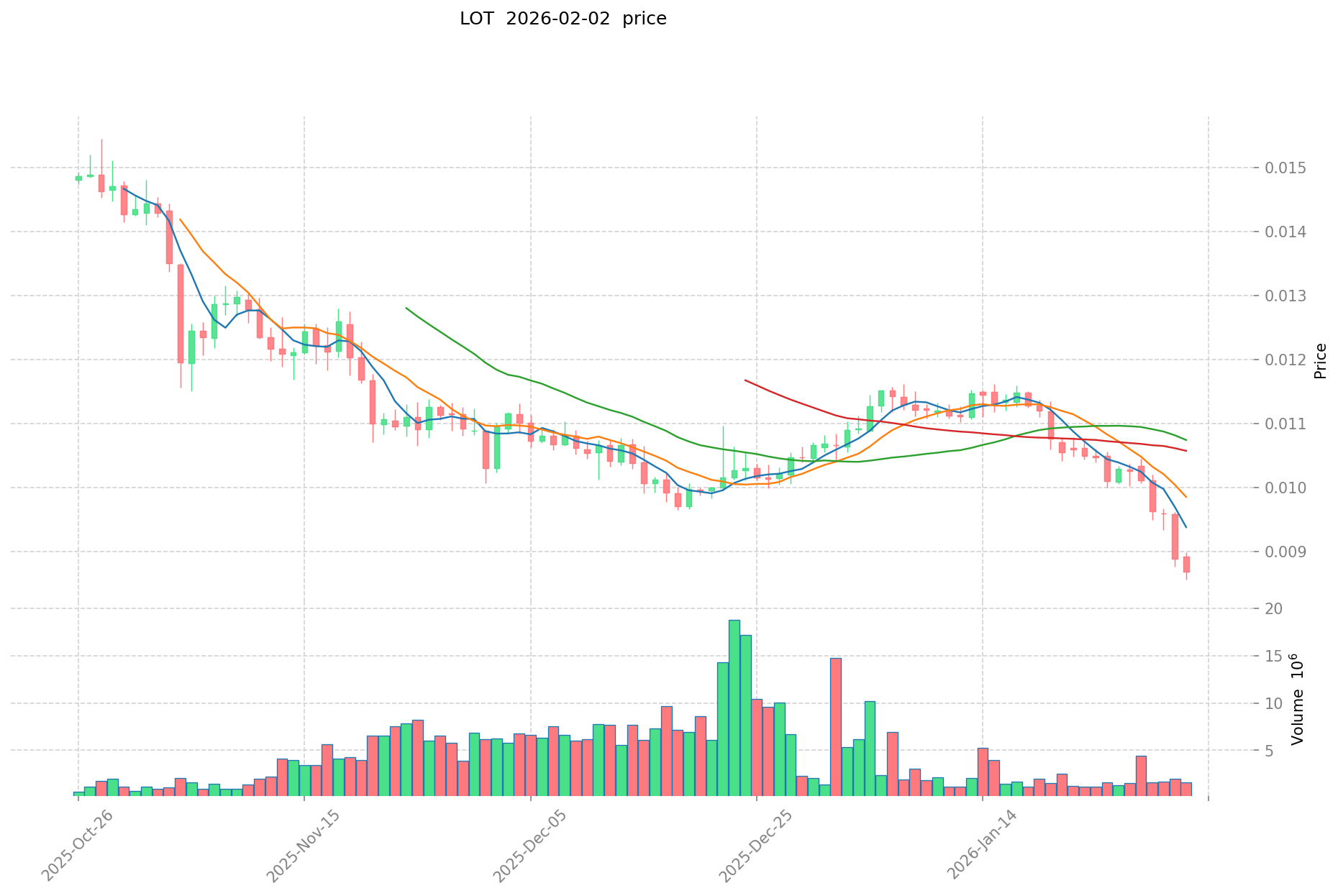
LOT Launch Period (2025): League of Traders was introduced to the market in 2025. Since its launch, the token has experienced notable price fluctuations. Following its initial trading phase, LOT reached a peak price of $0.04947 on June 20, 2025. However, the token subsequently entered a downward trend, declining to a recorded low of $0.008342 on February 2, 2026.
-
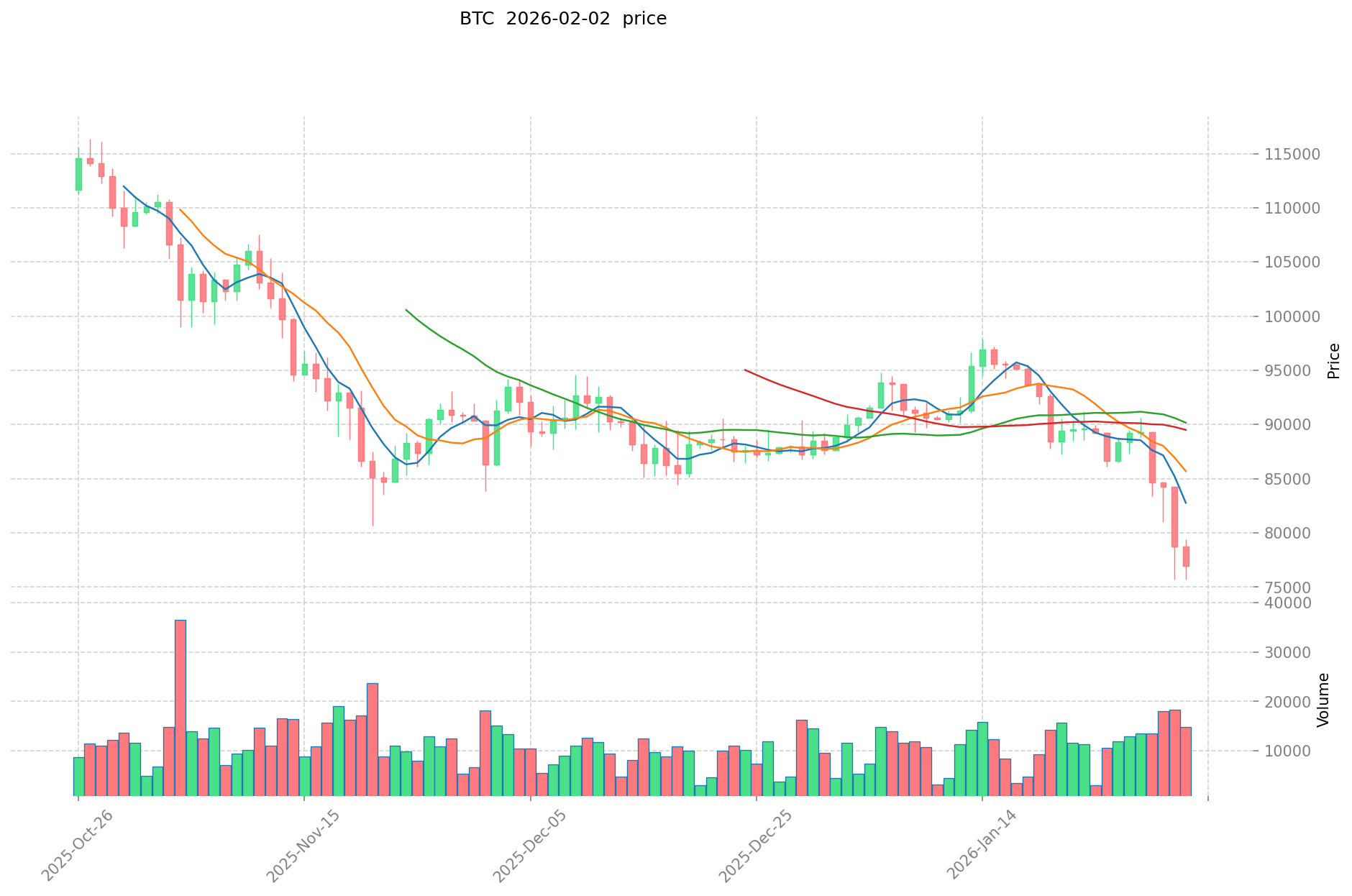
BTC Historical Context: Bitcoin, as the pioneering cryptocurrency, has undergone multiple market cycles since its inception in 2009. Throughout its history, BTC has demonstrated significant volatility, with its all-time high recorded at $126,080 on October 7, 2025. The asset later experienced a correction phase, reflecting broader market dynamics and macroeconomic factors affecting digital asset valuations.
-
Comparative Analysis: During recent market cycles, LOT demonstrated heightened volatility characteristic of newer tokens. From its peak at $0.04947, LOT declined approximately 83.1% to reach $0.008342. In contrast, Bitcoin, during the same general timeframe, moved from its all-time high of $126,080 down to approximately $77,771.5, representing a decline of around 38.3%. This comparison illustrates the relatively greater price volatility experienced by emerging tokens compared to more established cryptocurrencies.
Current Market Status (February 2, 2026)
- LOT Current Price: $0.008758
- BTC Current Price: $77,771.5
- 24-Hour Trading Volume: LOT recorded $20,335.15, while BTC demonstrated substantially higher liquidity with $1,562,121,883.07 in trading volume.
- Market Sentiment Index (Fear & Greed Index): The cryptocurrency market currently registers a Fear & Greed Index value of 14, indicating an "Extreme Fear" sentiment. This reflects heightened caution among market participants amid prevailing uncertainty.
Access real-time pricing information:
- View LOT current price Market Price
- View BTC current price Market Price
II. Core Factors Influencing LOT vs BTC Investment Value
Supply Mechanism Comparison (Tokenomics)
- BTC: Bitcoin operates under a fixed supply model with a maximum cap of 21 million coins, implementing a halving mechanism approximately every four years that reduces block rewards, creating a deflationary economic structure.
- LOT: Specific supply mechanism information is not available in the provided materials.
- 📌 Historical Pattern: Supply mechanisms influence price cycles through scarcity dynamics, where Bitcoin's halving events have historically been associated with subsequent market movements driven by reduced new supply entering circulation.
Institutional Adoption and Market Applications
- Institutional Holdings: Bitcoin has attracted significant institutional interest, with the introduction of Bitcoin ETFs simplifying access for traditional investors and facilitating broader institutional participation.
- Enterprise Adoption: Bitcoin serves as a transfer tool and store of value, with applications in cross-border payments and investment portfolios; its core value derives from its utility as a transaction instrument.
- Regulatory Environment: Bitcoin is influenced by regulatory developments across jurisdictions, with favorable regulatory frameworks and increased commercial applications potentially enhancing demand, while regulatory uncertainty may create volatility.
Technology Development and Ecosystem Building
- BTC Technology Development: Bitcoin's underlying blockchain technology continues to evolve, with its maturity level increasing and integration with various industries deepening beyond initial cryptocurrency applications.
- Ecosystem Comparison: Blockchain technology development remains closely connected to Bitcoin's infrastructure, with the technology showing expanded applications in data analysis, digital asset management platforms, and various blockchain-based services.
Macroeconomic Conditions and Market Cycles
- Macroeconomic Influences: Bitcoin is affected by international economic conditions, monetary policy, and foreign exchange policies, with broader economic trends influencing investor sentiment and demand patterns.
- Market Sentiment Factors: Positive developments such as increased commercial applications, favorable regulatory changes, and technological advancements tend to stimulate demand, while the asset's volatility is connected to attention dynamics within the crypto market.
- Investment Decision Factors: Bitcoin's investment appeal is influenced by multiple exogenous factors including personal investment preferences, decision-making behavior, and consumption versus investment demand considerations.
III. 2026-2031 Price Forecast: LOT vs BTC
Short-term Forecast (2026)
- LOT: Conservative $0.0072 - $0.0088 | Optimistic $0.0088 - $0.0105
- BTC: Conservative $66,221 - $77,907 | Optimistic $77,907 - $84,140
Mid-term Forecast (2028-2029)
- LOT may enter a consolidation phase, with projected price range of $0.0059 - $0.0164
- BTC may enter a growth phase, with projected price range of $52,066 - $139,945
- Key drivers: institutional capital inflows, ETF adoption, ecosystem development
Long-term Forecast (2030-2031)
- LOT: Baseline scenario $0.0115 - $0.0142 | Optimistic scenario $0.0150 - $0.0173
- BTC: Baseline scenario $70,154 - $118,905 | Optimistic scenario $116,860 - $159,332
Disclaimer
LOT:
| Year | Predicted High Price | Predicted Average Price | Predicted Low Price | Price Change |
|---|---|---|---|---|
| 2026 | 0.0105096 | 0.008758 | 0.00718156 | 0 |
| 2027 | 0.01348732 | 0.0096338 | 0.005876618 | 10 |
| 2028 | 0.0164159952 | 0.01156056 | 0.0058958856 | 32 |
| 2029 | 0.014407925928 | 0.0139882776 | 0.013428746496 | 59 |
| 2030 | 0.01732168415208 | 0.014198101764 | 0.01150046242884 | 62 |
| 2031 | 0.017178283324263 | 0.01575989295804 | 0.014971898310138 | 79 |
BTC:
| Year | Predicted High Price | Predicted Average Price | Predicted Low Price | Price Change |
|---|---|---|---|---|
| 2026 | 84139.56 | 77907 | 66220.95 | 0 |
| 2027 | 111812.1264 | 81023.28 | 64008.3912 | 4 |
| 2028 | 99310.234296 | 96417.7032 | 52065.559728 | 23 |
| 2029 | 139945.47530964 | 97863.968748 | 72419.33687352 | 25 |
| 2030 | 159332.3275186188 | 118904.72202882 | 70153.7859970038 | 52 |
| 2031 | 146074.45101240537 | 139118.5247737194 | 116859.560809924296 | 78 |
IV. Investment Strategy Comparison: LOT vs BTC
Long-term vs Short-term Investment Strategies
-
LOT: May suit investors seeking exposure to emerging social trading platforms with gamified trading experiences, particularly those interested in Korean market dynamics and early-stage token opportunities. The asset's volatility characteristics suggest suitability for traders comfortable with higher-risk profiles and shorter holding periods.
-
BTC: Appropriate for investors seeking exposure to established digital assets with broader market recognition, institutional adoption, and historical performance data. Bitcoin's characteristics align with strategies focused on store-of-value properties and participation in major cryptocurrency market cycles.
Risk Management and Asset Allocation
-
Conservative Investors: LOT 5-10% allocation vs BTC 90-95% allocation, prioritizing established assets with greater liquidity and institutional participation.
-
Aggressive Investors: LOT 20-30% allocation vs BTC 70-80% allocation, incorporating higher exposure to emerging tokens while maintaining core position in established cryptocurrencies.
-
Hedging Tools: Stablecoin allocation for liquidity management, options strategies for downside protection, cross-asset portfolio diversification including multiple cryptocurrency positions.
V. Potential Risk Comparison
Market Risk
-
LOT: Demonstrates elevated volatility consistent with newer token launches, experiencing an approximate 83.1% decline from peak to recent low. Limited trading volume of $20,335.15 (as of February 2, 2026) indicates lower liquidity, potentially resulting in wider bid-ask spreads and increased price impact during transactions.
-
BTC: Experiences market volatility influenced by macroeconomic conditions, institutional flows, and regulatory developments. Recent decline of approximately 38.3% from all-time high reflects broader cryptocurrency market correction dynamics. Trading volume of $1,562,121,883.07 demonstrates substantial liquidity supporting price discovery.
Technical Risk
-
LOT: Information regarding network architecture, scalability solutions, and technical infrastructure stability is not available in provided materials.
-
BTC: Network security considerations include mining concentration dynamics and potential protocol vulnerabilities, though Bitcoin's established infrastructure benefits from extensive testing and development over multiple years.
Regulatory Risk
- Global regulatory frameworks affect both assets differently, with Bitcoin facing established regulatory scrutiny across multiple jurisdictions while newer tokens like LOT may encounter evolving compliance requirements. Regulatory developments regarding cryptocurrency classification, taxation, and trading restrictions can influence both assets' accessibility and market dynamics.
VI. Conclusion: Which Is the Better Buy?
📌 Investment Value Summary:
-
LOT Characteristics: Represents exposure to social trading platform innovation with backing from notable institutions including Mirana, C3 Ventures, Cadenza, and Neowiz. The token demonstrates characteristics typical of emerging assets, including heightened volatility and growth potential within niche market segments.
-
BTC Characteristics: Offers established market position with institutional adoption, regulatory clarity in multiple jurisdictions, substantial liquidity, and historical performance data spanning multiple market cycles. Bitcoin's infrastructure supports diverse applications including cross-border transactions and portfolio diversification.
✅ Investment Considerations:
-
Beginning Investors: Consider focusing on established cryptocurrencies with greater liquidity, institutional participation, and historical performance data. Bitcoin's market position may provide more accessible entry point for understanding cryptocurrency market dynamics.
-
Experienced Investors: May evaluate portfolio allocation incorporating both established assets and emerging tokens based on risk tolerance, investment horizon, and portfolio diversification objectives. Consider implementing position sizing strategies reflecting each asset's volatility characteristics.
-
Institutional Investors: Assess allocation strategies considering liquidity requirements, regulatory compliance frameworks, and risk management protocols. Bitcoin's established infrastructure and institutional adoption pathways may align with institutional investment criteria.
⚠️ Risk Disclosure: Cryptocurrency markets demonstrate elevated volatility, and asset values can fluctuate substantially. This content does not constitute investment advice, financial guidance, or recommendations for specific investment actions. Market participants should conduct independent research and consider their financial circumstances before making investment decisions.
VII. FAQ
Q1: What is the main difference between LOT and BTC in terms of market positioning?
LOT is an emerging social trading platform token launched in 2025, focused on gamifying the crypto trading experience within the Korean market, while BTC is the established digital gold standard with global recognition since 2009. LOT represents exposure to niche social trading innovation backed by institutions like Mirana and Neowiz, whereas Bitcoin serves as a store of value and transfer tool with widespread institutional adoption, substantially higher liquidity ($1.56 billion vs $20,335 in 24-hour volume), and broader market acceptance across multiple jurisdictions.
Q2: How do the volatility profiles of LOT and BTC compare based on recent performance?
LOT demonstrates significantly higher volatility with an approximately 83.1% decline from its peak ($0.04947) to its recent low ($0.008342), while BTC experienced a more moderate 38.3% decline from its all-time high ($126,080) to approximately $77,771.5 during a comparable timeframe. This substantial difference in price movement reflects LOT's characteristics as a newer token with limited liquidity, making it more suitable for experienced traders comfortable with elevated risk profiles, whereas Bitcoin's relatively lower volatility aligns with investors seeking exposure to established digital assets with greater market stability.
Q3: What are the projected price ranges for LOT and BTC through 2031?
For LOT, short-term 2026 forecasts range from $0.0072-$0.0105, with long-term 2031 projections reaching $0.0150-$0.0173 in optimistic scenarios. BTC forecasts show significantly higher absolute values: $66,221-$84,140 for 2026, expanding to $116,860-$159,332 by 2031 in optimistic scenarios. However, it is essential to note that cryptocurrency price predictions carry substantial uncertainty, as they depend on multiple factors including regulatory developments, institutional adoption rates, technological advancements, and macroeconomic conditions that may evolve unpredictably.
Q4: How should investors approach asset allocation between LOT and BTC?
Conservative investors might consider a 5-10% LOT allocation versus 90-95% BTC allocation, prioritizing established assets with greater liquidity and institutional participation. Aggressive investors could implement a 20-30% LOT versus 70-80% BTC allocation, incorporating higher exposure to emerging tokens while maintaining core positions in established cryptocurrencies. Regardless of risk tolerance, investors should incorporate hedging tools such as stablecoin allocations for liquidity management, consider options strategies for downside protection, and maintain cross-asset portfolio diversification to manage the elevated volatility inherent in cryptocurrency markets.
Q5: What role does institutional backing play in evaluating LOT versus BTC?
LOT benefits from institutional support including Mirana, C3 Ventures, Cadenza, and Korean gaming company Neowiz, which provides credibility and potential development resources for the social trading platform. BTC demonstrates substantially broader institutional adoption, with Bitcoin ETFs simplifying access for traditional investors, enterprise integration for cross-border payments, and established infrastructure supporting institutional participation across multiple jurisdictions. While LOT's institutional backing supports its early-stage development, Bitcoin's widespread institutional adoption contributes to its greater liquidity, regulatory clarity, and market stability, factors that significantly influence investment risk profiles.
Q6: How do supply mechanisms affect the investment value proposition of each asset?
Bitcoin operates under a transparent deflationary model with a fixed maximum supply of 21 million coins and a halving mechanism every four years that reduces block rewards, creating scarcity dynamics that have historically influenced market cycles. This established supply mechanism contributes to Bitcoin's positioning as digital gold and store of value. LOT's specific supply mechanism details are not available in provided materials, representing an information gap that potential investors should address through independent research before making allocation decisions, as tokenomics fundamentally influence long-term value accrual and price behavior.
Q7: What are the primary risks investors should consider when comparing LOT and BTC investments?
LOT carries elevated market risk due to limited liquidity ($20,335 in 24-hour volume), higher volatility (83.1% peak-to-low decline), and limited historical performance data as a 2025 launch. BTC faces macroeconomic sensitivity, regulatory developments across jurisdictions, and network security considerations, though benefits from established infrastructure and institutional participation. Both assets experience regulatory risk as global frameworks evolve, with Bitcoin facing established scrutiny while newer tokens like LOT may encounter evolving compliance requirements. Investors should implement position sizing strategies reflecting each asset's risk characteristics and maintain diversification across multiple cryptocurrency positions.
Q8: Under what market conditions might LOT outperform BTC, and vice versa?
LOT may demonstrate relative strength during periods of heightened interest in social trading platforms, positive developments in Korean cryptocurrency regulations, successful ecosystem expansion, or broader market rotation toward emerging tokens with innovative use cases. BTC typically outperforms during institutional capital inflows, favorable macroeconomic conditions for store-of-value assets, regulatory clarity that enhances accessibility, or market cycles characterized by flight-to-quality dynamics favoring established cryptocurrencies. However, cryptocurrency markets demonstrate elevated unpredictability, and past performance patterns do not guarantee future results, requiring investors to continuously reassess allocation strategies based on evolving market conditions.
Share
Content
Introduction: LOT vs BTC Investment Comparison
I. Historical Price Comparison and Current Market Status
II. Core Factors Influencing LOT vs BTC Investment Value
III. 2026-2031 Price Forecast: LOT vs BTC
IV. Investment Strategy Comparison: LOT vs BTC
V. Potential Risk Comparison
VI. Conclusion: Which Is the Better Buy?
VII. FAQ
How to Buy Cryptocurrency


Trending Cryptocurrencies



XZXX: A Comprehensive Guide to the BRC-20 Meme Token in 2025

Bitcoin Fear and Greed Index: Market Sentiment Analysis for 2025

5 ways to get Bitcoin for free in 2025: Newbie Guide
Top Crypto ETFs to Watch in 2025: Navigating the Digital Asset Boom
Bitcoin Market Cap in 2025: Analysis and Trends for Investors
2025 Bitcoin Price Prediction: Trump's Tariffs' Impact on BTC

Top 7 Cloud Gaming Services for Gamers

What is LOT: A Comprehensive Guide to Land Ownership and Property Division

What is 老子: An Exploration of Ancient Chinese Philosophy and His Enduring Influence on Eastern Thought

What is MOTHER: A Comprehensive Guide to Understanding the Revolutionary AI Language Model

2026 LOT Price Prediction: Expert Analysis and Market Forecast for Polylot Token Growth