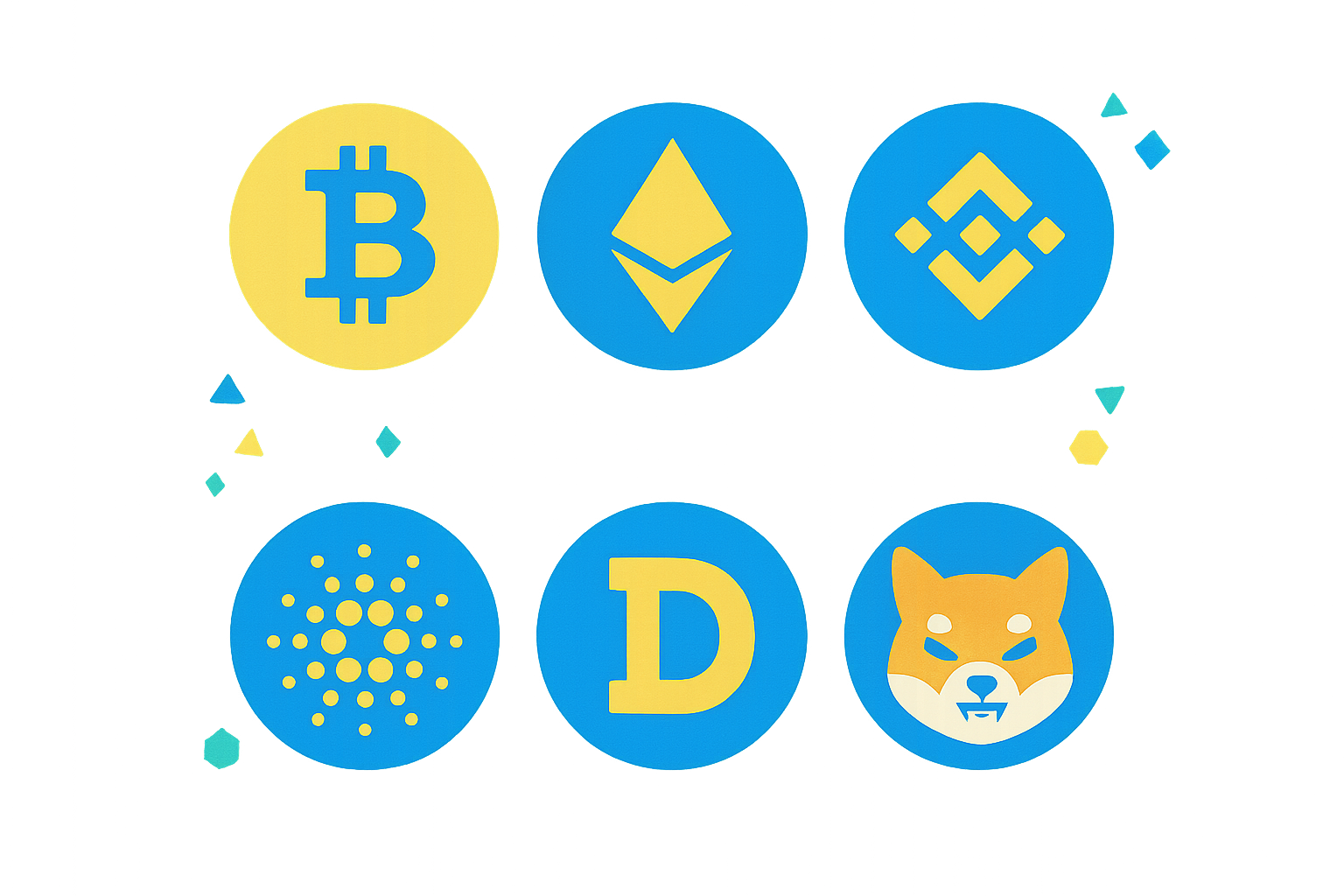
In-depth analysis of six cryptocurrencies that have achieved over 1,000x growth between 2009 and 2025—Bitcoin, Ethereum, BNB, Cardano, Dogecoin, and Shiba Inu. Explore the key growth factors and price trajectories for each asset. This guide is a must-read for investors scouting for the next bull market opportunities and users interested in Web3 projects. Gate offers trading for all major cryptocurrencies.
The Astonishing Growth of the Cryptocurrency Market
Over the past decade, the cryptocurrency market has seen explosive growth, with countless tokens rising hundreds or even thousands of times from their initial prices. Bitcoin stands out, having surged at least one million times from its starting price—and by some estimates, tens of millions of times—on its way to all-time highs.
This extraordinary expansion stems from a combination of blockchain innovation, institutional capital inflows, and a global transformation of financial systems. Beyond Bitcoin, other currencies with unique technologies, strong communities, and practical use cases have also achieved remarkable growth.
This article highlights six leading cryptocurrencies that have multiplied their prices more than 1,000-fold between 2009 and 2025, analyzing the specific growth drivers and price trajectories for each. These cases provide insight into the core patterns of success and investment opportunities in the crypto asset market.
Growth Overview of Six Leading Tokens (Initial Price, All-Time High, Multiples)
The table below summarizes the six tokens discussed, including their launch year, initial price, all-time high, and total price multiple. These data points illustrate just how significant cryptocurrency growth can be, underscoring the vast opportunities in this market.
| Token (Ticker) |
Launch Year |
Initial Price |
All-Time High (Date) |
Price Multiple (Initial to Peak) |
| Bitcoin (BTC) |
2009 |
$0.0008 (estimated for 2010) |
$109,350 (Jan 20, 2025) |
Approx. 136,687,500x |
| Ethereum (ETH) |
2015 |
$0.31 (2014 ICO price) |
$4,878 (Nov 2021) |
Approx. 15,736x |
| Major Exchange Token (BNB) |
2017 |
$0.15 (2017 ICO price) |
$705 (Nov 2024) |
Approx. 7,016x |
| Cardano (ADA) |
2017 |
$0.0024 (2015–17 ICO price) |
$3.10 (Sep 2021) |
Approx. 1,291x |
| Dogecoin (DOGE) |
2013 |
$0.0004 (Dec 2013 trading launch) |
$1.23 (Dec 2024) |
Approx. 3,075x |
| Shiba Inu (SHIB) |
2020 |
$0.00000000051 (Aug 2020 trading launch) |
$0.0000885 (Oct 2021) |
Approx. 173,529x |
While each token has its own unique features and growth catalysts, they all share three critical elements: innovation, community strength, and market timing.
Bitcoin (BTC)
Launched in January 2009 by Satoshi Nakamoto, Bitcoin was the world’s first cryptocurrency. It remains the market’s benchmark asset and is widely regarded as “digital gold.” With a strict supply cap of 21 million BTC, Bitcoin’s scarcity and decentralized security have made it a prominent long-term store of value.
Bitcoin’s debut revealed a new potential for currency systems independent of central banks or governments. Its blockchain-based distributed ledger delivers transparency and tamper-resistance, advancing the democratization of finance.
Price Evolution (Initial Price, All-Time High, Multiples)
Bitcoin was essentially worthless at launch; there were no exchanges in 2009, so it had no market price. The first USD exchange rate was set in October 2009, when 5,050 BTC sold for about $5—roughly $0.0009 per BTC.
After the first exchange opened in July 2010, Bitcoin traded between $0.0008 and $0.08. By late 2010, prices climbed to around $0.5, surpassing $1 in 2011, and spiking to about $29.6 in June before experiencing significant volatility. These initial swings reflected growing recognition and speculative demand for this new asset class.
Bitcoin’s price has continued to move in substantial four-year cycles—breaking $1,000 in late 2013, reaching $19,000 in December 2017, and most recently, achieving a record $109,350 on January 20, 2025. Compared to its initial trading price (around $0.0008–$0.08), this represents at least a million-fold increase, and by some estimates, tens of millions of times at the peak.
This remarkable ascent is not simply a speculative bubble; it’s driven by Bitcoin’s global recognition as a store of value and its adoption by institutional investors and nation-states.
Key Drivers of Bitcoin’s Growth
Market Maturity and the Role as Anchor Currency
As the first cryptocurrency, Bitcoin has consistently occupied the central position in the market. It’s the asset of choice for institutions and corporations, historically accounting for more than half of the entire crypto market’s capitalization.
This anchor status has led to “Bitcoin Dominance,” where other crypto prices often follow Bitcoin’s trends. Investors move capital into altcoins when seeking higher risk and back into Bitcoin as a safe haven, contributing to market stability.
Supply Constraints and Scarcity from Halving Events
Bitcoin’s supply halves roughly every four years, reducing new issuance. Halvings occurred in 2012, 2016, and 2020, curbing inflation. After the third halving in 2020, Bitcoin’s reputation as an “inflation hedge” surged amid global monetary easing.
This supply constraint, which assures gold-like scarcity through code, is a vital driver of long-term appreciation. The next halving is expected in 2024, and market anticipation is already high.
Macroeconomic Factors and Safe-Haven Reassessment
Post-pandemic fiscal stimulus and quantitative easing accelerated capital flows into Bitcoin. In early 2021, Bitcoin stood out as a risk asset alongside equities and real estate, surging from $29,000 at the end of 2020 to over $64,000 in a matter of months.
As inflation fears grew, Bitcoin was increasingly seen as “digital gold” and a hedge against fiat currency devaluation. In particular, emerging markets have adopted Bitcoin to preserve wealth amid unstable local currencies.
Institutional and Corporate Adoption
Major corporations have accumulated significant BTC holdings. MicroStrategy began accumulating in 2020 and, by 2025, held billions in BTC. Tesla announced a $1.5 billion BTC purchase in 2021 and for a time accepted BTC as payment for vehicles.
PayPal and leading banks have rolled out crypto services, with traditional financial institutions entering the space. Even previously skeptical banks like Goldman Sachs and JPMorgan now offer Bitcoin client services, establishing institutional legitimacy.
Nation-Level Legal Tender Adoption
In 2021, El Salvador became the world’s first country to recognize Bitcoin as legal tender, with unprecedented moves like distributing wallets to all citizens. The Central African Republic followed in 2022, and other emerging economies are considering similar steps.
This shift showed that Bitcoin is not just for speculation but also a viable means of payment at scale.
Global Recognition as Digital Gold
Bitcoin’s “digital gold” status is now well established. In 2021, its market cap briefly surpassed $1 trillion, rivaling the gold market. Its capped supply and decentralization make it increasingly attractive as a long-term holding, with more investors allocating Bitcoin in their portfolios.
Compared to gold, Bitcoin offers advantages such as divisibility, ease of transfer, and transparent verification, creating a new digital-age asset class for value storage.
Trump Administration’s Bitcoin Reserve Proposal (April 2025)
The Trump administration signaled it may add BTC to U.S. foreign reserves, aiming to maintain dollar dominance and counter other countries’ digital asset policies. Bitcoin reached new highs in response, demonstrating the impact of policy news on price.
If implemented, this would mark the world’s biggest economy officially embracing Bitcoin, potentially prompting other countries to follow. A race to accumulate Bitcoin at the nation-state level would likely push prices higher.
Ethereum (ETH)
Launched in July 2015, Ethereum is the world’s leading smart contract blockchain and the second-largest cryptocurrency. If Bitcoin is “digital gold,” Ethereum is the “protocol for a decentralized internet,” serving as the foundation for smart contracts and decentralized applications (DApps).
Ethereum’s core innovation is its programmable blockchain, going beyond currency to support DeFi, NFTs, and a broad range of applications. This flexibility has made it the go-to platform for countless projects and tokens.
Price Evolution (Initial Price, All-Time High, Multiples)
Ethereum’s 2014 ICO offered ETH at roughly $0.31, raising about $18 million—one of the most successful blockchain crowdfunding events.
At mainnet launch in July 2015, ETH traded around a few dollars. The 2017 ICO boom saw surging demand as many projects launched tokens on Ethereum, pushing ETH to a $1,400 peak in January 2018. It then plunged to the $80s by year-end, entering the so-called “crypto winter.”
Interest rebounded from 2020 as DeFi and NFT trends drove rapid price growth, with ETH reaching an all-time high of $4,878.26 on November 10, 2021. This represents over 15,000x returns from the ICO price for early investors.
Key Drivers of Ethereum’s Growth
Smart Contract and DApp Innovation
Ethereum’s biggest strength is enabling anyone to develop custom tokens and applications via smart contracts. Since 2016, countless projects have launched on Ethereum, fueling the ICO boom.
Smart contracts automate transactions and agreements using code, allowing for complex, intermediary-free operations in finance, real estate, supply chain management, and more.
The Rise of DeFi (Decentralized Finance)
From 2020, DeFi protocols like Uniswap and Compound built on Ethereum grew rapidly. Yield farming locked ETH, driving prices higher and establishing Ethereum as the core infrastructure for DeFi.
DeFi provides decentralized versions of lending, borrowing, trading, insurance, and more. By 2021, over $100 billion was locked in Ethereum DeFi protocols, positioning Ethereum as a credible alternative to traditional finance.
NFT Boom and Surging Demand
Early 2021 saw a rapid expansion of NFT marketplaces, with ETH serving as the main transaction currency for digital art and collectibles. This influx of new users and rising gas fees further boosted network usage and ETH prices.
NFTs revolutionized digital asset ownership for creators and collectors, with high-profile projects like CryptoPunks and Bored Ape Yacht Club showcasing Ethereum’s utility.
Technical Evolution: Transition to Ethereum 2.0
The August 2021 London upgrade (EIP-1559) introduced fee burning, increasing the likelihood of ETH becoming deflationary and supporting long-term value growth.
The September 2022 Merge shifted Ethereum from proof-of-work to proof-of-stake, slashing energy consumption by about 99.95% and boosting long-term investor confidence. This major upgrade addressed environmental concerns and strengthened Ethereum’s market position.
Enterprise Adoption and Ecosystem Expansion
Ethereum has firmly established itself as the second leading investment asset after Bitcoin. The 2017 launch of the Enterprise Ethereum Alliance (EEA) with members like Microsoft and JPMorgan drove enterprise blockchain research.
Since 2020, CME-listed ETH futures and expanded custody services have attracted institutional investors. Major financial players are increasingly adopting Ethereum-based solutions, accelerating enterprise adoption.
Major Exchange Token (BNB)
BNB is the native token of one of the world’s largest cryptocurrency exchanges. Launched via ICO in July 2017, it started as an ERC-20 token and later migrated to its own BNB Chain. BNB now plays a central role as a utility token for trading fee discounts, gas payments, and more across the exchange’s ecosystem.
BNB has evolved into a comprehensive platform token, powering DeFi, NFTs, gaming, and more within its own blockchain ecosystem.
Price Evolution (Initial Price, All-Time High, Multiples)
BNB debuted at $0.15 in its ICO, with about 100 million tokens sold. Initially trading at a few dollars, BNB’s value soared as the exchange grew, hitting $690.93 on May 10, 2021—about 4,605x its ICO price.
In 2024, ecosystem expansion and a more favorable regulatory environment propelled BNB to a new all-time high of $705 on November 15, 2024, or about 7,016x the ICO price. By 2025, BNB was trading in the $500–$700 range as the market stabilized.
Key Drivers of BNB’s Growth
Rapid Exchange Growth and User Expansion
Since 2018, this exchange has consistently ranked number one in global trading volume. BNB’s use for trading fee discounts ensures steady, utility-driven demand.
Increased user numbers, as well as reliability and convenience—plus capital inflows after scandals at other exchanges—have helped build a global user base. By 2025, registered users surpassed 200 million, cementing the exchange’s position as the world’s largest crypto trading platform.
Trading Fee Discounts and Expanding Use Cases
In addition to spot trading fee discounts, BNB is used for IEOs, staking, lending, and more. Holding BNB is required to participate in Launchpad IEOs, driving further demand.
BNB’s utility continues to grow with its user base. It’s now used for real-world applications like travel bookings, payments, and investment products, emphasizing its practical value as a crypto asset.
Success of the Native BNB Chain
The exchange launched its proprietary blockchain in 2019, with BNB as its native token. The 2020 launch of the BNB Smart Chain (BSC)—compatible with Ethereum—offered low gas fees, sparking rapid growth in DeFi and gaming apps.
By 2025, BNB Chain supports hundreds of dApps, ranking just behind Ethereum as a smart contract platform—particularly in gaming and metaverse use cases, with over 1,000 projects deployed.
Deflationary Model Through Regular Token Burns
BNB’s supply will ultimately be capped at 100 million. The exchange buys back and burns BNB quarterly, reducing supply and creating favorable tokenomics for long-term holders.
By 2025, around 40 million BNB had been burned, leaving approximately 60 million in circulation. This ongoing deflation supports BNB’s long-term value.
Brand Strength and Community Loyalty
Charismatic leadership and user-focused marketing have built strong global support, with frequent BNB use in airdrops and IEOs fostering a loyal holder base.
Effective crisis management, such as fully reimbursing users after the 2019 hack, has reinforced user confidence and supported BNB’s long-term value.
Cardano (ADA)
Cardano, ticker ADA, is a third-generation blockchain platform launched in 2017. It supports smart contracts and DApps, and is known for its scientific, peer-reviewed development led by Ethereum co-founder Charles Hoskinson. Its PoS consensus algorithm, Ouroboros, and phased upgrades (Byron, Shelley, Goguen, etc.) have driven its evolution.
Cardano’s commitment to academic rigor and formal methods has set a new standard for security and reliability in blockchain development.
Price Evolution (Initial Price, All-Time High, Multiples)
ADA’s ICO was held primarily in Japan and Korea in January 2017, with tokens sold at about $0.0024. After the mainnet launched in October, the altcoin boom quickly drove the price toward $1.
ADA languished during the 2018 bear market but rebounded in 2020–2021 as staking (Shelley) and smart contracts (Alonzo) were rolled out. ADA hit an all-time high of $3.10 on September 2, 2021—over 1,300x the ICO price—delivering large returns to long-term holders.
Key Drivers of Cardano’s Growth
Milestone Upgrades as Catalysts
The 2020 Shelley upgrade enabled decentralization and staking; the 2021 Alonzo upgrade added smart contracts. Each milestone fueled price rallies.
In 2023, the Hydra upgrade dramatically improved scalability, supporting thousands of transactions per second. By 2025, DeFi and NFT adoption has accelerated, as Hydra delivers fast, low-cost transactions and boosts Cardano’s practical value.
Trust from Academic Development Practices
Cardano’s theory-driven, peer-reviewed design has earned a large and loyal investor base. As of 2025, this approach continues, with cutting-edge cryptography being integrated. Cardano’s team has published more than 100 academic papers, positioning it as the industry’s most research-driven project.
The community’s cohesion and long-term holding mindset further support ADA’s value.
Positioning as an “Ethereum Killer”
Cardano has positioned itself as a more energy-efficient, low-fee, and highly secure alternative to Ethereum. In early 2021, high Ethereum gas fees increased Cardano’s appeal. By 2025, as Ethereum’s scaling challenges persist, Cardano’s Hydra solution is valued for its transaction speed, further strengthening its alternative status.
In Japan, “ADA Coin” enjoys strong name recognition, with local listings supporting its popularity and widespread long-term holding among retail investors.
Emergence of Real-World Use Cases
Cardano’s partnership with Ethiopia provides digital IDs and academic records for over five million students; by 2024, this expanded to the national education system, serving more than ten million users.
By 2025, Cardano has expanded into agricultural traceability (Tanzania), education certification (Southeast Asia), and notary services (Europe), making national-scale adoption increasingly realistic. These real-world implementations prove Cardano’s value beyond speculation.
Staking Incentives for Long-Term Commitment
ADA holders can earn several percent annually by staking. As of 2025, about 75% of the supply is staked, reducing circulating liquidity and supporting price stability. Staking rewards incentivize long-term holding and reduce sell pressure.
Dogecoin (DOGE)
Dogecoin was created in 2013 as a meme coin by Billy Markus and Jackson Palmer, using the Shiba Inu meme “Kabosu” as its mascot. Initially intended as a joke with unlimited supply, Dogecoin had neither a clear purpose nor technical innovation at launch.
However, its playful logo and culture quickly drew a dedicated community, and by 2021, Dogecoin had evolved from a joke to a top-five cryptocurrency by market cap. Dogecoin’s rise shows how community energy and meme culture can be powerful market forces.
Price Evolution (Initial Price, All-Time High, Multiples)
DOGE launched in December 2013 at about $0.0004, quickly surging over 300% after going viral on Reddit. By 2015, it hit an all-time low of $0.000086, but rebounded during the 2017–2018 altcoin boom.
In 2021, Elon Musk’s tweets and retail investor enthusiasm drove DOGE to $0.74 on May 8—a gain of about 1,850x (+185,000%).
Further developments through 2025—including renewed interest from Tesla projects—sent DOGE to a new high of $1.23 on December 15, 2024, or about 3,075x its initial price. As of 2025, DOGE trades in the $0.80–$1.00 range in a consolidation phase.
Key Drivers of Dogecoin’s Growth
Meme Culture and Community Power
Dogecoin’s Shiba Inu branding and lighthearted tone made it accessible to newcomers. It became popular for tipping and charity donations, establishing a unique identity as a “fun currency.”
The phrase “No highs, no lows, only Doge” embodies the community’s spirit, which remains strong on X and TikTok in 2025. The Dogecoin community has also attracted attention through charity work and sports sponsorships.
Celebrity and Influencer Endorsements
Elon Musk—self-styled “Dogefather”—has had an outsized impact, especially with Tesla’s DOGE payment support in 2024. Snoop Dogg and Mark Cuban have also publicly supported DOGE.
Social media virality fueled the 2021 bubble and the new high in late 2024. In 2025, the Grayscale DOGE ETF filing (submitted Jan 31, SEC accepted Feb 13) and Musk’s support have kept DOGE in the spotlight. Every time Musk makes a DOGE-related statement or action—such as temporarily changing the X logo—prices move sharply.
Alignment with Retail Investor Movements
The “WallStreetBets” movement in January 2021 brought retail investors en masse to DOGE, driving a grassroots “To the Moon” rally. On “Doge Day” (April 20), DOGE briefly overtook XRP for fifth place by market cap.
In 2025, ETF anticipation is reigniting retail buying, keeping DOGE in the top ten by market cap. Dogecoin has become a symbol of grassroots, retail-driven investing.
Increased Platform Accessibility
Listings on Robinhood and other major platforms have made DOGE highly accessible to younger investors, at times overloading trading systems with demand.
In 2025, Grayscale’s ETF filing (via NYSE Arca) and expanded DOGE trading on leading exchanges have increased institutional participation. DOGE is also being adopted as a payment method by some online retailers.
Speculation Driven by Popularity Alone
Dogecoin retains value based on its popularity, even without technical progress or utility. In 2023, Elon Musk changed the Twitter logo to a Shiba Inu, sparking renewed attention.
Tesla’s test acceptance of DOGE in December 2024 pushed it to $1.23, and the SEC’s formal ETF acceptance in February 2025 created additional buzz. Musk’s comments about “making Doge the currency of Mars” continue to fuel speculative enthusiasm.
Dogecoin’s rise illustrates that in crypto, community and meme culture can drive markets as much as technical advancements.
Shiba Inu (SHIB)
Shiba Inu, created in August 2020 by the anonymous “Ryoshi,” is a meme token inspired by Dogecoin and branded as the “Dogecoin Killer.” Issued as an ERC-20 token on Ethereum, SHIB is notable for its ultra-low price and enormous supply, enabling anyone to become a “whale.”
The meme coin boom in 2021 brought SHIB explosive attention, making it famous as a “get rich quick” token. SHIB capitalized on Dogecoin’s success with even lower prices and a community-driven approach.
Price Evolution (Initial Price, All-Time High, Multiples)
SHIB launched on Uniswap in 2020 at $0.00000000051. Initially unknown, it soared after major exchange listings in May 2021, hitting $0.00008845 in October.
That’s more than a 500,000x increase from launch, with many investors turning small sums into millions. After a correction, SHIB trades in the $0.00001–$0.00003 range as of 2025—still exponentially higher than its starting price.
Key Drivers of SHIB’s Growth
Meme Appeal and “Doge Killer” Marketing
SHIB’s use of the Shiba Inu breed and its “next Doge” positioning fueled viral spread, with the dream of “becoming a millionaire if SHIB hits 1 yen” igniting FOMO on social media and driving two major price surges in 2021.
Even in 2025, SHIB’s meme presence on X and TikTok remains strong, supporting annual gains of 150% as hype drives speculation. SHIB’s marketing strategy centers on offering “anyone can get rich” appeal via its ultra-low price.
Fervent Community and Viral Hype
The SHIB Army community is central to amplifying buzz. Elon Musk’s Shiba Inu tweets and Vitalik Buterin’s burning of 90% of his SHIB holdings triggered outsized price reactions.
By 2025, the 410 trillion token burn has supported prices by reducing supply. Buterin burned 90% of the SHIB he received and donated the rest to charity, boosting SHIB’s reputation and credibility.
Rapid Listings on Major Exchanges
SHIB’s 2021 listings on top exchanges improved liquidity and shifted its image from a “meme coin” to a “mainstream asset.” Over 100 exchanges now list SHIB, making it one of the most accessible meme coins and attracting a wide range of investors.
Ultra-Low Price Fuels Speculation
Being able to own millions of SHIB for a few dollars is a powerful motivator. The fantasy of “what if it hits $1?” fuels FOMO, and viral stories of small investments turning into millions drive further speculation.
As of April 2025, at $0.00001252, $100 buys about 8 million tokens—maintaining SHIB’s appeal for speculative buyers and especially attracting younger and newer crypto investors.
Project Evolution and Expanded Utility
SHIB launched ShibaSwap (a DEX) in 2021, announced the Shibarium layer-2 solution and SHIB: The Metaverse after 2022. As SHIB’s utility expands, burn mechanisms have been implemented to further support the price.
Shibarium’s rollout has slashed transaction fees and improved usability. The metaverse project includes virtual land sales and game development, expanding the SHIB ecosystem and marking its evolution from meme coin to a project with practical applications.
Summary: Future Outlook
Reviewing the six tokens (BTC, ETH, BNB, ADA, DOGE, SHIB) that have grown more than 1,000-fold from 2009 to 2025, it’s clear that technological breakthroughs, macroeconomic forces, and social media have all been powerful growth drivers.
Bitcoin has solidified its position as digital gold, Ethereum as the leading smart contract platform, and major exchange tokens as utility-driven growth stories. Cardano has won trust through its academic rigor, while Dogecoin and Shiba Inu have shown how meme culture and community can drive price surges.
While similar trends could repeat, past success does not guarantee future results. Regulatory shifts, technological advances, and macroeconomic changes all add uncertainty.
Investors should evaluate each project’s technical foundation, utility, and community strength, maintaining a rational outlook and long-term perspective. Despite persistent volatility, ongoing blockchain innovation will continue to generate new value creation opportunities.
FAQ
What are the common features of cryptocurrencies that have grown more than 1,000-fold?
These tokens typically feature groundbreaking technology, strong market demand, ongoing development, and high adoption rates. Such factors have generated large returns for visionary early investors.
What are the risks of investing in high-growth cryptocurrencies?
Risks include extreme price volatility, exchange security vulnerabilities, impacts from regulatory changes, and losses from low liquidity. Dramatic price declines are common, so only invest funds you can afford to lose.
Is it possible to earn 1,000x returns with crypto assets?
Yes, it’s possible. Tokens like Shiba Inu have delivered 1,000x returns or more. However, such outcomes are extremely rare—early decision-making and opportunity recognition are critical.
What differentiates successful and failed cryptocurrencies?
Successful tokens offer technological innovation and real-world utility, see growing trading volumes, and build expanding communities. Failed tokens lose demand, see collapsing activity, and are often abandoned by their teams. Sustainable use cases and reliability are key to success.
What should beginners keep in mind when investing in crypto?
Start by learning the basics and begin with small amounts. Use reputable platforms and maintain strict security. Understand the risks of scams and hacks, and always take full responsibility for your investment decisions.
How should I choose and evaluate crypto assets?
Check market capitalization and trading volume, and stick to whitelisted tokens. Assess each project’s utility, technical innovation, and potential. Start with established tokens like Bitcoin or Ethereum for higher reliability.
* The information is not intended to be and does not constitute financial advice or any other recommendation of any sort offered or endorsed by Gate.