Staking Crypto: How to Increase Your Income by Staking Coins
A Beginner's Guide to Crypto Staking
A new wave of investors has entered the crypto industry, seeking the best returns on their assets and ways to increase their income with cryptocurrency. Additionally, the emergence of proof-of-stake projects and DeFi platforms has created unprecedented opportunities to grow income through staking coins.
This comprehensive guide covers:
- What does staking crypto mean?
- Which coins can you stake?
- The best staking coins available
- Alternative ways to earn staking rewards
What Does Crypto Staking Mean?
Staking coins can be staked on proof-of-stake blockchains. PoS is the consensus mechanism behind a blockchain that ensures the network operates correctly and securely.
Staking coins gives holders decision-making power on the network, allowing them to vote on governance decisions and generate income from their assets. This process represents a fundamental shift in how blockchain networks achieve consensus and distribute rewards.
Staking has become increasingly popular as more networks transition to proof-of-stake mechanisms, offering participants the opportunity to earn passive income while contributing to network security and decentralization.
How Do Staking Coins Work?
Staking coins work by staking coins on a PoS network, either by holding coins in a native wallet or locking them in a smart contract to operate nodes. The coins are used to help verify transactions, operate nodes, and maintain the health of the blockchain.
Rewards are then earned based on the number of coins you contribute to the staking platform. The more coins you stake, the higher your potential rewards, though the exact percentage varies by network and platform.
The staking process typically involves selecting a validator or pool, delegating your coins, and receiving rewards at regular intervals. These rewards are distributed automatically, making staking an attractive passive income option for long-term holders.
Which Coins Can You Stake?
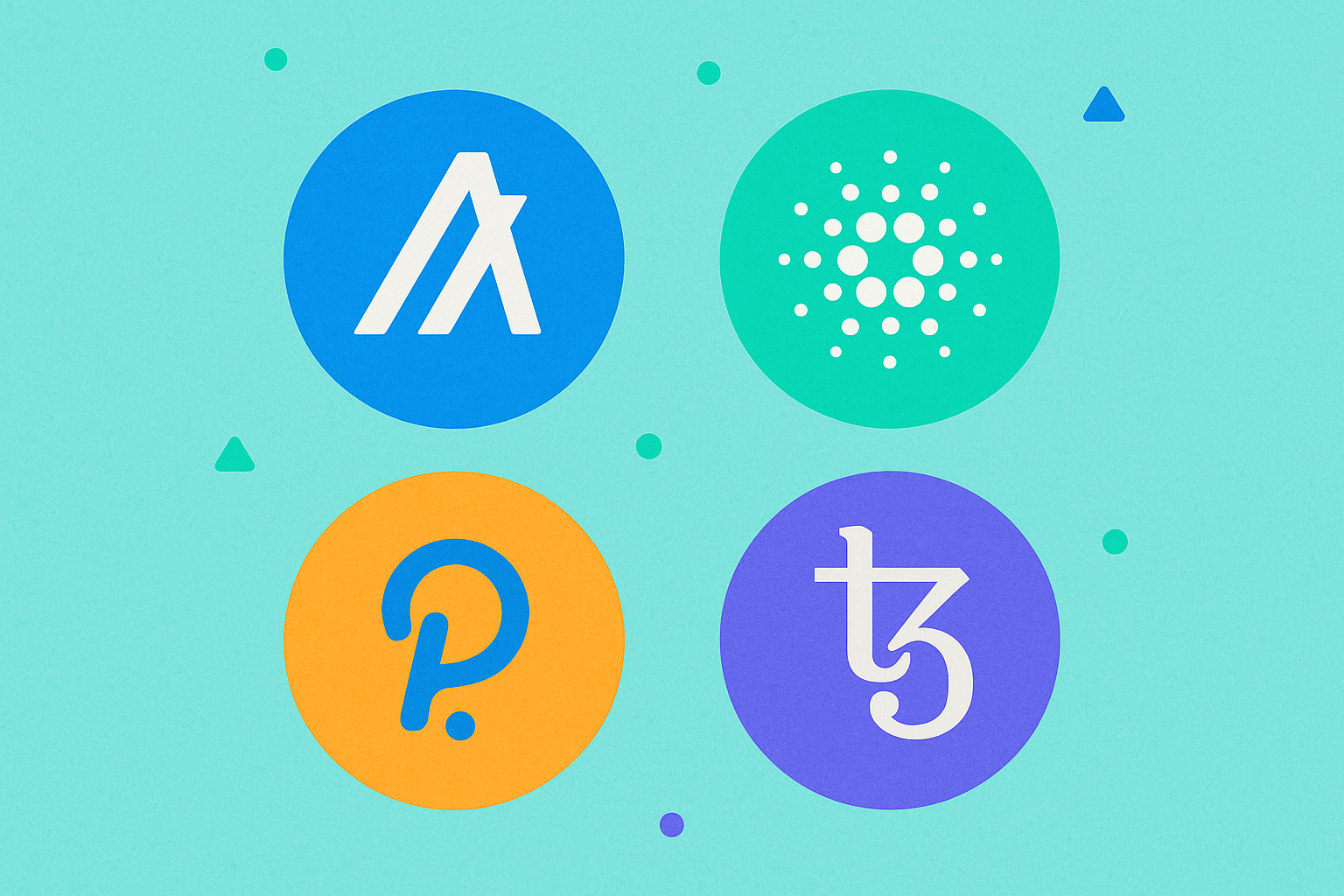
The most popular proof-of-stake coins include Synthetix, Algorand, Cardano, Polkadot, Avalanche, Cosmos, and Tezos. Each of these networks offers unique features and reward structures for stakers.
Emerging proof-of-stake projects are diversifying the crypto investment landscape, offering various staking options on altcoins. These platforms are now easily incorporating stablecoins, known for their fiat-pegged stability. This integration provides dual benefits: staking rewards and price stability. As a result, it makes PoS platforms more attractive and versatile for investors seeking both growth and security.
The expansion of stakeable assets continues to grow, with new projects regularly launching with built-in staking mechanisms that reward early adopters and long-term supporters.
Is Staking Coins Profitable?
Many alternative staking platforms are available in the market. However, staking coins through proof-of-stake blockchains remains one of the best ways to passively increase your income.
For long-term holders and "whales," staking your coins can prove highly profitable and provides far more incentives compared to keeping your coins in a wallet or on an exchange. The compound effect of staking rewards over time can significantly increase your holdings.
Profitability depends on several factors including the coin's price stability, staking rewards percentage, lock-up periods, and network participation rates. Careful research and portfolio diversification across multiple staking opportunities can optimize returns while managing risk.
How to Find the Best Staking Platform?
Staking is growing in popularity and becoming an essential part of the industry. Therefore, it is beneficial to conduct thorough research and find the best staking platform according to your needs. This guide provides you with the basics to get started.
When evaluating staking platforms, consider factors such as security measures, reputation, supported coins, reward rates, lock-up periods, and user interface. Reading community reviews and understanding the platform's track record can help you make informed decisions.
The Best Staking Coins
Many staking coins offer generous rewards for participation in staking networks. Particularly, the most popular coins have proven their utility during recent interest in PoS coins and projects.
Algorand
Staking on Algorand is easy to configure and provides generous rewards for holders. Users can start by downloading the Algorand wallet and then transferring their Algorand to the wallet. Once your Algorand is transferred, rewards of up to 6% are automatically earned, with reward distribution approximately every 9 minutes.
You can stake on alternative platforms, such as exchanges and staking providers. However, staking on the official Algorand wallet provides the highest percentage return on your assets. This is because no commission is charged on rewards earned through the official wallet.
Algorand's pure proof-of-stake mechanism ensures fast transaction finality and high security, making it an attractive option for both small and large stakers. The absence of minimum staking requirements makes it accessible to all users.
Cardano
Staking your ADA on the Cardano network means your assets represent a stake in the network, with the stake size equal to the amount of ADA staked. Users can earn rewards in two different ways: by delegating their stake to a pool operated by someone else or by operating their own stake pool.
Staking ADA can yield rewards of up to approximately 7%. Therefore, delegating to a high-income pool has become the most popular option. This process is easy and simple for users.
Cardano's delegation mechanism allows users to maintain full control of their funds while participating in staking, offering both security and flexibility. The network's research-driven approach ensures long-term sustainability and continuous improvement.
Polkadot
Polkadot has recently emerged as a real contender to Ethereum in the race for blockchain supremacy. Stakers can earn rewards of up to 16% by becoming a "Nominator" on the Polkadot blockchain network.
It's worth noting that to become a Nominator, you must hold the minimum amount of DOT required by the network, which varies based on network usage. Setup through the official wallet extension can also be lengthy and tedious.
Alternative platforms are offering 10% rewards on Polkadot, which can be easily earned by holding Polkadot on their platforms. There is no minimum required amount to stake on these platforms, making it more accessible for smaller investors.
Polkadot's innovative parachain architecture enables cross-chain communication, adding additional utility and value to staked DOT tokens. The network's governance model allows nominators to participate in important protocol decisions.
Tezos
Staking on Tezos is commonly called "Baking," and like Cardano, holders can choose to delegate their assets or operate nodes themselves.
All users can participate in the staking process and earn rewards of up to 6%. The node operator distributes these rewards to delegators. Additionally, the delegation process is easy to configure. Users can complete it through supported wallets that provide a delegation interface.
Like Algorand and Cardano, Tezos can also be staked on other platforms. However, these platforms only stake addresses, which means you may incur additional fees and earn less compared to staking through supported delegation wallets.
Tezos' on-chain governance mechanism allows the protocol to upgrade without hard forks, ensuring long-term adaptability. The baking process is energy-efficient and environmentally friendly compared to proof-of-work systems.
Alternative Ways to Earn Staking Rewards
In recent years, many alternative platforms such as major exchanges, crypto savings accounts, and DeFi platforms have emerged for those interested in staking their assets and increasing their income.
These platforms simplify staking, require minimal maintenance, and provide comparatively similar rewards for coins. With the introduction of these new platforms, coin holders have many excellent options to choose from.
They provide very generous rewards and incentives for staking while removing the required technical knowledge. This democratization of staking has made it accessible to mainstream investors who may lack technical expertise.
Exchanges
Major exchanges offer staking for various assets. As a result, rewards vary based on the chosen asset and staking period.
Exchanges offering staking include:
- Leading platforms: Facilitate staking of many cryptocurrencies, providing competitive yields and easy access for users
- Mainstream platforms: Offer user-friendly platforms for staking various assets, including additional security and educational resources
- Established exchanges: Provide unique staking opportunities for many assets, suitable for both new and experienced traders
- Popular platforms: Offer diverse staking options with attractive returns, emphasizing security and ease of use
- Major exchanges: Support staking of many popular cryptocurrencies, providing users with a blend of flexibility and profitability
- Trading platforms: Allow staking of various digital assets, focusing on simplicity and integrating innovative staking features
Major platforms provide the most comprehensive coverage for staking coins, offering annual yields from 1% to 16% with over 20 crypto assets. Meanwhile, exchanges take a small percentage from your staking rewards. Therefore, it's wise to compare between different exchanges as staking fees and the range of available coins vary.
Staking on exchanges is easy to configure and set up, and many cryptocurrency investors prefer to keep their coins on exchanges, so such native staking platforms have proven very popular with new investors.
Crypto Savings Accounts
Crypto savings accounts are another secure option for investors that can return 1-20% staking rewards on your assets. Although not technically "staking," you can deposit your coins on the platform and earn rewards because your assets provide liquidity for trading and lending services for other institutional players.
On the most popular platforms, staking market-leading coins like Bitcoin, Ethereum, and Chainlink can return rewards between 2-6%, along with many other altcoins that offer native staking.
The most popular options are BlockFi, Celsius, and YouHodler, which provide a simple way to "stake" your coins and increase your income through your assets. These platforms often offer flexible terms and the ability to withdraw funds with minimal notice.
DeFi Platforms for Staking Coins
DeFi platforms have become popular in recent years due to their simplicity and high earning potential. These platforms secure your assets through a liquidity pool or smart contract, which means you become a liquidity provider for the platform.
Rewards are generated from fees and interest earned on the platform. The yields you earn range between 20-100% APY and depend on the liquidity pool or platform you choose.
The most popular DeFi platforms, such as Uniswap and PancakeSwap, offer staking by providing liquidity to the platform.
You can achieve this by staking two coins in a liquidity pool or through single-sided staking, which involves staking native governance tokens to earn staking rewards.
Both options are relatively risk-free and can earn substantial rewards based on the type of coin and amount of time staked.
DeFi is thriving across many networks and proving to be a pioneer for those who want to earn income from their assets. The composability of DeFi protocols allows users to maximize returns through various strategies.
Staking Providers
Many newly launched "all-in-one" staking providers offer comprehensive platforms where users can choose the coin they want to stake and start staking on their platform with minimal setup.
These providers are similar to staking coins on exchanges, with the added benefit of larger staking pools and more native support for various staking coins. They typically take a cut for their services but can sometimes remove the complex initial setup, technical knowledge, and maintenance involved with operating your own node or being a delegator on a staking network.
The most popular staking providers include MyCointainer, Stake.Capital, EverStake, Staked, and stakefish. These providers often offer additional services such as portfolio tracking, reward optimization, and educational resources.
Maximize Your Crypto Wealth
Staking your coins, whether through an official wallet or through a platform, provides a great opportunity to increase your income and earn passively from your assets. Additionally, you have gained more information about coin staking and increasing your earnings using cryptocurrency. Our guide aims to help you find the ideal staking option. Remember that the sooner you start, the more you can benefit from compound rewards and long-term growth potential.
As the crypto ecosystem continues to evolve, staking opportunities will likely expand and become more sophisticated. Staying informed about new developments, understanding risk factors, and diversifying your staking portfolio can help maximize returns while managing exposure. Whether you're a beginner or experienced investor, staking offers a compelling way to participate in blockchain networks while earning passive income on your cryptocurrency holdings.
FAQ
What is cryptocurrency staking and how does it help me earn income?
Cryptocurrency staking is locking your coins to support blockchain networks and earn protocol rewards. You help secure the network while generating passive income based on your stake amount and network rewards.
How much cryptocurrency do I need to start staking?
The minimum amount varies by protocol. Some cryptocurrencies allow staking with just 1 unit, while others require hundreds or more. Check your chosen cryptocurrency's specific staking requirements to begin earning rewards.
What is the typical annual yield for staking?
Staking annual yields typically range from 8% to 20%, depending on the specific cryptocurrency and staking platform. Ethereum staking averages around 3-4%, while other coins can offer higher returns. Service fees usually account for 5-25% of your earnings.
What are the risks of staking? Is my capital safe?
Staking involves market risk from price volatility and security risk from platform attacks. Your capital safety depends on the platform's security measures and your private key management. Choose reputable platforms with strong security records.
Which cryptocurrencies support staking?
Major cryptocurrencies supporting staking include Ethereum (ETH), Solana (SOL), Cardano (ADA), Polkadot (DOT), Polygon (POL), Cosmos (ATOM), Tron (TRX), Near Protocol (NEAR), and Sui (SUI). The list continues to expand as more projects adopt staking mechanisms.
Should I stake on an exchange or run my own node?
Running your own node offers higher rewards and greater control, but requires technical expertise and significant resources. Exchange staking is simpler and more accessible, though typically yields lower returns. Choose based on your technical capability and capital availability.
Can I withdraw my coins anytime during staking?
In most cases, you cannot withdraw staked coins anytime. There is typically a lock-up period. Some coins allow early withdrawal but may impose penalties or reduced rewards.
Does staking income require taxation?
Yes, staking rewards are subject to income tax at their fair market value when received. This becomes your cost basis. You then pay capital gains tax on any difference between the cost basis and selling price.
What is the difference between Staking and Mining?
Staking earns rewards by locking cryptocurrencies, while Mining earns rewards by solving complex mathematical problems through computational power. Mining typically requires high energy consumption, whereas staking is more eco-friendly and cost-effective.
How can beginners safely start staking?
Choose reputable platforms and established projects with strong fundamentals. Start with smaller amounts, understand staking requirements, monitor your rewards regularly, and avoid high-risk tokens until gaining experience.
Share
Content
How to Buy Cryptocurrency


Trending Cryptocurrencies



Ethereum 2.0 in 2025: Staking, Scalability, and Environmental Impact
2025 best encryption staking platform recommendation: secure and profitable

How to Buy Crypto: A Step-by-Step Guide with Gate.com

Crypto Assets Stake Full Analysis: How to Earn Passive Income Through Tokens

MemeBox Price and Airdrop Guide 2025: What You Need to Know
Can AI Companions (AIC) Reach $0.2729 in Price Prediction?
Understanding Meme Coins: Top 5 Meme Coins to Watch
How to Choose and Set Up the Best Crypto Wallet
What is an IOU in Crypto?

What is Consensus Mechanism and What Types of Consensus Systems Exist

Top 10 Enterprise Blockchain Solutions from Global Leaders