The Complete Guide to Meme Coin Investment

What Are Meme Coins?
Meme coin investment is not merely a passing trend. What began as entertainment has now established itself as a significant component of the global cryptocurrency market. Many investors have already witnessed and experienced the remarkable rises and falls demonstrated by meme coins such as Dogecoin and Shiba Inu.
However, meme coin investment presents both opportunities for high returns and substantial risk of loss. So why are investors so interested in these meme coins? And how can meme coins move beyond simple humor to deliver actual returns to investors? Let's examine the background and strategies in detail.
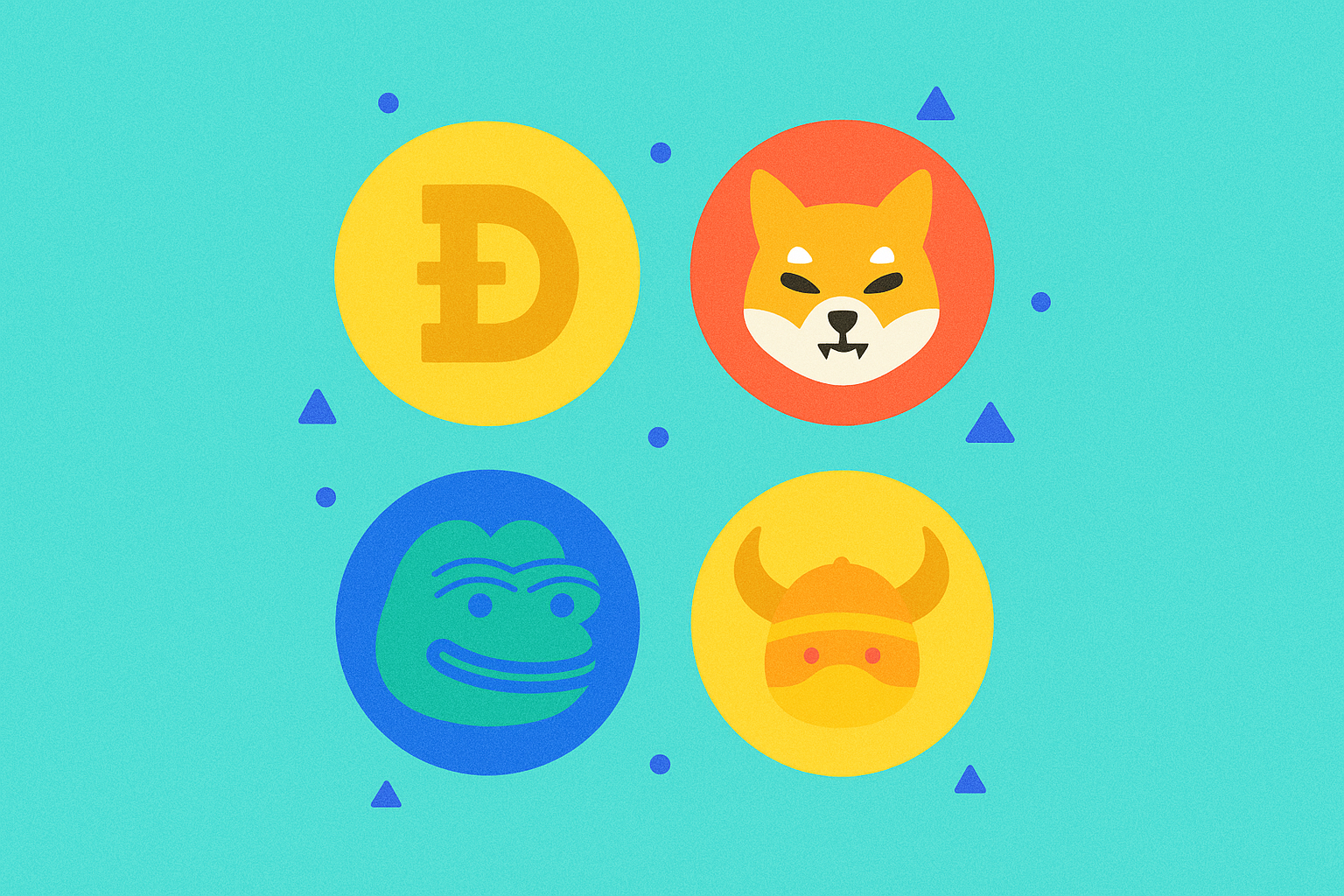
Meme coins are essentially cryptocurrencies created for entertainment purposes. This is precisely the background behind Dogecoin's creation. When Dogecoin delivered substantial returns to investors, coins imitating it began appearing one after another. These meme coins were created not so much for entertainment as out of desire for high returns.
Some meme coins operate on their own blockchain, powered by their own decentralized computer networks. Other meme coins operate as tokens on other cryptocurrency networks, such as ERC-20 tokens on the Ethereum network. This diversity in technical implementation reflects the varied approaches developers take when launching new meme-based cryptocurrencies.
Dogecoin: The Original Meme Coin
The first meme coin was Dogecoin. Software developers Billy Marcus and Jackson Palmer launched Dogecoin's mainnet as a fork of Litecoin in 2013. Marcus initially drew inspiration from the popular Shiba Inu meme circulating online at the time.
In late 2013, Dogecoin traded at cryptocurrency exchanges for between $0.0003 and $0.0007 per coin. In early 2014, it first broke through $0.001. By mid-2018, it had broken through $0.01. This took over four years to achieve. Then, in May 2021, it reached approximately $0.74 per coin. This represented a return of over 1000 times compared to early 2014 levels.
In early 2024, Dogecoin's price reached $0.084. Its market capitalization (the market value of all issued tokens) reached $12 billion. This means its enterprise value is higher than that of the American IT company Dropbox, which has a market capitalization of approximately $9.8 billion.
The remarkable journey of Dogecoin demonstrates how a cryptocurrency that started as a joke evolved into a significant digital asset. Its community-driven growth and viral marketing through social media platforms contributed to its unprecedented success, establishing a template that countless other meme coins would attempt to replicate.
The Fervent Popularity of Meme Coins: What's the Reason?
There is no clear answer to this question. Different investors are interested in meme coins for different reasons. Many investors find meme coins attractive because of their profitability. Popular meme coins like Dogecoin and Shiba Inu have recorded exponential price increases.
Some people enjoy the fact that meme coins represent a somewhat lighter side of cryptocurrency. Others appreciate the specific memes or characters, such as dogs, that inspire the coins. For these investors, meme coins function like collectibles, serving both as potential investments and as cultural artifacts that represent internet culture and community participation.
The psychological aspect of meme coin investment cannot be understated. The sense of belonging to a community, the excitement of potential massive gains, and the entertainment value all contribute to their appeal. Additionally, the relatively low entry price of many meme coins makes them accessible to retail investors who might feel priced out of more established cryptocurrencies.
What Risks Exist When Investing in Meme Coins?
Volatility
Meme coins are generally considered to lack utility compared to major cryptocurrencies like Bitcoin or Ethereum. Meme coins primarily function as collectibles for collectors. Some experts criticize that meme coins have little or no fundamental value.
Therefore, meme coin prices tend to rise and fall repeatedly according to sentiment changes in related communities and the mood of the broader retail investor community. In other words, meme coin prices can be viewed as highly volatile and unpredictable. Another reason is that a small number of investors monopolize a significant number of meme coins. Because of this, meme coin prices can rise and fall dramatically based on the mood of a few investors.
When fear of missing out surges, meme coin prices can skyrocket. Simple events like celebrity investment recommendations can trigger this fear. In early 2021, billionaire Elon Musk frequently made statements supporting Dogecoin. Powered by this, Dogecoin's price rose by up to 20,000% during that year.
Panic selling can cause price crashes just as much as fear of missing out. In October 2022, Dogecoin traded at $0.06, which is over 90% lower than the previous year's high of $0.75. During the same period, Shiba Inu traded at $0.000001, nearly 90% lower than its all-time high recorded in 2021.
Investors who bought at or near the peak when fear of missing out reached its zenith lost almost all their money. Meanwhile, meme coins can affect each other's prices. For example, if investors flock to one particular meme coin, another meme coin's price may plummet. This interconnected volatility creates additional layers of risk that investors must carefully consider.
Rug Pulls
Meme coin investors also face the risk of falling victim to rug pull scams. A notable example is the Squid Game meme coin, modeled after the popular Netflix program.
In late 2021, the creators of the Squid Game meme coin cashed out their held tokens and disappeared as the coin's price surged. Immediately, all value of that meme coin was lost. Even token holders' sales were blocked, leaving investors with worthless assets and no recourse.
This incident highlights the importance of due diligence and the risks inherent in investing in newly launched meme coins without established track records or transparent development teams. The lack of regulation in the cryptocurrency space makes such scams particularly prevalent in the meme coin sector.
How Do You Buy Meme Coins?
The meme coin purchase process consists of three main steps:
- Opening a cryptocurrency exchange account
- Depositing funds into the account
- Purchasing meme coins
Method ① Opening a Cryptocurrency Exchange Account
Popular meme coins are listed on various cryptocurrency exchanges. Choose an exchange that suits your preferences and register for membership. All exchanges require personal information such as email address and password, ID upload, and address verification.
When selecting an exchange, consider factors such as security measures, trading fees, available payment methods, and customer support quality. Research the exchange's reputation and read user reviews to ensure you're choosing a reliable platform for your meme coin investments.
Method ② Depositing Cash into the Account
Once you've created an account on a cryptocurrency exchange and completed identity verification, the next step is to deposit your funds into the exchange. Refer to each exchange's deposit instructions for the deposit method.
Different exchanges support various deposit methods, including bank transfers, credit cards, and other payment options. Be aware of any fees associated with deposits and the processing time for different payment methods. Some methods may be instant while others might take several business days.
Method ③ Purchasing Meme Coins
Once cash is deposited into your exchange account, you can purchase the desired meme coins. When buying domestically, be sure to check the "kimchi premium." If the coin market is very overheated, you may end up purchasing meme coins at prices about 20% more expensive in certain regions.
If you want to use international exchanges instead of domestic ones, you can transfer cryptocurrency to other exchanges and convert it to stablecoins or other assets to purchase meme coins. Consider factors such as liquidity, trading volume, and price differences across exchanges to optimize your purchase strategy.
Top Meme Coins in Recent Years
1. Pepe
Launched in April 2023, Pepe reminds American investors of a specific cartoon character. It evokes the frog that appears in cartoonist Matt Furie's 2005 work Boy's Club. Pepe differentiates itself from other meme coins in that it has no unique value or financial prospects.
Pepe operates without an official team or roadmap and functions as a purely entertainment-focused asset. This community offers various benefits through airdrops, merchandise purchases, and investments. The token's success demonstrates how cultural references and internet memes can translate into cryptocurrency value, even without traditional utility or development roadmaps.
The Pepe community has embraced the token's lack of serious purpose, turning it into a strength rather than a weakness. This approach appeals to investors who appreciate the ironic and satirical nature of meme culture.
2. Dogecoin
Dogecoin is a cryptocurrency created in 2013, inspired by a meme. It takes its name from "Doge," a popular internet meme featuring a Shiba Inu. Dogecoin is a fork of Luckycoin, which is a fork of Litecoin (itself a fork of Bitcoin).
Dogecoin has secured a significant following over the years. It has been used to tip various charities and online content creators. The Dogecoin community is often called the "Doge Army," reflecting the passionate and loyal nature of its supporter base.
Dogecoin's value and popularity have been influenced by factors such as social media trends and celebrity endorsements. Although Dogecoin started as a playful and satirical cryptocurrency, what's special is that it has gained popular recognition and usefulness beyond its initial intention. The coin has been accepted by various merchants and has developed real-world use cases, transforming from a joke into a legitimate payment option.
3. Shiba Inu
Shiba Inu launched in August 2020. It takes its name from the Shiba Inu dog that gained popularity as an internet meme. The Shiba Inu token, also called SHIB, aims to leverage the meme culture and community characteristics of cryptocurrency.
Shiba Inu is based on the Ethereum blockchain and is considered an ERC-20 token. It was created to provide a decentralized alternative to other cryptocurrencies and build an active community. The token's ecosystem has expanded to include decentralized exchange capabilities and NFT platforms.
The token's logo is in the shape of a Shiba Inu, which has become synonymous with the token's identity. One thing to note about Shiba Inu is its initial token supply reaching into the trillions. This massive supply creates a psychological appeal for investors who can own millions or billions of tokens for relatively small investments.
4. Floki
Floki started inspired by Elon Musk's dog. It has evolved into a comprehensive Web 3.0 project encompassing decentralized finance, NFTs, metaverse, and charitable activities.
Positioned as "The People's Crypto," Floki has the ambitious goal of establishing schools on every continent, focusing on underdeveloped regions. This philanthropic aspect differentiates Floki from purely speculative meme coins.
Floki is a multi-chain token, operating on both Ethereum and Binance Smart Chain (BSC) blockchains. It has a built-in mechanism where a 3% tax is imposed on token purchases and sales, providing ongoing support to the project. This tax mechanism funds development, marketing, and charitable initiatives, creating a sustainable ecosystem.
Should You Invest in Meme Coins?
Experienced investors and professional investors can make quick profits through meme coin trading. This applies to general investors and small investors as well. However, meme coin prices rise and fall rapidly. If you don't constantly watch the market, you could suffer major losses or miss major investment opportunities. For this reason, in the case of general investors, there is a high possibility of seeing significant losses in meme coin investments.
In conclusion, whether to invest in meme coins depends on the individual. If you're satisfied with prices moving significantly within days, you might choose to invest. However, the advice that most individual investors should follow is to invest only what you can afford to lose. You could become rich by investing your life savings in the latest trending meme coin, but it could also end in disaster, leaving you penniless.
Successful meme coin investing requires not only financial resources but also time, attention, and emotional resilience. The rapid price movements can be stressful, and the speculative nature means that fundamental analysis often takes a backseat to sentiment and hype.
Will Meme Coins Continue to Thrive?
Meme coins have gained significant popularity since Dogecoin, and several meme coins have occupied important positions in the market. However, controversy about their future still exists. Meme coins are highly volatile and speculative due to their dependence on community passion and cultural influence. This can be positive, but there is also the risk that demand will drop sharply once the trend passes.
Whether meme coins continue to thrive depends on whether they achieve practical uses and technological advances. Many projects are transitioning to technology development and gaming, which could be opportunities for sustained vitality. However, high volatility and risks must still be accepted.
The evolution of meme coins from pure jokes to projects with utility represents a maturation of the sector. Some meme coins are developing ecosystems that include staking mechanisms, governance features, and integration with decentralized applications. These developments could provide long-term value beyond mere speculation.
In conclusion, the future of meme coins is uncertain, and while short-term growth is possible, long-term success is difficult to guarantee. Investing in meme coins requires a cautious approach and thorough risk management. Diversification, position sizing, and clear exit strategies are essential components of any meme coin investment strategy.
FAQ
What is a Meme Coin? How does it differ from Bitcoin and Ethereum?
Meme coins are community-driven cryptocurrencies with high volatility, primarily driven by social media influence. Unlike Bitcoin and Ethereum, which have established utility and technology foundations, meme coins rely heavily on community sentiment and viral trends for their value.
How to buy and trade Meme coins? Which trading platforms should be used?
Create an account on a centralized exchange, complete identity verification, deposit funds, search for your desired Meme coin, and place buy or sell orders. You can trade spot or futures depending on platform offerings and your strategy.
What are the main risks of Meme coin investment? How to reduce investment risks?
Main risks include extreme price volatility and market manipulation. Reduce risks by investing only small amounts, setting stop-loss points, and diversifying your portfolio. Only risk capital you can afford to lose completely.
Which notable Meme coins are worth paying attention to? What are their respective characteristics?
Notable Meme coins include TRUMP, SPARK, and BOSS on Solana chain. TRUMP shows strong community support, SPARK demonstrates significant volatility with rapid price movements, while BOSS exhibits viral momentum. These coins are community-driven, characterized by low entry barriers and viral propagation potential, attracting younger investors seeking high-growth opportunities.
Why do Meme coin prices fluctuate so dramatically? What are the underlying reasons?
Meme coins exhibit extreme volatility due to ultra-low entry prices combined with high profit expectations. Most holders have limited capital, making prices highly sensitive to trending events. This combination of low liquidity, retail speculation, and social media hype drives dramatic price swings of 10x or more.
How much capital do I need to start investing in Meme coins? What are some beginner tips?
You can start with as little as tens of dollars. Key tips: diversify your portfolio, begin with small amounts, monitor market movements closely, take profits when gains occur, and avoid holding through market downturns.
How to identify high-growth potential meme coin projects?
Focus on rising trading volume compared to averages, increasing social media mentions, and balanced holder distribution. Monitor community engagement metrics and early price momentum. Look for projects with organic growth and strong community participation rather than centralized team dependency.
What is the long-term investment value of meme coins? Are they suitable for long-term holding?
Meme coins offer significant growth potential with viral community momentum and cultural relevance. Strategic long-term holders who believe in community fundamentals can see substantial returns. However, success requires conviction and selective project evaluation.
What is the impact of social media (such as Twitter, Reddit) on meme coin prices?
Social media has significant impact on meme coin prices. Trending topics, influencer discussions, and community sentiment on Twitter and Reddit can drive rapid price movements. Positive viral moments often trigger buying pressure, while negative sentiment can cause sharp declines. However, this influence is highly volatile and sentiment-driven rather than fundamentals-based.
How should Meme coin investors develop investment strategies and risk management plans?
Diversify your portfolio across multiple Meme coins, allocate only disposable capital, set strict stop-loss levels, and establish clear entry and exit points. Monitor trading volume trends, community sentiment, and project fundamentals. Review positions regularly and avoid emotional trading decisions.
Share
Content
How to Buy Cryptocurrency


Trending Cryptocurrencies



XZXX: A Comprehensive Guide to the BRC-20 Meme Token in 2025
Top 5 Meme Coins to Invest in 2025: Risks and Rewards

Solana (SOL) : Low Fees, Memecoins, and the way to moon

Meme Coin Price Predictions for 2025:Factors Influencing Meme Coin Prices

Pepe Unchained: Pepe Meme Coin evolves into a Layer-2 ecosystem

MemeBox Price and Airdrop Guide 2025: What You Need to Know

How to Avoid Slippage in Cryptocurrency Trading

What Is a Blockchain Game Guild? Should You Join a Game Guild?

Free Money for App Registration: Crypto Rewards Guide
Top 4 Cryptocurrency Exchanges for Free Registration Bonuses

What is Slippage? How Can We Avoid It While Trading Crypto?