Top Cryptocurrencies to Watch for Investment in 2025: Expert Insights. Analyzing Bitcoin, Ethereum, XRP, Solana, and Other Altcoins with Growth Projections. Portfolio Diversification, Layer-2 Solutions, and DeFi Tokens for Long-Term Investors.
Top Cryptocurrencies for 2025: Expert Picks
As the digital asset market rapidly evolves, industry experts have identified several key areas for potential investment. Rafik Mamin, CEO of Minestream, has analyzed the most promising cryptocurrencies, basing his assessment on fundamental metrics and prevailing market trends.
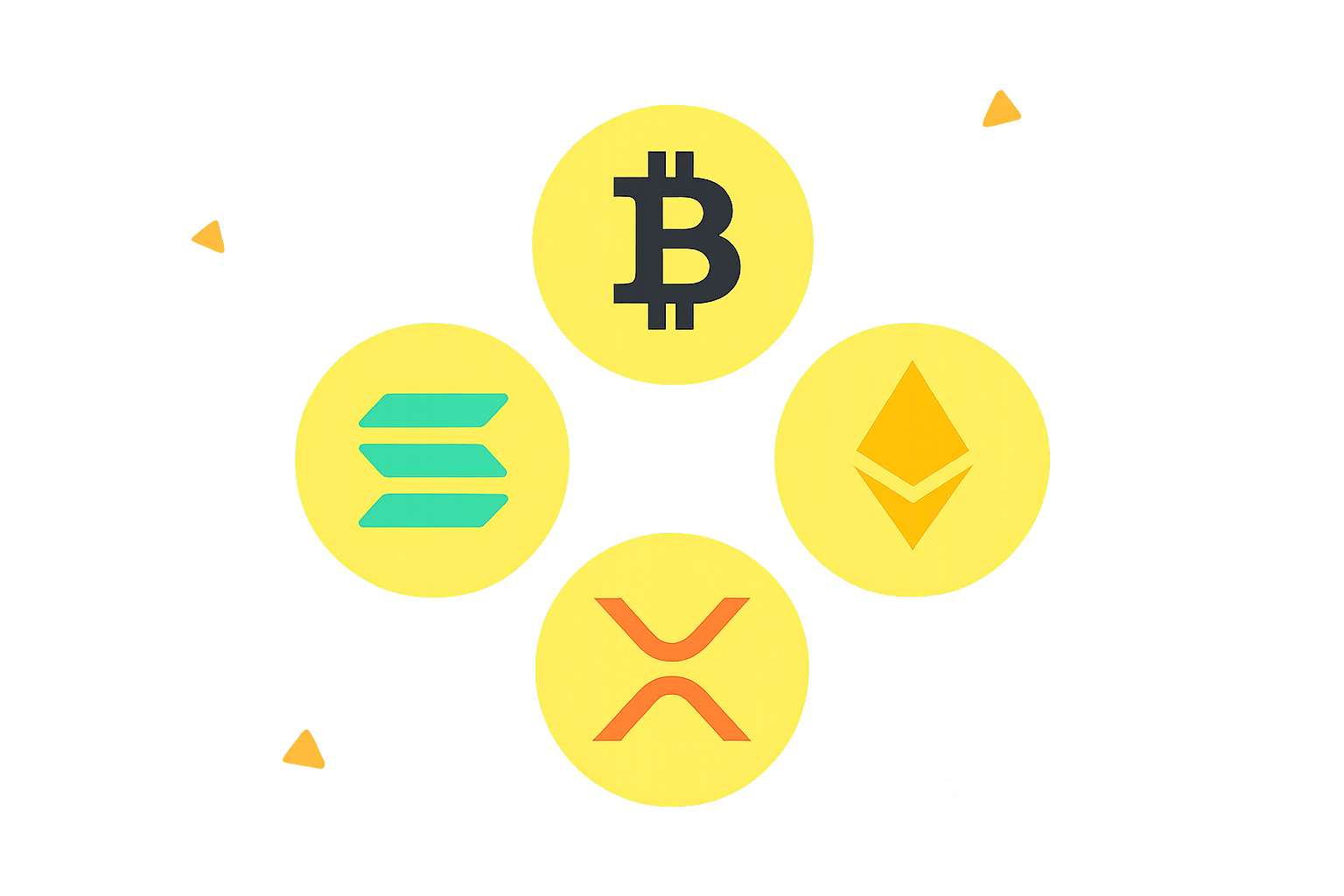
Mamin highlights Bitcoin, Ethereum, XRP, and Solana as the leading candidates for substantial growth. These assets remain resilient thanks to their robust infrastructure, active communities, and continuous technological advancements.
Bitcoin continues to reinforce its reputation as digital gold and the flagship asset of the crypto market. Analysts project its value could reach $150,000, driven by rising institutional interest and a capped supply. Should conditions remain favorable—including further regulatory acceptance and expanded corporate adoption—Bitcoin’s price could surpass $180,000. Growth drivers include the upcoming halving, increased ETF trading volumes, and global macroeconomic uncertainty, all of which fuel demand for alternative assets.
Ethereum sustains its leadership in decentralized applications (dApps) and smart contracts. The platform underpins thousands of projects across DeFi, NFT, and Web3. Upcoming protocol upgrades focused on scalability and lower fees position the asset for a potential rally to $5,700. With exceptionally strong momentum and successful technology rollouts, it could reach $5,800. The shift to Proof-of-Stake has drastically cut network energy use, further boosting Ethereum’s appeal to institutional investors.
XRP (by Ripple) stands out as regulatory disputes with US authorities near a potential resolution. A favorable court decision could trigger a significant price surge. Experts forecast movement toward the $4–5 range, powered by pent-up demand and Ripple’s expanding banking partnerships. XRP Ledger technology delivers high transaction speeds and minimal fees, making XRP attractive for cross-border payments.
Solana remains a magnet for investors, thanks to high throughput and active ecosystem development. Its blockchain handles thousands of transactions per second at minimal cost, giving it a competitive edge. SOL is expected to trade in the $200–550 range, possibly reaching $700 if conditions are optimal. Growth will depend on more projects deploying on Solana, network stability improvements, and rising institutional interest.
Renowned crypto analyst Aleksei Bykov recommends a broader asset list for portfolio diversification:
-
Ethereum — remains the leading smart contract platform due to upcoming upgrades that boost scalability and energy efficiency. Its extensive ecosystem and large developer community ensure long-term resilience.
-
Optimism — a Layer-2 solution for Ethereum leveraging Optimistic Rollups. It eases mainnet congestion and sharply reduces transaction fees, all while preserving base-layer security.
-
StarkNet — an innovative Layer-2 platform for Ethereum that uses zk-rollups to accelerate transactions. Zero-knowledge proofs deliver high levels of privacy and scalability.
-
Polygon — a comprehensive Ethereum scaling solution offering fast, cost-efficient transactions. It resolves mainnet congestion by creating parallel chains compatible with the Ethereum Virtual Machine.
-
Bitcoin — remains the gold standard for reliability and serves as digital gold for long-term investors. Limited supply and rising recognition from traditional financial institutions further solidify its position.
-
Solana — stands out for its high throughput and low fees, making it attractive for both dApp developers and users.
Blockchain specialist Ilya Makar names Bitcoin as the top growth candidate, citing intensifying institutional interest from major financial players. Among alternative cryptocurrencies, he spotlights Ethereum for its dominance in smart contracts and Cardano for its research-driven development and security focus.
Makar also suggests investors consider these projects:
- Polkadot — enables seamless interoperability among blockchains through a unique parachain architecture
- Chainlink — the leading oracle provider for smart contracts, linking blockchain to real-world data
- Avalanche — a high-performance platform with low latency and support for building custom blockchains
- Cosmos — a network of interconnected blockchains with an emphasis on compatibility
- Near Protocol — a scalable platform with a user-friendly interface and low barriers for developers
Crypto market analyst Alexander Weiss advises focusing on Layer-2 tokens, which address base-layer blockchain scalability. He favors TON (The Open Network) for its messenger integration and large user base, Solana for technological superiority, and Sui for its innovative transaction processing.
DeFi specialist Pavel Butenko recommends prioritizing proven Ethereum ecosystem projects: Ethereum itself as the foundational platform, and Layer-2 solutions Arbitrum and Optimism, which substantially reduce transaction costs. He also points to RWA (Real World Assets—tokenization of physical assets) and DePIN (Decentralized Physical Infrastructure Networks) as promising emerging sectors, offering new models for blockchain’s real-world engagement.
Bottom Line: Which Cryptocurrency Should You Invest in for 2025?
Insights from leading crypto experts reveal several top directions for upcoming investment opportunities.
Bitcoin stands out as the main growth candidate, thanks to its first-mover status and increasing institutional adoption. With forecasts of $150,000—and up to $180,000 in the best-case scenario—Bitcoin looks attractive for long-term investors. Its capped supply of 21 million coins and regular halvings create lasting scarcity, historically fueling price appreciation.
Ethereum maintains its leadership in the decentralized application ecosystem, supported by continuous technical upgrades and a mature infrastructure. As the backbone for thousands of DeFi, NFT, and Web3 projects, demand for ETH remains robust. The move to a more energy-efficient consensus and scaling solutions further underpins growth potential.
XRP is a compelling option as legal issues with regulators appear close to resolution. A favorable outcome could generate strong upward momentum, given the pent-up demand and Ripple’s vast financial sector network. The XRP Ledger’s technical strengths in international payments remain a significant advantage.
Solana holds a solid position due to high throughput, low fees, and rapid ecosystem expansion. The potential to reach $700 under optimal conditions is driven by more project launches and improved network reliability following past technical issues.
For alternative cryptocurrencies, experts recommend considering:
Layer-2 solutions (Layer-2): Polygon, Optimism, Arbitrum, and StarkNet tackle Ethereum’s scalability bottleneck, offering substantial fee reductions while maintaining security. As decentralized app adoption rises, so does demand for these solutions.
Smart contract platforms: Cardano is recognized for its research-oriented development; Polkadot for its unique multi-chain interoperability; Avalanche for high throughput; and Cosmos for seamless compatibility.
Infrastructure projects: Chainlink leads as a provider of oracle solutions connecting smart contracts to real-world data. TON offers notable messenger integration. Sui brings innovation to transaction processing.
DeFi and emerging segments: Lido Finance and Synthetix continue to expand DeFi. RWA (real-world asset tokenization) and DePIN (decentralized physical infrastructure networks) are promising new use cases for blockchain technology.
IOTA remains unique due to its Tangle architecture, which targets IoT and microtransactions.
When building your portfolio, diversification is key: allocate funds across core cryptocurrencies (Bitcoin, Ethereum), smart contract platforms, scaling solutions, and high-potential niche projects. Always remember the crypto market’s high volatility—only invest what you can afford to lose without jeopardizing your financial well-being.
FAQ
Which cryptocurrencies are most promising in 2025?
Bitcoin (BTC) leads, driven by institutional investment and rising inflation. Ethereum (ETH) has strong potential as its ecosystem grows. Top DeFi projects offer significant upside. Coins with robust technology and active development deliver the best performance.
Why should you invest in cryptocurrency in 2025?
In 2025, cryptocurrency is a regulated, recognized asset class. Bitcoin and leading altcoins like Ethereum and Solana are becoming stable investments. Integration into national financial systems boosts the appeal of digital assets.
Which new cryptocurrencies will launch in 2025?
In 2025, several promising projects are expected to launch, including Sui, Solana, and Ripple. These cryptocurrencies show strong growth potential, thanks to innovative technology and rising market demand.
What risks are involved with investing in cryptocurrencies?
Cryptocurrencies are highly volatile and carry the risk of significant financial loss. The lack of oversight from traditional financial authorities adds further risk. Using borrowed funds can result in catastrophic losses. Market and technical risks are also important considerations.
How do you choose a cryptocurrency for investment?
Focus on an asset’s liquidity and trading volume, evaluate the development team and technology, monitor market demand, and consider the regulatory outlook in your region. Prioritize cryptocurrencies with strong communities and active development.
What is the minimum amount needed to start investing in cryptocurrency?
You can start with as little as $10. Most platforms support small deposits, making it easy for beginners to enter the market with minimal capital and gradually build their positions.
* The information is not intended to be and does not constitute financial advice or any other recommendation of any sort offered or endorsed by Gate.