Top 12 Decentralized Exchanges (DEX) Recommended

What Is a DEX?
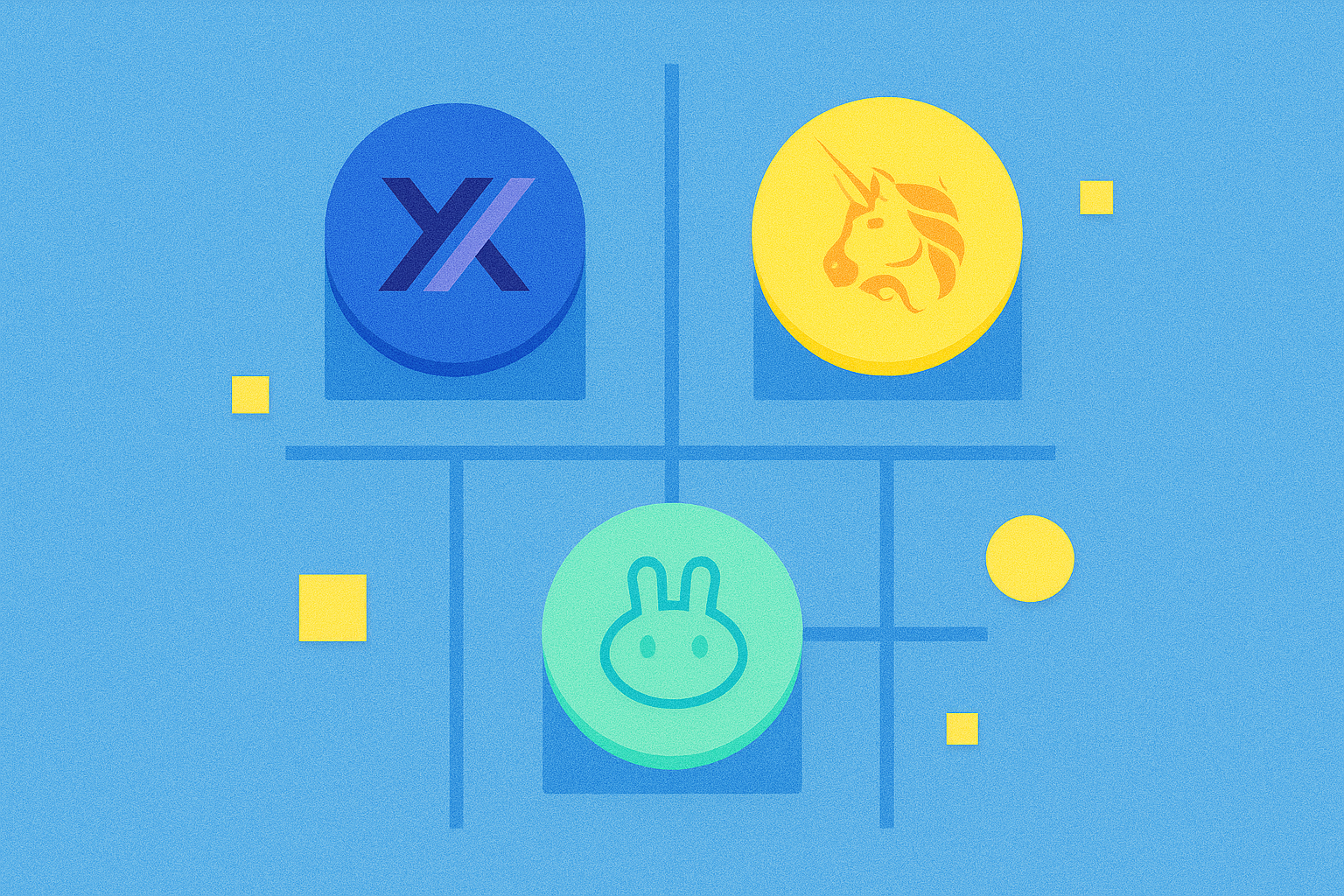
A decentralized exchange (DEX) is a digital platform powered by blockchain technology that enables cryptocurrency trading without intermediaries like banks. Unlike traditional financial systems, users maintain direct control over their assets, ensuring transparency and security throughout every transaction.
DEXs stand apart from traditional stock exchanges and centralized crypto exchanges. On a DEX, decision-making and control are distributed among users, eliminating centralization. This decentralized philosophy is a cornerstone of the cryptocurrency vision, driving autonomy and independence in finance.
Compared to conventional exchanges, DEXs offer robust security and greater privacy. Users can trade instantly by connecting their own wallet—no identity verification (KYC) required. With just an internet connection, anyone, anywhere in the world can access cryptocurrency markets.
Decentralized exchanges employ various blockchain technologies, including smart contracts, tokens, and layer solutions. Each DEX has its own architecture and user interface. Some platforms use the automated market maker (AMM) model, while others operate with order book systems.
Why DEXs Matter
In today’s digital era, DEXs play a critical role in promoting financial inclusion. Billions worldwide lack access to traditional banking services; DEXs’ open accessibility helps bridge that gap. For the unbanked and people living in regions with underdeveloped financial infrastructure, DEXs unlock new opportunities for economic participation.
As global trade and finance move away from USD dominance, DEXs provide alternative trading options, especially in regions with economic instability or volatile currencies. Cross-border transactions become frictionless, supporting smoother global commerce.
DEXs also ensure access to cryptocurrencies anytime, anywhere—even during financial crises—guaranteeing fair financial services regardless of individual circumstances or location. If centralized systems fail, decentralized protocols continue operating.
Beyond simple transactions, DEXs address broader economic challenges like currency shortages and trade restrictions. They offer decentralized solutions that empower individuals and businesses to act independently. These attributes position DEXs as essential to the future of finance.
Key DEXs to Watch
Recent breakthroughs in DEX technology have led to a surge of innovative platforms. Below, we profile 12 standout DEXs, examining their unique features, benefits, and how to use them. Each one offers distinct technologies and services to suit different user needs.
dYdX
dYdX is a decentralized exchange leveraging Layer 2 technology for fast, low-cost trades. Focused on derivatives, it offers perpetual contracts for flexible trading strategies.
Why Choose dYdX
- StarkEx (L2) delivers rapid settlement and minimal transaction delays
- ZK proofs protect user privacy and transaction data
- Plans for migration to an independent Cosmos-based chain promise improved scalability
- Collaborates with “Hedgies” NFTs to boost community engagement
Fee Structure
- No deposit fees, lowering the cost of funding trades
- Maker fees: 0%–0.02%, among the industry’s lowest
- Taker fees: 0%–0.05%, adjusted by trading volume
Pros
- Intuitive interface is beginner-friendly
- Fast trade execution keeps up with market shifts
- Supports a variety of order types (limit, market, stop-loss, etc.)
Cons
- Limited margin trading pairs restrict choices
- Swap coverage is narrow; not all cryptocurrencies are supported
How to Register
- Sign in using a Web3 wallet (MetaMask or similar)
- Connect your wallet to dYdX
- Deposit a minimum of $500 to start trading
ApeXPro
ApeXPro is a StarkEx-powered, multi-chain decentralized exchange focused on perpetual contracts. It requires no KYC, charges zero gas fees, and is favored by active traders.
Why Choose ApeXPro
- Multi-chain DEX supporting numerous blockchains via StarkEx
- Perpetual trading enables long-term positions
- No KYC or gas fees—easy onboarding
- Up to 20x leverage for efficient capital allocation
- Implements Buy & Burn Pool for $BANA price stabilization
Fees
- Maker fee: 0.02%—highly competitive
- Taker fee: 0.05%
Pros
- Demo accounts for risk-free practice
- Mobile app support for on-the-go trading
- Leverage lets you control large positions with minimal capital
Cons
- Fewer supported tokens, limited coverage of minor assets
- Smart contract risks and potential technical vulnerabilities
How to Register
- Connect your Web3 wallet
- Accept the platform’s terms of use
- Register your username and email (not available to US residents)
- Deposit funds to begin trading
Mainstream Platform DEX
This DEX operates on a dedicated blockchain to deliver low-cost trading. Its proprietary price discovery mechanism ensures optimal rates for users.
Why Choose This Platform
- Dedicated chain enables low-cost trades and significant fee reduction
- XRouting algorithm finds the best price and minimizes slippage
- GasStation feature streamlines swapping tokens for fee payment
Pros
- Low fees support frequent trading with minimal cost
- Multi-chain price aggregation sources best prices across exchanges
- Global user support for worldwide access
Cons
- Typically lower trading volume compared to leading DEXs
How to Register
- Create a platform account
- Deposit or purchase at least $50
- Receive a MysteryBox bonus
Curve
Curve specializes in stablecoin swaps, delivering low slippage and high efficiency. It excels in exchanging assets of equivalent value.
Why Choose Curve
- Efficient swaps for stablecoins minimize price volatility risk
- CRV rewards and vote-lock mechanism offer fee rebates for long-term holders
Pros
- Low fees enable frequent, cost-effective trades
- Non-custodial—users always control their funds
- Extensive liquidity pools support diverse trading pairs
Cons
- Not suitable for beginners; DeFi expertise required
- Dependency on external DeFi protocols introduces risk
How to Register
- Connect your Web3 wallet
- Go to curve.fi
- Select a pool and deposit or swap
Balancer
Balancer is a decentralized exchange offering customizable AMM features. Users can create unique liquidity pools and manage multi-asset portfolios.
Why Choose Balancer
- Custom AMM features allow flexible pool design
- Portfolio management streamlines multi-asset holdings
- veBAL holders receive 100% of fees, incentivizing governance
Pros
- Multi-asset pools simplify portfolio management
- Custom AMM support enables tailored trading strategies
Cons
- Risk of fraudulent tokens—caution is essential
- Complex UI may deter beginners
How to Register
- Connect your Web3 wallet
- Visit balancer.fi
- Explore pools and select Swap
Changelly
Changelly is an aggregator platform integrating multiple DEXs. Its smart routing technology ensures users get the best available rates.
Why Choose Changelly
- Smart router delivers optimal rates, minimizing costs
- Integrates 100+ DEXs and supports swaps for over 3,600 tokens
Pros
- Low fees for cost-efficient trading
- Live support for fast issue resolution
- Non-custodial—users retain control of assets
Cons
- Restricted in many countries, including the US
- Additional fees for fiat currency use
How to Register
- Go to Changelly.com
- Select your asset and click “Exchange Now”
- Click “Connect Wallet” (top right) to link your wallet
- Enter your wallet address or scan the QR code
- Execute the swap and earn $10 from the referral program
PancakeSwap
PancakeSwap is a leading DEX on BNB Chain, famed for low fees and high liquidity. It offers yield farming, staking, and NFT trading.
Why Choose PancakeSwap
- AMM model enables stable trades with low slippage
- Supports yield farming, staking, and NFT trading for diverse earning options
Pros
- Low fees keep trading costs down
- High trading volume ensures strong liquidity
Cons
- Network congestion may slow transactions
- Fraudulent token risk—use caution with unreliable assets
How to Register
- Connect your Web3 wallet
- Go to pancakeswap.finance
- Choose Trade, Earn, or NFT to get started
SushiSwap
SushiSwap is a decentralized exchange offering liquidity mining and SUSHI rewards. It supports multi-chain trading across 14 blockchains.
Why Choose SushiSwap
- Liquidity mining and SUSHI rewards generate extra income for providers
- Supports 14 blockchains for wide-ranging trading
Pros
- User-friendly interface for easy trading
- Revenue sharing model rewards users as the platform grows
Cons
- Technical updates lag behind competitors
- Smart contract risks and technical vulnerabilities require caution
How to Register
- Connect your Web3 wallet
- Select the blockchain you wish to use
- Visit sushi.com
- Choose the asset and start trading
Bancor
Bancor is a DEX with impermanent loss protection and an AMM model for instant asset swaps.
Why Choose Bancor
- AMM enables instant swaps—no waiting
- Impermanent loss protection reduces risk for liquidity providers
Pros
- Loss protection cuts volatility risk for liquidity providers
- Single-sided deposits allow liquidity provision with one asset
Cons
- Some centralized elements—full decentralization not achieved
- Complex UI may challenge new users
How to Register
- Connect your Web3 wallet
- Go to bancor.network
- Select Trade or Pools to begin
DODO
DODO is a DEX using the Proactive Market Maker (PMM) algorithm for high liquidity and precise pricing. Its proprietary mechanism enables efficient trades.
Why Choose DODO
- PMM algorithm delivers high liquidity and optimal pricing with minimal slippage
Pros
- Low fees for cost-effective trades
- High price accuracy for market-rate exchanges
- No minimum deposit for liquidity providers—any amount is welcome
- Loss protection reduces risk
Cons
- Declining platform adoption
- Lower Total Value Locked (TVL) means less liquidity
How to Register
- Connect your Web3 wallet
- Visit dodoex.io
- Select Exchange or Bridge to start
Uniswap
Uniswap is the world’s largest DEX by trading volume, supporting Ethereum and Layer 2 solutions. Its streamlined interface makes it a favorite among users.
Why Choose Uniswap
- Highest trading volume and liquidity among DEXs
- Supports Ethereum and Layer 2 networks for broad compatibility
Pros
- Ample liquidity keeps slippage low, even for large trades
- No registration—trade instantly
- Superior user experience with intuitive design
Cons
- Ethereum network can incur high gas fees
- Fraudulent token risk—use caution
How to Register
- Choose your Web3 wallet
- Visit uniswap.org
- Connect your wallet and start trading right away
DEX Types
Decentralized exchanges fall into several technical categories, each with unique features and benefits. Users can choose the best fit based on their needs and trading preferences.
-
AMM (Automated Market Maker): Uses algorithmic pricing and liquidity pools for trades. Examples: Uniswap, PancakeSwap, SushiSwap.
-
On-chain Order Book: Manages buy and sell orders directly on the blockchain for full transparency, though it may face speed and cost challenges.
-
Off-chain Order Book: Order books are maintained off-chain, with settlement on-chain. This model provides fast, low-cost order processing while maintaining transparent settlements.
-
DEX Aggregator: Aggregates pricing from multiple DEXs to offer users the best rates. Example: Changelly, which enables access to several platforms from one interface.
Major DEX Comparison Table
This table compares key features, fees, listed assets, and bonus programs across major decentralized exchanges so you can select the best platform for your needs.
| Platform | Features | Fees | Listed Assets | Bonus |
|---|---|---|---|---|
| StormGain | No ID required; free deposit/withdrawal | Variable | BTC, ETH, LTC, XRP, ERC20, others | None |
| dYdX | Free monthly trades; free deposit/withdrawal; perpetuals up to $100,000 free | Maker 0%–0.02%, Taker 0%–0.05% | Major assets | None |
| APEXPro | Trade-to-earn model | Maker 0.02%, Taker 0.05% | BANA, USDC, BTC, others | Airdrops, etc. |
| Uniswap | High liquidity | 0.3% | ERC20 | None |
| Curve | Yield farming focus | 0.04% | Stable assets | None |
| Balancer | Multi-feature AMM | 0.0001%–10% | ERC20 | None |
| PancakeSwap | Low fees; high liquidity | 0.25% | BEP20 | None |
| SushiSwap | Staking & farming | 0.3% | ERC20 | None |
| Bancor | Loss protection | Pool-based | ERC20 | None |
| DODO | Smart trading | 0.3% | ERC20, EVM chains | None |
| Mainstream Platform DEX | Multi-chain support | Network gas only | 10+ chains, 100,000+ tokens | None |
The Future Is Decentralized
The vulnerabilities exposed in centralized exchanges (CEXs) have accelerated the migration to DEXs. Major CEX failures have reshaped the crypto industry and changed user perspectives.
Research from Delphi Digital shows that after major CEX collapses, DeFi protocols and DEXs saw a 24% surge in trading volume. This proves users are increasingly aware of centralized platform risks and are seeking safer, more transparent decentralized alternatives.
With regulatory responses lagging, decentralized trading is more important than ever. DEXs empower users with direct asset control, shielding them from third-party risks and positioning DEXs at the heart of tomorrow’s financial systems.
DEX Usage Recommendations:
- Choose platforms with audited code to minimize security risks
- Only invest surplus funds and manage risk proactively
- Use multiple wallets to diversify assets
- Stay informed about the latest security threats and beware of scams and hacks
Conclusion: The Outlook for Decentralized Exchanges (DEXs)
As with all crypto innovations, thorough due diligence is essential before trading on DEXs. Only invest funds you can afford to lose, and use platforms audited by independent smart contract authorities.
DEXs offer significant security advantages over centralized exchanges. As more people learn about and use crypto, DEXs will continue to grow in popularity. Ongoing technical advances will improve user experience and lower costs, fueling broader adoption.
Regulatory developments may eventually blur the lines between DEXs and CEXs, with hybrid platforms combining the strengths of both.
Decentralized exchanges are critical tools in realizing crypto’s vision of financial democratization. Continued innovation will give more users access to secure, transparent trading environments.
FAQ
What is a decentralized exchange (DEX)? How is it different from a centralized exchange?
A DEX is a blockchain-based, decentralized platform for trading. Unlike centralized exchanges, it eliminates intermediaries and enables direct on-chain trading. DEXs offer superior privacy and security.
What are the major DEX platforms, and how do Uniswap, SushiSwap, Curve differ?
Uniswap leads in liquidity and trading volume. SushiSwap excels in yield farming. Curve is specialized for stablecoin trades. PancakeSwap, supported by Binance, sees high volume. Each platform is differentiated by fees and features.
How do you trade on a DEX? What should beginners be aware of?
Connect your wallet, approve tokens, and execute swaps. Beginners should always verify contract addresses and avoid phishing scams. Keep enough native tokens in your wallet to pay gas fees.
What are the fees for DEX trades? How can you reduce trading costs?
DEX fees vary based on network gas prices. To lower costs, use Layer 2 solutions, trade during off-peak hours, or batch transactions.
Is trading on a DEX safe? What are the risks?
DEXs are generally secure, but risks include smart contract bugs, loss of private keys, and liquidity shortages. Use reputable platforms and safeguard your private keys.
What is liquidity mining? How do you participate in liquidity mining on DEXs?
Liquidity mining means supplying token pairs to DEX liquidity pools to earn trading fees and platform rewards. Just connect your wallet and provide equal amounts of two tokens to join.
What are the differences between DEXs on Ethereum, Polygon, and BSC?
Ethereum is robust but expensive; Polygon offers low fees and quick trades; BSC is also low-cost and fast but faces scaling challenges. Trading volume, speed, and supported tokens vary by chain.
How do DEXs and CEXs compare? What are the pros and cons?
DEXs enable self-custody and secure, direct trades with no intermediary. CEXs offer fast execution and easy access, but centralized funds are more exposed to theft. DEXs may be slower due to blockchain constraints.
How do you select the right DEX?
Choose DEXs based on supported blockchains and tokens. Confirm strong liquidity and security; compare user reviews and trading volumes.
What trends will shape DEXs in the future?
Liquidity integration and aggregator models will dominate. Access to multiple markets will be seamless, improving trading efficiency. Direct market maker participation will boost liquidity, and technical innovation will further accelerate decentralized trading.
Share
Content
How to Buy Cryptocurrency


Trending Cryptocurrencies



What will be the market capitalization of USDC in 2025? Analysis of the stablecoin market landscape.

How is DeFi different from Bitcoin?

What is DeFi: Understanding Decentralized Finance in 2025

USDC stablecoin 2025 Latest Analysis: Principles, Advantages, and Web3 Eco-Applications
Development of Decentralized Finance Ecosystem in 2025: Integration of Decentralized Finance Applications with Web3
2025 USDT USD Complete Guide: A Must-Read for Newbie Investors

What Are LP Tokens and How to Earn From Them: A Comprehensive Overview
Comprehensive Guide to Bitcoin and Cryptocurrency Investment

How to Create an NFT for Free with Picsart
Dusting Attack: How Hackers Steal Your Information with Tiny Crypto Amounts and How to Protect Yourself

Who Is Will Clemente? A Guide to the Popular On-Chain Analyst