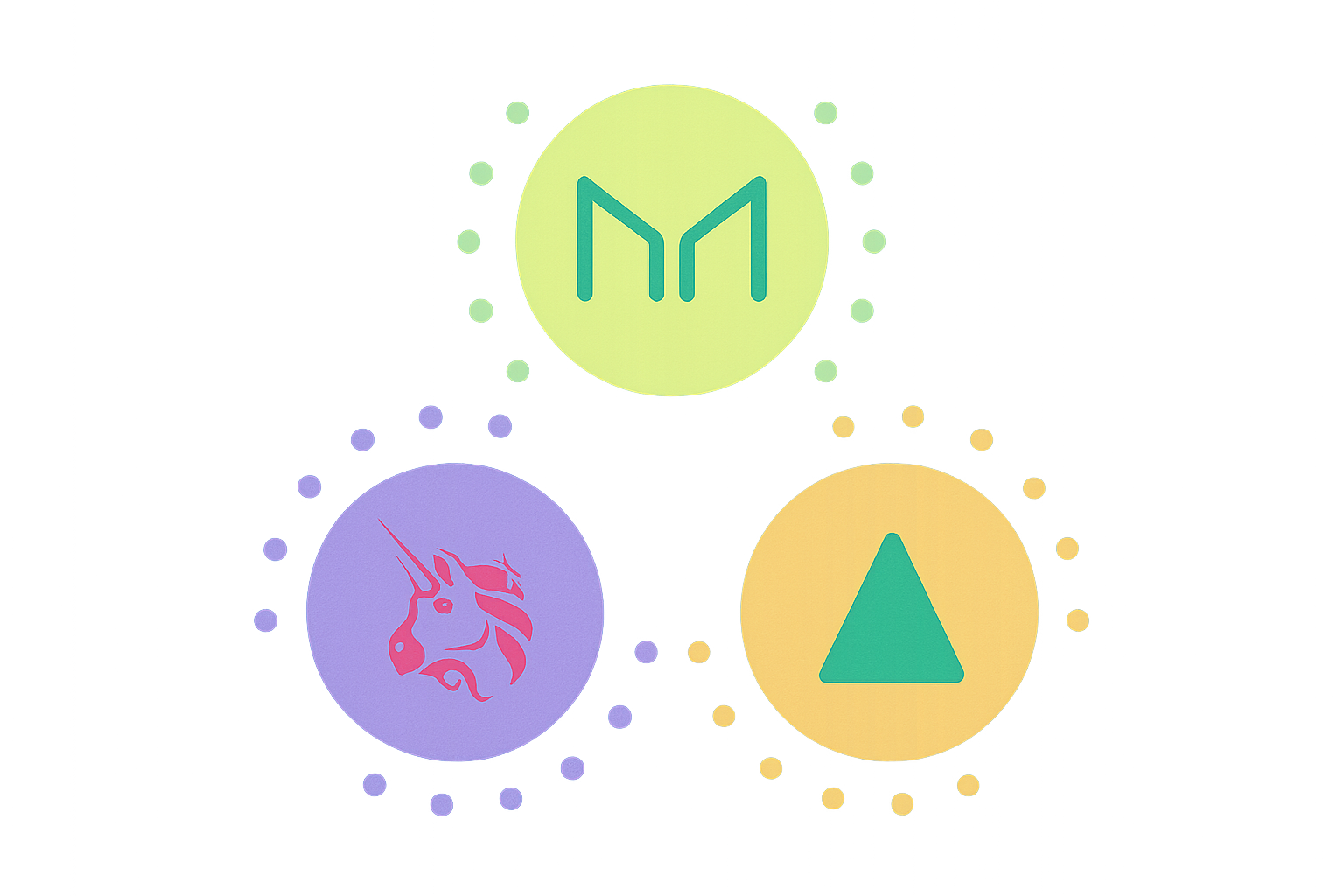
What Are Governance Tokens? A comprehensive beginner's guide covering foundational concepts and their key roles. Explore how governance tokens enable decision-making power, enhance security, and drive economic value. Learn about leading tokens including MKR, UNI, and AAVE, and gain insight into price volatility and security risks. This complete guide details why DeFi and DAO governance tokens are indispensable in the Web3.0 era. Trading is available on Gate.
What Are Governance Tokens?
Governance tokens are tokens that grant holders the right to participate in decision-making for decentralized applications (DApps) or decentralized autonomous organizations (DAOs) built on blockchain technology, including operational policies and reward distribution methods. Unlike traditional centralized organizations, governance tokens empower users to lead critical decisions and project direction. This user-driven management is the core characteristic of governance tokens.
These tokens form the backbone of new organizational structures in the Web3.0 era, allowing all participants to express their opinions on equal footing and vote to determine project policies. For example, governance token holders can exercise voting rights on any major matters related to a project, such as protocol upgrades, fee changes, or feature additions.
With governance tokens, decision-making authority—once monopolized by corporations or developer teams—is now distributed across the community. This enhances project transparency and better aligns user interests with project development. Currently, many DeFi protocols and DAOs rely on governance tokens, making them indispensable to decentralized ecosystems.
Key Features of Governance Tokens
Governance tokens possess unique attributes that differentiate them from conventional crypto assets. Here, we detail three primary features.
Feature 1: Participation Rights in Decision-Making
The most significant feature of governance tokens is that they give users the right to participate in project decisions, fostering greater transparency and democratization.
Token holders can vote on a variety of proposals, including development strategies, reward distribution, fee settings, and new feature implementations. Typically, the more tokens a user holds, the greater their voting power.
This mechanism ensures that project direction is shaped by community consensus, preventing unilateral control by individuals or organizations. Additionally, every step from proposal to voting and implementation is recorded on the blockchain, providing full transparency and auditability.
Feature 2: Enhanced Project Security
Governance tokens also play a role in boosting project security. Token holders may participate in smart contract code reviews and vote on security audit outcomes.
Decentralized management eliminates single points of attack, reducing risks of hacking and unauthorized changes. Furthermore, protocol upgrades or major amendments require broad community approval, minimizing the likelihood of malicious changes being enacted.
Many projects operate bug bounty programs to reward the discovery of security vulnerabilities, often paying out in governance tokens. This creates an environment where the community collectively works to strengthen security.
Feature 3: Economic Value
Governance tokens not only confer voting rights but often carry economic value. Some projects distribute a portion of platform profits to token holders as dividends.
Governance tokens are traded on crypto exchanges, with prices fluctuating according to market supply and demand. When a project succeeds and attracts more users, demand—and thus price—may rise. Conversely, stagnation or competitive pressure can lead to price declines.
Thus, governance tokens are valued beyond their voting function and are increasingly seen as investment vehicles. However, it's essential to fully understand price volatility risks before holding them.
Important Considerations for Governance Tokens
Although governance tokens offer numerous advantages, there are also risks to consider. Here are two key points.
Consideration 1: Price Volatility Risk
Governance tokens are subject to significant value fluctuations depending on project success or failure. If a project grows and gains users, token demand and price may rise. If a project underperforms or faces technical issues, prices can drop sharply.
Prices are also impacted by market supply and demand, crypto market trends, regulatory changes, and competing projects. Cryptocurrency markets are particularly volatile compared to traditional financial markets, with frequent sharp price movements.
When investing in governance tokens, understand these risks and invest according to your risk tolerance. Diversifying across multiple tokens, rather than concentrating on a single project, can help mitigate risk.
Consideration 2: Security Risks
Governance tokens are used in DApps and DAOs—projects operated via smart contracts. While smart contracts execute automatically, vulnerabilities in the code can expose projects to attacks.
Past incidents have resulted in substantial losses due to exploited smart contract vulnerabilities. Once an attack succeeds, the irreversible nature of blockchain transactions makes recovery difficult.
Wallet security is also critical. Leaked private keys or phishing scams can lead to token loss. When holding governance tokens, use reputable wallets and secure your private keys. Check whether the project has undergone security audits or operates bug bounty programs.
Major Governance Tokens
Many DeFi projects and DAOs issue governance tokens. Here are three leading examples.
Major Governance Token 1: MKR (Maker)
MKR is the governance token for the MakerDAO protocol. MakerDAO is a pioneering DeFi project that issues DAI, a stablecoin pegged to the US dollar.
MKR holders vote on DAI stabilization fees (staking rates), collateral types, collateralization ratios, system fees, and more. MakerDAO employs transparent governance, with all proposals and voting results recorded on the blockchain.
MKR's unique economic model uses a portion of DAI issuance fees to buy back and burn MKR tokens, decreasing the total supply and increasing scarcity. MKR is one of the best-known governance tokens and is vital to the DeFi ecosystem.
Major Governance Token 2: UNI (Uniswap)
UNI is the governance token for Uniswap. Uniswap is a leading decentralized trading platform (DEX) on Ethereum, utilizing an automated market maker (AMM).
UNI holders vote on Uniswap's development, fee distribution, feature additions, and protocol upgrades. The 2020 airdrop granted voting rights to early Uniswap users, creating significant buzz.
Uniswap is one of the most successful DEX projects, and UNI tokens enjoy high liquidity and trading volume. The governance process is active, with frequent community proposals and ongoing improvements.
Major Governance Token 3: AAVE (Aave)
AAVE is the governance token for the AAVE platform. AAVE offers crypto lending and liquidity services and is among the largest DeFi platforms.
AAVE holders vote on adding collateral assets, interest model changes, and protocol parameter adjustments. The token also functions as a "Safety Module," covering protocol losses with staked AAVE tokens.
This mechanism allows AAVE holders to directly support protocol security and earn staking rewards. AAVE continues to introduce innovative features and is a leader in DeFi.
Conclusion: Governance Tokens Are Becoming Standard Web3.0 Currencies
This article explored governance token definitions, features, risks, and key examples. Governance tokens enable participation in decision-making for decentralized projects, making management more democratic and transparent.
They provide voting rights, economic value, and bolster project security. Yet, price volatility and security risks must be understood before holding them.
As blockchain adoption grows, governance tokens will be implemented by more projects. As a central element of new organizational models in Web3.0, governance tokens will play a crucial role. Regulatory challenges remain, but are expected to resolve as technology advances. Watch for future developments and new possibilities in governance tokens.
FAQ
What Are Governance Tokens?
Governance tokens provide voting rights for organizational decision-making on the blockchain. Holders can influence key project outcomes.
What Are the Main Functions and Roles of Governance Tokens?
Governance tokens grant holders voting power over major project decisions. Key roles include protocol modifications, budget allocation, and operational policy determination. They also facilitate profit and incentive distribution, promoting decentralization.
How Can Governance Tokens Be Acquired?
The most reliable method is to purchase governance tokens on a DEX. They can also be obtained for free via airdrops or by actively contributing to projects.
What Are the Benefits of Holding Governance Tokens?
Holders can vote on critical project decisions and help shape protocol direction. Additional benefits include fee discounts and reward allocations, with potential for value appreciation as the project grows.
How Do Governance Tokens Differ from Regular Cryptocurrencies?
Governance tokens confer voting rights for project management, while standard cryptocurrencies do not. Governance tokens are typically held long-term for stable governance, whereas regular crypto assets are traded more freely.
What Are the Main Risks and Considerations for Governance Token Investments?
The main risks are price volatility and loss of value if the project fails. Verify project reliability and be mindful of market fluctuations before investing.
How Do Voting Rights Work for Governance Tokens?
Holders have the right to vote on major project decisions. Usually, one token equals one vote, and voting is automatically conducted via smart contracts. Holders can vote on issues like team member appointments and fee adjustments, determining project direction.
* The information is not intended to be and does not constitute financial advice or any other recommendation of any sort offered or endorsed by Gate.