What Is a Non-Custodial Wallet? A Step-by-Step Guide to Creating a Non-Custodial Wallet

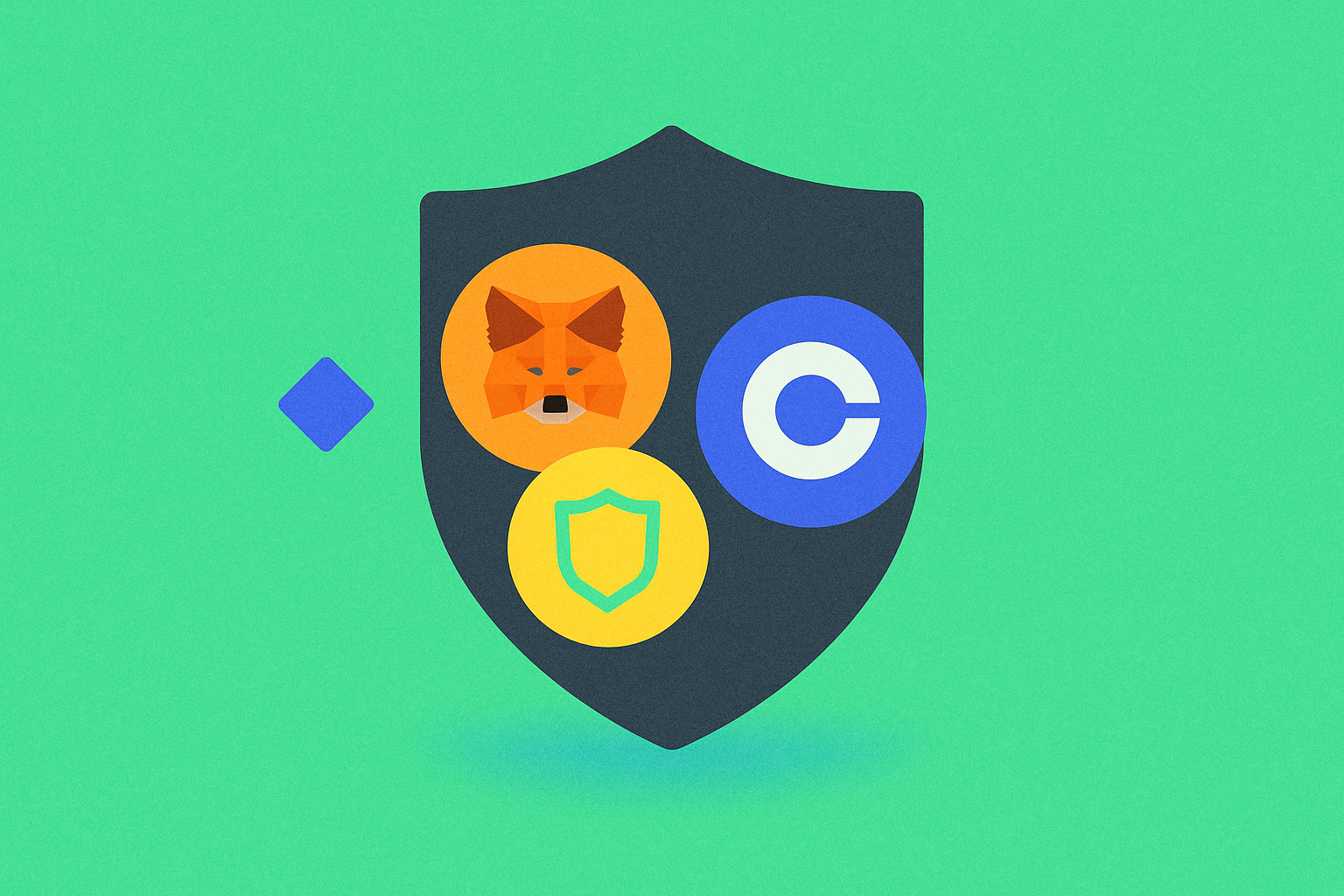
How Do Crypto Wallets Work?
In the cryptocurrency world, your assets exist as data entries recorded on the blockchain. A crypto wallet acts as a critical intermediary, allowing you to securely and efficiently access and manage your digital assets.
To understand how wallets operate, each crypto wallet is built on two fundamental components:
Public Key: This functions like your bank account number and is used to receive cryptocurrency from others. You can share your public key openly without security concerns. Anyone who wants to send you crypto will need your wallet address derived from this public key.
Private Key: This is the most important element, comparable to your bank password or personal signature. The private key must be kept strictly confidential by the wallet owner. It’s used to sign and authorize every transaction, proving your legal ownership of the assets and your right to transfer them. If someone obtains your private key, they gain complete control over the assets in your wallet.
What Is a Custodial Wallet?
A custodial wallet, also known as a hosted wallet, is a type of wallet where a cryptocurrency investor entrusts a third party to manage and secure their wallet keys. The most common example of a custodial wallet is an account on a centralized crypto exchange.
When using a custodial wallet, you don’t directly hold your private keys. Instead, the exchange or service provider manages all the keys and bears responsibility for protecting your assets. This is similar to depositing money at a bank, where the bank is responsible for safeguarding and managing your funds.
Advantages of Custodial Wallets
Beginner-friendly: Custodial wallets are highly accessible for newcomers to crypto. You don’t need to worry about handling complex private keys or losing access. Interfaces are typically straightforward and user-friendly, much like traditional banking apps.
Professional-grade security: Major exchanges invest heavily in advanced, multi-layered security, including data encryption, cold storage, multi-factor authentication, and round-the-clock security teams. This provides peace of mind, especially for users without deep technical expertise.
Disadvantages of Custodial Wallets
Centralized risk: If the custodian (exchange) is hacked or faces financial trouble or bankruptcy, users can lose their assets. There have been many cases of major exchanges being hacked or shutting down unexpectedly, leaving users unable to withdraw funds.
Contradicts decentralization: Using a custodial wallet centralizes power and assets—directly opposing the core decentralized ethos of blockchain and cryptocurrency.
Regulatory compliance: Users are required to complete Know Your Customer (KYC) and Anti-Money Laundering (AML) procedures, which can expose personal data and reduce privacy.
Legal risks: Assets in a custodial wallet may be frozen or seized by authorities if ordered by regulators. In these scenarios, users lack full control.
Management fees: Many custodial wallet providers charge management, transaction, or withdrawal fees, raising the cost of use.
What Is a Non-Custodial Wallet?
A non-custodial wallet is a type of crypto wallet where the owner is directly and fully responsible for managing their private keys. No third party can intervene or control the user’s assets.
Non-custodial wallets come in various forms, including web-based apps, desktop or mobile software, dedicated hardware devices (hardware wallets), or even paper wallets—where keys are printed and physically stored.
With a non-custodial wallet, you truly own and control 100% of your assets. You hold the private key and have full authority over every transaction, with no need for approval from anyone else. This is the essence of the famous saying in the crypto community: "Not your keys, not your coins."
Advantages of Non-Custodial Wallets
Complete asset control: You have absolute ownership and control over your assets. No one can block your access or use of your funds as long as you keep your private key secure.
No third-party risk: No centralized party can freeze, seize, or restrict your assets. You are not dependent on the reliability or continuing existence of any organization.
Privacy protection: No KYC or personal information is required—anyone can create and use a non-custodial wallet. This preserves your anonymity and privacy.
Direct access to DeFi: Non-custodial wallets enable direct interaction with decentralized finance (DeFi) applications, so you can lend, borrow, stake, yield farm, and trade on decentralized exchanges without intermediaries.
Disadvantages of Non-Custodial Wallets
Key management responsibility: Owners must manage and secure private keys entirely on their own, which demands technical knowledge and great caution.
Irrecoverable key loss risk: If you lose your private key or recovery phrase, your assets are gone forever—there’s no way to recover them. No customer support can help in this case.
Newcomer scam risk: Beginners are easy targets for phishing, hacks, or scams. They might accidentally expose private keys, interact with malicious smart contracts, or send funds to fake addresses.
Strict security discipline required: Users must master and apply best security practices: securely back up keys, use strong passwords, be wary of suspicious sites and apps, and regularly update security software.
How to Create a Non-Custodial Wallet (Example: MetaMask)
MetaMask is one of the most popular non-custodial wallets. Here’s a step-by-step guide to creating a MetaMask wallet:
Step 1: Download and install MetaMask Go to the Chrome Web Store and search "MetaMask." Download the official extension and add it to your browser. MetaMask also supports Firefox, Brave, and Edge.
Step 2: Launch the setup process After installation, click the MetaMask icon in your browser toolbar to begin wallet setup.
Step 3: Create a new wallet Select "Create a Wallet" if this is your first time with MetaMask. If you already have a wallet, choose "Import Wallet" to restore it using your recovery phrase.
Step 4: Set a password Create a strong password for your wallet—used to unlock it on your current device. The password should be at least 8 characters, with upper- and lowercase letters, numbers, and special characters.
Step 5: Back up your recovery phrase MetaMask will display a secret 12-word recovery phrase. This is crucial for restoring your wallet. Write it down on paper and store it securely—never keep it electronically or as a screenshot.
Step 6: Secure your recovery phrase Memorize or carefully copy your recovery phrase. Never share it with anyone, including MetaMask support. Anyone who has it can fully access and control your wallet.
Step 7: Confirm your recovery phrase MetaMask will ask you to re-enter your recovery phrase in order. Complete this confirmation step.
Step 8: Finish and use your wallet Once finished, your MetaMask wallet is ready. You can now receive, send crypto, and interact with decentralized applications.
Top 5 Non-Custodial Wallets with Web Versions
#1. MetaMask
MetaMask has become a staple in the crypto community since its 2016 launch. Its popularity surged during the 2020 DeFi boom, as millions joined the platform for decentralized finance applications.
The MetaMask interface is highly intuitive, making it ideal for both beginners and experienced traders. It operates as a browser extension, so users can interact with DApps seamlessly without leaving their browsers.
MetaMask’s major advantage is multi-chain support. In addition to Ethereum, it’s compatible with other blockchains like Binance Smart Chain, Polygon, Arbitrum, Optimism, and many more. This lets you easily switch between chains for lower fees or diverse investment opportunities.
MetaMask also integrates with leading NFT platforms like OpenSea, enabling convenient NFT buying, selling, and management.
#2. MyEtherWallet (MEW)
MyEtherWallet, or MEW, is one of the oldest non-custodial wallets in the Ethereum ecosystem, launched in 2016. MEW specializes in Ethereum and ERC-20 tokens, making it the go-to wallet for users seeking a focused Ethereum solution.
MEW lets users interact directly with Ethereum DApps and EVM-compatible blockchains. Its web interface is simple and user-friendly, streamlining basic tasks like sending and receiving ETH or ERC-20 tokens.
MEW fully supports NFT management, allowing users to view, manage, and transfer NFTs. It also integrates with major hardware wallets like Ledger and Trezor for enhanced security.
With years of stable operation, MEW has earned a strong reputation for reliability and security in the Ethereum community.
#3. Coinbase Wallet
Coinbase Wallet was launched in 2018 as a product separate from the main Coinbase exchange. Notably, Coinbase Wallet is fully non-custodial, unlike regular Coinbase accounts.
Coinbase Wallet’s standout feature is broad blockchain compatibility. It supports Ethereum, Bitcoin, Solana, Polygon, and hundreds of altcoins, letting users manage a wide range of assets in one app.
It offers competitive transaction fees and does not require KYC for wallet use, preserving privacy and enabling anyone to quickly create and use a wallet.
One drawback is that Coinbase Wallet’s code is not fully open-source. As a result, the community cannot fully audit the code, which may concern users who prioritize transparency and security.
#4. Trust Wallet
Trust Wallet, backed by a major exchange, has quickly become one of the most popular mobile wallets. It’s designed for a simple yet powerful mobile experience.
Trust Wallet’s multi-chain compatibility is a key strength. It supports over 65 blockchains and millions of tokens, so users can manage most major crypto assets in one app.
Trust Wallet also offers comprehensive NFT support, allowing users to view, manage, and transfer NFTs directly within the app.
A notable feature is direct staking within the wallet. Users can stake supported coins—like Cosmos, Tezos, Tron, and more—to earn passive rewards without leaving the app.
Additionally, Trust Wallet includes a built-in swap feature, enabling quick token exchanges directly in the wallet.
One of Trust Wallet’s biggest advantages is being fully open-source, allowing the community to audit and contribute, which enhances transparency and trust.
#5. Crypto.com DeFi Wallet
Crypto.com DeFi Wallet is the non-custodial wallet from Crypto.com, purpose-built for full access to the DeFi ecosystem. It allows users to participate in decentralized finance activities such as lending, borrowing, yield farming, and staking.
The wallet supports multiple blockchains, including Ethereum, Cronos (Crypto.com’s proprietary chain), Cosmos, and others. This provides flexibility for users to choose the best chain in terms of needs and transaction fees.
Crypto.com DeFi Wallet also provides full NFT support, allowing you to buy, sell, and manage NFTs. Its integrated swap feature makes it easy to exchange different cryptocurrencies without leaving the app.
More recently, Crypto.com DeFi Wallet introduced a browser extension, enabling users to interact with DApps directly from their web browser, similar to MetaMask.
Supported by a large and reputable platform, Crypto.com DeFi Wallet continues to attract users seeking safe and convenient DeFi access.
Are Non-Custodial Wallets Considered Safer?
In the custodial vs. non-custodial safety debate, many industry experts view non-custodial wallets as theoretically safer for several reasons:
No custodian risk: With non-custodial wallets, you’re not exposed to third-party hacks, bankruptcy, or dishonesty. You have full control of your assets, with no dependency on any organization’s reliability.
True financial sovereignty: You manage your assets—no one can freeze, seize, or restrict your funds. This reflects the "be your own bank" principle at the heart of crypto.
Avoiding third-party operational risk: Some exchanges use client deposits for lending or risky investments. If those fail, users may lose funds. With non-custodial wallets, assets always remain under your control and can’t be misused.
However, which wallet is safer isn’t always a clear-cut answer. For those less tech-savvy or lacking security expertise, custodial services from reputable platforms may be safer. Major exchanges often have professional security teams, asset insurance, and advanced protection methods that individuals cannot easily match.
Your choice between custodial and non-custodial wallets depends on personal factors: your technical knowledge, security skills, asset size, intended use, and preference for control. Many experienced users combine both—using custodial wallets for frequent, small transactions, and non-custodial wallets (especially hardware wallets) for long-term, large-asset storage.
Most importantly, you need to understand the pros and cons of each wallet type, assess your abilities and needs, and make the best choice to protect your crypto assets.
FAQ
What is a non-custodial wallet? How does it differ from a custodial wallet?
A non-custodial wallet is one you manage yourself, holding your own private key. In a custodial wallet, a third party manages the key for you. Non-custodial wallets are safer because you have full control over your assets.
How do I create a non-custodial wallet? What are the steps?
Creating a non-custodial wallet is simple: (1) Download a trusted wallet app, (2) Create a new account, (3) Securely save your recovery phrase, (4) Set a strong password. You have complete control over your private key.
Are non-custodial wallets safe? What are the main risks?
Non-custodial wallets are safer because you have full control of your private key. The main risks are losing your secret key, which results in permanent asset loss, or falling for phishing scams if you don’t protect your information.
What is a private key in a non-custodial wallet? How should I manage it?
A private key is a confidential code that lets you access and control your wallet's assets. Never share it—store it securely and make sure it’s not lost to protect your funds.
What are some popular, trusted non-custodial wallets today?
MetaMask, Trust Wallet, Coin98 Super Wallet, and Ramper Wallet are popular and reliable non-custodial wallets. These wallets give you full control of your private keys and support multiple blockchains.
If I forget my non-custodial wallet’s seed phrase, can I recover it?
There’s no way to recover it. The seed phrase is your only key to access a non-custodial wallet. If you lose it, you cannot retrieve your funds. Always keep your seed phrase safe and secure.
Share
Content
How to Buy Cryptocurrency


Trending Cryptocurrencies



How to Withdraw Money from Crypto Exchanges in 2025: A Beginner's Guide

5 ways to get Bitcoin for free in 2025: Newbie Guide

Treasure NFT Marketplace: A 2025 Guide for Web3 Gamers and Investors

What Is TOAD Coin and How Does Its Tokenomics Work?

Crypto Assets Beginner's Guide: How to Buy, Store, and Trade Your First Crypto Coin

What Is the Best AI Crypto in 2025?
Profitability Analysis of Cryptocurrency Mining: Miner and Altcoin Selection in Recent Years
Comprehensive Guide to NFTs: Understanding Digital Ownership and Blockchain Technology

Top 7 Metaverse Games for Play-to-Earn Gaming
What is SHFT: A Comprehensive Guide to Understanding Shift Management and Workforce Scheduling

What is LABUBU: A Complete Guide to Pop Mart's Most Iconic Collectible Character