What is Avalanche (AVAX): whitepaper logic, use cases, technology innovation, and roadmap explained

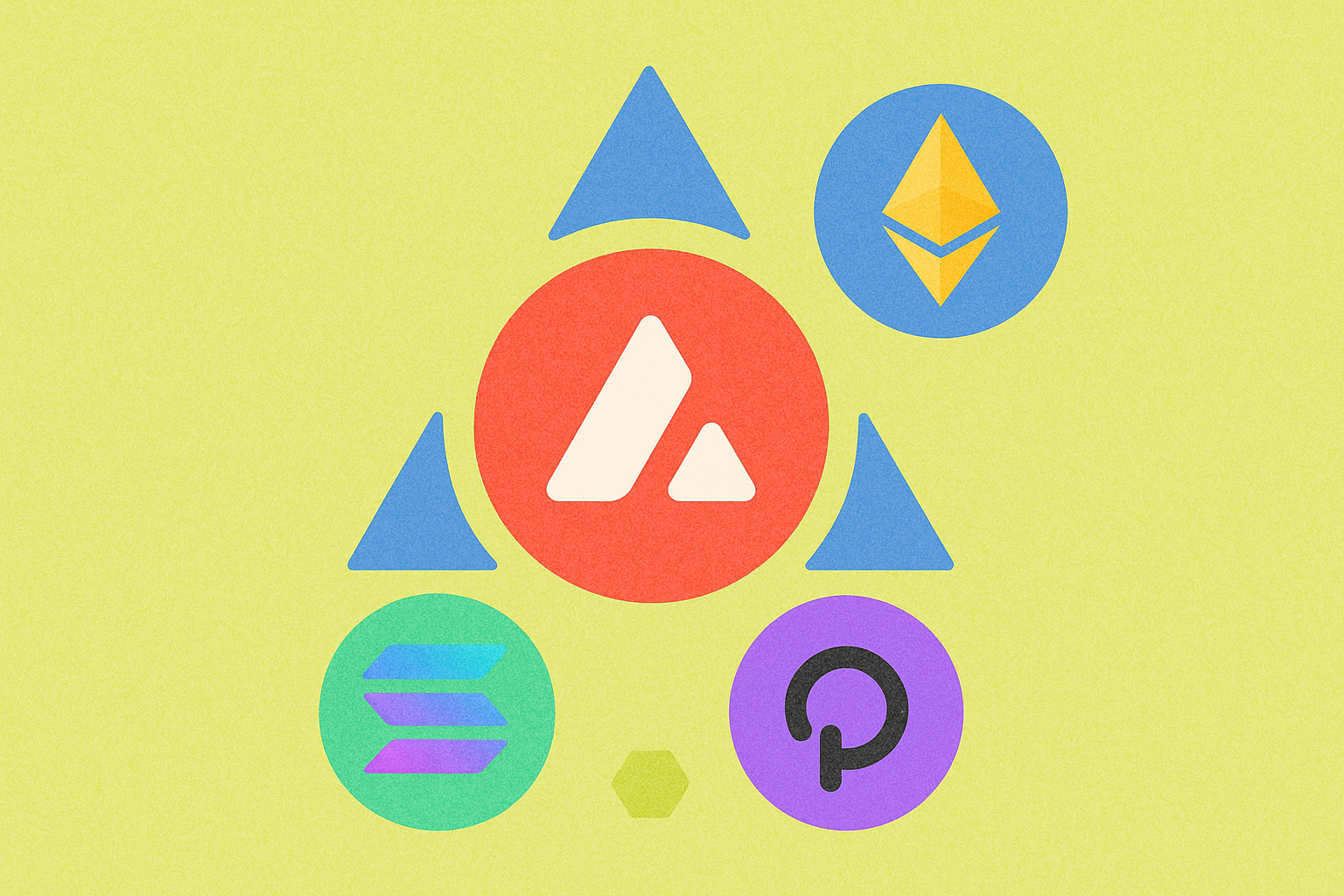
Three-Layer Architecture and Consensus 3.0: How Avalanche Achieves 4,500+ TPS with Sub-Cent Transaction Fees
Avalanche's distinctive three-chain architecture forms the technical foundation for its remarkable performance. The platform separates critical functions across three specialized blockchains: the X-Chain for digital asset creation and management, the P-Chain for network coordination and custom Layer-1 subnet deployment, and the C-Chain for Ethereum-compatible smart contracts. This distributed design enables parallel transaction processing across chains rather than sequentially bottlenecking all activity through a single validator set, fundamentally addressing the scalability limitations plaguing traditional blockchain networks.
Underlying this architecture is Avalanche's revolutionary consensus mechanism, which departs from traditional proof-of-work and standard proof-of-stake approaches. The protocol employs a probabilistic consensus model where validators randomly sample small subsets of peers—typically just 20 nodes—regardless of total network size. This design ensures constant consensus messaging overhead, allowing Avalanche to scale horizontally without proportional increases in communication complexity. The Snowman consensus layer, built atop this foundation, guarantees near-instant finality and unprecedented throughput.
These innovations translate into concrete performance advantages. Avalanche achieves 4,500+ transactions per second with sub-cent fees and sub-second transaction finality—dramatically outperforming competitors. For context, Ethereum processes approximately 15 TPS with 12+ minute finality, while Bitcoin manages around 7 TPS. This architecture enables developers to deploy custom Layer-1 blockchains within the Avalanche ecosystem while maintaining interoperability, making it ideal for enterprise applications, DeFi protocols, and decentralized finance solutions requiring predictable, fast, and economical transaction execution.
Multi-Functional AVAX Token: Transaction Fuel, Staking Mechanism, and Governance Power Across DeFi, RWA, and Gaming Ecosystems
AVAX functions as the fundamental utility token powering the Avalanche ecosystem, serving three interconnected roles that drive network functionality and participant engagement. As transaction fuel, AVAX covers gas fees for all operations on the network, enabling smart contract execution with 1-second transaction finality and Ethereum toolkit compatibility. This design ensures efficient payment mechanisms for decentralized applications while maintaining network scalability.
The staking mechanism represents another critical dimension of AVAX utility, allowing holders to become validators and secure the network through proof-of-stake participation. Token holders can delegate their AVAX to validators or run validator nodes themselves, earning rewards for network contribution. This incentive structure creates economic security while distributing governance participation across the community.
Governance power embedded within AVAX tokens grants holders influence over protocol evolution and ecosystem development decisions. Through decentralized governance frameworks, AVAX holders can propose and vote on network upgrades, parameter adjustments, and resource allocation. Across DeFi applications, AVAX enables borrowing, lending, and trading mechanisms. In RWA tokenization, institutions increasingly utilize the Avalanche network for asset representation, with major players exploring opportunities in this sector. Gaming ecosystems leverage AVAX for in-game transactions, asset ownership, and play-to-earn mechanics, creating interconnected value flows throughout these diverse sectors.
Subnet Innovation and Scalability: Building Enterprise-Grade Blockchain Solutions While Maintaining Decentralization
Avalanche Subnets represent a breakthrough in enterprise blockchain architecture by enabling organizations to build sovereign, customizable networks without sacrificing the security and decentralization that blockchain technology promises. Traditional centralized databases cannot meet the compliance and performance demands of modern enterprises, yet deploying on fully public chains often introduces operational risks and regulatory uncertainty.
Subnets solve this fundamental tension by allowing enterprises to embed compliance logic directly into their blockchain infrastructure. Financial institutions leverage this capability to launch tokenized asset markets and settlement rails built around strict regulatory requirements, while maintaining the immutability and transparency benefits of blockchain technology. Banks can now operate private settlement networks that process high volumes of transactions at minimal cost, with transaction finality achieved in seconds rather than hours.
Large corporations employ permissioned Subnets to manage sensitive data within controlled blockchain environments while still benefiting from decentralized validation. This approach protects proprietary information and intellectual property while enabling secure, auditable data flows across organizational boundaries. Enterprise data platforms can now leverage blockchain's permanence without exposing information to public scrutiny.
The Avalanche consensus mechanism underlying these Subnets achieves exceptional scalability—processing thousands of transactions per second at near-instant finality—while maintaining true decentralization through thousands of independent validators securing the network. This validator diversity ensures that no single entity can compromise network integrity, giving enterprises the operational confidence needed to run critical systems on decentralized infrastructure. The ability to customize validator sets, asset types, and transaction rules enables organizations to build infrastructure precisely tailored to their business requirements, transforming blockchain from experimental technology into production-grade enterprise backbone.
Competitive Positioning Against Ethereum, Solana, and Polkadot: Market Adoption Metrics and Ecosystem Development Trajectory
Avalanche's competitive positioning against Ethereum, Solana, and Polkadot reflects a differentiated market adoption strategy targeting institutional and enterprise users. While Ethereum dominated with 2.23 million daily transactions and $8 trillion in stablecoin volume during Q4 2025, and Solana achieved 148 million daily transactions by processing more volume than Ethereum's two-year total, Avalanche distinguished itself through targeted ecosystem development focused on real-world financial applications.
| Metric | Avalanche | Ethereum | Solana | Polkadot |
|---|---|---|---|---|
| Primary Adoption Focus | Institutional/Enterprise | Financial Integration | Speed/Volume | Interoperability |
| Key Infrastructure | Subnets & DeFi | L2 Solutions | High-Throughput | Parachains |
| Developer Momentum | Strong | Established | Accelerating | Growing |
| 2025 Growth Signal | Institutional Integrations | Stablecoin Dominance | Developer Surge | Ecosystem Expansion |
Avalanche's 2025 ecosystem development trajectory emphasized institutional blockchain adoption through Grove Finance's $250M+ institutional credit platform, Dinari's tokenized stock infrastructure, and Re's reinsurance yield products. These integrations positioned Avalanche distinctly against competitors pursuing high transaction throughput. Solana added 11,534 new developers in nine months and achieved 100% uptime for 16 consecutive months, capturing speed-focused adoption, while Ethereum maintained market adoption leadership through Layer-2 solutions and dominant stablecoin infrastructure.
Polkadot's parachain ecosystem and customizable architecture attracted enterprises seeking interoperability, yet Avalanche's subnet model enabled use-case-specific blockchains with institutional-grade security. This fragmented competitive landscape reflects market maturation where different networks serve specialized adoption niches rather than winner-take-all dynamics, with Avalanche carving institutional adoption as its primary growth vector.
FAQ
What is Avalanche (AVAX)? What are its core innovative technologies?
Avalanche (AVAX) is a blockchain platform with a unique three-chain architecture (X-Chain, P-Chain, C-Chain) using Proof of Stake consensus. Core innovations include the Avalanche consensus protocol enabling high throughput, EVM compatibility for easy Ethereum app migration, and 99% lower energy consumption than Proof of Work systems.
How does the consensus mechanism (Snowman/Snowball) in Avalanche's whitepaper work?
Avalanche's Snowball consensus works through nodes continuously querying multiple validators and adopting majority opinion. Each node samples validators repeatedly, reaching agreement via majority voting. This ensures efficient and reliable network consensus without traditional mining.
How does Avalanche compare to Ethereum and Solana in terms of advantages and disadvantages?
Avalanche offers faster transactions and lower fees than Ethereum, with better scalability. Compared to Solana, Avalanche provides more stability but lower throughput. It balances decentralization and performance better than both, though Solana leads in pure speed and Ethereum dominates in ecosystem maturity.
What are Avalanche's main application scenarios and ecosystem projects?
Avalanche supports DeFi, GameFi, and enterprise applications through its three-chain architecture. Key ecosystem includes financial institutions using its subnets for compliance, payment solutions via stablecoins, and RWA tokenization. Over 500 deployed subnets enable custom blockchain environments across multiple industries.
What are the functions of Avalanche's three-layer architecture (X-Chain, P-Chain, C-Chain)?
X-Chain handles AVAX token transactions and asset transfers. P-Chain manages validators, staking, and subnet governance. C-Chain supports smart contracts and decentralized applications with EVM compatibility.
Avalanche (AVAX): What are the transaction speed, throughput, and fee costs?
Avalanche processes over 4,500 transactions per second with high throughput and minimal fees, making it highly efficient and cost-effective for users and developers.
What is the economic model and use cases of AVAX token?
AVAX is Avalanche's native token used for paying transaction fees, network governance participation, and staking. With a maximum supply of 720 million tokens, AVAX incentivizes network validators and secures the protocol through proof-of-stake consensus.
Avalanche 2024-2025年的发展路线图是什么?
Avalanche's 2024-2025 roadmap focuses on Etna network upgrade and subnet rebranding. Key priorities include AI computing innovation, knowledge property research, and enhanced scalability to strengthen ecosystem development.
How to develop and deploy smart contracts on the Avalanche network?
Use Solidity programming language with Avalanche's official toolchain. Set up your development environment, write contracts, compile them, then deploy via Avalanche nodes. Leverage tools like Hardhat or Truffle for streamlined development and testing processes.
How does Avalanche ensure security and decentralization?
Avalanche ensures security and decentralization through its innovative Avalanche consensus protocol using repeated subsampling voting. The network maintains over 1300 validators with low hardware requirements, enabling broad participation. Its three interconnected blockchains (X, C, P chains) distribute functions, while sub-1-second finality time prevents transaction reversals. This design achieves high decentralization without compromising speed or scalability.
Share
Content
Three-Layer Architecture and Consensus 3.0: How Avalanche Achieves 4,500+ TPS with Sub-Cent Transaction Fees
Multi-Functional AVAX Token: Transaction Fuel, Staking Mechanism, and Governance Power Across DeFi, RWA, and Gaming Ecosystems
Subnet Innovation and Scalability: Building Enterprise-Grade Blockchain Solutions While Maintaining Decentralization
Competitive Positioning Against Ethereum, Solana, and Polkadot: Market Adoption Metrics and Ecosystem Development Trajectory
FAQ
How to Buy Cryptocurrency


Trending Cryptocurrencies



XZXX: A Comprehensive Guide to the BRC-20 Meme Token in 2025

Survey Note: Detailed Analysis of the Best AI in 2025
Detailed Analysis of the Best 10 GameFi Projects to Play and Earn in 2025

Kaspa’s Journey: From BlockDAG Innovation to Market Buzz
Best Crypto Wallets 2025: How to Choose and Secure Your Digital Assets

Popular GameFi Games in 2025
How to Earn Money from Cryptocurrency and Bitcoin?
How to Choose and Set Up the Best Cryptocurrency Wallet: A Comprehensive Guide

Top NFT Creators: Digital Artists Worth Watching

Top 5 Telegram Botcoins for DeFi Trading and Automation

How to Earn Money from Cryptocurrencies and Bitcoin