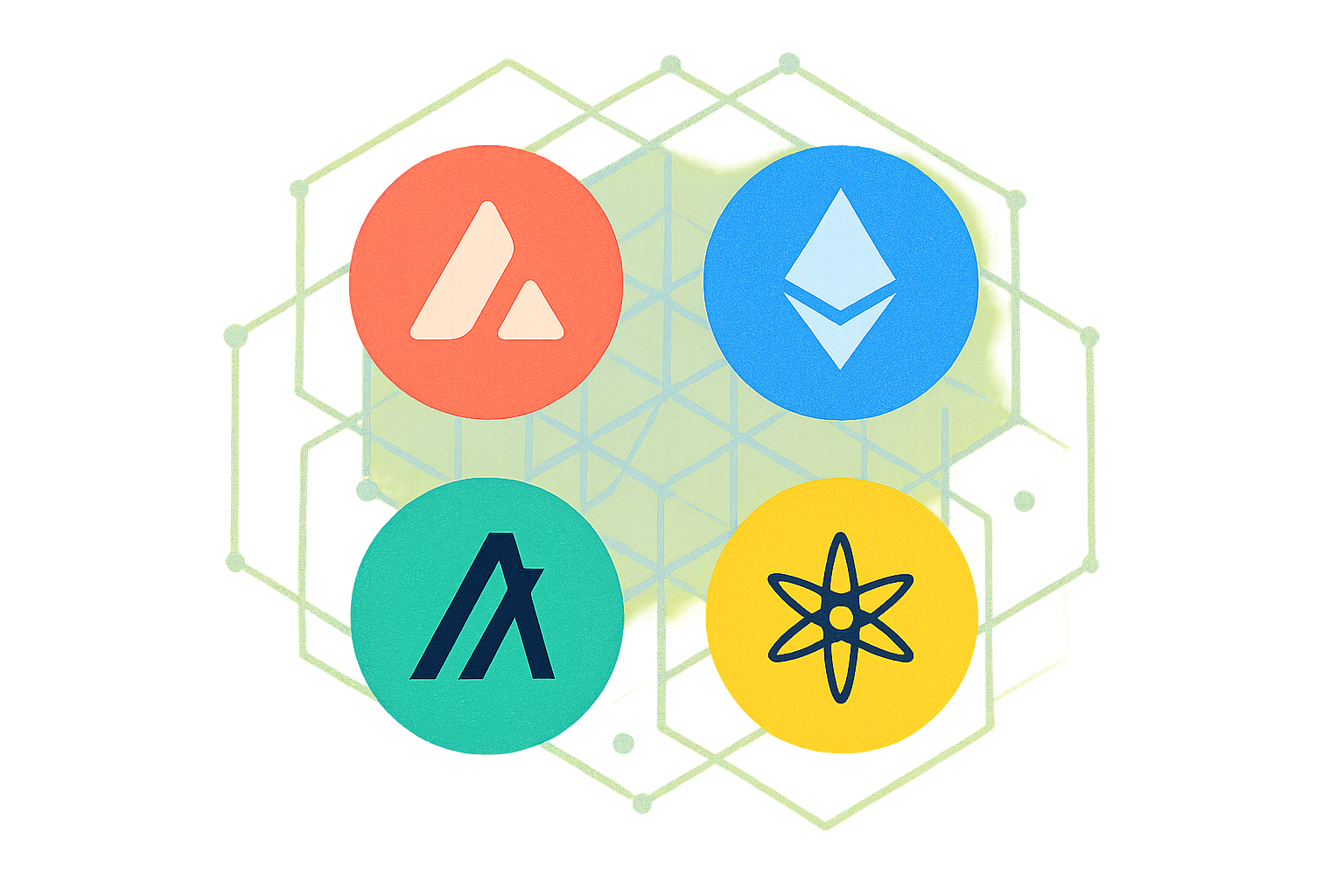
Discover the Avalanche blockchain—how it works, why AVAX is generating high expectations, and what sets its Proof of Stake technology apart from Ethereum and Solana. Explore AVAX investment opportunities on exchanges like Gate, including price forecasts, step-by-step buying guides, and strategies for staking to maximize yields.
The History of Avalanche
The Avalanche project was incubated in 2018 and officially launched in September 2020. Emin Gün Sirer, a computer scientist and associate professor at Cornell University, created Avalanche. Emin founded Ava Labs and, together with Kevin Sekniqi and Maofan 'Ted' Yin, developed the AVAX platform before its public release.
In May 2018, Emin’s concepts started coming to life when an anonymous group published a paper titled "Snowflake to Avalanche." This marked the official debut of the Avalanche network concept and was a key turning point in the project’s evolution.
In June 2018, Ava Labs was founded to turn these ideas into reality. Over the next two years, the development team worked relentlessly, launching the first testnet in April 2020. In 2021, Ava Labs conducted the initial AVAX token offering, raising $42 million within the first 24 hours. That September, Avalanche launched its mainnet and began issuing its own token, opening a new chapter for the blockchain ecosystem.
What Is Avalanche?
Avalanche is a blockchain platform built to address fragmentation in the cryptocurrency market. Its core mission is to create a unified global financial marketplace where users can transact digital assets easily, quickly, and efficiently.
Avalanche’s standout feature is its use of the Proof of Stake consensus algorithm. This approach enables the network to process transactions rapidly while consuming much less energy than traditional Proof of Work platforms.
The Avalanche network acts as a versatile platform, hosting Ethereum, Bitcoin, and many other cryptocurrencies. It also supports digital collectibles (NFTs) and enables peer-to-peer (P2P) lending. This breadth makes Avalanche one of the most comprehensive blockchain platforms available today.
How Does Avalanche Work?
Avalanche’s unique multi-blockchain architecture allows it to process approximately 4,500 transactions per second—far exceeding first-generation blockchains. By combining multiple blockchains with the Proof of Stake consensus mechanism, Avalanche validates transactions much faster than most exchanges and other blockchain networks.
The consensus protocol Avalanche employs is the result of integrating strengths from Bitcoin’s Nakamoto consensus and Classical Consensus models. This hybrid approach yields a breakthrough protocol that delivers strong security while maintaining high transaction throughput.
Avalanche’s architecture consists of three main blockchains: X-Chain (Exchange Chain) for asset creation and trading; C-Chain (Contract Chain) for Ethereum-compatible smart contracts; and P-Chain (Platform Chain) for managing validators and subnets. This structure lets Avalanche optimize performance for each specific function.
Avalanche Services
Avalanche delivers a comprehensive suite of services. Its core offerings include peer-to-peer (P2P) lending, decentralized exchanges (DEXs), and subnet creation—a feature that requires AVAX coins as fees.
The platform is designed to provide a seamless experience for all digital asset types and across multiple financial sectors. From token trading and staking to new asset issuance, Avalanche supports all activities efficiently.
Avalanche aims to power Web 3.0, also referred to as the "Internet of Money." The platform’s vision is to become a central hub for future financial transactions, enabling all financial activity to be decentralized, transparent, and efficient.
Additionally, Avalanche supports high-speed, low-cost development of decentralized applications (DApps). This has attracted many developers and blockchain projects to leverage Avalanche as their main platform.
Who Competes with Avalanche?
Ethereum: Avalanche’s primary competitor and an important partner. Ethereum is the leading smart contract platform with a robust ecosystem. However, it lacks the flexibility of Avalanche, particularly in transaction speed and gas fees. Avalanche offers better scalability and lower transaction costs.
Algorand: A strong competitor with strategic partnerships ranging from top universities to major financial institutions. Algorand is recognized for its fast transactions and high security. However, it’s falling behind by focusing on a single blockchain, whereas Avalanche leverages multiple blockchains for broader asset support and flexibility.
Cosmos: Built on a Web 3.0 vision, Cosmos supports more than 253 applications and has strong developer backing. Cosmos brands itself as the "Internet of Blockchains," connecting different blockchains for seamless interaction. Still, Avalanche surpasses Cosmos in transaction speed and Ethereum compatibility.
While each competitor has distinct strengths, Avalanche stands out for its multi-blockchain design, high throughput, and wide compatibility, positioning it strongly in the blockchain space.
What Is Pangolin DEX?
Pangolin DEX is a community-driven decentralized exchange built on Avalanche with cross-compatibility for Ethereum. It is a key DeFi application within the Avalanche ecosystem.
The exchange enables users to seamlessly trade cryptocurrencies on both Avalanche and Ethereum. Pangolin uses an Automated Market Maker (AMM) model, similar to Uniswap, but benefits from Avalanche’s speed and low cost.
Pangolin is positioned as a lightning-fast, ultra-low-fee trading platform supporting a wide range of cryptocurrencies. Its trading fees are usually much lower than those on Ethereum-based DEXs while maintaining high transaction speeds. This makes Pangolin an appealing choice for traders seeking cost and time efficiencies.
In addition to trading, Pangolin offers services like liquidity provision and staking, allowing users to earn passive income on their assets.
Avalanche’s Future Potential
Avalanche has attracted significant institutional investment, raising $230 million through its native token sale. These AVAX coins are subject to a lock-up period to support market stability. Strategic investors include top funds like Polychain and Three Arrows Capital, signaling strong professional confidence in the project.
The development team plans to release the remaining AVAX supply soon. Backed by successful fundraising and ongoing community-driven promotion and development, Avalanche is well positioned to outpace competitors in the race to become a leading decentralized financial hub.
Avalanche’s growth is further strengthened by strategic partnerships with major blockchain projects, robust developer support, and continuous technology enhancements. The Avalanche ecosystem is expanding rapidly, with more DApps, DEXs, and DeFi projects launching on the platform.
Avalanche Coin
Avalanche coin (AVAX) is relatively new to the cryptocurrency market but has already generated significant demand. AVAX serves as the native token for the Avalanche network and has multiple use cases within the ecosystem.
Since AVAX has only recently completed its initial distribution, not all coins are freely circulating. A large portion remains locked under a release schedule. This scarcity has created upward price pressure as demand outpaces supply.
Strategic investors continue to hold AVAX and have high expectations for Avalanche’s long-term prospects, trusting in the team’s vision and execution. However, with the upcoming release of the remaining AVAX supply, short-term selling pressure and price corrections are possible.
Within the Avalanche ecosystem, AVAX is used to pay transaction fees, stake for network security, create new subnets, and participate in decentralized governance.
AVAX Price Forecast
During its development, AVAX experienced remarkable price growth—rising from $3.6 to a peak of $86, a 23.9x increase—demonstrating strong market demand and investor confidence.
Analysts and experts currently project AVAX’s price in the $80–$150 range in the near future. These forecasts are driven by positive ecosystem development, user growth, and expanding use cases.
As Avalanche aims to unify DeFi services and become the "Internet of Money," demand for AVAX could rise significantly. As more projects launch and transaction volume climbs, AVAX’s value could see further gains.
Still, keep in mind that crypto markets are highly volatile, and price predictions are for reference only. AVAX’s price will depend on broader market trends, technological progress, and macroeconomic factors.
Should You Buy Avalanche Coin?
AVAX’s recent price rally has raised concerns about a potential major correction. Yet, Avalanche’s development is still in early stages, with substantial growth opportunities ahead.
Short term, increasing token supply from scheduled releases may put downward pressure on AVAX’s price. Short-term investors might consider waiting for a pullback to enter at key support levels.
For long-term holders (HODLers) who do not want to miss out on significant growth potential, the current price may still be reasonable for accumulating and holding. With its advanced technology, strong team, and rapidly expanding ecosystem, Avalanche offers considerable future upside.
Always base investment decisions on thorough research, a deep understanding of the project, and your own risk profile. Invest only what you can afford to lose, and diversify your portfolio.
How to Buy AVAX
AVAX is available on more than 70 exchanges worldwide, including top-tier and reputable platforms. This broad presence ensures high liquidity and wide acceptance for AVAX on the market.
However, most exchanges do not support direct AVAX purchases with fiat currency. You will need to first acquire stablecoins (such as USDT, USDC) or popular cryptocurrencies (BTC, ETH) and then swap them for AVAX.
The typical buying process involves: registering with an exchange, completing identity verification (KYC), depositing funds or crypto, finding the AVAX trading pair (e.g., AVAX/USDT), placing a buy order, and finally withdrawing AVAX to your personal wallet for enhanced security.
For optimal safety, use reputable exchanges, enable two-factor authentication (2FA), and consider storing large AVAX holdings in a hardware wallet.
Outlook for AVAX Coin
AVAX’s most compelling advantage is its seamless cross-chain asset transfer and trading capability. Its multi-chain compatibility and high transaction speed give Avalanche a distinct edge.
If Avalanche accomplishes its roadmap, the platform could become a true "Internet of Finance"—a hub connecting all decentralized financial activities. This would create significant value for AVAX and deliver substantial returns for early investors.
However, savvy and experienced investors will not blindly trust project promises. The crypto market is inherently risky and volatile. For sound decisions, join the AVAX community, track project milestones, assess technology upgrades, and stay well informed.
Long-term prospects for AVAX are positive, but investing requires caution, a clear strategy, and disciplined risk management. Deep research, portfolio diversification, and a long-term perspective are essential to maximize success with AVAX.
FAQ
What is Avalanche? How does it work, and what are its advantages over other blockchains?
Avalanche is the fastest blockchain with low transaction fees and strong environmental sustainability. It operates through independent subnets for parallel processing. Its leading advantages are speed, low cost, and superior scalability compared to other blockchains.
What are the functions of AVAX coin? How can you use or buy AVAX?
AVAX is used for network fees, staking, and governance. You can buy AVAX directly through mobile apps or trading platforms using credit cards or wire transfers. AVAX also serves as a bridge for transactions between different blockchains.
Does AVAX have price appreciation potential? What are the risks of investing in AVAX?
AVAX offers price potential thanks to its robust technology platform and fast-growing ecosystem. Risks include high market volatility, competition from other blockchains, and regulatory shifts.
How does Avalanche differ from Ethereum, Solana, and other Layer 1 blockchains?
Avalanche features a unique subnet architecture, EVM compatibility, and higher throughput. The network splits its main chain into separate networks, offering greater scalability than other Layer 1 blockchains.
What projects are currently building on Avalanche?
Avalanche currently supports more than 478 active projects, including notable names such as AAVE, Trader Joe, BenQi, 1inch, and many others. The project count continues to rise.
What are the benefits of staking AVAX? How do you stake, and what is the yield?
Staking AVAX earns you returns by validating network transactions. You can stake directly or through service providers. Current yields range from 8–12% annually, depending on network conditions.
* The information is not intended to be and does not constitute financial advice or any other recommendation of any sort offered or endorsed by Gate.