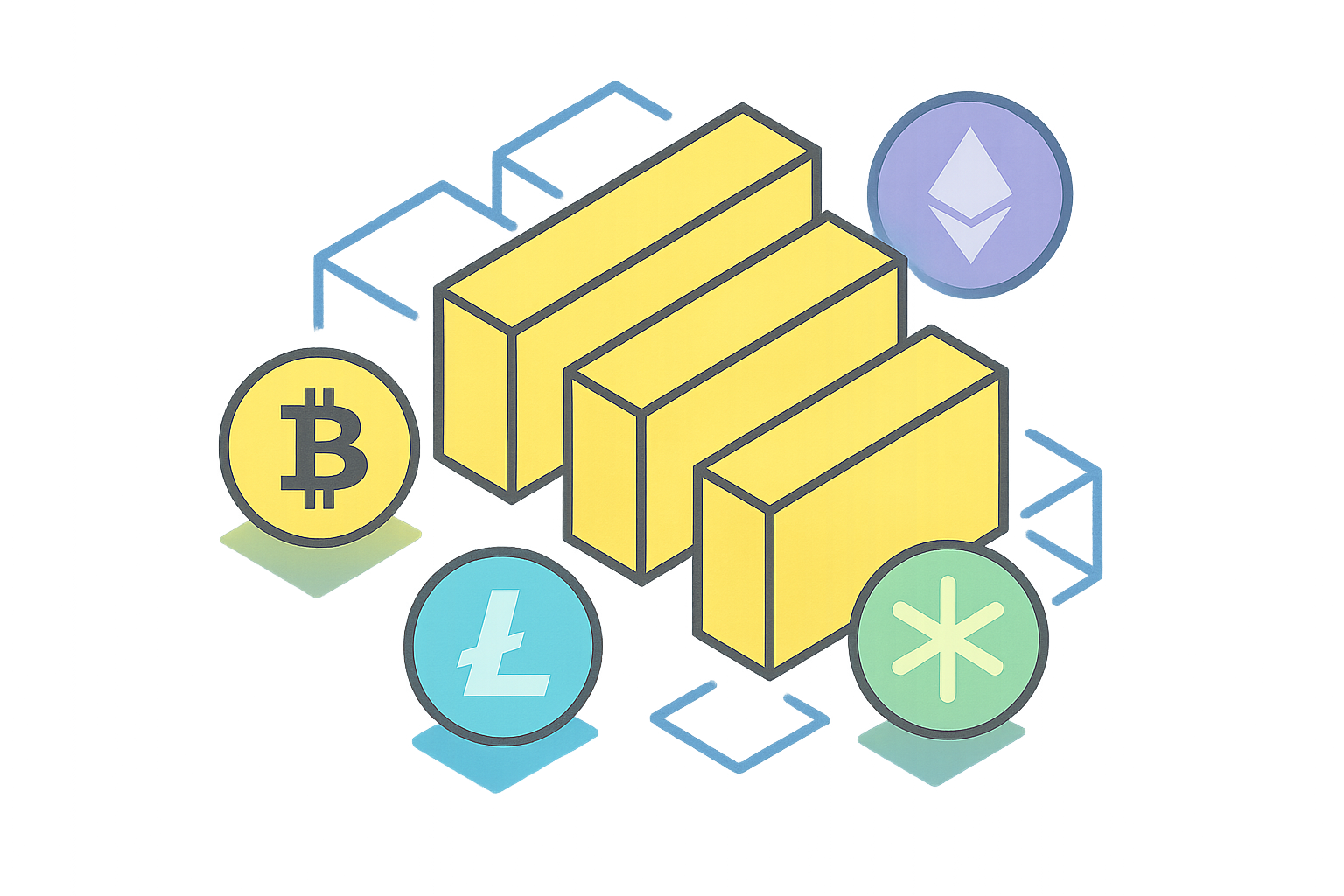
What is Distributed Ledger Technology


How Does DLT Work?
Distributed ledger technology (DLT) networks operate without a central authority. Instead, information is stored simultaneously across multiple nodes in a peer-to-peer network, with updates managed by an automated consensus algorithm. This architecture fundamentally differs from traditional centralized databases, where a single server or organization controls all data.
Data is transmitted, duplicated, and synchronized in real time across the nodes that make up the network. As a result, each node independently maintains a complete copy of the ledger, providing high system resilience. When an update occurs, all nodes vote to approve it and reach consensus on its validity. Consensus mechanisms can be implemented in various ways, including Proof of Work, Proof of Stake, and other algorithms.
Each update is secured by a unique cryptographic signature that ensures data authenticity and prevents unauthorized changes. This approach guarantees both security and transparency. Any network participant can verify data integrity but cannot modify records without approval from the majority of nodes.
Are DLT and Blockchain the Same?
These terms are often used interchangeably because both describe systems that record and store data on transparent, decentralized networks without a central control node. However, from a technical perspective, the two are not identical.
In reality, blockchain is just one form of distributed ledger—albeit the most prominent, thanks to cryptocurrencies. Other DLT types, such as Directed Acyclic Graphs (DAG), Hashgraph, and Holochain, each offer their own unique features and benefits.
The defining characteristic of blockchain is the grouping and organization of data into a cryptographically protected chain of blocks. Each new block contains the cryptographic hash of the previous block, forming an unbreakable data chain. Critically, new blocks can only be appended to the chain—existing data cannot be altered or deleted. This property, known as immutability, is one of blockchain's chief advantages.
Additionally, blockchains typically function as open public networks, allowing anyone to join as a node and participate in transaction validation without special permissions. By contrast, other DLT types may be private or require access authorization.
These attributes make blockchain an optimal, cryptographically secure solution for recording, storing, and openly tracking transaction histories—especially where maximum transparency and trust are essential.
Advantages of DLT
High levels of transparency, efficiency, and automation. Control of the network is decentralized among users, eliminating the potential for manipulation by a single central authority. Each participant can audit the ledger and verify data accuracy. Automating processes with smart contracts significantly accelerates operations and reduces human error.
Potential for fast, low-cost transactions. Removing intermediaries, third parties, and central authorities greatly reduces transaction fees and processing time. Traditional financial transactions may require days and involvement from banks or payment systems, whereas DLT solutions can process transactions in minutes or even seconds with minimal cost.
Robust security. The distributed data storage model delivers unprecedented protection. Breaching such a system would require compromising most network nodes simultaneously, which is technically and economically impractical. Data cannot be altered or forged without approval from most participants, making DLT ideal for storing critical information.
DLT Use Cases
Finance. Cryptocurrencies built on decentralized DLT technologies enhance security and transparency for financial transactions. Beyond cryptocurrencies, DLT is used for cross-border payments, trade finance, digital securities issuance, and automated insurance claims via smart contracts.
Voting. DLT offers a secure, confidential, and transparent voting system, addressing challenges of election fraud. Each vote is recorded in an immutable ledger, preventing result tampering. Voter anonymity is preserved through cryptographic techniques.
Healthcare. Distributed ledger technology enables secure access to patient records worldwide and improves diagnostic tools. Encrypted patient data can be exchanged between medical institutions, streamlining diagnosis and treatment. Patients retain full control and can grant selective access to their information.
Supply Chains. DLT increases transparency and efficiency in global supply chains and improves consumer awareness about product quality and safety. Every step from manufacturer to end consumer is recorded in the ledger, enabling traceability, authenticity checks, and counterfeit detection.
Oil & Gas. In the oil and gas industry, DLT automates the tracking of hydrocarbon production, transportation, and sales. All participants—from producers to end buyers—can access real-time, reliable information on product volume and quality. This reduces fraud risks and improves trading efficiency.
Military. Military organizations leverage DLT for protecting critical data, managing logistics, and ensuring secure communications. Decentralized architecture makes military information systems more resilient to cyberattacks and physical server destruction. The technology also supports weapons tracking and military equipment supply chain management.
Agriculture. In agriculture, DLT enables tracking of food origins from farm to table—essential for organic products. Farmers can document cultivation methods, fertilizers and pesticides used, storage, and transportation conditions. This builds consumer trust and allows quality producers to receive fair compensation.
DLT Outlook
Distributed ledger technology remains relatively new and is still evolving, with continuous innovation and expanding areas of application. DLT gained global recognition through blockchain and Bitcoin, which proved the viability of decentralized systems.
Beyond cryptocurrencies and financial transactions, DLT offers a vast array of potential uses across many sectors of the real economy. In the coming years, DLT is expected to integrate with emerging technologies such as artificial intelligence, the Internet of Things, and quantum computing.
Development of inter-network protocols is a major focus, enabling different blockchains and DLT systems to interoperate. This will lead to a global distributed ledger ecosystem capable of processing trillions of transactions and serving billions of users worldwide.
Governments are showing growing interest in DLT for digitizing public services, creating central bank digital currencies, and improving administrative efficiency. These trends suggest that distributed ledger technology could become one of the foundational pillars of tomorrow’s digital economy.
FAQ
What Is Distributed Ledger Technology and How Does It Work?
Distributed ledger technology stores data on a decentralized network, with each participant holding a copy of the records. Changes are recorded in blocks and validated collectively, ensuring transparency and security without a central authority.
What Are the Practical Applications of Distributed Ledgers in Today's Economy?
Distributed ledgers are used in banking for secure transactions, supply chain management, insurance, property registration, and transparent financial reporting.
How Does a Distributed Ledger Differ from Traditional Centralized Data Storage?
A distributed ledger stores data across multiple nodes, providing decentralization and transparency. Unlike centralized systems—where data resides in one place under a single operator's control—a distributed ledger increases reliability, enhances security, and eliminates single points of failure.
How Secure Is Distributed Ledger Technology, and What Risks Does It Carry?
Distributed ledger technology achieves high security through decentralization and cryptography, reducing the risk of a single point of failure. However, risks include cyberattacks, protocol flaws, and human error. Ongoing audits and security updates are essential.
What Is the Relationship between Distributed Ledgers and Blockchain?
Every blockchain is a distributed ledger, but not all distributed ledgers are blockchains. Blockchain delivers reliability and security through cryptography and decentralization.
Share
Content
How to Buy Cryptocurrency


Trending Cryptocurrencies



XZXX: A Comprehensive Guide to the BRC-20 Meme Token in 2025

What Is a Phantom Wallet: A Guide for Solana Users in 2025

Ethereum 2.0 in 2025: Staking, Scalability, and Environmental Impact

2025 Layer-2 Solution: Ethereum Scalability and Web3 Performance Optimization Guide

What is BOOP: Understanding the Web3 Token in 2025

Altcoin Season Index 2025: How to Use and Invest in Web3
Comprehensive Guide to Private Keys in Cryptocurrency

Best Crypto Exchange for Beginners: Top 10 Options

Sybil attack in cryptocurrency: explained simply

Top 7 Metaverse Games to Explore
Mempool explained: what it is and how it works in plain language