Fluence (FLT) is a decentralized cloudless computing platform launched in 2024 to challenge centralized cloud monopolies by aggregating global data center capacity into an open, verifiable DePIN network. The platform operates through distributed computing nodes secured by blockchain technology, enabling cost-effective and transparent infrastructure for developers and Web3 applications. FLT token serves as the network's economic layer, rewarding compute providers and facilitating access to decentralized resources through Gate and other exchanges. With over 7,600 token holders and a fixed supply of 1 billion tokens, Fluence addresses critical challenges in cloud computing adoption, network scalability, and competitive market positioning. This comprehensive guide explores Fluence's technical architecture, market performance, ecosystem partnerships, and investment considerations, providing insight into how decentralized infrastructure reshapes cloud computing's future.
Fluence's Positioning and Significance
In 2024, the Fluence team launched Fluence (FLT), aiming to address the monopolistic control of cloud computing by tech giants and the high costs associated with centralized infrastructure.
As the first decentralized "Cloudless" computing platform, Fluence plays a critical role in decentralized physical infrastructure networks (DePIN) and Web3 application hosting.
As of 2026, Fluence has established itself as an innovative DePIN solution, with over 7,600 holders and an active developer ecosystem.
This article will provide an in-depth analysis of its technical architecture, market performance, and future potential.
Origin and Development History
Birth Background
Fluence was created by the Fluence team in 2024, aiming to solve the inefficiencies and high costs of centralized cloud computing, as well as vendor lock-in issues.
It emerged during the rise of decentralized physical infrastructure networks and the growing demand for open, verifiable computing solutions, with the goal of providing an affordable, resilient, and transparent alternative to traditional cloud providers.
The launch of Fluence brought entirely new possibilities to developers, enterprises, and Web3 projects seeking cost-effective computing resources.
Major Milestones
- March 2024: Mainnet launched with FLT token trading beginning on Gate.com at an initial price of $0.70.
- March 2024: Reached all-time high of $1.55, demonstrating strong initial market interest.
- 2024-2025: Platform development continued with expansion of global data center partnerships and network capacity.
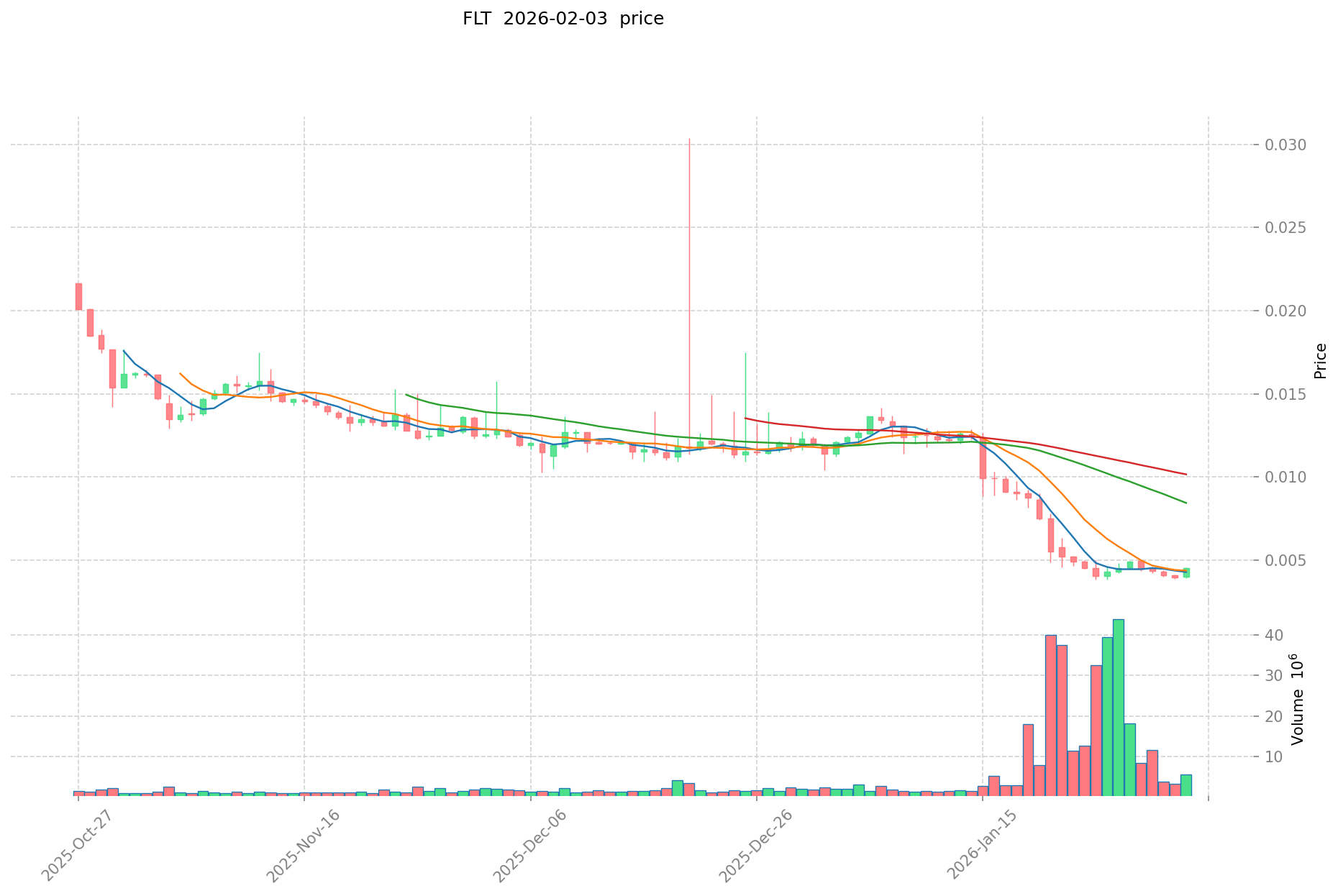
- January 2026: Token experienced significant market correction, reaching all-time low of $0.003821.
With the support of the Fluence Foundation and its community, Fluence continues to optimize its technology, security features, and real-world applications.
How Does Fluence Work?
No Central Control
Fluence operates on a decentralized network of computing nodes distributed across top-tier data centers worldwide, free from control by any single cloud provider or monopolistic entity.
These nodes collaborate to provide computing resources and validate operations, ensuring the system remains transparent and resistant to centralized failures.
This structure grants users greater autonomy and enhances network resilience.
Blockchain Core
Fluence's infrastructure leverages blockchain technology as a transparent, immutable coordination layer for its computing network.
The platform maintains public records of compute provider commitments and resource allocation, creating a verifiable system where anyone can audit operations.
Transactions and compute assignments are secured through cryptographic verification, establishing trust without intermediaries.
The platform aggregates excess computing capacity from global data centers into an always-on DePIN network suitable for running various applications.
Ensuring Fairness
Fluence implements a distributed governance and resource allocation system to ensure fair access to computing resources and prevent monopolistic behavior.
Compute providers participate by contributing infrastructure capacity to the network and are rewarded with FLT tokens based on their service delivery.
The platform's innovation includes enabling users to easily switch between providers, creating competitive pressure that keeps prices low while maintaining high service levels.
Secure Transactions
Fluence utilizes public-private key cryptography to protect transactions and resource allocations:
- Private keys (similar to secret passwords) are used to authorize compute requests and token transfers
- Public keys (similar to account numbers) are used to verify ownership and authenticate providers
This mechanism ensures funds remain secure and transactions maintain transparency while protecting user privacy.
The platform's open architecture allows for verification of compute operations, providing additional security through auditability.
Circulating Supply Overview
As of February 03, 2026, Fluence's circulating supply stands at 257,437,371.11 FLT tokens, representing approximately 25.74% of the total supply of 1,000,000,000 FLT tokens. The maximum supply is capped at 1,000,000,000 tokens, establishing a fixed supply model.
The token distribution and issuance mechanisms influence the supply-demand dynamics of FLT in the market. The platform's economic model is designed to support its decentralized cloudless computing infrastructure.
Price Volatility
Fluence (FLT) reached a notable price point of $1.55 on March 25, 2024, during a period of heightened market activity. The token experienced its lowest price of $0.003821 on January 25, 2026, reflecting market conditions and broader crypto sector dynamics.
Recent price movements show varied performance across different timeframes: the token has experienced a 1.83% increase over 1 hour, a 13% rise over 24 hours, and a 3.85% gain over 7 days. However, the 30-day period shows a decline of 63.91%, and the 1-year performance indicates a decrease of 96.95%. These fluctuations reflect evolving market sentiment, adoption patterns, and external market factors affecting the decentralized computing sector.
Click to view the current FLT market price
On-Chain Metrics
- Holder Count: 7,603 addresses hold FLT tokens, indicating the distribution of token ownership across the community
- 24-Hour Trading Volume: $23,116.78, reflecting current market liquidity and trading activity
- Market Capitalization: $1,161,557.42, representing the total market value of circulating FLT tokens
Fluence Ecosystem Applications and Partners
Core Use Cases
Fluence's ecosystem supports multiple applications:
- Decentralized Computing: The platform provides cloudless computing infrastructure, offering an open alternative to centralized cloud providers with cost savings and enhanced flexibility.
- DePIN Network: Fluence assembles excess compute capacity from top-tier data centers worldwide into a global, always-on DePIN network, suitable for running a wide range of applications.
Strategic Partnerships
Fluence aggregates computing resources from top-tier data centers globally, creating a decentralized infrastructure network. These partnerships provide a solid foundation for Fluence's ecosystem expansion.
Challenges and Considerations
Fluence faces the following challenges:
- Market Competition: Competition from other decentralized computing platforms and established cloud service providers
- Technology Adoption: Encouraging developers and enterprises to transition from traditional cloud services to decentralized alternatives
- Network Scalability: Maintaining service quality and performance as the network grows
These issues have sparked discussions within the community and market, while also driving continuous innovation at Fluence.
Fluence's community demonstrates growing interest, with the token currently held by 7,603 wallet addresses. On X platform, posts and hashtags related to Fluence generate ongoing discussion. The platform's value proposition of offering computing services at lower costs compared to traditional cloud providers has attracted attention from developers and blockchain enthusiasts.
Sentiment on X shows mixed perspectives:
- Supporters praise Fluence's decentralized computing model and cost efficiency, viewing it as an innovative solution to cloud monopolies.
- Critics focus on market volatility and adoption challenges in the competitive cloud computing space.
Recent trends reflect the typical dynamics of emerging blockchain infrastructure projects.
Popular Topics
X users actively discuss Fluence's decentralization benefits, cost advantages over traditional cloud providers, and potential use cases, showcasing both its transformative potential and the challenges of achieving mainstream adoption.
- Official Website: Visit Fluence Official Website for features, use cases, and latest updates.
- X Platform: Fluence maintains an active presence on X at @fluence_project, sharing updates on technical developments, community activities, and ecosystem growth.
Fluence Future Roadmap
- Platform Development: Continued expansion of the decentralized computing network with enhanced capabilities and performance optimization
- Ecosystem Goals: Growing the developer community and expanding application deployment on the Fluence network
- Long-term Vision: Establishing Fluence as a leading decentralized computing infrastructure platform
How to Participate in Fluence?
- Purchase Channels: Buy FLT on Gate.com and other supporting exchanges
- Storage Solutions: Use ERC-20 compatible wallets such as MetaMask to securely store FLT tokens
- Ecosystem Building: Visit the official documentation to explore development opportunities and contribute to the decentralized computing ecosystem
Summary
Fluence leverages blockchain technology to redefine cloud computing infrastructure, offering decentralization, cost efficiency, and resilience. Its innovative approach to assembling global computing resources into an open, verifiable network positions it as an alternative to traditional cloud monopolies. While facing adoption challenges and market competition, Fluence's vision of cloudless computing and its growing ecosystem demonstrate its commitment to advancing decentralized infrastructure. Whether you're a developer seeking cost-effective computing solutions or an investor interested in DePIN projects, Fluence represents an noteworthy initiative in the decentralized technology landscape.
FAQ
What is FLT crypto token and how does it work?
FLT is Fluence's native token used for staking, gas payments, and governance. It rewards compute providers for running hardware and enables users to participate in network decision-making.
What is the use case and purpose of FLT cryptocurrency?
FLT is used to pay node operators for computational services in the Fluence ecosystem. It facilitates transactions, supports network operations, and enables users to access decentralized compute resources on the platform.
How can I buy and store FLT tokens safely?
Purchase FLT tokens through major cryptocurrency platforms. Store them securely in a Web3 wallet with strong security practices, such as enabling two-factor authentication and using hardware wallets for large amounts.
What are the risks and security considerations for FLT investments?
FLT investments carry risks including capital loss, liquidity constraints, and market volatility. Security considerations include portfolio diversification, regulatory compliance monitoring, and careful assessment of underlying asset quality during market fluctuations.
What is the current market price and trading volume of FLT?
The current market price of FLT is $0.003965, with a 24-hour trading amount of $142,249. The price has declined by 0.38% over the last 24 hours.
Which exchanges support FLT token trading?
FLT token is available on major cryptocurrency exchanges including BingX, CoinEx, Gate.com, MEXC, and Ourbit, providing multiple trading options for users.
What is the total supply and tokenomics of FLT?
FLT has a total supply of 1,000,000,000 tokens with a maximum supply capped at 1,000,000,000 FLT. The circulating supply is currently 50,000,000 FLT, representing 5% of the total supply.
* The information is not intended to be and does not constitute financial advice or any other recommendation of any sort offered or endorsed by Gate.