What is GameFi? The Difference Between Traditional Gaming Projects and GameFi

How is Blockchain Transforming the Gaming World?
The gaming industry generates more revenue than the film and music industries combined, making it the fastest-growing entertainment sector over the past decade. In recent years, this industry has reached astronomical revenue figures exceeding $180 billion, demonstrating the massive scale and potential of digital gaming markets.
Games like Candy Crush Saga, released for mobile devices, allow players to play for free while offering in-game items that can only be purchased with real money. This freemium model has dominated the traditional gaming landscape, but it primarily benefits game developers and publishers rather than the players themselves who invest countless hours into these virtual worlds.
Currently, we can play games to earn money through Play to Earn (P2E) gaming models. This revolutionary approach is made possible through blockchain technology and Non-Fungible Tokens (NFTs). Play to Earn games allow users to generate income based on their playtime and skill level. The earnings typically come in the form of native cryptocurrencies associated with specific blockchain networks. This innovation has solved one of the biggest problems in today's gaming market: creating a sustainable value model within games that benefits players directly.
Blockchain gaming introduces true digital ownership, where players can own, trade, and monetize their in-game assets outside the game's ecosystem. This represents a fundamental shift from traditional gaming economies where all value remains trapped within closed systems controlled by game developers.
What Exactly is GameFi?
GameFi is a portmanteau term referring to games developed on blockchain platforms, combining the concepts of gaming and finance (Game + Finance = GameFi). In simple terms, GameFi allows you to participate in a game built on blockchain infrastructure and earn real income from your gaming activities.
GameFi projects operate on the distributed ledger of blockchain networks, granting players true ownership rights over virtual items within games. These projects implement the Play to Earn model, which fundamentally changes the relationship between players and game economies by rewarding players for their time, skill, and contributions to the gaming ecosystem.
GameFi differs from traditional gaming in three key elements:
Asset Ownership: Players have verifiable ownership of in-game assets represented as NFTs or tokens on the blockchain. Unlike traditional games where items exist only within the game's database, blockchain-based assets are owned by players' wallet addresses and cannot be arbitrarily removed by developers.
Tradability of Assets: These assets can be freely traded on various cryptocurrency marketplaces, decentralized exchanges, and NFT platforms. Players can convert their in-game achievements into real-world value by selling items, characters, or tokens to other players or collectors.
Data Transparency: All transactions, ownership records, and game mechanics are recorded on public blockchains, providing unprecedented transparency. Players can verify scarcity, track item history, and understand tokenomics clearly, creating trust and fair value assessment.
In contrast to traditional games, GameFi rewards players significantly more for all the time and skills they invest in playing. Players truly own the assets they earn in-game and can trade them across various cryptocurrency markets, creating real economic opportunities and sustainable income streams for dedicated gamers.
The Difference Between Traditional Games and GameFi
Play to Earn Model: Traditional online games generate revenue through in-app purchases, affiliate marketing, and advertising, with all profits flowing to developers and publishers. GameFi projects enable users to earn money by selling in-game items and collecting cryptocurrency rewards. This creates a circular economy where player engagement directly translates to economic value that players can capture.
In traditional gaming, players are essentially paying customers who exchange money for entertainment without any return on investment. In GameFi, players become stakeholders in the game's economy, benefiting from the game's growth and success through token appreciation and asset value increases.
GameFi's New Approach: GameFi projects allow players to add real-world value to their in-game purchases and achievements. Products and items in games are stored on public distributed ledgers, creating permanent and verifiable records of ownership. This blockchain technology enables game tokens and items to be traded for cryptocurrencies and ultimately converted to real-world cash through various exchange platforms.
The decentralized nature of GameFi means that game economies can exist independently of any single company or server. Even if a game's original developers stop active development, the blockchain-based assets and smart contracts can continue functioning, preserving player investments and enabling community-driven evolution.
Little or No Upfront Costs: Most GameFi games are free to download and play, lowering the barrier to entry for new players worldwide. Although there are no upfront costs, some games may require you to purchase in-game tokens, characters, or other items to begin earning or to access certain features. This "scholarship" model has emerged where established players lend assets to new players, sharing earnings and creating new economic relationships.
Many GameFi projects implement tiered systems where free players can still earn modest rewards while players who invest in premium assets or characters can achieve higher earning potential, creating flexible participation options for different economic situations.
Ownership of In-Game Assets: GameFi players own their assets and NFTs with true digital property rights. These are stored on the blockchain permanently and cannot be arbitrarily deleted or modified by game developers. This contrasts sharply with traditional games, which can be shut down at any time, causing all player investments and achievements to vanish instantly.
Blockchain-based ownership also enables cross-game interoperability in some cases, where assets from one game might be usable in another compatible game, creating a broader metaverse economy. Players can also use their gaming assets as collateral for loans in DeFi protocols or stake them for additional rewards, multiplying utility beyond simple gameplay.
How Does GameFi Bring Better Financial Models to Gaming?
For traditional games today, players cannot easily interact with or transfer assets between different games, creating isolated value silos. GameFi is focused on improving gaming financial models by allowing all game projects to be managed in one place through decentralized game hubs and aggregation platforms.
These game hubs serve as unified interfaces where players can track their entire gaming portfolio, manage assets across multiple GameFi projects, and discover new games that align with their interests and earning goals. This aggregation creates network effects and reduces friction in the GameFi ecosystem.
Players can also support new gaming projects through launchpad platforms, where players contribute financially to games in early development stages. In return, they receive exclusive benefits, early access, and native tokens from those games at preferential rates. This form of launchpad in the GameFi world is called IGO (Initial Game Offering), similar to ICOs but specifically for gaming projects.
IGOs democratize game funding by allowing community members to become early investors and stakeholders rather than limiting investment opportunities to venture capital firms. This creates stronger community alignment and gives players direct influence over which games receive funding and support.
The GameFi ecosystem has gradually begun to flourish as more development teams and startups participate in building infrastructure and applications. From the games themselves to launchpad platforms, development toolkits, NFT marketplaces, and gaming guilds, the number of participants in various areas of the technology system continues to grow steadily. This creates a robust and diverse ecosystem supporting sustainable growth.
The Gaming Industry is Undergoing a Revolution
Blockchain-based games will have an enormous impact on the gaming industry, fundamentally restructuring how value is created, distributed, and captured. Established companies in this field are actively discussing and experimenting with blockchain technology integration, recognizing the disruptive potential of decentralized gaming models.
New companies in the cryptocurrency market are rapidly attracting attention and growing, with projects like Axie Infinity and The Sandbox demonstrating the massive potential of Play to Earn gaming. These pioneers have shown that GameFi can create sustainable economies supporting thousands of players earning meaningful income, particularly in developing economies.
Increasingly, more development teams are building games designed to attract and retain engaged communities rather than simply extracting maximum revenue. The entire ecosystem of this market will need robust and efficient methods to address interactions between players and between all these games, creating seamless experiences across multiple gaming platforms.
GameFi emerges to play the role of a bridge between different metaverses, enabling interoperability and value transfer across virtual worlds. As the technology matures and more players enter the space, GameFi has the potential to create a truly open metaverse where digital assets, identities, and economies transcend individual game boundaries, creating unprecedented opportunities for players, developers, and investors alike.
FAQ
What is GameFi and how does it combine gaming with decentralized finance?
GameFi merges gaming with decentralized finance, enabling players to earn real rewards and own in-game assets via blockchain. It combines gaming experiences with DeFi protocols, giving players true asset ownership, earning opportunities, and governance participation in decentralized ecosystems.
What are the main differences between GameFi projects and traditional gaming?
GameFi projects use blockchain technology and cryptocurrencies, enabling players to own and trade in-game assets as real value. Traditional gaming relies on centralized servers with direct sales and subscriptions. GameFi integrates decentralized finance principles, allowing true asset ownership and earning mechanisms.
How can players earn money or tokens in GameFi games?
Players earn through play-to-earn mechanics by completing game tasks, staking assets for interest, lending in-game items, and trading NFTs. Blockchain technology enables players to own, buy, sell, and trade in-game assets freely, converting gameplay into real economic value.
What are the risks and challenges associated with GameFi projects?
GameFi projects face on-chain security risks including token bugs, NFT vulnerabilities, and governance exploits, plus off-chain challenges like market volatility and player retention. Strong code validation and security measures are essential to protect player assets and game economies.
What blockchain networks are commonly used for GameFi games?
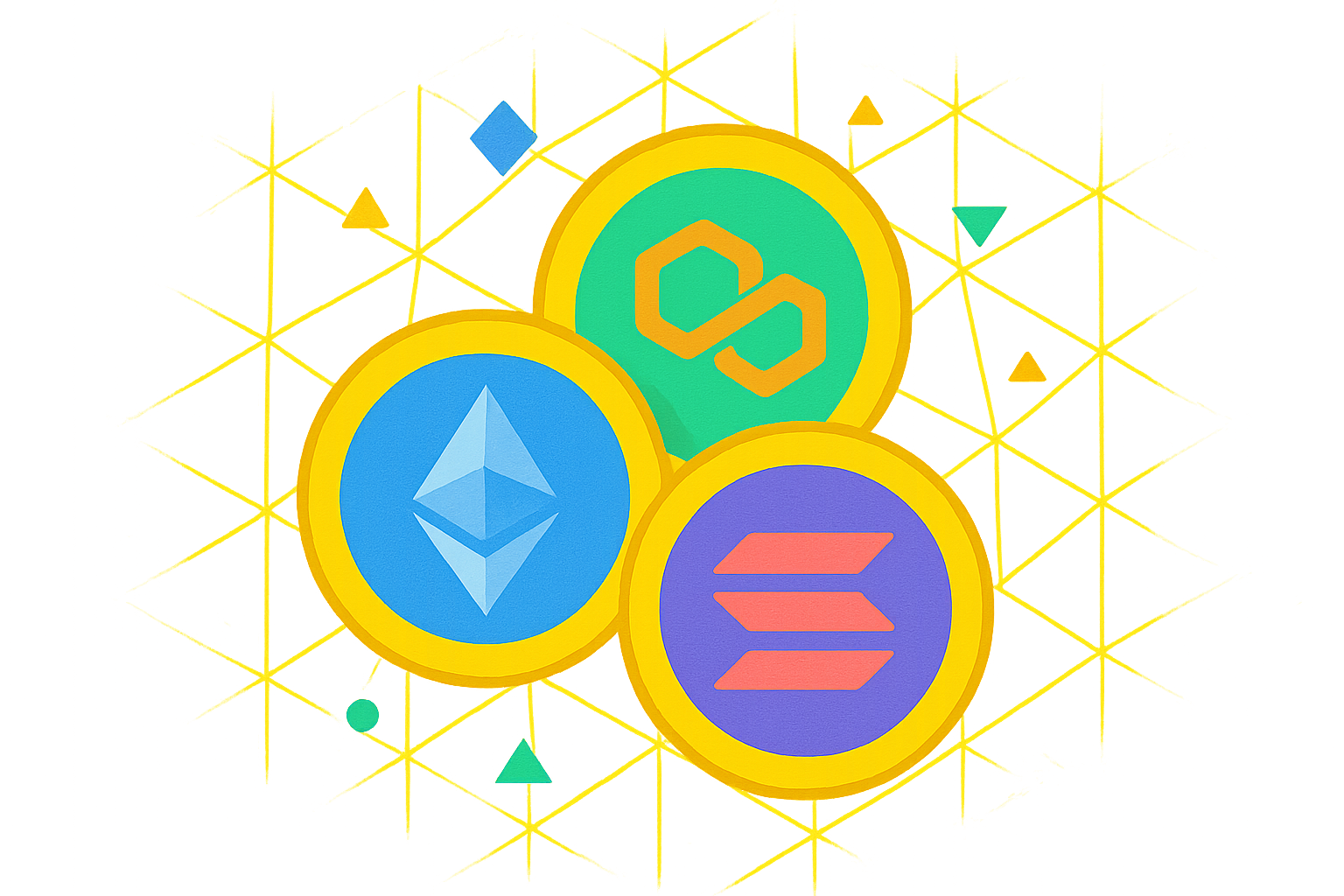
Ethereum, Polygon, and Solana are the most commonly used blockchain networks for GameFi games, offering various advantages in scalability, transaction costs, and user adoption.
How do NFTs play a role in GameFi ecosystems?
NFTs enable players to own, trade, and monetize in-game assets including virtual land, items, and characters. They create verifiable ownership and establish vibrant player-driven economies where value can be retained and transferred across platforms.
Can you make real money playing GameFi games, or is it just speculation?
Yes, you can earn real money playing GameFi games through token rewards and NFT sales. However, returns depend on the game's economy, token value, and your time investment. Success requires both skill and market timing.
What are some popular GameFi projects and examples?
Popular GameFi projects include Immutable (IMX) with $1.8B market cap, Illuvium (ILV) with $648M market cap, and Echelon Prime (PRIME). These projects lead in play-to-earn gaming and blockchain integration.
Share
Content
How to Buy Cryptocurrency


Trending Cryptocurrencies



Treasure NFT Marketplace: A 2025 Guide for Web3 Gamers and Investors

What are the new trends in the NFT market in 2025?

NFT Treasure Hunting: Top Strategies for Web3 Collectors in 2025

How to Create and Sell NFTs: A Step-by-Step Guide for Beginners

The technical principles and application scenarios of 2025 NFTs
How to Create an NFT in 2025: A Step-by-Step Guide
Comprehensive Guide to Free Bitcoin Earning Methods

Everything You Need To Know About Bull Flag Patterns
Top 10 Crypto Podcasts for Investors and Enthusiasts
What is blockchain in plain language
What does the Metaverse or the digital world of the future mean?