Matrix Layer Protocol (MLP) is an AI-driven decentralized communication infrastructure protocol launched in November 2024 on Gate.com, designed to address inefficiencies in multi-dimensional data transmission for decentralized networks. This comprehensive guide covers MLP's technical architecture built on Binance Smart Chain, market performance metrics including 618 million circulating tokens and 15,621 holders, and its applications across IoT, Web3, and Metaverse ecosystems. The article analyzes MLP's blockchain foundation, transaction security mechanisms, and decentralized control features while examining current market dynamics, ecosystem partnerships, and community engagement. For investors and developers exploring emerging blockchain infrastructure solutions, this guide provides essential insights into MLP's positioning, operational mechanisms, and practical participation methods through Gate.com trading.
Matrix Layer Protocol's Positioning and Significance
In 2024, the development team launched Matrix Layer Protocol (MLP), aiming to address inefficiencies in multi-dimensional data transmission and communication infrastructure for decentralized networks.
As an AI-driven communication and infrastructure protocol, Matrix Layer Protocol plays a key role in IoT, Web3, and Metaverse ecosystems.
As of 2026, Matrix Layer Protocol has established itself within the decentralized communication infrastructure space, with 15,621 holders and an active development community.
This article will deeply analyze its technical architecture, market performance, and future potential.
Origin and Development Journey
Birth Background
Matrix Layer Protocol was created in 2024, aiming to solve challenges in providing efficient, flexible multi-dimensional data transmission for decentralized network ecosystems.
It emerged during the expansion phase of Web3 and IoT technologies, with the goal of delivering low-latency, high-security services across various network environments to transform the current landscape.
The launch of Matrix Layer Protocol brought new possibilities for decentralized applications, IoT devices, and metaverse platforms.
Important Milestones
- November 2024: Token officially listed on Gate.com, initiating community-driven growth phase.
- December 2024: Price reached a notable level of $0.077, reflecting early market interest.
- 2025-2026: Continued ecosystem development with focus on layered structures and multi-dimensional network topologies.
With support from its development community and ecosystem participants, Matrix Layer Protocol continues to optimize its technology, security, and real-world applications.
How Does Matrix Layer Protocol Work?
Decentralized Control
Matrix Layer Protocol operates on a decentralized network of computers (nodes) distributed globally, free from control by banks or governments.
These nodes collaborate to validate transactions, ensuring system transparency and attack resistance, granting users greater autonomy and improving network resilience.
Blockchain Foundation
Matrix Layer Protocol's blockchain is a public, immutable digital ledger that records every transaction.
Transactions are grouped into blocks and linked through cryptographic hashing to form a secure chain.
Anyone can view the records, establishing trust without intermediaries.
The protocol's layered structure design further enhances performance and scalability.
Ensuring Fairness
Matrix Layer Protocol operates on BNB Smart Chain infrastructure to validate transactions and prevent fraudulent activities such as double-spending.
Network participants maintain security through validation and consensus mechanisms, ensuring system integrity.
Its innovation includes AI-driven optimization for multi-dimensional data transmission.
Secure Transactions
Matrix Layer Protocol uses public-private key cryptography to protect transactions:
- Private keys (similar to secret passwords) are used to sign transactions
- Public keys (similar to account numbers) are used to verify ownership
This mechanism ensures fund security while maintaining appropriate privacy levels for users.
The protocol implements layered security architecture to enhance protection across different network environments.
Circulation Overview
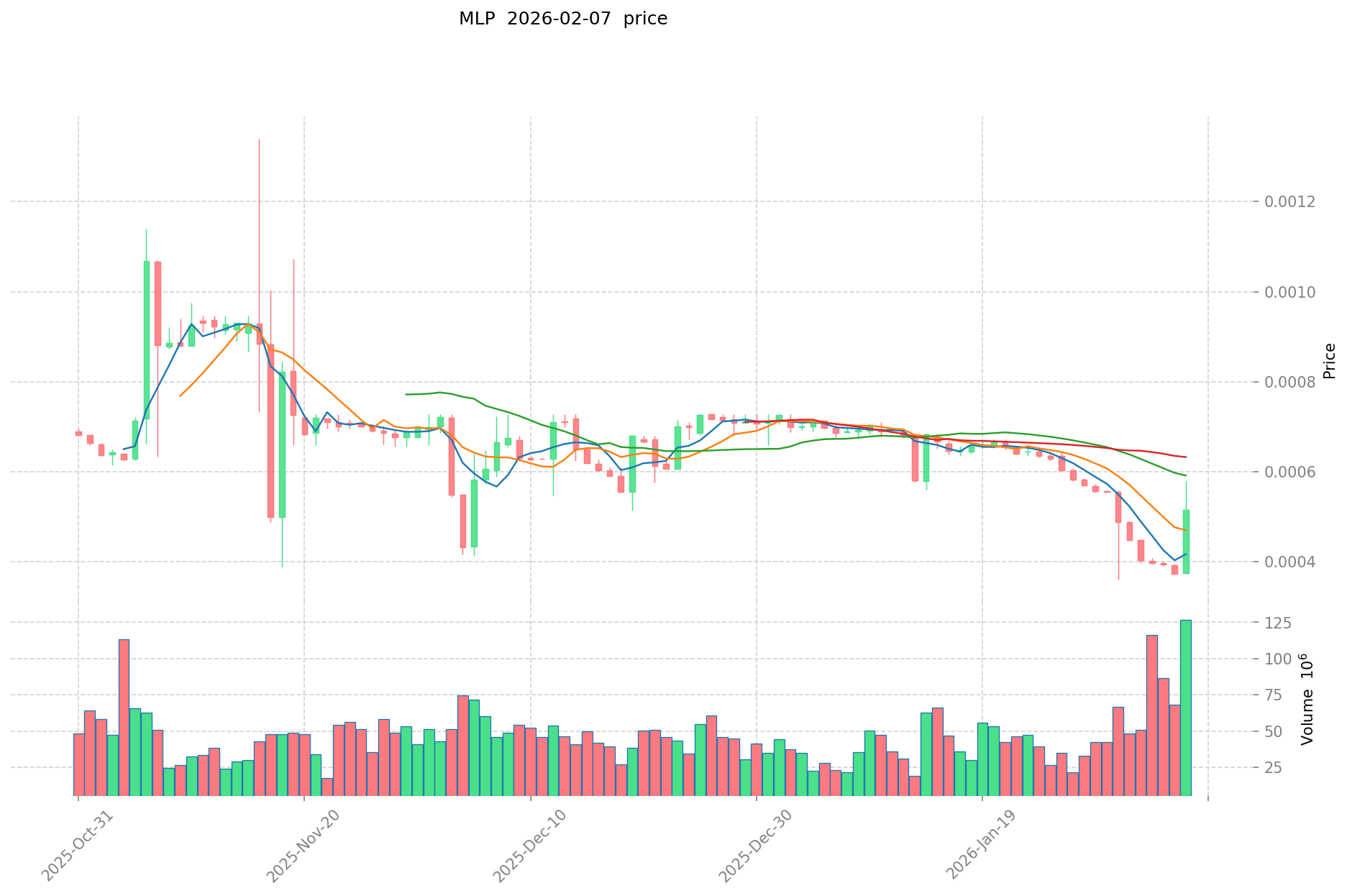
As of February 08, 2026, Matrix Layer Protocol (MLP) has a circulating supply of 618,000,000 tokens, with a total supply of 5,000,000,000 tokens. The maximum supply is capped at 5,000,000,000 tokens, establishing a fixed supply model.
The circulating supply represents approximately 12.36% of the total supply, indicating a controlled token release strategy that may influence market dynamics over time.
Price Volatility
MLP reached an all-time high of $0.077 on December 31, 2024, reflecting early market enthusiasm following its launch in November 2024.
The token experienced its lowest price of $0.00024 on October 22, 2025, representing significant market correction from its peak levels.
These fluctuations demonstrate the volatile nature of emerging AI-infrastructure tokens and reflect broader market sentiment shifts, adoption patterns, and evolving investor expectations in the decentralized communication protocol sector.
Click to view current MLP market price
On-Chain Metrics
- Holders: 15,621 addresses currently hold MLP tokens, indicating growing community participation
- 24-Hour Trading Volume: $33,795.16, reflecting current market activity levels
- Market Capitalization: $252,762, representing the current valuation of circulating tokens
Matrix Layer Protocol Ecosystem Applications and Partners
Core Use Cases
Matrix Layer Protocol's ecosystem supports multiple application scenarios:
- Decentralized Communication Infrastructure: The protocol provides multi-dimensional data transmission solutions for IoT devices, enabling efficient connectivity across distributed networks.
- Web3 and Metaverse Integration: MLP facilitates low-latency communication channels for emerging virtual environments, supporting real-time interactions in decentralized applications.
Strategic Partnerships
Information about specific strategic partnerships for Matrix Layer Protocol is currently limited in available materials. The project continues to develop its technical infrastructure to support future collaborations within the decentralized network ecosystem.
Challenges and Controversies
Matrix Layer Protocol faces several notable challenges:
- Market Performance: The token has experienced substantial price volatility, with a 99.11% decline over the past year
- Adoption Barriers: As a relatively new infrastructure protocol launched in November 2024, MLP faces competition in establishing its position within the crowded blockchain infrastructure space
- Limited Exchange Availability: Currently listed on a limited number of trading platforms, which may impact liquidity and accessibility
These challenges highlight the ongoing development phase of the project and the competitive landscape of blockchain infrastructure protocols.
Matrix Layer Protocol maintains an active presence with approximately 15,621 token holders. The project engages with its community through its official X platform account and maintains documentation through its GitBook whitepaper.
The community atmosphere reflects the project's early-stage development:
- Supporters highlight MLP's potential in providing AI-driven communication solutions for decentralized networks, emphasizing its focus on IoT, Web3, and Metaverse applications
- Observers note the significant price corrections and limited market cap, which reflect typical challenges faced by emerging infrastructure projects
Recent market trends show bearish sentiment, with notable declines across multiple timeframes including -8.9% over 24 hours and -17.16% over 7 days.
Discussion Topics
Community discussions center around the protocol's technical capabilities in multi-dimensional network topologies and its potential applications in future communication scenarios, while also acknowledging market volatility and adoption challenges.
- Official Website: Visit Matrix Layer Protocol Official Site for features, use cases, and latest developments.
- Whitepaper: The Matrix Layer Protocol Whitepaper details its technical architecture, objectives, and vision for decentralized communication infrastructure.
- X Platform: Matrix Layer Protocol maintains an active presence on X through @Matrix_MLP, sharing updates about protocol developments, technical features, and ecosystem progress.
Matrix Layer Protocol Future Roadmap
Specific detailed roadmap milestones beyond the project's core infrastructure development goals are not extensively documented in available materials. The project focuses on expanding its AI-driven communication protocol capabilities to support IoT, Web3, and Metaverse applications with enhanced multi-dimensional data transmission solutions.
How to Participate in Matrix Layer Protocol?
- Purchase Options: MLP can be acquired on Gate.com and other supporting platforms
- Storage Solutions: As a BEP-20 token on BSC, MLP can be securely stored in compatible wallets that support Binance Smart Chain assets
- Contract Information: The token's smart contract address on BSC is
0xdbe3ea3639077a837e767c5d82730254fc933e41, verifiable on BscScan
- Stay Informed: Follow official channels and documentation to track protocol developments and ecosystem updates
Summary
Matrix Layer Protocol represents an emerging infrastructure project focused on AI-driven communication solutions for decentralized networks. The protocol aims to provide efficient, low-latency data transmission capabilities across IoT, Web3, and Metaverse applications through its multi-dimensional network architecture.
With a total supply of 5 billion tokens and current circulation of 618 million (12.36%), MLP operates on Binance Smart Chain as a BEP-20 token. Despite experiencing considerable market volatility since its launch in November 2024, the project maintains a focused community of holders interested in its infrastructure potential.
While facing challenges common to new blockchain projects including market adoption and competitive pressures, Matrix Layer Protocol's emphasis on layered architecture and multi-dimensional topologies positions it within the evolving landscape of decentralized communication infrastructure. Whether you're exploring emerging blockchain protocols or interested in decentralized network solutions, Matrix Layer Protocol offers a perspective on future communication infrastructure development.
FAQ
What is a Master Limited Partnership (MLP) in cryptocurrency?
A Master Limited Partnership (MLP) in cryptocurrency is a structure combining tax benefits of partnerships with public company liquidity. MLPs enable investors to hold tradable units while receiving distributions, offering efficient capital access for blockchain infrastructure projects and digital asset ventures.
How do crypto MLPs work and what are their key features?
Crypto MLPs tokenize energy infrastructure ownership on blockchain, combining traditional MLP structures with decentralized management. Key features include fractional ownership, transparent operations, and enhanced liquidity through smart contracts and token trading.
What are the differences between traditional MLPs and crypto MLPs?
Traditional MLPs are U.S.-specific pass-through partnerships with tax advantages, while crypto MLPs are decentralized digital assets offering blockchain-based liquidity provision and yield farming without geographic restrictions or traditional corporate structures.
What are the tax implications of investing in crypto MLPs?
Crypto MLP investments trigger ordinary income tax on unit sales due to recaptured deductions. Capital gains tax applies based on holding period. Longer holdings may increase tax obligations as cost basis decreases. State location matters for additional tax implications.
What are the risks and benefits of crypto MLP investments?
Crypto MLP investments offer high return potential through diversified token exposure and yield opportunities. Key risks include high volatility, regulatory uncertainty, and market manipulation. Success requires thorough research and risk management strategies.
Which cryptocurrencies or blockchain projects use the MLP structure?
My Liquidity Partner (MLP) is the primary cryptocurrency using the MLP structure. It operates on decentralized finance protocols focusing on liquidity provision and yield farming, enabling users to participate in trading and earn rewards through liquidity pools.
* The information is not intended to be and does not constitute financial advice or any other recommendation of any sort offered or endorsed by Gate.