What is OLE: A Complete Guide to Object Linking and Embedding Technology
OpenLeverage's Positioning and Significance
OpenLeverage (OLE) was introduced as a permissionless lending margin trading protocol designed to address inefficiencies in decentralized exchange (DEX) margin trading and limited access to leveraged trading on decentralized platforms.
As a protocol enabling long or short positions on any DEX trading pair with aggregated liquidity, OpenLeverage plays a key role in the decentralized finance (DeFi) sector.
As of 2026, OpenLeverage has processed over $700 million in trading volume and achieved a total value locked (TVL) of $14.5 million, supported by an active development community and security audits from PeckShield, Code4rena, and CertiK.
This article provides an in-depth analysis of its technical architecture, market performance, and future potential.
Origin and Development Journey
Background
OpenLeverage was created to solve the challenge of providing efficient and secure margin trading capabilities on decentralized exchanges.
It emerged during the rapid expansion of DeFi protocols, aiming to empower traders and applications to execute leveraged positions on any DEX trading pair without centralized intermediaries.
OpenLeverage's launch brought new possibilities to DeFi traders and liquidity providers.
Key Milestones
- OpenLeverage was deployed on Ethereum, BNB Chain, and KCC networks, enabling multi-chain accessibility.
- The protocol was incubated by Binance Labs and Creative Destruction Lab, providing strategic support.
- Trading volume surpassed $700 million, demonstrating growing adoption.
- Total value locked (TVL) reached $14.5 million, reflecting user confidence.
- Security audits were completed by PeckShield, Code4rena, and CertiK, enhancing protocol trustworthiness.
With support from Binance Labs and the developer community, OpenLeverage continues to refine its technology, security, and real-world applications.
How OpenLeverage Works
Decentralized Architecture
OpenLeverage operates as a permissionless protocol without central control by banks or governments.
The protocol enables anyone to create lending pools to support margin trading for specific token pairs with liquidity pools on DEXs.
This decentralized structure ensures transparency, resistance to single points of failure, and greater user autonomy.
Protocol Foundation
OpenLeverage leverages blockchain technology to provide a transparent and immutable record of lending and trading activities.
Traders can efficiently long or short any trading pair on DEXs by aggregating liquidity from multiple sources.
The protocol's architecture supports cross-chain deployment on Ethereum, BNB Chain, and KCC, enhancing accessibility and performance.
Security Mechanism
OpenLeverage has undergone comprehensive security audits by PeckShield, Code4rena, and CertiK to identify and address potential vulnerabilities.
The protocol employs smart contract-based validation to ensure safe execution of margin trades and lending operations.
Users maintain control of their private keys, ensuring that funds remain secure and transactions remain pseudonymous.
Token Utility
OLE serves as the native token, enabling community ownership and incentivizing protocol participation.
Tokens can be earned through trading, lending, referring new members, and participating in Clans Clash activities.
This incentive structure promotes active engagement and aligns community interests with protocol growth.
OpenLeverage (OLE) Market Performance
Circulation Overview
As of February 7, 2026, OpenLeverage (OLE) has a circulating supply of 188,630,573 tokens, with a total supply of 1,000,000,000 tokens and a maximum supply capped at 1,000,000,000 tokens, representing a fixed supply model.
New tokens enter the market through trading activities, lending operations, referral programs, and participation in Clans Clash, which influences the supply and demand dynamics of the token.
The current circulating supply represents approximately 18.86% of the total token supply, indicating significant room for potential future circulation.
Price Volatility
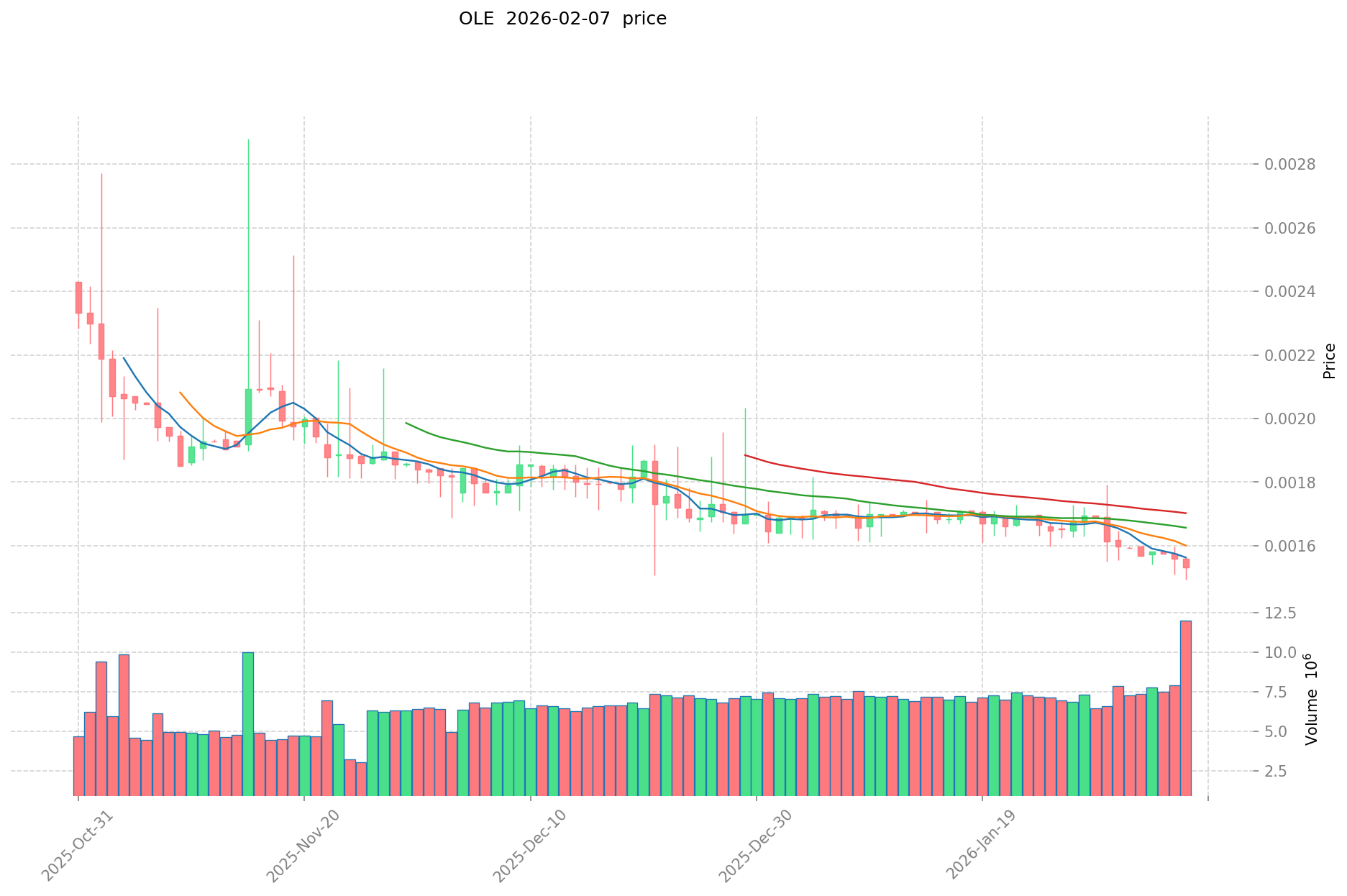
OpenLeverage (OLE) reached a notable price level of $0.155627 on July 7, 2022, influenced by market conditions during that period.
The token experienced a lower price point of $0.00146786 on February 7, 2026, reflecting changes in market sentiment and broader industry trends.
These price movements demonstrate the token's response to various market factors, adoption patterns, and external influences within the decentralized finance sector.
Click to view the current OLE market price
On-Chain Metrics
- 24-Hour Trading Volume: Approximately $20,509.88 (indicating current market activity levels)
- Token Holders: 529 addresses (reflecting community participation)
- Market Capitalization: Approximately $284,266 (representing current market valuation)
- Fully Diluted Valuation: Approximately $1,507,000 (indicating potential total market value at maximum supply)
OpenLeverage Ecosystem Applications and Strategic Partners
Core Use Cases
OpenLeverage's ecosystem supports multiple applications:
- Decentralized Finance (DeFi): OpenLeverage protocol itself provides permissionless lending and margin trading, enabling traders to long or short any trading pair on decentralized exchanges with aggregated liquidity.
- Trading Infrastructure: The platform has facilitated over $700 million in trading volume, demonstrating its capacity to support efficient leveraged trading operations across multiple blockchain networks.
Strategic Partnerships
OpenLeverage has been incubated by Binance Labs and Creative Destruction Lab, establishing a foundation for technological advancement and market expansion. The project has undergone security audits from PeckShield, Code4rena, and CertiK, reinforcing its commitment to protocol security and reliability. These partnerships and collaborations have contributed to OpenLeverage's deployment across Ethereum, BNB Chain, and KCC networks.
Challenges and Controversies
OpenLeverage faces several notable challenges:
- Market Performance: The token has experienced significant price volatility, with a decline over the past year
- Adoption Constraints: With 529 holders and relatively limited exchange availability, expanding the user base represents an ongoing challenge
- Competitive Landscape: The DeFi lending and margin trading sector features numerous established protocols, creating competitive pressure
These factors have generated discussion within the community regarding the project's market positioning and growth trajectory.
OpenLeverage Community and Social Media Presence
Community Engagement
The OpenLeverage community maintains active engagement through its social channels. The OLE token serves as the native asset enabling community ownership and protocol usage incentives, with distribution through trading, lending, referrals, and participation in Clans Clash activities.
Social Media Sentiment
Discussions surrounding OpenLeverage on social platforms reflect diverse perspectives:
- Supporters emphasize the protocol's permissionless architecture and margin trading capabilities, viewing it as an innovative solution for decentralized leveraged trading
- Observers note considerations around price performance and market liquidity
The community continues to monitor the protocol's development and market dynamics.
Discussion Topics
Social media conversations around OpenLeverage focus on DeFi protocol innovation, margin trading mechanisms, and decentralized exchange integration, highlighting both the protocol's technical capabilities and market adoption challenges.
Additional Information Sources for OpenLeverage
- Official Website: Visit OpenLeverage Official Site and BNB Chain Platform for protocol features, use cases, and latest updates.
- X Platform: Follow OpenLeverage on X at @OpenLeverage for protocol developments, community activities, and partnership announcements.
- Code Repository: Access the OpenLeverage GitHub for technical documentation and development resources.
- Blockchain Explorers: View token contracts on Etherscan for Ethereum and BscScan for BNB Chain.
OpenLeverage Future Roadmap
While specific roadmap details were not provided in the reference materials, OpenLeverage's multi-chain deployment strategy indicates ongoing ecosystem expansion efforts. The protocol's focus areas include enhancing margin trading capabilities and expanding support for additional trading pairs across integrated DEX platforms.
How to Participate in OpenLeverage?
- Purchase Options: Acquire OLE tokens on Gate.com, which supports trading for the OpenLeverage token
- Storage Solutions: Store OLE tokens securely using compatible wallets that support Ethereum and BNB Chain networks
- Community Participation: Engage with the OpenLeverage community through official social channels and contribute to protocol development discussions
- Ecosystem Building: Developers can explore integration opportunities through the OpenLeverage GitHub repository and technical documentation
Summary
OpenLeverage offers a permissionless approach to decentralized margin trading, providing lending infrastructure and leveraged trading capabilities across multiple blockchain networks. The protocol has achieved notable trading volume and maintains deployment on Ethereum, BNB Chain, and KCC. With security audits from established firms and incubation support from recognized organizations, OpenLeverage has established foundational credibility in the DeFi space. Despite facing challenges related to market performance and competitive dynamics, the protocol's innovative margin trading infrastructure positions it as a participant in the evolving decentralized finance landscape. Whether you are exploring DeFi protocols or seeking leveraged trading solutions, OpenLeverage represents one option worth monitoring in the permissionless trading infrastructure sector.
FAQ
What is Crypto OLE? What role does it play in cryptocurrency?
Crypto OLE is the utility and governance token of OpenLeverage, enabling holders to participate in protocol governance, reduce trading fees, and earn enhanced lending rewards. It plays a key role in decentralized leverage trading.
What is the difference between Crypto OLE and traditional financial options?
Crypto OLE operates in decentralized cryptocurrency markets without regulatory oversight, while traditional options involve regulated contracts on stocks or indices. Crypto OLE offers different underlying assets, trading mechanisms, and operates in less regulated environments compared to traditional finance options.
How to use OLE in cryptocurrency trading? What risks should I pay attention to?
Use OLE for leveraged trading and governance. Key risks include market volatility, smart contract vulnerabilities, platform security threats, and liquidation risk. Always conduct thorough risk assessment before trading.
How does OLE's smart contract work?
OLE's smart contract automates lending and trading through programmed conditions. Funds are held in the contract until liquidation and borrowing requirements are met. All transactions are anonymous yet transparent, executed automatically by the contract code.
What are the advantages and disadvantages of Crypto OLE compared to other derivative tools?
Crypto OLE offers faster settlement, better scalability, and lower capital requirements compared to traditional derivatives. However, it faces challenges including complex mechanisms, limited liquidity in emerging markets, and evolving regulatory frameworks that may impact future operations.
Share
Content
OpenLeverage's Positioning and Significance
Origin and Development Journey
How OpenLeverage Works
OpenLeverage (OLE) Market Performance
OpenLeverage Ecosystem Applications and Strategic Partners
Challenges and Controversies
OpenLeverage Community and Social Media Presence
Additional Information Sources for OpenLeverage
OpenLeverage Future Roadmap
How to Participate in OpenLeverage?
Summary
FAQ
How to Buy Cryptocurrency


Trending Cryptocurrencies



XZXX: A Comprehensive Guide to the BRC-20 Meme Token in 2025

Survey Note: Detailed Analysis of the Best AI in 2025

Detailed Analysis of the Best 10 GameFi Projects to Play and Earn in 2025

Kaspa’s Journey: From BlockDAG Innovation to Market Buzz

Best Crypto Wallets 2025: How to Choose and Secure Your Digital Assets
Popular GameFi Games in 2025
What Is a Mainnet in Cryptocurrency?
Comprehensive Guide to Dollar-Cost Averaging in Cryptocurrency

Crypto Signals: What Are They and How To Use Them
Cryptocurrency for Beginners: Which Coin Should You Invest In

Cloud Mining: Best Sites Overview