What is RFC: A Comprehensive Guide to Request for Comments in Internet Standards

Retard Finder Coin's Positioning and Significance
In 2025, the development team launched Retard Finder Coin (RFC), aiming to address the need for community-driven meme coins with fair launch mechanisms and transparent governance. As a Solana-based meme coin launched on Pump.fun, Retard Finder Coin plays a role in the decentralized finance and community-driven token space.
As of 2026, Retard Finder Coin has developed an active community with 11,904 holders and maintains a presence across multiple platforms. This article will analyze its technical foundation, market performance, and community dynamics.
Origin and Development History
Birth Background
Retard Finder Coin was created in 2025, drawing inspiration from the "I Find Retards" community on X (formerly Twitter). The project aims to promote freedom of speech, humor, and the spirit of decentralized finance through a community-driven approach. It emerged during the continued expansion of Solana's meme coin ecosystem, with the goal of providing a transparent and fairly launched token for community engagement. Retard Finder Coin's launch brought new possibilities for meme coin enthusiasts and supporters of decentralized community governance.
Key Milestones
- January 2025: Token launched directly on Pump.fun, implementing fair launch principles with transparent token distribution.
- 2025: Community growth accelerated, reaching thousands of holders within months of launch.
- 2026: Trading became available on Gate.com, expanding accessibility for global traders.
With support from its community and the Pump.fun platform, Retard Finder Coin continues to develop its ecosystem and community engagement initiatives.
How Retard Finder Coin Works
No Central Control
Retard Finder Coin operates on the Solana blockchain, a decentralized network of computers (nodes) distributed globally, free from control by banks or governments. These nodes collaborate to validate transactions, ensuring system transparency and attack resistance, granting users greater autonomy and enhancing network resilience.
Blockchain Core
Retard Finder Coin's blockchain is a public, immutable digital ledger that records every transaction. Transactions are grouped into blocks and linked through cryptographic hashes to form a secure chain. Anyone can view the records, establishing trust without intermediaries. Solana's architecture enables high-speed transaction processing with low fees, supporting the token's operational efficiency.
Ensuring Fairness
Retard Finder Coin operates on Solana's Proof of Stake (PoS) consensus mechanism to validate transactions and prevent fraudulent activities such as double spending. Validators maintain network security through staking SOL tokens and processing transactions, receiving rewards for their participation. The innovation includes high transaction throughput and low operational costs characteristic of the Solana network.
Secure Transactions
Retard Finder Coin utilizes public-private key cryptography to protect transactions:
- Private keys (like secret passwords) are used to sign transactions
- Public keys (like account numbers) are used to verify ownership
This mechanism ensures fund security while transactions maintain pseudonymous characteristics typical of blockchain systems. The token's contract address (C3DwDjT17gDvvCYC2nsdGHxDHVmQRdhKfpAdqQ29pump) can be verified on Solana Explorer for transparency.
Retard Finder Coin's Market Performance
Circulation Overview
As of February 5, 2026, Retard Finder Coin's circulating supply stands at 961,433,200 tokens, with a total supply of 1,000,000,000 tokens and a maximum supply also capped at 1,000,000,000 tokens, representing a fixed supply model.
The token was launched directly on Pump.fun, a platform designed for fair launches and community-driven token distribution, which influences its supply-demand dynamics through transparent market mechanisms.
Price Fluctuation
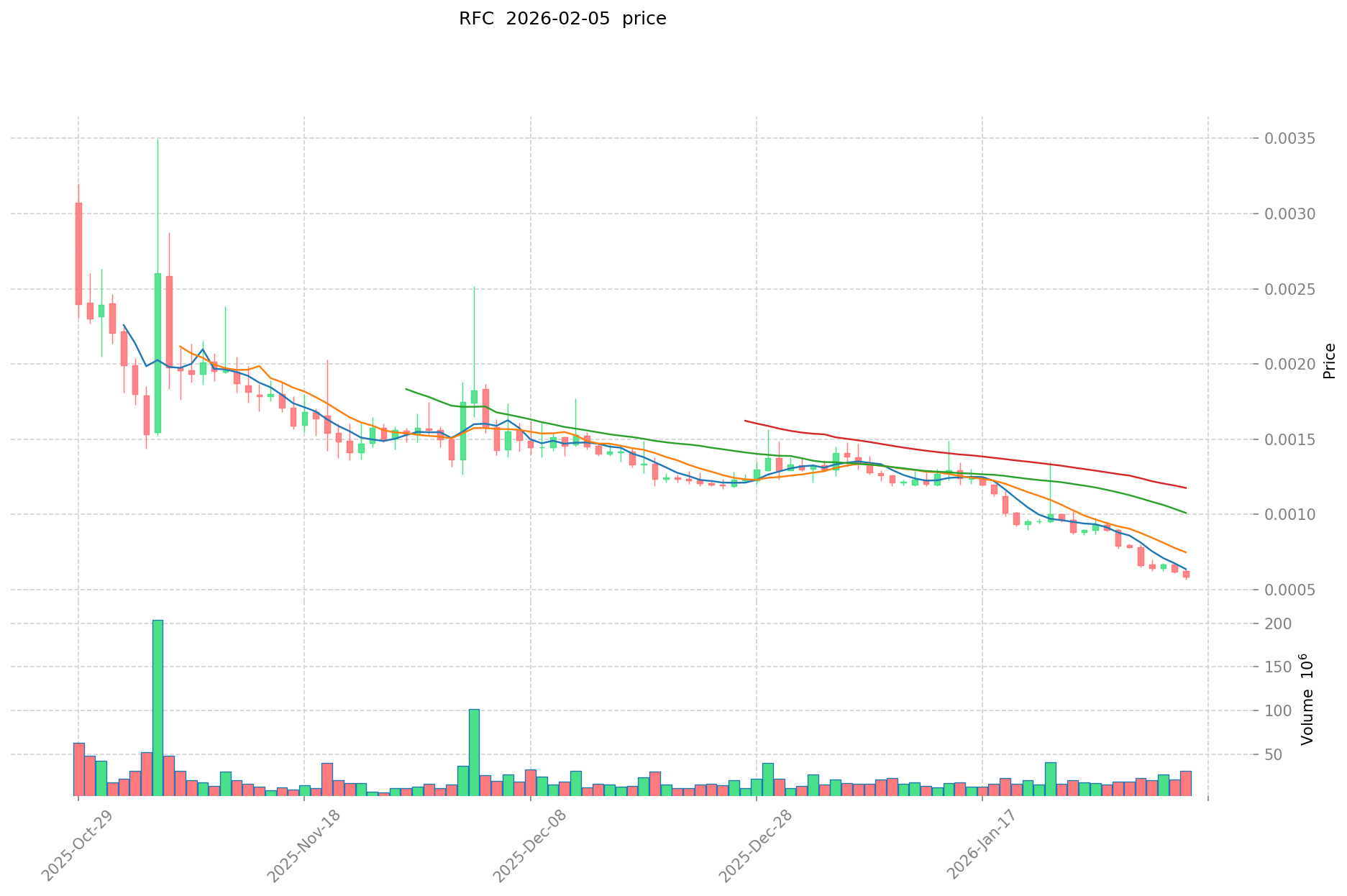
Retard Finder Coin reached a notable price level of $0.14129 on April 14, 2025, driven by initial market enthusiasm and community engagement following its launch.
Its lowest recorded price was $0.0005655, occurring on February 4, 2026, reflecting broader market corrections and reduced trading momentum.
These fluctuations demonstrate the impact of market sentiment, adoption trends, and community-driven dynamics typical of meme-oriented digital assets.
Click to view the current RFC market price
On-Chain Metrics
- Holder Count: Approximately 11,904 addresses (indicating community participation levels)
- Circulating Ratio: 96.14% of total supply currently in circulation (showing high token availability)
- Trading Volume (24H): $18,393.66 (reflecting current market activity)
Retard Finder Coin Ecosystem Applications and Partners
Core Use Cases
Retard Finder Coin's ecosystem supports multiple applications:
- Community Engagement: Built on the Solana blockchain, RFC facilitates decentralized community interaction through its connection to the "I Find Retards" community on X (formerly Twitter).
- Meme Token Trading: Launched on Pump.fun, RFC provides fair launch mechanisms and transparent token distribution for community-driven projects.
Strategic Partnerships
RFC was launched directly on Pump.fun, a platform designed for fair launches and community-driven tokens on the Solana blockchain. These partnerships provide a solid foundation for RFC's ecosystem expansion.
Controversies and Challenges
Retard Finder Coin faces the following challenges:
- Market Volatility: The token has experienced significant price fluctuations, with a decline of approximately 87.73% over the past year.
- Competition Pressure: Operating in a crowded meme coin market alongside numerous other Solana-based tokens.
- Regulatory Risks: As with many meme coins, RFC operates in an evolving regulatory landscape that may impact its future operations.
These issues have sparked discussions within the community and market, while also driving RFC's continuous innovation.
Retard Finder Coin Community and Social Media Atmosphere
Fan Enthusiasm
Retard Finder Coin's community demonstrates active engagement, with 11,904 holders as of February 2026.
On X platform, related posts and hashtags (such as #RFC) generate regular community discussion.
The token's fair launch mechanism and connection to the "I Find Retards" community have ignited community enthusiasm.
Social Media Sentiment
Sentiment on X shows polarization:
- Supporters praise RFC's community-driven nature, fair launch principles, and connection to freedom of speech and humor, viewing it as an authentic meme coin project.
- Critics focus on price volatility, market risks, and the speculative nature of meme tokens.
Recent trends indicate sentiment closely follows price movements and broader market conditions.
Hot Topics
X users actively discuss RFC's price movements, community growth, and meme culture significance, showcasing both its viral potential and the challenges inherent in meme token projects.
Retard Finder Coin More Information Sources
- Official Website: Visit Retard Finder Coin Official Website for features, use cases, and latest updates.
- White Paper: RFC White Paper details its technical architecture, goals, and vision.
- X Updates: On X platform, RFC uses @RFindercoin for active engagement, with posts covering community updates, price movements, and meme culture content.
Retard Finder Coin Future Roadmap
- Ecosystem Goals: Expanding community engagement and increasing token holder base
- Long-term Vision: Establishing RFC as a prominent community-driven meme token on the Solana blockchain
How to Participate in Retard Finder Coin?
- Purchase Channels: Buy RFC on Gate.com and other supporting exchanges
- Storage Solutions: Use compatible Solana wallets to securely store RFC tokens
- Community Participation: Join the "I Find Retards" community on X to engage with other RFC holders
- Blockchain Explorer: View transactions and token information via Solana Explorer
Summary
Retard Finder Coin leverages blockchain technology to create a community-driven meme token, emphasizing transparency, fair launch principles, and freedom of expression. Its active community, connection to X culture, and Solana blockchain foundation distinguish it within the meme coin sector. Despite facing market volatility and competitive pressures, RFC's community spirit and transparent approach position it as a notable participant in the decentralized meme token landscape. Whether you're a newcomer or experienced participant, Retard Finder Coin represents an interesting community-driven project worth exploring.
FAQ
What is Crypto RFC? What is its role in blockchain and cryptocurrency?
Crypto RFC is a digital asset token used in cryptocurrency trading. It functions as a tradable token on supported blockchain platforms, enabling users to buy, sell, and hold RFC tokens while participating in the broader crypto ecosystem and decentralized finance activities.
What are common application examples of RFC standards in cryptocurrency protocol development?
RFC standards are commonly applied in cryptocurrency protocols for security specifications, consensus mechanisms, and network communication. Examples include Bitcoin's P2P networking protocols, Ethereum's smart contract standards (ERC-20, ERC-721), and cryptographic algorithms like SHA-256. These standards ensure interoperability and security across blockchain networks.
Crypto RFC和传统互联网RFC标准有什么区别?
Crypto RFC专注于密码学协议和算法安全,强调加密和数据保护;传统互联网RFC涵盖更广泛的网络标准和基础设施,主要处理通信协议。两者在应用领域和技术重点上存在本质差异。
How to participate in Crypto RFC proposal and discussion process?
Engage in pre-discussion on community forums, draft your RFC document, collect feedback from community members, refine your proposal, participate in voting, and support implementation of approved proposals.
What are the important RFC standards in mainstream crypto projects such as Ethereum and Bitcoin?
Bitcoin uses BIP standards, Ethereum uses EIP standards. These RFC standards are used to propose and discuss new protocols and improvements in the crypto community.
Share
Content
Retard Finder Coin's Positioning and Significance
Origin and Development History
How Retard Finder Coin Works
Retard Finder Coin's Market Performance
Retard Finder Coin Ecosystem Applications and Partners
Controversies and Challenges
Retard Finder Coin Community and Social Media Atmosphere
Retard Finder Coin More Information Sources
Retard Finder Coin Future Roadmap
How to Participate in Retard Finder Coin?
Summary
FAQ
How to Buy Cryptocurrency


Trending Cryptocurrencies



What Is a Phantom Wallet: A Guide for Solana Users in 2025
Solana Price in 2025: SOL Token Analysis and Market Outlook

How Does Solana's Proof of History Work?

Solana (SOL) : Low Fees, Memecoins, and the way to moon

Is Solana a Good Investment?
Solana in 2025: Ecosystem Growth and DeFi Dominance
Top 13 Altcoins for Investment
What is cryptocurrency arbitrage and how can you profit from it
Top 13 Cheapest Cryptocurrencies to Invest in for 2025–2026
Comprehensive Guide to NFT Minting Costs: Ethereum vs Polygon vs Solana

7 Steps to Take When Cryptocurrency Markets Crash