What is SQT: A Comprehensive Guide to Structured Query Testing in Modern Software Development
SubQuery Network's Position and Significance
In 2024, the SubQuery team launched SubQuery Network (SQT), aiming to address data indexing challenges and centralization bottlenecks in Web3 infrastructure. As a blockchain data indexer providing fast, flexible, reliable, and decentralized APIs, SubQuery Network plays a critical role in powering leading Web3 applications across over 160 chains.
As of 2026, SubQuery Network has established itself as an essential infrastructure layer for the multi-chain ecosystem, serving builders and developers with robust data indexing capabilities. This article will provide an in-depth analysis of its technical architecture, market performance, and future potential.
Origin and Development History
Birth Background
SubQuery Network was created by the SubQuery team in 2024, aiming to solve fragmented data access and centralized infrastructure dependencies in Web3 development. It emerged during the expansion of multi-chain ecosystems and the growing demand for decentralized data solutions, with the goal of empowering developers with flexible, decentralized data indexing tools to transform the development landscape. The launch of SubQuery Network brought new possibilities for Web3 builders and blockchain developers.
Important Milestones
- February 2024: Official token launch, marking the beginning of its journey in providing decentralized data indexing services.
- 2024: Expansion to support over 160 blockchain networks, demonstrating significant cross-chain capability.
- 2025: Continued ecosystem growth with increased adoption by Web3 applications and developers.
- 2026: Ongoing optimization of infrastructure services and network performance.
With the support of its development team and growing community, SubQuery Network continues to enhance its technology, security, and real-world applications.
How SubQuery Network Works
No Central Control
SubQuery Network operates on a decentralized network of computers (nodes) distributed globally, free from control by centralized entities. These nodes collaborate to verify data indexing operations, ensuring system transparency and attack resistance, granting users greater autonomy and enhancing network resilience.
Blockchain Core
SubQuery Network's infrastructure is built to interact with multiple blockchain networks, maintaining an efficient and verifiable data indexing system. Data queries are processed and indexed across various chains, creating secure and accessible information layers. Anyone can access indexed data without intermediaries, establishing trust through transparency. Its multi-chain architecture and flexible indexing framework further enhance performance.
Ensuring Fairness
SubQuery Network employs decentralized validation mechanisms to ensure data integrity and prevent manipulation. Network participants maintain security through running indexer nodes and providing data services, earning SQT rewards for their contributions. Its innovation includes supporting over 160 chains with flexible and customizable indexing solutions.
Secure Transactions
SubQuery Network utilizes cryptographic techniques to protect data operations:
- Private keys are used to authorize node operations
- Public keys are used to verify data authenticity
This mechanism ensures data security and maintains pseudonymous privacy for network participants. The platform's architecture includes additional security features through its decentralized network design.
SubQuery Network (SQT) Market Performance
Circulating Supply Overview
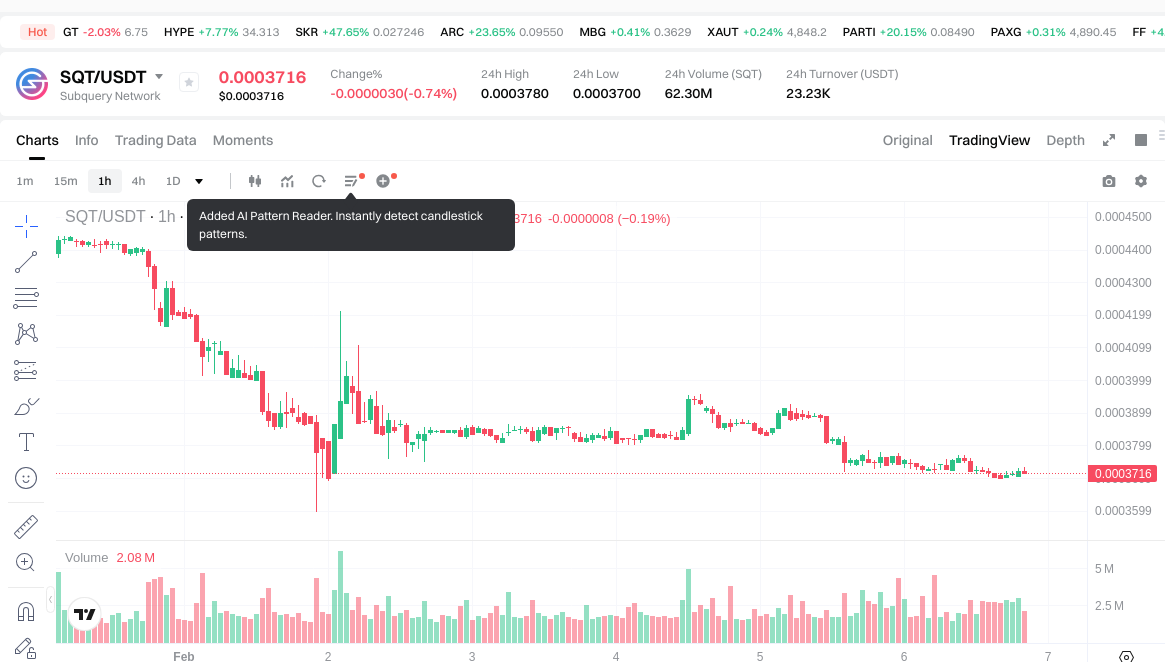
As of February 6, 2026, SubQuery Network (SQT) has a circulating supply of 993,713,034 tokens, with a total supply of 10,010,059,082 tokens. The maximum supply is capped at 10,000,000,000 tokens, indicating a fixed supply model with minimal inflationary pressure.
New tokens enter the market through the project's token distribution mechanism, which influences supply and demand dynamics within the ecosystem.
Price Fluctuations
SubQuery Network (SQT) reached a notable price level of $0.045 on April 5, 2024, driven by increased market activity and broader Web3 infrastructure adoption trends during that period.
Its lowest recorded price was $0.0003034, occurring on January 10, 2026, reflecting bearish market conditions and broader cryptocurrency market adjustments.
These price movements reflect market sentiment shifts, adoption trends, and external factors affecting the blockchain infrastructure sector.
Click to view the current SQT market price
On-Chain Metrics
- Holder Count: Approximately 3,880 addresses hold SQT tokens, indicating a growing user base within the SubQuery ecosystem
- 24-Hour Trading Volume: $23,118.42, reflecting current market activity and liquidity levels
- Market Capitalization to Fully Diluted Valuation Ratio: 9.94%, showing significant potential supply yet to enter circulation
SubQuery Network Ecosystem Applications and Partners
Core Use Cases
SubQuery Network's ecosystem supports multiple applications across the blockchain infrastructure landscape:
- Data Indexing Infrastructure: SubQuery provides fast, flexible, and reliable blockchain data indexing services, enabling developers to build decentralized applications with efficient data queries.
- Multi-Chain Support: Supporting over 160 blockchain networks, SubQuery empowers cross-chain data aggregation and interoperability for Web3 applications.
Strategic Partnerships
SubQuery Network has established collaborations with various blockchain ecosystems and development platforms, enhancing its technical capabilities and market presence. These partnerships provide a solid foundation for SubQuery's ecosystem expansion and demonstrate its commitment to supporting the broader Web3 infrastructure.
Challenges and Considerations
SubQuery Network faces several challenges in its development:
- Technical Complexity: Managing data indexing across 160+ blockchain networks requires continuous optimization and scalability improvements
- Market Competition: The blockchain data infrastructure space includes various competing solutions and indexing protocols
- Regulatory Environment: The evolving regulatory landscape for Web3 infrastructure services may impact operational frameworks
These factors have generated ongoing discussions within the community and continue to drive SubQuery's innovation efforts.
SubQuery Network Community and Social Media Atmosphere
Community Engagement
SubQuery Network maintains an active community presence with approximately 3,880 token holders as of February 2026. The project's social channels regularly feature updates about technical developments, ecosystem growth, and partnership announcements. Community activity reflects sustained interest in blockchain data infrastructure solutions.
Social Media Sentiment
Sentiment on X shows diverse perspectives:
- Supporters highlight SubQuery's multi-chain compatibility, decentralized API services, and its role as essential infrastructure for Web3 development.
- Observers note factors including price volatility and market performance trends, with the token experiencing fluctuations characteristic of the broader cryptocurrency market.
Recent trends indicate ongoing community engagement around infrastructure development and ecosystem expansion.
Popular Discussion Topics
X users actively discuss SubQuery's technical capabilities, multi-chain support strategy, and position within the Web3 infrastructure landscape, showcasing both its innovation potential and the competitive dynamics of the blockchain indexing sector.
SubQuery Network Additional Information Sources
- Official Website: Visit SubQuery Network official site for features, use cases, and latest developments.
- Documentation: SubQuery Academy provides comprehensive technical architecture, objectives, and project vision.
- X Platform: SubQuery Network maintains an active presence on X under @SubQueryNetwork, sharing updates about technical upgrades, ecosystem developments, and partnership announcements, generating engagement from the developer community.
SubQuery Network Development Roadmap
- Ongoing Development: Continuous enhancements to data indexing capabilities and expansion of supported blockchain networks
- Ecosystem Goals: Growing the network of developers and applications utilizing SubQuery's infrastructure services
- Long-term Vision: Establishing SubQuery as a foundational data infrastructure layer for the decentralized Web3 ecosystem
How to Participate in SubQuery Network?
- Purchase Options: SQT tokens are available on Gate.com and other supported platforms
- Storage Solutions: Use compatible wallets such as MetaMask or hardware wallets to securely store SQT tokens (contract addresses: Ethereum - 0x09395a2A58DB45db0da254c7EAa5AC469D8bDc85, Base - 0x858c50C3AF1913b0E849aFDB74617388a1a5340d)
- Community Participation: Engage with the SubQuery community through official social channels and developer forums
- Ecosystem Building: Visit SubQuery Academy to access developer documentation and contribute to the ecosystem
Summary
SubQuery Network is redefining blockchain data infrastructure by providing fast, flexible, and decentralized indexing services across 160+ chains. Its active community, comprehensive resources, and technical capabilities position it as a significant player in the Web3 infrastructure space. While facing competitive pressures and market dynamics, SubQuery's focus on multi-chain support and developer tools demonstrates its commitment to advancing decentralized technology. Whether you are new to blockchain infrastructure or an experienced developer, SubQuery Network offers valuable tools and services worth exploring.
FAQ
What is SQT (Subquery Token) and what problem does it solve?
SQT is a utility token powering the SubQuery Network, incentivizing participation and enabling transactions within the ecosystem. It solves decentralized data indexing challenges by rewarding network contributors and facilitating secure data query services.
How does Subquery network work and what is the role of SQT token?
SubQuery Network operates as a decentralized data indexing protocol powered by the SQT token. SQT serves as a utility token that incentivizes network participation, facilitates transactions, and rewards indexers for providing indexed data services to the ecosystem.
Where can I buy SQT tokens and what exchanges list it?
SQT tokens are available on major exchanges including MEXC Global and Gate.com. You can also trade SQT on decentralized exchanges like Uniswap (v3) for greater flexibility and control over your trades.
What are the use cases and benefits of holding SQT?
SQT holders gain governance rights, earn staking rewards, and access exclusive protocol features. It incentivizes network participation and provides economic benefits through value appreciation.
How is SQT different from other indexing and query layer solutions in crypto?
SQT utilizes decentralized data indexing through a network of nodes, enhancing scalability and security compared to centralized alternatives. It prioritizes efficiency and true decentralization in the indexing layer.
What are the risks and considerations before investing in SQT?
SQT carries medium to high risk. Consider your risk tolerance, market knowledge, and conduct thorough research before investing. Diversify your portfolio and only invest what you can afford to lose.
Share
Content
SubQuery Network's Position and Significance
Origin and Development History
How SubQuery Network Works
SubQuery Network (SQT) Market Performance
SubQuery Network Ecosystem Applications and Partners
Challenges and Considerations
SubQuery Network Community and Social Media Atmosphere
SubQuery Network Additional Information Sources
SubQuery Network Development Roadmap
How to Participate in SubQuery Network?
Summary
FAQ
How to Buy Cryptocurrency


Trending Cryptocurrencies



XZXX: A Comprehensive Guide to the BRC-20 Meme Token in 2025

Survey Note: Detailed Analysis of the Best AI in 2025

Detailed Analysis of the Best 10 GameFi Projects to Play and Earn in 2025
Kaspa’s Journey: From BlockDAG Innovation to Market Buzz

Best Crypto Wallets 2025: How to Choose and Secure Your Digital Assets
Popular GameFi Games in 2025
Games with Payouts: Top 23 Projects for Earning
What is Cronos and How Does It Work?
What is Pump & Dump? How to Avoid Becoming a Victim of Pump & Dump Schemes
What is cryptocurrency in plain language
Best Cloud Gaming Services