What distinguishes Layer 1 from Layer 2?

What Is the Blockchain Trilemma?
Blockchain technology is expanding beyond the financial sector and seeing adoption across a wide range of industries. As a result, scalability has become increasingly critical within blockchain ecosystems. Enhancing system throughput enables blockchains to support new applications and higher transaction volumes. Discussions around blockchain scalability often focus on the roles of Layer 1 and Layer 2 solutions.
Blockchain layers were developed to bolster network security and data integrity. In this article, we examine how these layers work together to improve interoperability across different blockchains.
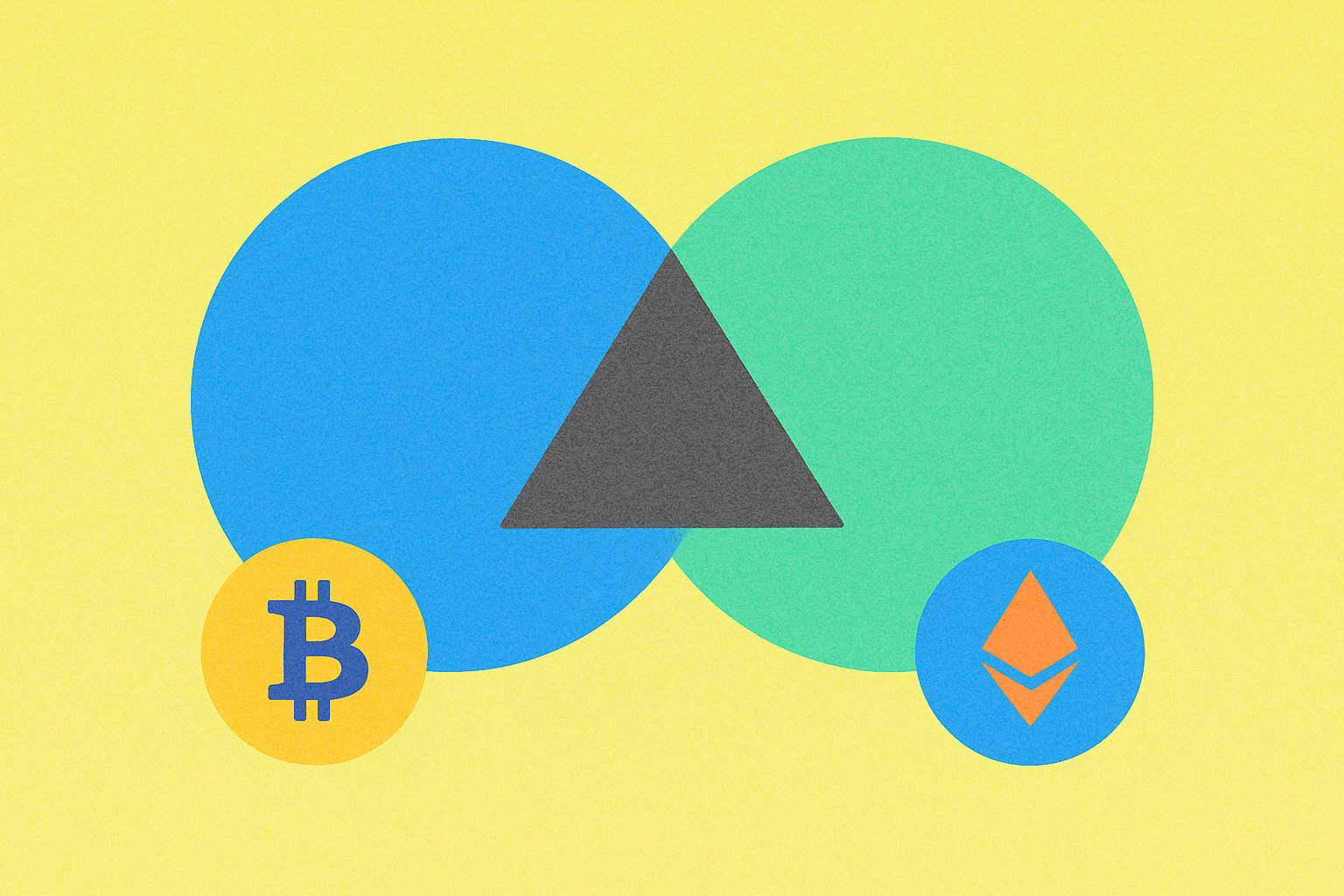
The blockchain scalability trilemma refers to the challenge of simultaneously achieving three core attributes—security, decentralization, and scalability. This concept has become a key constraint in the evolution of blockchain technology.
According to the trilemma, a blockchain can only fully optimize two out of these three properties at any one time, making it technically difficult to maximize all three. Historically, blockchain projects have been forced to sacrifice one property to preserve overall system functionality.
Bitcoin, for example, optimizes for decentralization and security but compromises on scalability. Ethereum faces similar challenges, working to increase transaction throughput while maintaining robust security and decentralization.
To date, no cryptocurrency has achieved an optimal balance of all three attributes. Every crypto project prioritizes two—sometimes three—properties, trading off the remaining one as necessary.
Many developers have implemented technical solutions and ideas aimed at resolving scalability and the trilemma. Depending on their implementation, these concepts emerge as either Layer 1 or Layer 2 solutions.
Some cryptocurrency projects can process thousands of transactions per second, but this often comes at the cost of decentralization or security. In contrast, Bitcoin and Ethereum remain the leading examples of highly secure and decentralized digital currencies. Cardano, Avalanche, and Solana are prominent Layer 1 projects that are gaining attention for their focus on solving the scalability challenges inherent to Bitcoin and Ethereum.
Layer 1 Scaling Solutions
To understand the differences between Layer 1 and Layer 2 blockchain scaling, it's helpful to start with a definition of Layer 1. As the term suggests, a Layer 1 blockchain network refers to the base protocol layer. This foundational architecture serves as the final record for all transactions.
Layer 1 scaling solutions enhance the foundational blockchain layer to boost scalability. These solutions provide several methods for increasing network throughput. For example, Layer 1 solutions can directly modify protocol rules to improve transaction capacity and speed, and can expand overall network capacity to accommodate more data and users.
When considering Layer 1 and Layer 2 blockchains, two primary Layer 1 scaling solutions stand out: consensus protocol modifications and sharding. Both approaches play a central role in achieving scalability at the Layer 1 level.
For instance, consensus mechanisms such as Proof of Stake (PoS) are considered more efficient than Proof of Work (PoW) at the blockchain layer. PoS maintains network security while significantly reducing computational resource consumption. Sharding, on the other hand, distributes the network’s workload across multiple datasets or "shards," enabling parallel processing.
Advantages
-
Enhanced Scalability: Increased scalability is the most apparent benefit of Layer 1 blockchain solutions. By modifying the base protocol, these solutions can improve the network’s overall processing capacity.
-
Maintained Security and Decentralization: Layer 1 solutions offer high scalability and economic feasibility while preserving decentralization and security. This ensures the network’s reliability and safety.
-
Facilitated Ecosystem Development: Layer 1 scaling solutions make it possible to integrate new tools, technological advances, and other innovations directly into the base protocol—driving overall ecosystem growth.
Disadvantages
Limited scalability is a common challenge for Layer 1 networks. Bitcoin and other major blockchains often struggle to process transactions during periods of high demand. Notably, Bitcoin’s PoW consensus mechanism requires significant computational resources and is highly energy-intensive.
Layer 1 changes directly impact the fundamental protocol, so their implementation requires careful review and broad community consensus. Once a change is implemented, it can be difficult to revert if problems arise.
Addressing Layer 1 Challenges
Scaling Layer 1 networks requires fundamental blockchain upgrades. The following approaches focus on foundational network improvements.
Consensus Protocol Improvements
Consensus algorithms are essential mechanisms for achieving agreement within blockchain networks. There are several types, including PoW and PoS, each with distinct features and benefits.
PoW remains the most widely used consensus algorithm but suffers from low throughput and high energy consumption. Miners must solve complex mathematical problems, which requires substantial computational power. Conversely, PoS offers greater throughput than PoW.
In PoS systems, network participants process and validate transaction blocks based on their crypto asset holdings, eliminating the need for energy-intensive computation. This allows for high-speed transaction processing with lower energy consumption. Ethereum completed its transition to a PoS consensus algorithm to increase network capacity and decentralization while maintaining security.
Sharding
Sharding, adapted from distributed database systems, has become one of the most popular Layer 1 scaling solutions. Sharding divides the blockchain network’s overall state into separate datasets called "shards."
Instead of having every node manage the entire network, responsibilities are split into more manageable tasks. The network can then process shards in parallel, handling multiple transactions at once. Each network node is assigned to a specific shard, rather than maintaining a complete blockchain copy, reducing individual workload and increasing network efficiency.
Each shard submits proofs to the main chain and interacts with other shards using cross-shard communication to share addresses, state, and balances. This system maintains coordination and consistency across the network. Ethereum 2.0, along with Zilliqa, Qtum, and Tezos, are major protocols actively researching and implementing sharding technology.
Layer 2 Scaling Solutions
The primary objective of Layer 2 scaling is to utilize networks or technologies built on top of the blockchain protocol. Off-chain protocols or supporting networks help blockchain networks boost scalability and efficiency.
Layer 2 scaling solutions transfer the transaction load from the blockchain protocol to off-chain architectures. These off-chain systems then report the final results of processed transactions to the main blockchain. By delegating data processing tasks to these supporting architectures, Layer 2 solutions relieve congestion on the core blockchain protocol, making scalability possible.
The Lightning Network, used for scaling Bitcoin, is among the most prominent Layer 2 solutions. Lightning processes transactions off-chain and records only the final result on the main chain, providing rapid and low-cost transactions. Many other Layer 2 solutions are also prevalent in blockchain discussions.
Advantages
-
Preserves Layer 1 Security and Decentralization: Layer 2 scalability processes transactions off-chain, allowing the network to maintain the security and decentralization of Layer 1. The main chain acts as the final settlement layer, ensuring reliability and security.
-
Accelerates Microtransactions: Processing transactions off-chain enables much faster execution of microtransactions. This makes use cases like small payments and real-time transactions feasible—scenarios that were challenging on traditional blockchains.
-
Reduces Transaction Costs: By alleviating congestion on the main chain, off-chain processing significantly lowers transaction fees.
Disadvantages
-
Potential Interoperability Challenges: Layer 2 users are limited by the protocols of their chosen solution, which can hinder connectivity among blockchains. Interoperability between different Layer 2 solutions remains a challenge.
-
Security and Privacy Risks: Processing transactions outside Layer 1 introduces new security and privacy concerns. Robust security measures are essential for off-chain transaction processing.
-
Liquidity Fragmentation: Multiple Layer 2 solutions may lead to fragmented liquidity, impacting user experience.
Addressing Layer 2 Challenges
Various technical approaches have been developed to solve Layer 2 challenges. Below, we detail the main Layer 2 solutions.
Nested Blockchains: Distributing Processing via Parent-Child Structures
Nested blockchains are hierarchical structures where a blockchain contains additional blockchains within it. They consist of a main chain—the foundational blockchain—and multiple child chains built on top. The main chain sets overall network rules and parameters, while child chains handle specific processing tasks.
By distributing processing through parent-child relationships, the main chain’s workload is reduced, leading to improved scalability. Child chains can implement their own consensus mechanisms and can be optimized for specific use cases. The OMG Plasma project is a leading example of Layer 2 nested blockchain infrastructure on Ethereum.
State Channels: Fast Off-Chain Transactions
State channels connect blockchains to off-chain transaction channels, enabling bidirectional communication. State channels don’t require validation from main chain network nodes, significantly accelerating transaction processing.
Participants record the channel’s initial state on the main chain, then transact freely off-chain. Once transactions are completed, only the final state and changes are recorded back on the main chain. This approach ensures that only the final result is recorded on-chain, not all intermediate transactions, maximizing efficiency.
Liquid Network, Ethereum’s Raiden Network, Celer, and Bitcoin Lightning are notable examples of state channels. However, it’s important to note that state channels may sacrifice some decentralization to achieve scalability.
Sidechains: Independent Parallel Chains
Sidechains are independent transaction chains that operate alongside a blockchain. They may use different consensus mechanisms from the main chain and can be designed for greater speed and scalability. The main chain maintains overall security, validates bundled transaction records, and handles dispute resolution.
Unlike state channels, sidechains publish transactions and are structured so that any security breach on the sidechain does not affect the main chain. This independence minimizes risks to the main chain.
However, building a sidechain requires developing infrastructure from scratch, which can be resource-intensive and costly. Sidechains also require their own validator sets, resulting in a security model distinct from the main chain.
Key Differences Between Layer 1 and Layer 2
Several critical distinctions exist between Layer 1 and Layer 2 blockchain scaling solutions. The following sections outline these differences in detail.
1: Definition
Layer 1 refers to scaling methods that upgrade the foundational blockchain layer to improve processing speed and throughput. This includes increasing block size and changing consensus algorithms. Layer 1 solutions enhance network performance by altering the core blockchain protocol itself.
Layer 2 refers to off-chain solutions that reduce the main chain’s workload by processing data externally. Specific information processing or transaction tasks are delegated to Layer 2 protocols, networks, or applications, which then report results back to the main blockchain. This approach eases main chain load and offers faster transactions.
2: Operation
Layer 1 scaling focuses on core protocol changes within the blockchain network. Implementing Layer 1 solutions requires modifying the blockchain protocol directly. As a result, changes cannot be easily reversed if transaction volumes drop significantly. Protocol changes demand consensus and a network-wide upgrade.
By contrast, Layer 2 scaling functions independently as an off-chain solution. Off-chain protocols, networks, and solutions report only final results to the main blockchain protocol, enabling flexible scaling without requiring main chain modifications.
3: Types of Solutions
For Layer 1, consensus protocol enhancements and sharding are representative solutions. Scaling may also involve adjustments to block size or block generation speed. These methods improve performance by modifying the blockchain’s fundamental structure.
For Layer 2, there are virtually no restrictions on implementation. Any protocol, network, or application can operate as a Layer 2 solution off-chain, providing flexible scaling for a wide range of use cases.
4: Quality
Layer 1 serves as the authoritative source of information and manages final transaction settlement. It uses native tokens and provides access to network resources. Innovation in consensus mechanism design is a defining feature. Because Layer 1 changes affect the entire network, careful planning and implementation are essential.
Layer 2 delivers comparable functions to Layer 1 while increasing throughput and programmability and reducing transaction costs. Each Layer 2 solution has its own method for remapping transactions to its respective Layer 1. Layer 2 leverages main chain security to achieve fast, low-cost transactions.
The Future of Blockchain Scaling
Scalability is a major obstacle to widespread blockchain adoption. As cryptocurrency demand increases, blockchain platforms will require greater scalability. Both Layer 1 and Layer 2 approaches have distinct costs and advantages.
Layer 1 solutions provide foundational improvements that support long-term network sustainability. Layer 2 solutions deliver immediate scalability enhancements and improve user experience. As a result, the future of blockchain scaling will rely on integrating both Layer 1 and Layer 2 solutions.
In recent years, many blockchain projects have adopted comprehensive scaling strategies combining both Layer 1 and Layer 2. For example, Ethereum is advancing sharding as a Layer 1 solution and rollups as a Layer 2 solution.
The concept of Layer 0 has also emerged. Layer 0 blockchains provide foundational infrastructure for creating new chains and enabling cross-chain interoperability. Chains built on Layer 0 can communicate with one another and with other non-native blockchains. Layer 0 forms the basis for Layer 1 blockchains. Notable Layer 0 examples include Cosmos, Polkadot, and Avalanche. Cosmos, in particular, serves as the foundation for major blockchain platforms.
Looking ahead, the blockchain ecosystem is likely to evolve into a multi-layered structure integrating Layer 0, Layer 1, and Layer 2. This evolution will help resolve the trilemma of security, decentralization, and scalability—enabling blockchain infrastructure to support truly large-scale adoption.
FAQ
What are the core differences between Layer 1 and Layer 2?
Layer 1 is the foundational blockchain layer, while Layer 2 consists of off-chain technologies built on top. Layer 2 processes transactions off the main chain, greatly enhancing scalability and reducing gas fees.
What are the pros and cons of Layer 2 solutions like Lightning Network or Polygon?
Key advantages are significantly lower fees, higher transaction speeds, and improved user experience. Drawbacks include trade-offs in security and decentralization, fragmentation among Layer 2 networks, and increased complexity for users.
When should you choose Layer 1 versus Layer 2?
Layer 1 is ideal for large transactions demanding robust security. Layer 2 is best for frequent, smaller transactions that benefit from speed and lower fees. Selecting the appropriate layer for each use case enables efficient transactions.
Is Layer 2 secure? Are there additional risks compared to Layer 1?
Layer 2 is generally secure, but it involves slightly higher security risks than Layer 1. Key concerns include the quality of smart contract audits and the centralization of sequencers. Leading protocols are continually improving, and security levels are expected to match Layer 1 over time.
How do Layer 2 solutions differ between Bitcoin and Ethereum?
Ethereum Layer 2 solutions support smart contracts and complex transactions, while Bitcoin Layer 2s are focused on simple payments. Ethereum excels in security inheritance; Bitcoin prioritizes transaction efficiency.
Share
Content
How to Buy Cryptocurrency


Trending Cryptocurrencies



Top Layer 2 projects worth following in 2025: From Arbitrum to zkSync

Pepe Unchained: Pepe Meme Coin evolves into a Layer-2 ecosystem
2025 Layer-2 Solution: Ethereum Scalability and Web3 Performance Optimization Guide
How Layer 2 Changes the Crypto Assets Experience: Speed, Cost, and Mass Adoption

What is Layer 2 in crypto assets? Understand the scaling solution for Ethereum
Pepe Unchained (PEPU): Building the New Era of Meme Coins on Layer 2
Top 6 Recommended Apps for AI Trading of Crypto Assets
What is MAN: Understanding Metropolitan Area Networks and Their Role in Modern Enterprise Infrastructure
What is SBR: A Comprehensive Guide to Sequencing Batch Reactor Technology and Its Applications in Wastewater Treatment
What is GTAI: A Comprehensive Guide to Graph-based Transformer Artificial Intelligence
What is NESS: A Comprehensive Guide to the Nintendo Entertainment System and Its Revolutionary Impact on Gaming History