Index ZERO is a pioneering meta protocol token on Solana launched in December 2023, addressing fair token distribution and sustainable liquidity provision challenges. As the first token of Solana's Index protocol, it introduces innovative block auction minting mechanisms where all generated fees create liquidity pools with locked LP tokens for three years. With 6,017 holders and fixed supply of 21 million tokens, Index ZERO operates through decentralized Proof of Stake consensus on Solana's high-performance blockchain. The token reached peak price of $2.5 in December 2023 and currently trades at lower levels, reflecting market volatility. Available on Gate.com, Index ZERO demonstrates experimental approaches to tokenization while facing competition and limited exchange availability. This guide covers its technical architecture, market performance, ecosystem applications, and community dynamics, offering insights into emerging meta protocol developments for both newcomers and experienced crypto participants.
Index ZERO's Positioning and Significance
In 2023, the Index protocol team launched Index ZERO (ZERO), aiming to address challenges in decentralized token distribution and liquidity provision on Solana.
As the first token of Solana's first meta protocol, Index ZERO plays a pioneering role in experimental token launch mechanisms and community-driven liquidity.
As of 2026, Index ZERO has established itself as an innovative asset within the Solana ecosystem, with 6,017 holders and an active community supporting the protocol's development.
This article will provide an in-depth analysis of its technical architecture, market performance, and future potential.
Origin and Development History
Birth Background
Index ZERO was created by the Index protocol team in December 2023, aiming to solve the problem of fair token distribution and sustainable liquidity provision in emerging blockchain protocols.
It emerged during the Solana ecosystem's expansion and innovation in token launch mechanisms, with the goal of enabling transparent, fair token minting through block auction mechanisms to change the status quo.
The launch of Index ZERO brought new possibilities for fair token distribution and liquidity management to Solana ecosystem participants and DeFi users.
Important Milestones
- December 2023: Public minting commenced through a block auction mechanism, with all generated fees allocated to create liquidity pools with half the token supply, and LP tokens locked for three years.
- December 2023: Token listing on Gate.com, expanding accessibility for global traders.
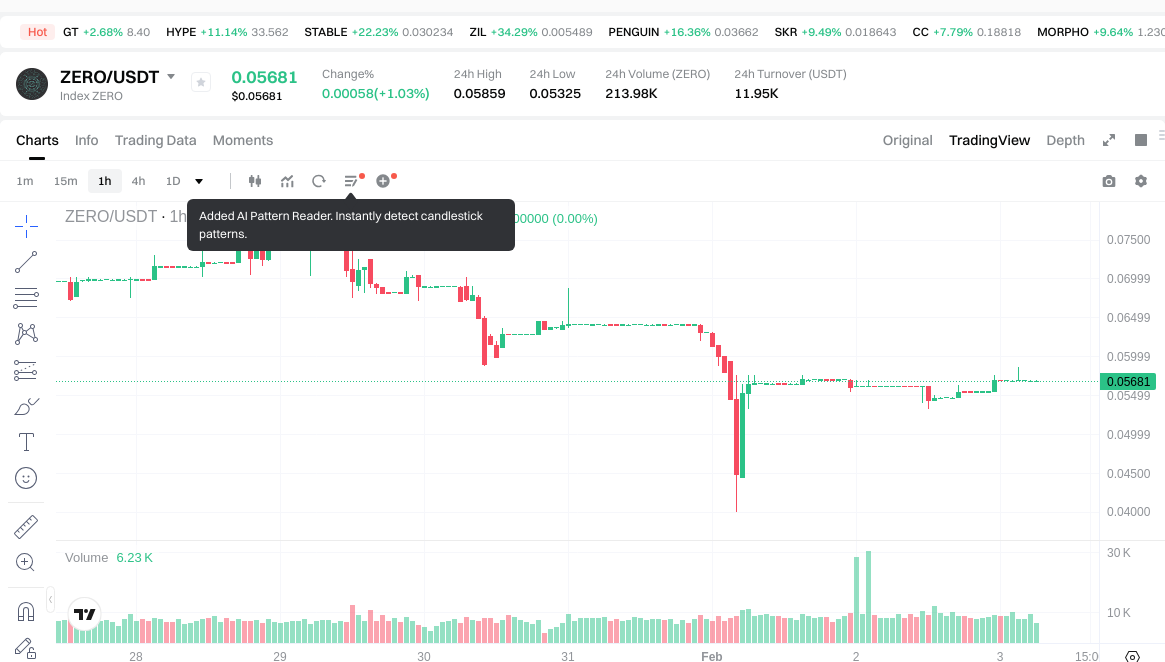
- January 2026: The token reached its all-time low of $0.04, presenting potential opportunities for market participants.
Under the support of the Index protocol community and early adopters, Index ZERO continues to develop its protocol infrastructure and practical applications.
How Index ZERO Operates
No Central Control
Index ZERO operates on Solana's decentralized network of globally distributed nodes, independent of traditional financial institutions or government oversight.
These nodes collaborate to validate transactions, ensuring system transparency and attack resistance, granting users greater autonomy and enhancing network resilience.
Blockchain Core
Index ZERO's blockchain is a public, immutable digital ledger recording every transaction on the Solana network.
Transactions are grouped into blocks and linked through cryptographic hashes to form a secure chain.
Anyone can view the records, establishing trust without intermediaries.
Solana's high-performance architecture enables rapid transaction processing and scalability.
Ensuring Fairness
Index ZERO operates on Solana's Proof of Stake (PoS) consensus mechanism to validate transactions and prevent fraudulent activities such as double-spending.
Validators maintain network security by staking SOL and processing transactions, earning rewards in the process.
The innovative approach includes a transparent block auction minting process where all fees contribute to liquidity pool creation.
Secure Transactions
Index ZERO utilizes public-private key cryptography to protect transactions:
- Private keys (similar to secret passwords) are used to sign transactions
- Public keys (similar to account numbers) are used to verify ownership
This mechanism ensures fund security while transactions maintain transparency on Solana's public blockchain.
The protocol's design includes a three-year LP token lock mechanism to ensure long-term liquidity stability.
Circulation Overview
As of February 03, 2026, Index ZERO's circulating supply stands at 21,000,000 tokens, which represents 100% of the total supply of 21,000,000 tokens. The token features a fixed supply model with no additional issuance planned.
New tokens entered the market through a public minting process via block auction war, where all generated fees were allocated to create liquidity pools with half of the supply. The LP tokens are locked for a 3-year period, establishing a structured distribution mechanism. The entire supply has been released into circulation, with all tokens currently available in the market.
Price Fluctuations
Index ZERO reached its peak price of $2.5 on December 27, 2023, driven by initial market enthusiasm and early adoption following its launch as the first token of the Index protocol on Solana.
The token's lowest price of $0.04 occurred on January 31, 2026, reflecting broader market corrections and decreased trading activity. Over the past year, the token has experienced a decline of 58.67%, demonstrating significant price volatility.
Recent market dynamics show mixed performance: the token gained 1.24% over the past 24 hours, while experiencing declines of 18.27% over 7 days and 25.69% over 30 days. These fluctuations reflect evolving market sentiment, adoption trends, and broader cryptocurrency market conditions.
Click to view current ZERO market price
On-Chain Metrics
- Holder Count: 6,017 addresses (indicating community distribution and adoption)
- 24-Hour Trading Volume: $11,907.24 (reflecting current market activity)
- Market Capitalization: $1,193,010 (representing total market valuation)
- Contract Standard: SPL token on Solana blockchain
Index ZERO Ecosystem Applications and Partners
Core Use Cases
Index ZERO's ecosystem supports multiple applications:
- Meta Protocol Innovation: As the first token of the Index protocol on Solana, it demonstrates the potential of meta protocols in creating new tokenization mechanisms.
- Liquidity Provision: The token's initial distribution model utilized block auction mechanisms, with all generated fees allocated to creating liquidity pools, promoting decentralized market-making capabilities.
Strategic Partnerships
Index ZERO operates within the Solana ecosystem, leveraging the network's high-performance infrastructure for its meta protocol implementation.
These partnerships provide a foundation for Index ZERO's ecosystem expansion.
Controversies and Challenges
Index ZERO faces the following challenges:
- Market Volatility: The token has experienced notable price fluctuations, with current trading levels significantly below earlier valuations.
- Competition Pressure: The emergence of various meta protocols and token standards across blockchain platforms creates a competitive environment for innovation and adoption.
- Limited Exchange Availability: With presence on a single exchange platform, accessibility for potential users may be constrained compared to more widely distributed assets.
These issues have sparked discussions within the community and markets, while also driving Index ZERO's continued innovation.
Fan Enthusiasm
Index ZERO's community demonstrates engagement, with the token holding approximately 6,017 wallet addresses.
On X platform, related posts and hashtags (such as #ZERO) generate community discussions.
Developments in the meta protocol space and liquidity mechanisms have contributed to community interest.
Sentiment on X presents varied perspectives:
- Supporters praise Index ZERO's innovative approach to meta protocols and its fair launch mechanism through block auctions, viewing it as an experiment in decentralized token distribution.
- Observers note the token's price performance and its position within the broader Solana ecosystem landscape.
Recent trends reflect the typical dynamics observed in emerging protocol tokens.
Hot Topics
X users discuss Index ZERO's meta protocol mechanics, liquidity structure, and its role in expanding tokenization possibilities on Solana,
reflecting both its innovative potential and the challenges of establishing new protocol standards.
- Official Website: Visit Index ZERO Official Site for features, use cases, and latest updates.
- X Updates: On X platform, Index ZERO maintains an active presence through @analysoor,
with posts covering topics such as protocol developments, community activities, and ecosystem updates.
- Blockchain Explorer: View token details and transaction history on Solana Explorer.
How to Participate in Index ZERO?
- Purchase Channels: Acquire Index ZERO on Gate.com
- Storage Solutions: Securely store tokens using Solana-compatible wallets such as Phantom or Solflare
- Engage with Protocol: Explore the Index protocol's mechanisms and participate in the meta protocol ecosystem
- Build Ecosystem: Visit development resources to understand the protocol's architecture and potential applications
Summary
Index ZERO represents an experimental approach to meta protocols on Solana, introducing novel mechanisms for token distribution through block auctions and liquidity pool creation.
Its community engagement, technical implementation, and market presence position it as a noteworthy project within the Solana ecosystem.
Despite facing challenges such as market volatility and limited exchange availability, Index ZERO's innovative distribution model and protocol design contribute to the ongoing evolution of tokenization standards.
Whether you are new to crypto or an experienced participant, Index ZERO offers insights into emerging meta protocol developments.
FAQ
What is Crypto ZERO and what is its main purpose?
Crypto ZERO is a decentralized digital currency built on blockchain technology. Its main purpose is to enable secure, transparent, and peer-to-peer transactions without intermediaries, offering users full control over their assets while maintaining transaction immutability.
How do you buy and store Crypto ZERO tokens?
Purchase ZERO tokens using a crypto wallet with debit/credit card, bank transfer, or peer-to-peer trading. Store tokens securely in your personal wallet for full control and security.
What are the key features and advantages of ZERO compared to other cryptocurrencies?
ZERO offers innovative technology, strong community support, and exceptional growth potential. Its low entry price makes it accessible to investors while delivering superior performance compared to established cryptocurrencies in the long term.
Is Crypto ZERO safe and what are the potential risks?
Crypto ZERO carries market volatility and regulatory risks. Conduct thorough research before participating. Non-compliant assets may present higher risks including potential asset loss or trading delays. Prioritize MiCAR-compliant alternatives.
What is the total supply and current market cap of ZERO?
ZERO has a total supply of 564 million tokens. The current market cap is $39.908K, reflecting the token's present valuation in the market.
Who are the founders and team behind Crypto ZERO?
Crypto ZERO was founded by Amir Bandeali and an experienced team of blockchain developers. The team comprises experts in blockchain technology and finance, dedicated to delivering innovative solutions in the cryptocurrency space.
* The information is not intended to be and does not constitute financial advice or any other recommendation of any sort offered or endorsed by Gate.