These People and Projects Are Key to ERC-8004
The Ethereum Foundation has announced that the ERC-8004 standard will soon go live on mainnet, adding further momentum to the already surging AI Agent sector.
New protocols are often seen as gateways to new opportunities. So what does this new standard actually mean? Is it just another technical upgrade, or is Ethereum making a pivotal strategic move for the AI era?
While retail investors chase the next 100x meme token, industry leaders like Coinbase, Cloudflare, and Solana have already entered the field, quietly building trust infrastructure and payment rails for the coming AI wave.
How will this transformation unfold? Across Ethereum, Base, and Solana—the three key battlegrounds—which projects are already leading the charge?
Why ERC-8004 Matters
Many expect 2026 to be the breakout year for AI Agent applications and vibe-coding, with a surge of AI Agents developed by various companies and teams.
Picture this: in the future, you have an AI travel assistant. When you ask it to book a trip, it may need to interact with countless external AI agents—an airline booking AI, a hotel reservation AI, a local car rental AI, and even an itinerary-planning AI.
This raises a critical question: How does your travel assistant know which airline AI is legitimate and not a scam? How do you trust that an unfamiliar car rental AI won’t fail you at a crucial moment?
In the human world, we rely on business licenses, credit ratings, and platform guarantees to solve trust and fraud issues. But in a digital world of countless anonymous AI agents, there’s a massive “trust gap” between agents.
Without a unified standard, the AI economy could either become a closed system dominated by giants like Google and Apple—where data and reputation can’t be shared—or devolve into a haven for fraud and poor service.
ERC-8004: The Agent’s Digital Passport
ERC-8004 was designed to solve this problem.
Think of it as a global identity system for AI Agents, built on Ethereum—an immutable digital passport giving each AI agent a unique identity.
This “passport” can dynamically record an agent’s entire track record: how many clients it has served, how many positive reviews it has received, whether it’s passed third-party skill certifications, and more.
All of this information is publicly available, transparently recorded on-chain, and cannot be deleted or altered by anyone (including the AI itself).
Why does this matter? It establishes a universal reputation system. An AI agent with a strong reputation on Platform A can carry its “credit profile” to Platform B without starting from scratch. Reputation becomes the most valuable asset and collateral for AI agents in the digital world.
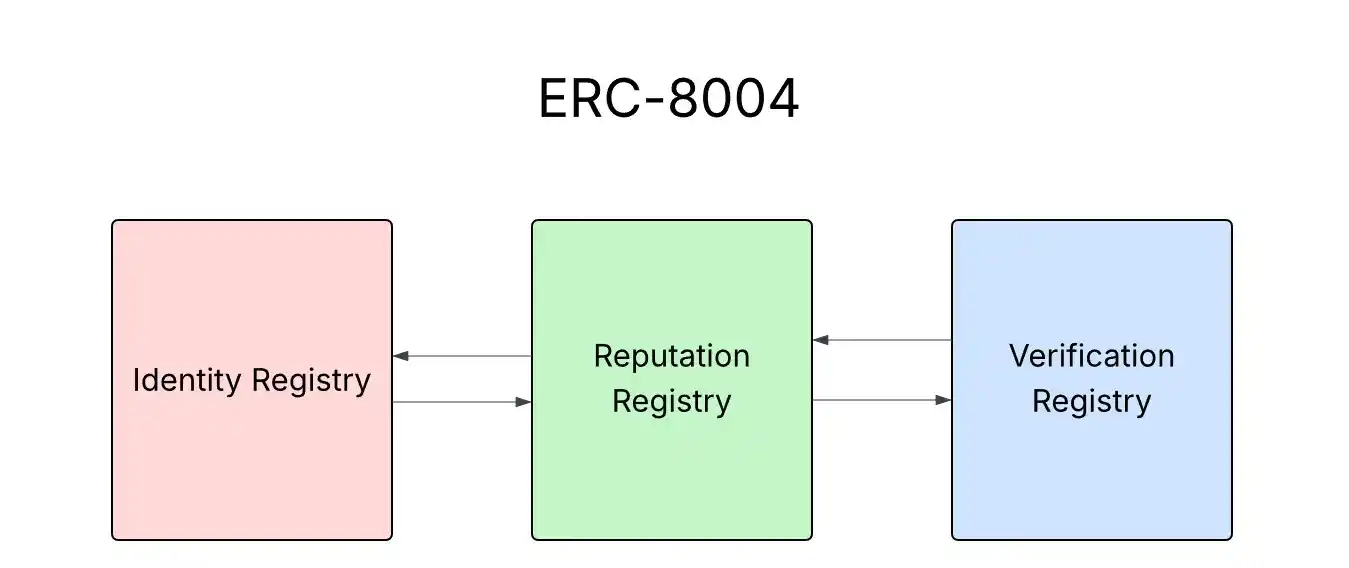
The core of ERC-8004: identity registry, reputation registry, and verification registry—three pillars in one
Just as ERC-20 unified tokens and ERC-721 launched the NFT market, ERC-8004 aims to provide a unified trust foundation for the fast-growing AI Agent economy.
Web2 AI Agents can also use this reputation system for real-world interactions. For example, a weather forecast AI agent can obtain off-chain weather data via oracles and build on-chain reputation based on the accuracy of its forecasts.
Consider a crypto-native use case: a new meme coin project wants to airdrop tokens only to genuine, experienced “P” users—not bots or airdrop hunters. How can the project filter participants? ERC-8004 offers an ideal solution.
The project can set rules: only airdrop to AI trading assistants whose ERC-8004 records show they’ve traded more than 20 meme coins in the past three months and had more than five profitable trades.
This means no matter how many new wallets you create, if your AI trading assistant’s “credit profile” doesn’t meet the criteria, you won’t receive the airdrop. This fundamentally raises the cost of Sybil attacks and ensures that tokens go to the most valuable community contributors.
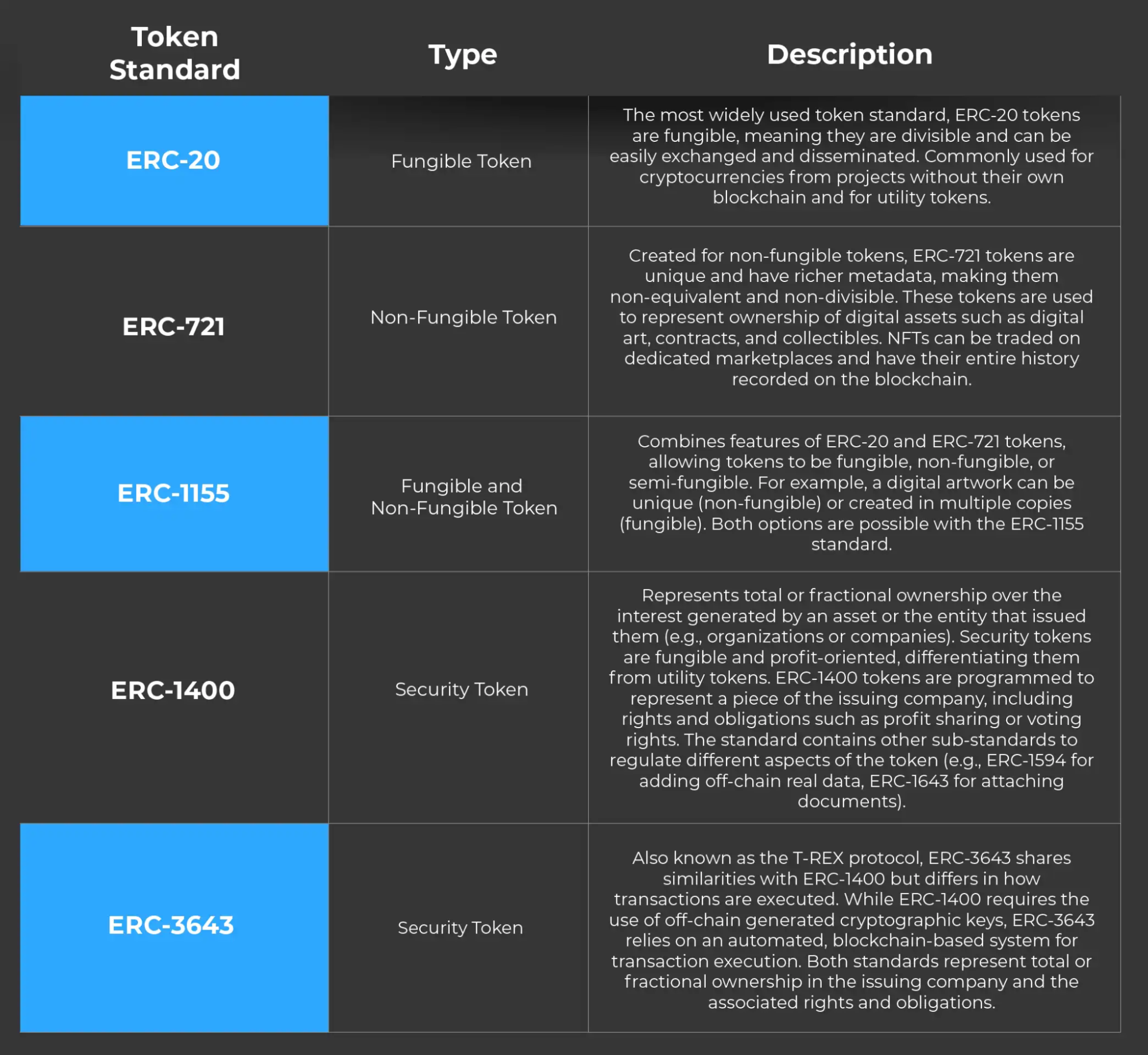
The evolution of ERC standards: each one, from ERC-20 to ERC-8004, has unlocked new use cases
x402: The Agent’s POS Terminal
ERC-8004 solves the “Who are you?” and “Can I trust you?” questions for AI Agents; the x402 protocol answers “How do agents transact?”
x402 provides a set of standardized Web3 payment instructions, allowing an AI service provider to automatically issue a bill upon receiving a request. The requesting AI agent reads the bill and completes payment—all automatically.
The entire process is seamless—payment and delivery happen together, without human intervention.
x402 Protocol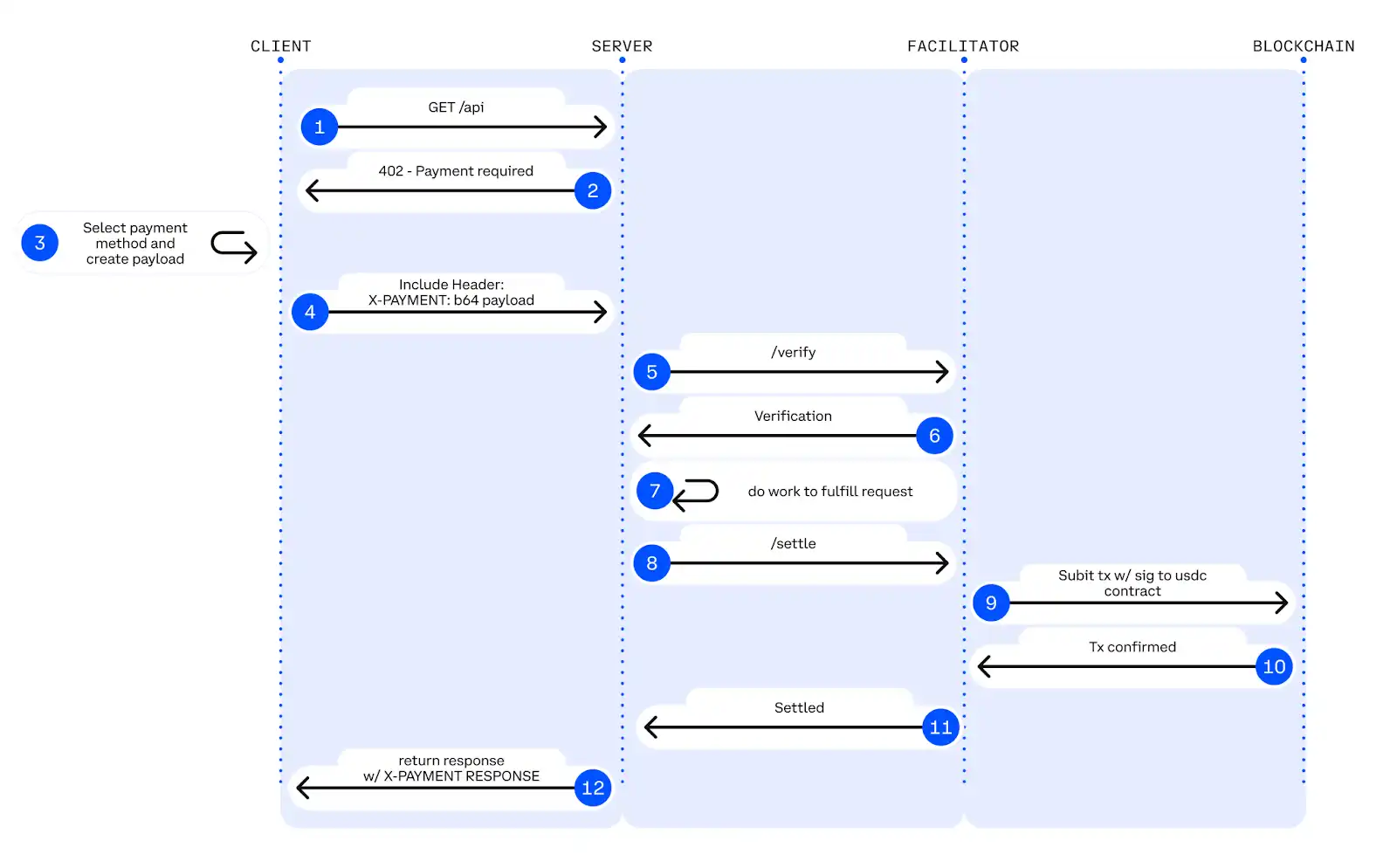 Architecture overview: client, server, and facilitator work together to complete payments
For example, an AI art assistant needs to call a more powerful cloud AI model to complete a complex image. Using x402, the assistant can automatically pay $0.01 in compute fees and receive the image, all within seconds—no manual approval or complex payment flow required.
In short, ERC-8004 is the AI’s ID and credit report; x402 is the POS terminal for their transactions.
Together, they lay the foundation for AI Agents to collaborate and exchange value securely and reliably worldwide.
The Agent Economy Singularity
The explosive growth of x402 and ERC-8004 isn’t a coincidence or a simple technical iteration. It’s the result of strategic planning by industry giants and marks the beginning of a new era where Web3 payments and Web2 applications deeply converge.
Web2 Applications + Web3 Payments
ERC-8004 delivers trust consensus for Ethereum, while the partnership between Coinbase and Cloudflare builds real-world payment rails for the Agent economy.
For Ethereum, ERC-8004 expands blockchain utility beyond DeFi into the broader AI economy, creating new use cases for ETH—such as collateral for AI agents and payment of transaction fees—solidifying its role as the global settlement layer.
Cloudflare, one of the world’s largest CDN providers, covers millions of websites. By integrating x402, Coinbase and Cloudflare can provide AI agent payment capabilities to a vast Web2 client base, secure a strategic position in AI infrastructure, and expand business frontiers.
Coinbase also serves as a compliant fiat on/off-ramp, closing the payment loop.
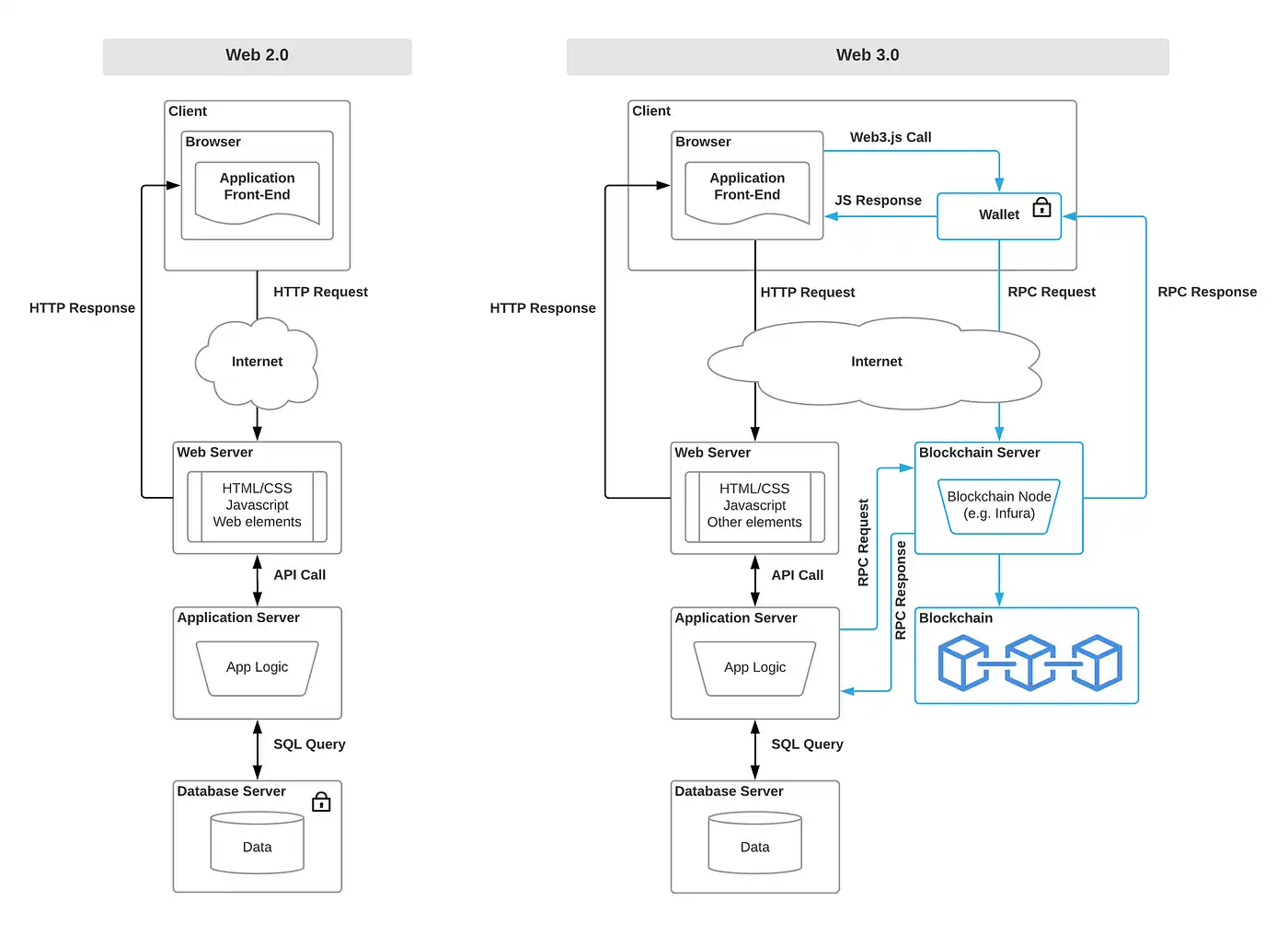
Web2 and Web3 integrated architecture: Cloudflare, Coinbase, and Ethereum collaborate to build the stack
The combination of ERC-8004 and x402 builds an economic architecture where Web2 AI Agent systems run on Web3 infrastructure.
With AI at the center, it connects “Web2 applications + Web3 settlement” into a closed-loop economy, enabling crypto to capture real-world AI value—not just internal speculation.
Big Tech’s Bet
Industry leaders have recognized the importance of this sector. Ethereum, Coinbase, and Solana are all in.
In September 2025, the Ethereum Foundation established a dedicated dAI (decentralized AI) team, making it a core strategic direction alongside privacy and scaling.
The team’s mission: make Ethereum the go-to settlement and coordination layer for AI and the machine economy. ERC-8004 is the linchpin for this vision and the dAI team’s top development priority.
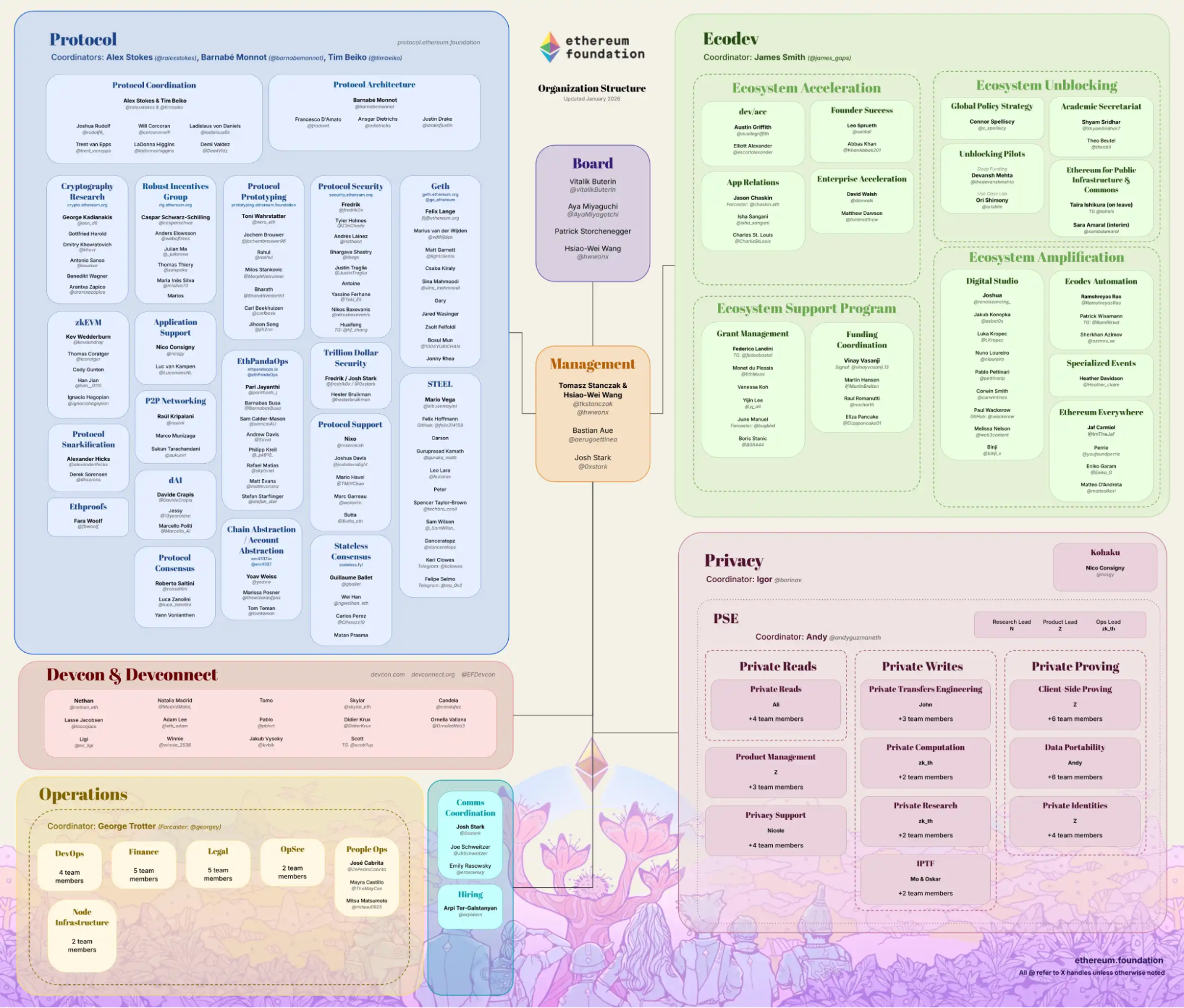
Ethereum Foundation’s org chart: dAI team joins privacy and scaling as a core strategic pillar
The dAI team, led by Ethereum core developer Davide Crapis, brings together top contributors from across the ecosystem: Vitto Rivabella (Ethereum Foundation), Marco De Rossi (MetaMask AI lead), Erik Reppel (former Coinbase senior engineer and x402 protocol creator), Jordan Ellis (Google), and others as core developers of ERC-8004.
Advisors include Jessy (@13yearoldvc) from Nascent and Kevin (@kleffew94) from Coinbase Developer Platform (x402 whitepaper co-author), creating a robust dAI ecosystem.
Coinbase and Cloudflare co-founded the x402 Foundation, and Base network is now the primary venue for x402 transactions.
Solana has made x402 a core part of its AI strategy. Co-founder Toly personally registered the x402.sol domain, hosted an x402 hackathon with over 400 projects in late 2025, and the official Twitter account regularly engages with ecosystem projects.
By the end of January 2026, annualized x402 protocol payments had reached $600 million, with Base chain alone seeing over 2.29 million transactions in just a few months. A new AI agent-driven economic system is rapidly taking shape.
Tracking the Ecosystem
To keep up with the ERC-8004 and x402 ecosystems, bookmark these channels and tools:
Key Figures and Community on X (Twitter)
For the latest, real-time information, follow the dAI team and core contributors. They frequently share project launches, demos, and integration updates:
• @DavideCrapis: dAI team lead—mainnet updates and ecosystem news.
• @marco_derossi: MetaMask AI lead, principal author of ERC-8004.
• @programmer: Erik Reppel, creator of x402 protocol.
• @VittoStack: Ethereum Foundation AI engineer—ecosystem maps and tools.
• @13yearoldvc: dAI advisor, shares unique x402/8004 insights.
• @kleffew94: x402 whitepaper co-author, Coinbase developer.
• @AIonBase_: Updates on Base ecosystem AI projects.
Official Sites and GitHub
• x402 Official Site: https://www.x402.org/ (Ecosystem page lists all official integrations)
• 8004scan: https://www.8004scan.io/ (View registered AI agents, identity NFTs, and reputation records)
• x402scan: https://www.x402scan.com/ (x402 ecosystem explorer: track transactions and adoption)
For developers and tech enthusiasts, GitHub is the best place to dive into technical details and find sample projects:
• ERC-8004 Reference Implementation: https://github.com/ChaosChain/trustless-agents-erc-ri
• ChaosChain Genesis Studio: https://github.com/ChaosChain/chaoschain-genesis-studio (first end-to-end commercial prototype)
• Awesome ERC-8004: https://github.com/sudeepb02/awesome-erc8004 (community-curated list of projects, SDKs, and tools)
Projects to Watch
Ethereum Ecosystem Projects
As the birthplace of the ERC-8004 standard, Ethereum has attracted a wealth of infrastructure projects. These often serve as the foundation for the x402 and ERC-8004 ecosystem, with frequent team collaboration (such as X Spaces discussions), and draw attention from smart capital like Electric Capital and Mirana.
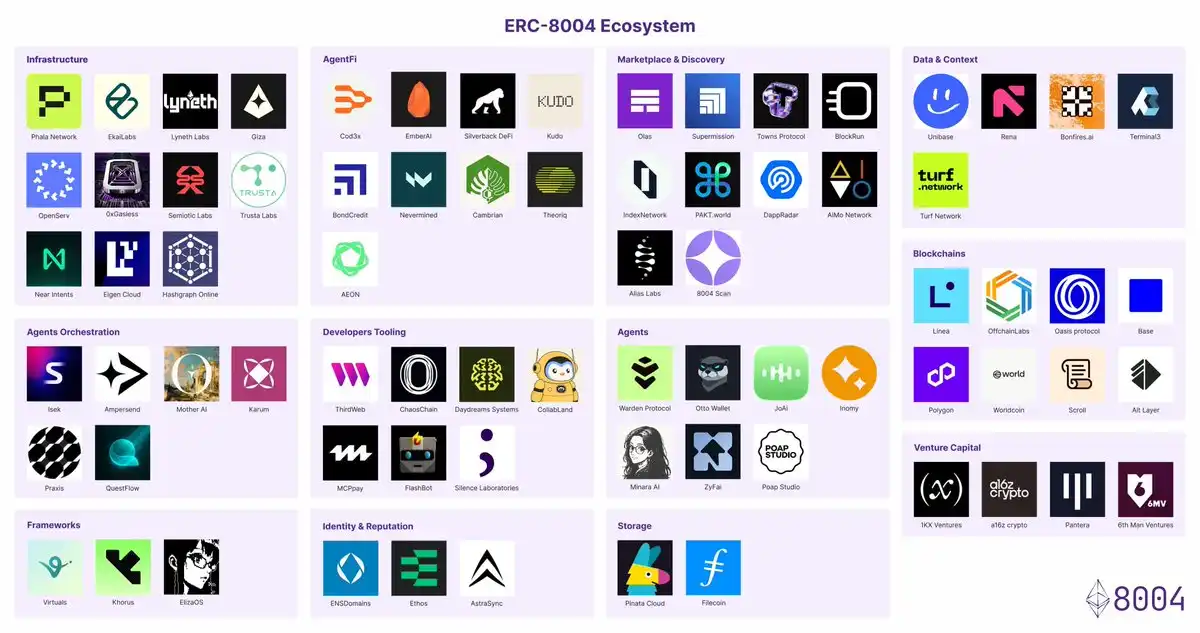
Ethereum AI ecosystem overview: key projects and participants in the ERC-8004 ecosystem
1. 8004scan
8004scan is an on-chain browser for AI agents, powered by AltLayer. dAI team lead Davide Crapis and team members have frequently shared and endorsed it as an “open, unified interface for checking agent identity data.”
On the site, you can look up more than 4,500 registered AI agents’ IDs, owners, reputation scores, and histories. It’s a key entry point for exploring the ecosystem.
This project has not issued a token.
2. ChaosChain Genesis Studio
ChaosChain Genesis Studio is the first end-to-end commercial prototype in the ERC-8004 and x402 ecosystem, created by developer @lordOfAFew.
It’s not a standalone project, but an open-source reference implementation showing how to integrate ERC-8004’s identity system with x402’s USDC payments—a ready-made template for developers building commercial apps.
This open-source tool does not have a token.
3. Giza Protocol
Giza is a protocol focused on zkML (zero-knowledge machine learning) technology, backed by the Ethereum Foundation and working closely with Starkware.
Its core value: using zero-knowledge proofs, AI models can prove the correctness and reliability of their outputs without revealing data or model details.
Within the ERC-8004 ecosystem, Giza can provide “verifiable” reputation for AI agents. For example, an AI trader can use Giza to prove its operations strictly follow preset strategies and earn a higher reputation score.
The project has issued a token (GIZA), with a current market cap of around $9 million and a historical high of about $122 million.
4. Superfluid
Superfluid is a “streaming payment” protocol launched in 2020, recently regaining attention for its fit with high-frequency, micro-payment AI Agent scenarios. It was a winner at the Ethereum Foundation x402 hackathon.
It lets funds flow like data—per second, minute, or hour—enabling true pay-as-you-go billing and improving capital efficiency.
The project has issued a token (SUPER), with a current market cap of about $2.2 million.
5. EigenLayer
EigenLayer is a restaking protocol that allows users to restake ETH or other LST assets to provide economic security for other protocols.
In the AI agent ecosystem, EigenLayer can serve as a decentralized trust layer for AI model computation and verification. An AI agent verified by EigenLayer may have a more valuable ERC-8004 identity.
The project has issued a token (EIGEN).
Base Ecosystem Projects
Base, Coinbase’s Layer 2, is the main battleground for x402. According to AI on Base, x402 transactions on Base have surpassed Solana, capturing 60% market share.
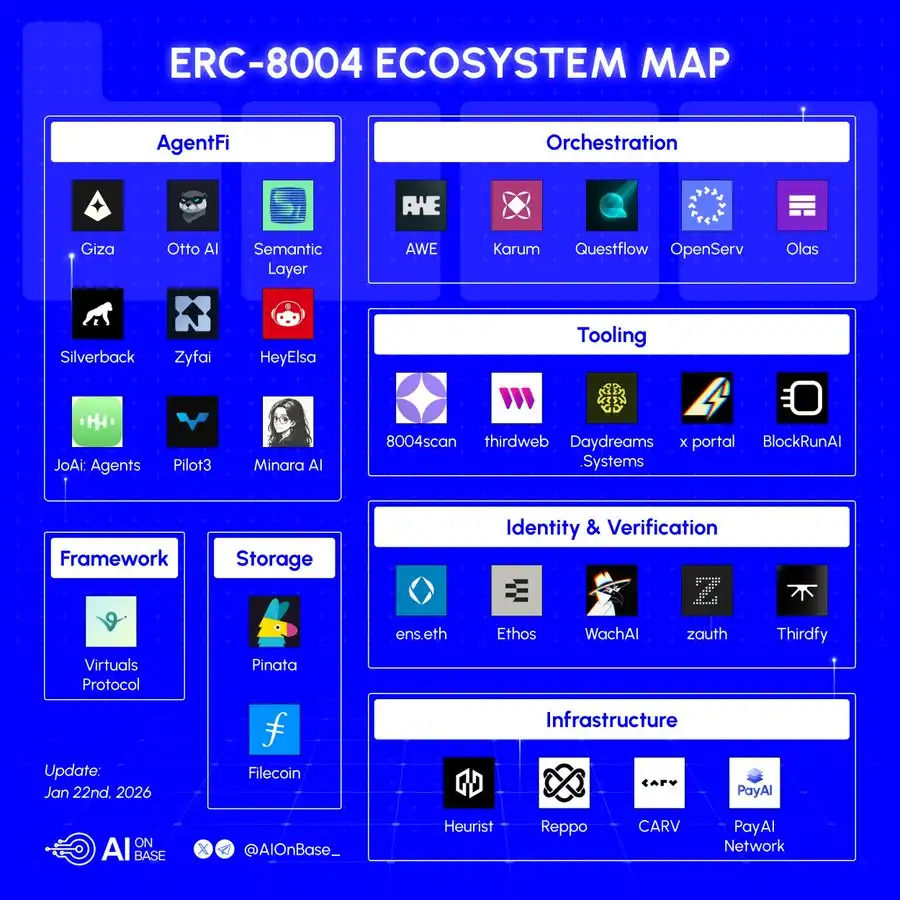
ERC-8004 related projects on Base
1. Virtuals Protocol
Virtuals Protocol is a launchpad for AI agents, enabling discovery, collaboration, and settlement between different agents.
The team has publicly stated it is working closely with the Ethereum Foundation to make Ethereum the settlement hub for AI agents. According to AI on Base, the ecosystem has generated $467 million in GDP and $1.33 million in revenue.
The project has issued a token (VIRTUAL).
2. CLAWD
CLAWD is a high-profile AI agent experiment on Base, initiated by Ethereum Foundation developer Austin Griffith.
It’s a bot running on Twitter (clawd.atg.eth) that monitors tweet sentiment for certain keywords and triggers on-chain buybacks and burns based on positive or negative sentiment.
This “emotion-driven tokenomics” is highly innovative. While the $CLAWD token was created by the community, the experiment has received multiple interactions from dAI team lead Davide Crapis, Base officials, and Jesse Pollak. Austin Griffith himself is closely connected with the dAI group.
The $CLAWD token on Base has significant trading volume and community attention, with a current market cap of about $23 million and a historical high of $34 million.
After CLAWD’s success, a second AI agent, EMBER, was created by developer @bsmokes.
EMBER has its own GitHub account and can interact with CLAWD on X and on-chain, showcasing agent-to-agent collaboration. Its current market cap is about $2.5 million.
3. BlockRun.AI
BlockRun.AI provides large model API services for AI agents, is frequently shared by AI on Base, and supports the x402-mcp tool promoted by Base lead Jesse Pollak. Via x402, it offers a unified interface for AI agents to access ChatGPT, Anthropic, Google, and other major models on demand, making it essential infrastructure for AI agents to acquire intelligence.
This project has not issued a token.
Solana Ecosystem Projects
Solana’s x402 hackathon in November 2025 attracted over 400 projects and more than $130,000 in prizes, with winning entries focused on hardware and real-time payment innovation. Here are some of the most notable:
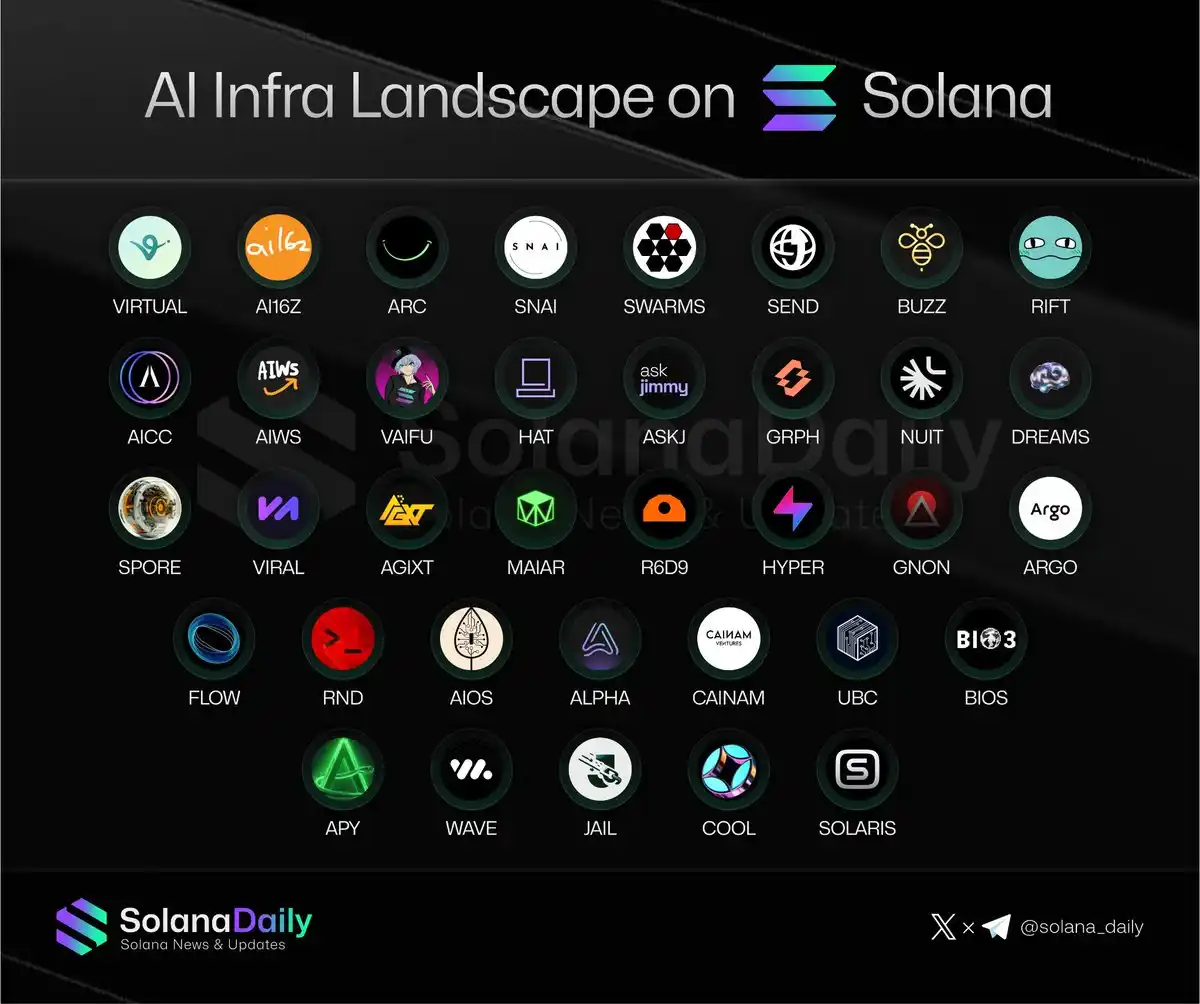
Solana AI infrastructure landscape: hardware innovation and real-time payments
1. Daydreams Agents
Daydreams Agents is a development framework for commercializing AI Agents, supported by the Solana Foundation.
Its Lucid Agents Commerce SDK allows developers to build AI agents capable of selling services and collecting fees in just 60 seconds.
These agents natively support x402 payments and the ERC-8004 identity standard, enabling agent-to-agent transactions and collaboration.
Daydreams is deployed across Solana, Base, and Starknet, offering a comprehensive “build-deploy-monetize” toolchain for developers.
The project has issued a token (DREAMS), with a market cap of about $12 million.
2. PayAI Network
PayAI Network is a top x402 service provider, recognized by Solana’s official Twitter account multiple times.
As an x402 facilitator, it plays a key intermediary role. When one AI agent needs to pay another, the facilitator verifies the payment request and executes the on-chain transfer and settlement for the application.
This means developers can complete payments using PayAI’s API without handling complex blockchain interactions, greatly lowering the integration barrier.
PayAI is also driving deep x402 and ERC-8004 integration, proposing that after every x402 payment, reviews from both buyer and seller are automatically recorded in the ERC-8004 reputation system—creating a closed loop where “payment equals reputation.”
The project has issued a token (PAYAI), with a market cap of about $7.4 million.
3. Intelligence Cubed (i³)
i³ was the main track champion at the Solana x402 hackathon.
It introduced the IMO (Initial Model Offering) concept, allowing developers to tokenize AI models and sell ownership, with investors earning dividends based on model usage—a new path for AI model commercialization. All payments are handled via x402.
This project has not issued a token.
Conclusion
x402 and ERC-8004 are not just technical upgrades—they’re a paradigm shift in “who pays for AI.” With Coinbase, Cloudflare, the Ethereum Foundation, and Solana all joining in, a new AI Agent-driven economic system is rapidly emerging.
In terms of project distribution: Ethereum focuses on infrastructure and trust layers, Base—centered on Virtuals Protocol—builds the application layer, and Solana is advancing hardware innovation and real-time payments. For investors, the best way to capture the AI+Crypto wave is to focus on projects with official backing, proven hackathon performance, and genuine community engagement.
Disclaimer:
- This article is reprinted from [BlockBeats] with copyright belonging to the original author [EeeVee]. For any concerns about this reprint, please contact the Gate Learn team, who will handle it promptly according to established procedures.
- Disclaimer: The views and opinions expressed are those of the author and do not constitute investment advice.
- Other language versions are translated by the Gate Learn team. Unless Gate is mentioned, do not copy, distribute, or plagiarize the translated article.
Share
Content


Related Articles

What Is Ethereum 2.0? Understanding The Merge

Reflections on Ethereum Governance Following the 3074 Saga
Our Across Thesis

What is Neiro? All You Need to Know About NEIROETH in 2025
An Introduction to ERC-20 Tokens