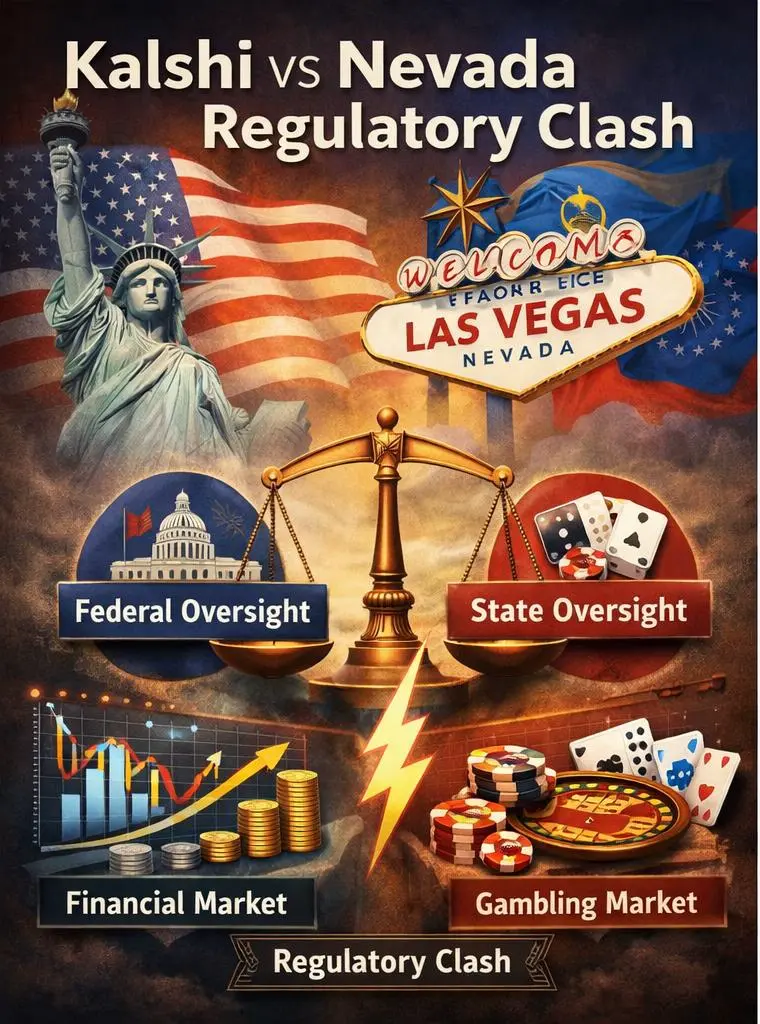
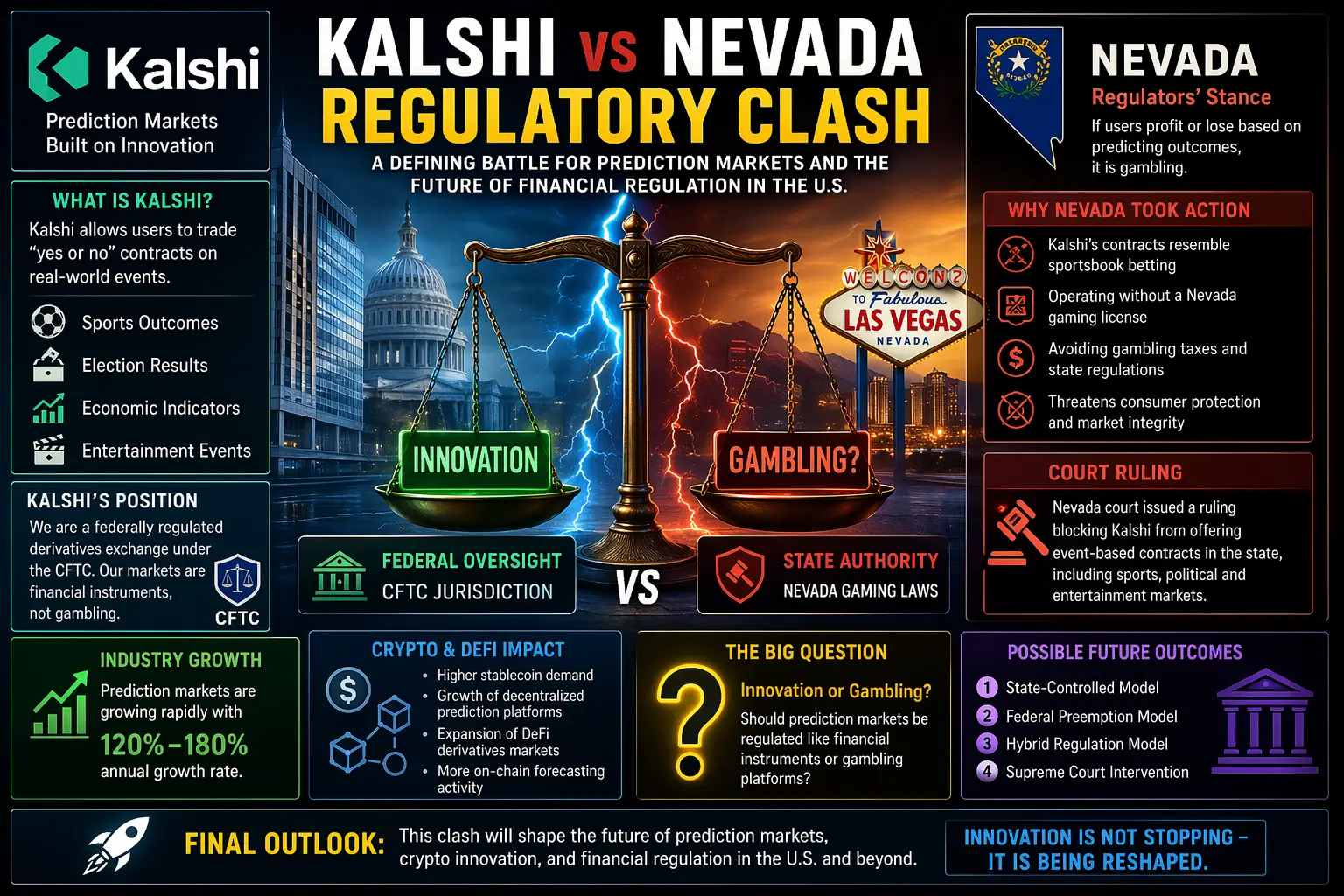
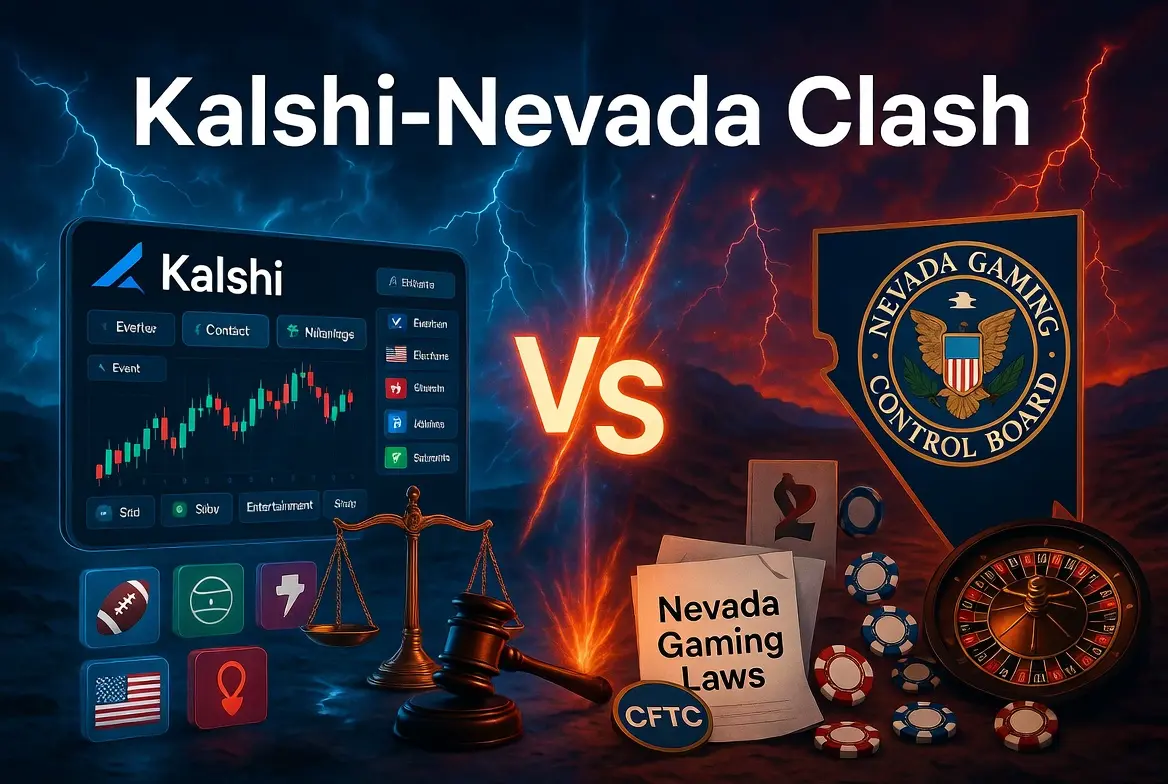
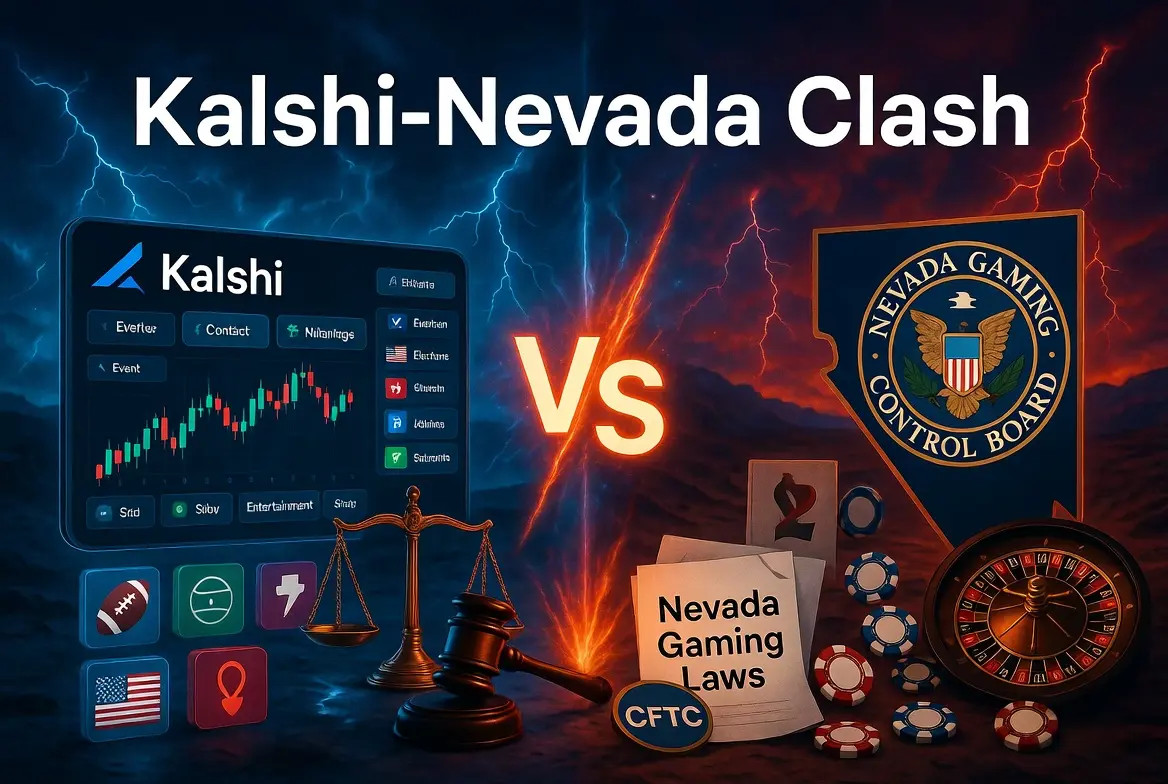
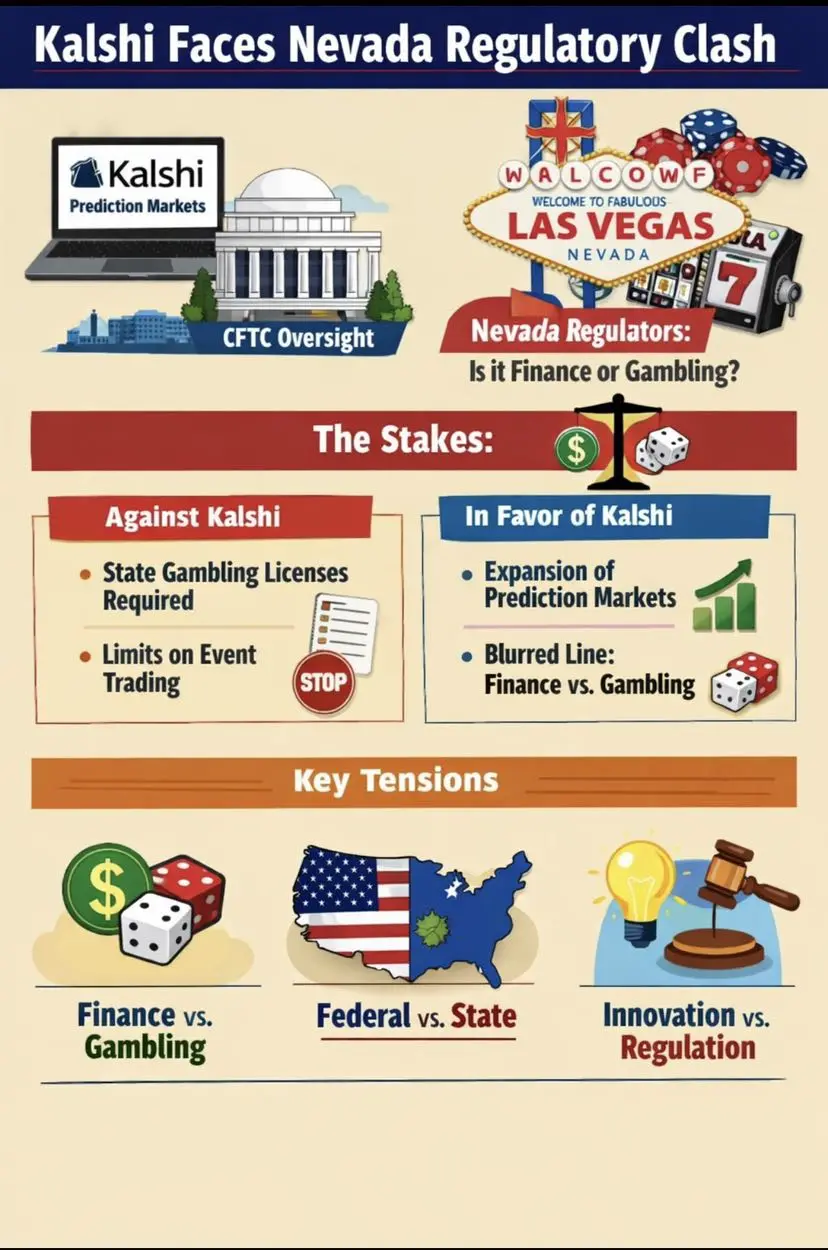
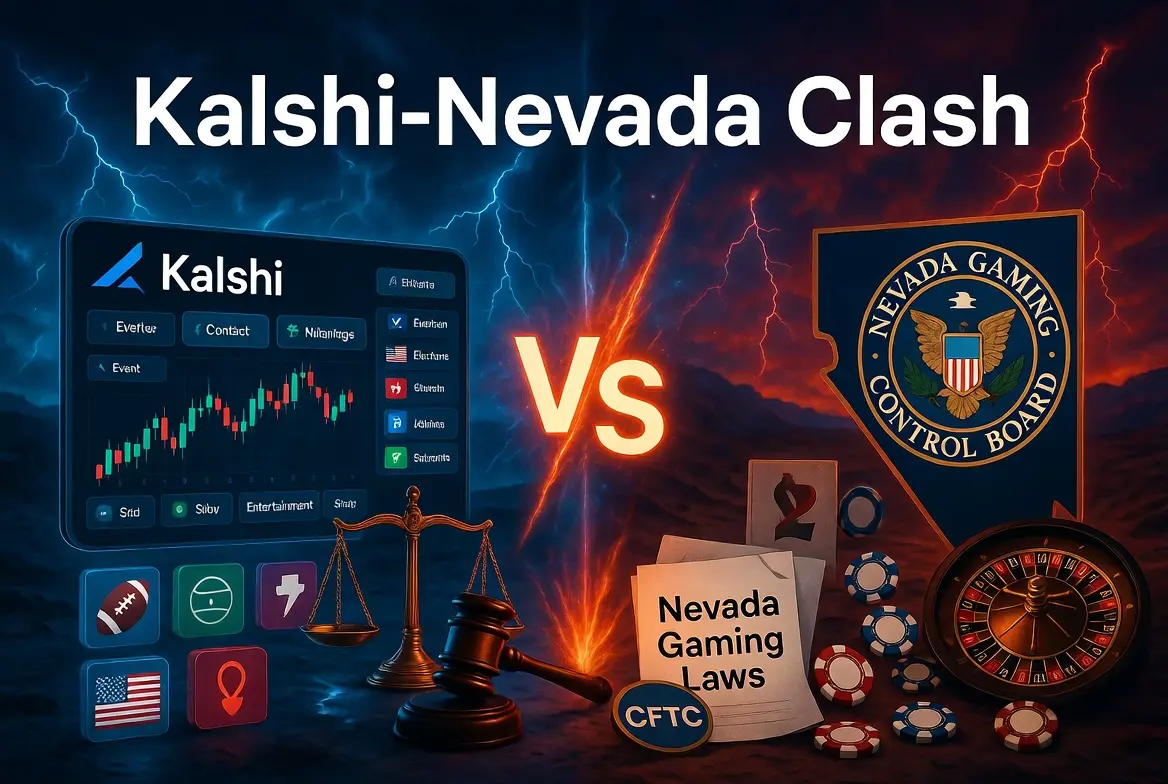
#KalshiFacesNevadaRegulatoryClash The Legal Battle That Could Define the Future of Prediction Markets
---
Preamble
This is not just a legal dispute.
This is a system-level confrontation between two powerful forces:
State-level gambling regulators
Federal financial market authorities
At the center of this clash is Kalshi — a platform that is attempting to redefine how people interact with uncertainty itself.
The core question is simple, but explosive:
> Are prediction markets financial instruments — or just gambling in disguise?
The answer to this question will not only determine Kalshi’s future — it will define the regulatory framework for an entire emerging industry.
---
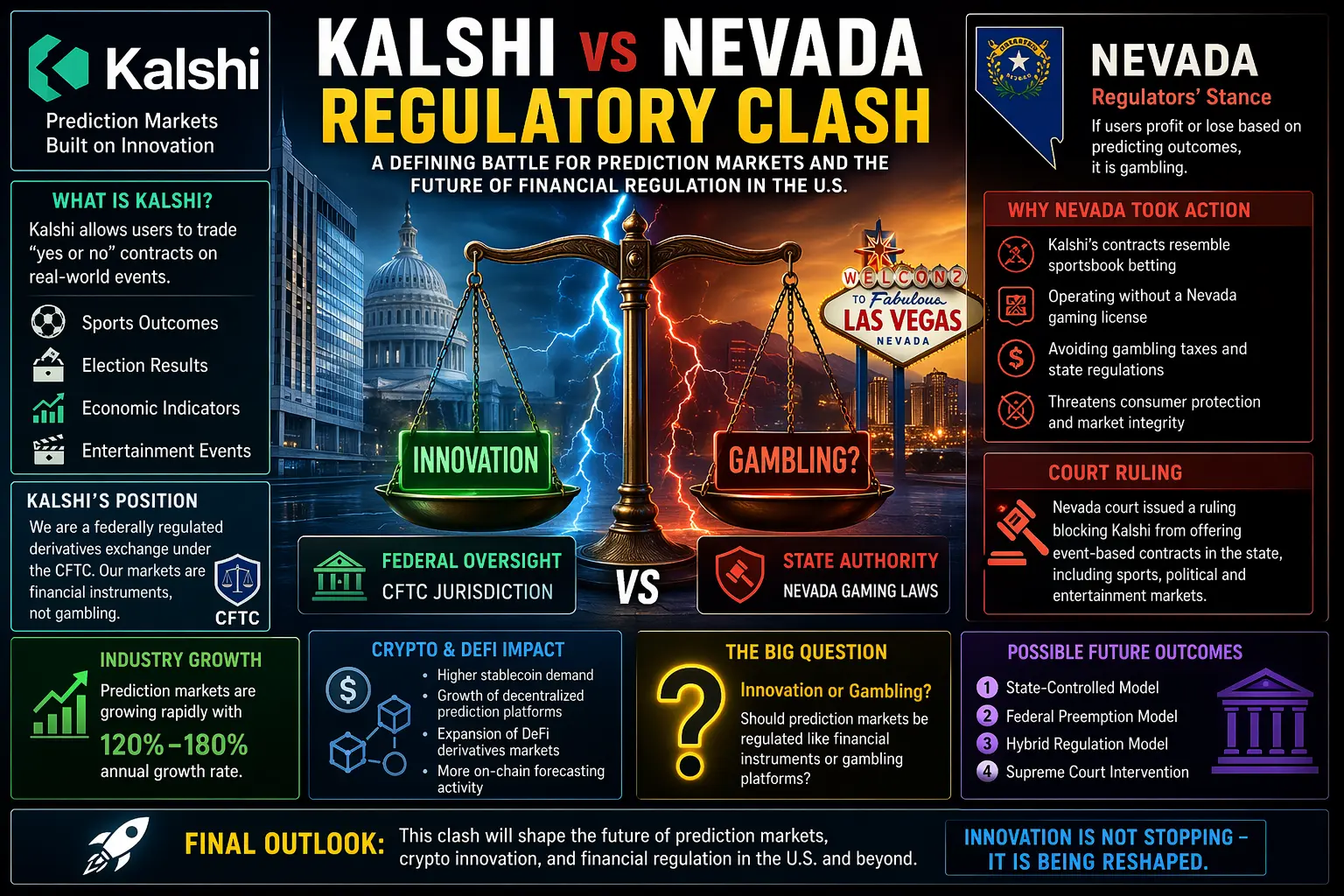
1. What Is Kalshi — And Why It Matters
---
Step 1: Understanding the Business Model
Kalshi is not a traditional betting platform.
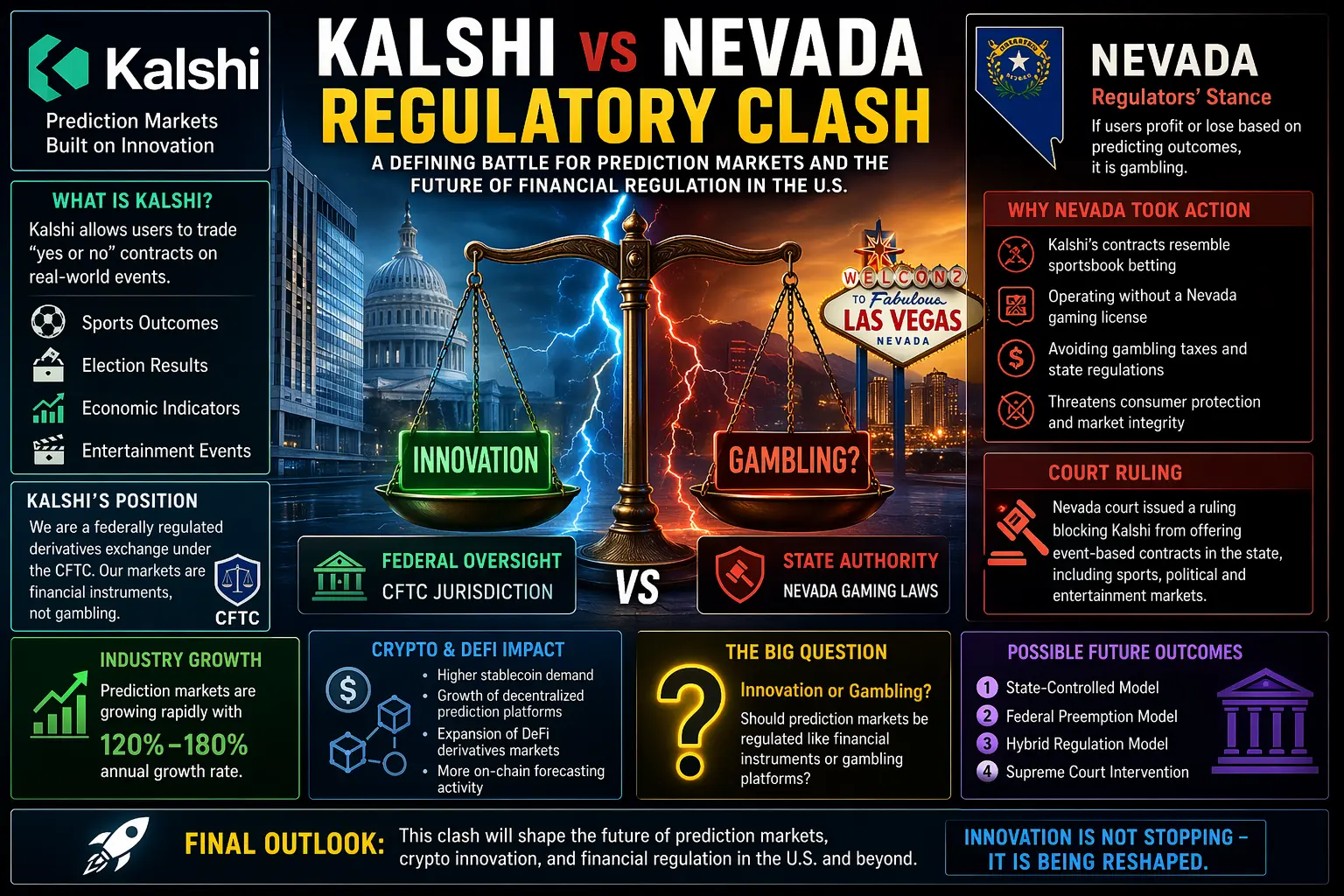
It operates as a regulated event derivatives exchange, allowing users to trade on outcomes such as:
Elections
Economic data
Weather events
Sports results
Policy decisions
Instead of betting, users buy contracts priced between $0 and $1 representing probability.
This structure places Kalshi under the jurisdiction of the
Commodity Futures Trading Commission (CFTC), which oversees derivatives markets.
---
Step 2: The Key Innovation
Kalshi’s core innovation is:
👉 Turning real-world events into tradable financial instruments
This creates:
Price discovery for probabilities
Market-based forecasting
New asset class (event derivatives)
---
Step 3: Why It’s Disruptive
Prediction markets challenge:
Traditional finance (new asset class)
Gambling industry (overlapping products)
Regulatory frameworks (unclear classification)
This is why regulators are reacting aggressively.
---
2. Nevada Steps In — The Trigger Event
---
Step 1: The Ban
In March 2026, Nevada regulators:
Issued a temporary restraining order
Blocked Kalshi from operating in the state
Classified its contracts as illegal gambling
---
Step 2: The Core Argument
Nevada’s position:
Event contracts = betting
Sports + elections = gambling activity
Therefore → requires gaming license
A state judge supported this view, reinforcing the ban and extending restrictions
---
Step 3: The Extended Conflict
The ban was not temporary in spirit.
Nevada:
Continued blocking operations
Strengthened legal stance
Positioned itself as a regulatory leader against prediction markets
---
3. The Core Legal Conflict — Federal vs State Power
---
Step 1: Federal Position (CFTC)
The
Commodity Futures Trading Commission argues:
Kalshi operates as a Designated Contract Market (DCM)
Event contracts = financial swaps
Federal law overrides state gambling laws
---
Step 2: State Position
States like Nevada argue:
These are not financial instruments
They are functionally identical to betting
Therefore fall under state jurisdiction
---
Step 3: Why This Matters
This is a constitutional-level issue:
👉 Federal preemption vs state sovereignty
If federal authority wins:
Prediction markets expand nationwide
If states win:
Fragmented, restricted market
---
4. Not Just Nevada — A Nationwide Battle
---
Step 1: Multi-State Crackdown
Kalshi is facing pressure across multiple states:
Ohio → $5M fine for unlicensed betting
Arizona → criminal charges filed
Michigan → lawsuits over illegal gambling
Washington → legal action initiated
---
Step 2: Conflicting Court Decisions
Some rulings support Kalshi:
Federal courts backing CFTC authority
Others oppose:
State courts labeling contracts as gambling
---
Step 3: Legal Fragmentation
This creates:
Regulatory confusion
Operational uncertainty
Legal inconsistency
---
5. Arizona Case — A Turning Point
---
Step 1: Federal Intervention
A major development:
Federal judge blocked Arizona’s criminal case
CFTC intervened directly
---
Step 2: What This Signals
This indicates:
👉 Federal government is willing to defend prediction markets
---
Step 3: Strategic Implication
If federal protection strengthens:
Kalshi gains legitimacy
States lose enforcement power
---
6. The Bigger Industry — Prediction Markets Explosion
---
Step 1: Rapid Growth
Prediction markets have grown massively:
130x expansion (2024–2025)
Billions in trading volume
---
Step 2: Key Players
Kalshi
Polymarket
---
Step 3: Use Cases Expanding
Markets now include:
Politics
Crypto volatility
Macroeconomics
Sports
---
Step 4: Why Governments Are Concerned
Concerns include:
Gambling addiction
Insider trading risk
Election integrity
---
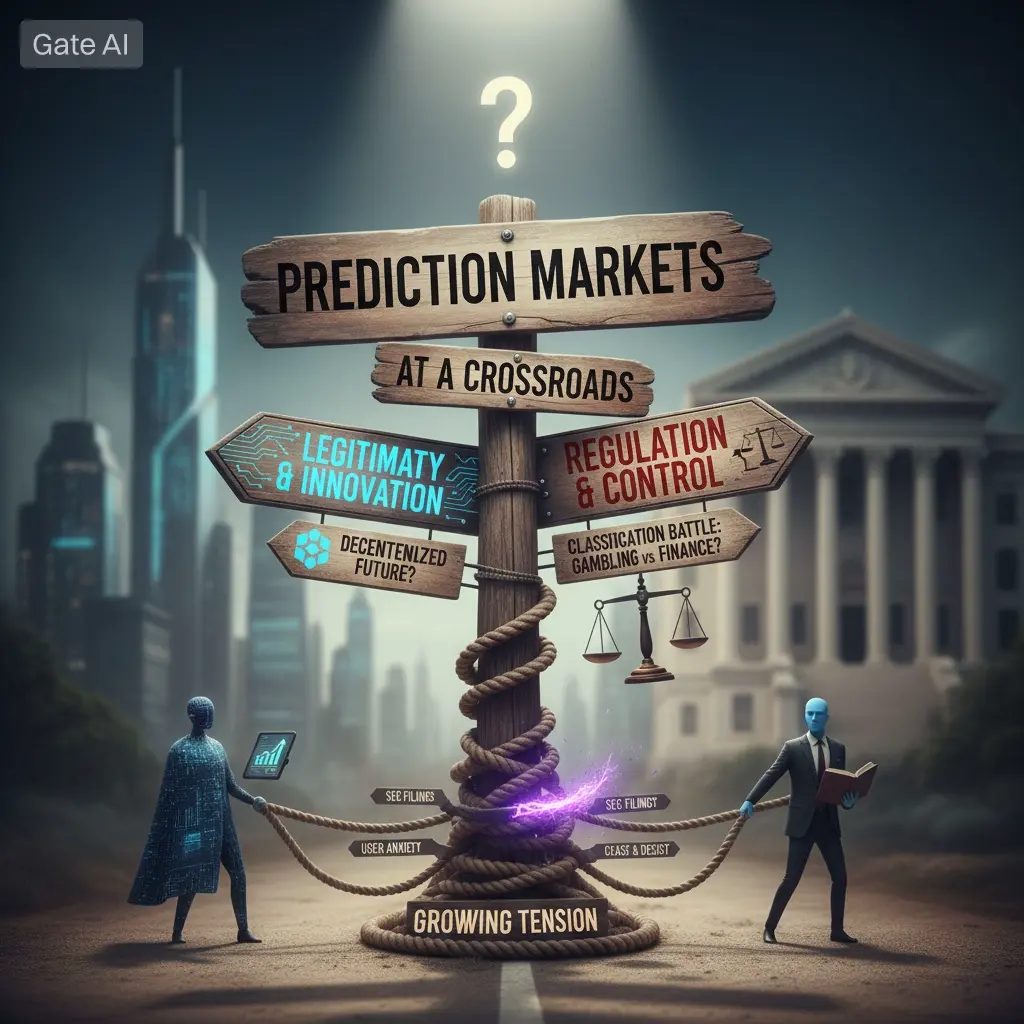
7. The Core Debate — Gambling vs Finance
---
Step 1: The Gambling Argument
Critics say:
Users are betting on outcomes
No real hedging purpose
Similar to sportsbooks
---
Step 2: The Financial Argument
Supporters argue:
Contracts provide risk hedging
Markets improve forecasting accuracy
Similar to derivatives
---
Step 3: The Reality
The truth lies in between:
👉 These are hybrid instruments
And that’s the problem.
---
8. Economic Implications
---
Step 1: If Kalshi Wins
New asset class emerges
Retail gains access to event trading
Financialization of real-world events
---
Step 2: If States Win
Heavy restrictions
Market fragmentation
Innovation slowdown
---
Step 3: Global Impact
Other countries are already:
Banning platforms
Restricting access
---
9. The Hidden Risk — Insider Trading
---
Step 1: Unique Vulnerability
Prediction markets allow trading on:
Non-public information
Real-world events
---
Step 2: Example Risks
Political insiders
Corporate data leaks
Sports manipulation
---
Step 3: Regulatory Concern
CFTC is already:
Monitoring suspicious trades
Pushing stricter oversight
---
10. The Future — What Happens Next?
---
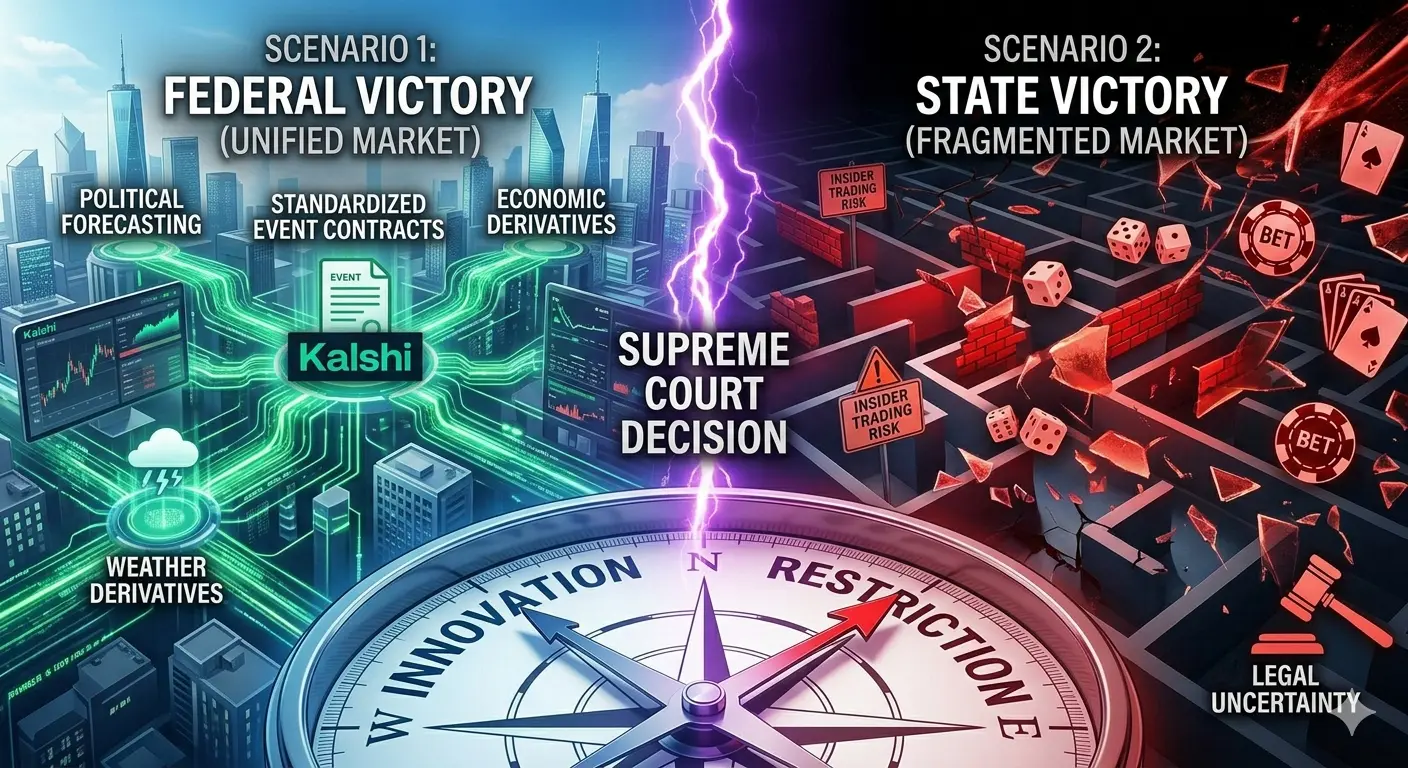
Scenario 1: Federal Victory
Unified national framework
Massive growth
Institutional adoption
---
Scenario 2: State Victory
Patchwork regulations
Limited scalability
Legal uncertainty
---
Scenario 3: Supreme Court Decision
Most likely outcome:
👉 Final resolution at the highest level
---
11. The Bigger Insight
---
> This is not about Kalshi.
This is about:
👉 Who controls the future of probability markets
---
Prediction markets represent:
Financial evolution
Information aggregation
Decentralized forecasting
---
Closing Thoughts
---
The clash between Kalshi and Nevada is a defining moment.
It forces us to confront a deeper question:
👉 Should markets be allowed to price everything?
Because once you allow trading on:
Elections
Wars
Policies
You are not just building markets.
You are reshaping how society interprets reality.
---
Final Question
---
If prediction markets go global:
Would you trade them as investments?
Or avoid them as disguised gambling?
---
Disclaimer
This post is for educational purposes only and does not constitute legal or financial advice. Regulatory outcomes remain uncertain and may significantly impact the prediction market industry.