


what is a satoshi
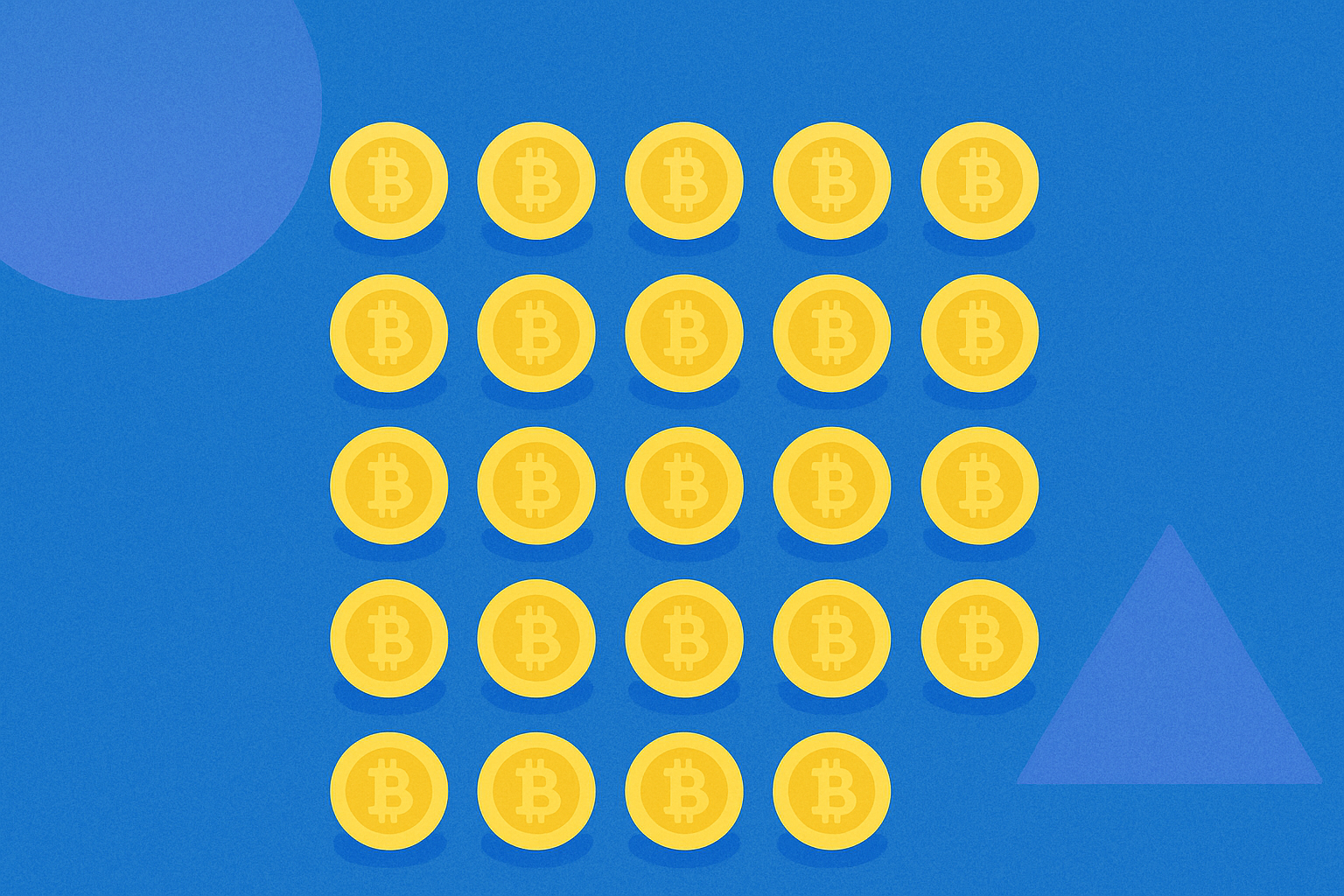
What Does Satoshi (Sat) Mean?
A satoshi, often abbreviated as “sat,” is the smallest unit of Bitcoin. One Bitcoin (BTC) is equal to 100 million satoshis.
The term “satoshi” comes from the name of Bitcoin’s creator, Satoshi Nakamoto. You can think of a satoshi like a “cent” or “mill” in other currencies, allowing for precise pricing and small payments. Most crypto wallets and tools let users view balances and transaction amounts in satoshis, which helps avoid dealing with long decimal numbers in BTC. Importantly, a satoshi is not a separate cryptocurrency—it is simply the smallest denomination of Bitcoin.
Why Is It Important to Understand Satoshis?
Understanding satoshis makes it easier to read prices, calculate fees, and handle micropayments.
Many real-world scenarios use satoshis as the standard unit of account. For example, on-chain miner fees are often quoted in sats per vByte (sat/vB). The Lightning Network, a Layer 2 payment protocol for Bitcoin that enables high-frequency microtransactions, also uses sats for straightforward pricing. In wallets and exchanges, using sats to display small purchases or transfers makes amounts more readable. Knowing the difference between “a few thousand sats” and “a few thousand bitcoins” helps prevent costly misunderstandings.
How Do Satoshis Work?
Satoshis are simply a unit conversion—every Bitcoin balance is also an amount of sats.
The exchange rate is fixed: 1 BTC = 100,000,000 sats. Every transaction output recorded by a wallet is internally counted in sats; displaying BTC is just for user convenience. For example, “0.001 BTC” equals 100,000 sats.
Transaction fees are typically quoted as “sat/vB,” which means the number of sats paid per virtual byte of transaction data. The calculation is simple: transaction size (vB) × fee rate (sat/vB) = total fee (sats). For example, if your transaction is 200 vB and the fee rate is 30 sat/vB, the total fee is 200 × 30 = 6,000 sats.
On the Lightning Network, invoices are often denominated in millisatoshis (msat), which are one-thousandth of a satoshi. This allows for even more granular pricing. For instance, 1,500 msat equals 1.5 sats. While you don’t need to know every detail, it’s useful to understand that msat exists for highly precise payments.
How Are Satoshis Used in Crypto?
Satoshis mainly appear in price displays, fee selection, micropayments, and native Bitcoin applications.
In exchanges and wallets: Some platforms allow users to display balances or order sizes in sats. For example, when you buy a small amount of BTC on Gate, your asset page will show the precise fraction in either BTC or sats (using the 1 BTC = 100 million sats conversion), making it easier to understand your holdings at a granular level.
For transactions and fees: Wallets often display current network fee ranges (e.g., 20–80 sat/vB for “normal” speed or higher for “fast”). You can choose your desired balance between speed and cost based on these rates.
For micropayments: On the Lightning Network and similar platforms, tipping, pay-per-content, or in-game purchases commonly involve payments of 10–1,000 sats. These small, instant payments benefit from using sats as the unit of account.
With Ordinals: This method marks images or text onto individual sats. Because each sat can be uniquely numbered, sats take on collectible attributes and narratives about scarcity.
How Do You Buy Satoshis?
When you buy sats, you are actually buying BTC—simply convert your amount to know how many sats you own.
Step 1: Register on Gate and complete identity verification to secure your account.
Step 2: Deposit fiat currency or USDT (or another funding source) to prepare for your purchase.
Step 3: Place an order on the BTC/USDT spot trading pair to buy BTC. The platform will display how much BTC you’ve bought; use the 1 BTC = 100 million sats formula to calculate your total in sats.
Step 4: Asset security. If withdrawing to a self-custody wallet, back up your recovery phrase; when transferring on-chain, pay attention to network fees (quoted in sat/vB) and minimum withdrawal amounts.
Step 5: For micropayment needs: If you primarily make small payments, consider using a wallet that supports the Lightning Network. If you plan to hold long-term, on-chain storage will suffice.
What Are Recent Trends or Data About Satoshis?
In the past year, volatility in transaction fees and mainstream adoption of sat-denominated products have been notable trends.
Supply data: Bitcoin’s maximum supply is capped at 21 million coins—meaning there are about 2.1 × 10^15 sats in existence. This fixed upper limit gives each sat a mathematically clear sense of scarcity.
Fees and network congestion: According to public on-chain data sources like mempool.space, fee rates during busy periods frequently exceed 100 sat/vB and can spike above 200 sat/vB. In quieter times, rates typically fall within the 20–80 sat/vB range. Your chosen fee directly impacts both confirmation speed and cost.
Display and pricing habits: More wallets and tools now offer a “sats mode,” making it easier for users—especially beginners—to price and think in small units without cumbersome decimals.
Price reference example: When BTC is priced at $100,000 USD, 1 sat is worth about $0.001; if BTC is around ¥600,000 CNY, then 1 sat equals roughly ¥0.006. These values fluctuate with market price; simply divide the current BTC price by 100 million to get the price per sat.
What Are Common Misconceptions About Satoshis?
Frequent misunderstandings include thinking of sats as a new coin or confusing the unit with the person.
Misconception 1: Sats are a separate token.
- Correction: Sats are simply a unit of measurement for Bitcoin—not an independent coin that can be issued or traded separately.
Misconception 2: Satoshi refers to both the person and the unit.
- Correction: Satoshi Nakamoto is a name (or pseudonym), while “satoshi” as a unit refers only to Bitcoin’s smallest denomination. Both are called “Satoshi” in English but refer to different things depending on context.
Misconception 3: Higher fees mean greater security.
- Correction: Transaction fees are paid per byte to speed up confirmation during periods of congestion; they do not increase the inherent security of your funds. Choose fees based on your needs—no need to always pay for the fastest speed.
Related Terms
- Satoshi (Sat): The smallest unit of Bitcoin; 1 sat = 0.00000001 BTC. Used for precise pricing and microtransactions.
- Proof of Work (PoW): A consensus mechanism that secures the network by requiring miners to solve cryptographic puzzles. Bitcoin uses PoW for network security.
- Mining: The process where miners compete using computing power to package transactions into new blocks and earn Bitcoin rewards.
- Blockchain: A chain of cryptographically linked data blocks recording all historical transactions; known for its immutability.
- Wallet: A tool for storing private keys and public keys used to manage and transfer Bitcoin assets.
- Hash Value: A fixed-length string generated by cryptographic algorithms; used to verify data integrity and ensure block uniqueness.
FAQ
How many bitcoins are in one satoshi?
One satoshi (sat) equals 0.00000001 bitcoin—it is Bitcoin’s smallest denomination. The unit honors Bitcoin’s creator Satoshi Nakamoto. One bitcoin equals 100 million sats, making it easy to price very small transactions.
Why does Bitcoin use sats as a unit?
Using sats as Bitcoin’s smallest unit makes microtransactions and pricing more intuitive. As Bitcoin’s price rises, representing small amounts in sats instead of long decimals improves clarity. This design reflects Bitcoin’s high divisibility.
How do you quickly convert between sats and bitcoins?
The conversion is simple: bitcoin amount × 100 million = number of sats; conversely, number of sats ÷ 100 million = bitcoin amount. For example, 0.01 bitcoin = 1 million sats. On platforms like Gate, wallet balances are often displayed directly in sats with automatic conversion.
What role do sats play in Lightning Network and other Layer 2 solutions?
Layer 2 solutions like the Lightning Network use sats for settling microtransactions—leveraging Bitcoin’s smallest unit. This enables transactions worth fractions of a cent at minimal cost, showcasing the practical brilliance of the satoshi unit in real-world applications.
Is there any difference between holding sats and holding bitcoins?
No fundamental difference—sats and bitcoins are just different units of measurement, like grams versus kilograms. Holding sats means holding part of a bitcoin; you can buy or trade either unit directly on platforms like Gate. Understanding this makes it easier to switch between units depending on context.
References & Further Reading
Related Articles

In-depth Explanation of Yala: Building a Modular DeFi Yield Aggregator with $YU Stablecoin as a Medium
BTC and Projects in The BRC-20 Ecosystem
