

Trade
Basic
Futures
Futures
Hundreds of contracts settled in USDT or BTC
Options
HOT
Trade European-style vanilla options
Unified Account
Maximize your capital efficiency
Demo Trading
Futures Kickoff
Get prepared for your futures trading
Futures Events
Participate in events to win generous rewards
Demo Trading
Use virtual funds to experience risk-free trading
Earn
Launch
CandyDrop
Collect candies to earn airdrops
Launchpool
Quick staking, earn potential new tokens
HODLer Airdrop
Hold GT and get massive airdrops for free
Launchpad
Be early to the next big token project
Alpha Points
NEW
Trade on-chain assets and enjoy airdrop rewards!
Futures Points
NEW
Earn futures points and claim airdrop rewards
Investment
Simple Earn
Earn interests with idle tokens
Auto-Invest
Auto-invest on a regular basis
Dual Investment
Buy low and sell high to take profits from price fluctuations
Soft Staking
Earn rewards with flexible staking
Crypto Loan
0 Fees
Pledge one crypto to borrow another
Lending Center
One-stop lending hub
VIP Wealth Hub
Customized wealth management empowers your assets growth
Private Wealth Management
Customized asset management to grow your digital assets
Quant Fund
Top asset management team helps you profit without hassle
Staking
Stake cryptos to earn in PoS products
Smart Leverage
NEW
No forced liquidation before maturity, worry-free leveraged gains
GUSD Minting
Use USDT/USDC to mint GUSD for treasury-level yields

More




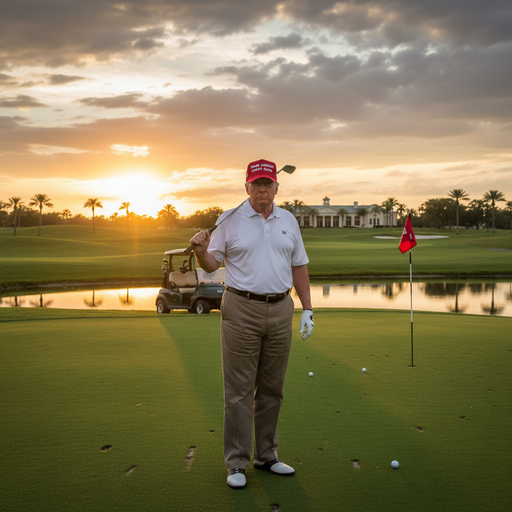


Technology upgrade boosts momentum, ETH ready for a new growth phase amid global easing
Fusaka: A Turning Point in Ethereum’s Value Architecture
Although Ethereum’s Fusaka upgrade did not attract significant market attention, it marks a substantial advancement in network architecture and economic model. Unlike previous upgrades, Fusaka not only expands through mechanisms like PeerDAS but also addresses a core issue: how can L1 mainnet restore value when L2 is thriving?
The highlight of Fusaka lies in EIP-7918, a dynamic linking mechanism between blob base fee and L1 execution layer. This approach forces Rollups to pay data service fees (DA) at a fixed rate corresponding to approximately 1/16 of the L1 base fee, instead of continuing to leverage blob bandwidth at nearly zero cost. These fees will be burned and redistributed to ETH holders.
From “London” to “Dencun” and now “Fusaka,” each upgrade has intensified (burning). While London only burned the execution layer, Dencun added blob components with some instability, Fusaka creates a tight link between L2 activity and ETH burning. The numbers show the change: at 23:00 on 12/11, blob fees increased by a factor of 5696.3 billion compared to pre-upgrade levels, resulting in 1527 ETH burned daily, with blob accounting for 98% of total burns. As L2 activity continues to grow, ETH may enter a deflationary (deflationary) state.
Wall Street and Washington Building the Foundation for the Tokenization Era
On 3/12, SEC Chairman Paul Atkins made a notable statement: the entire US financial system could transition to blockchain within a few years. This is not just rhetoric but reflects a real emerging trend.
Atkins emphasized three core advantages of tokenization. First, transparency in ownership structure: when assets exist on blockchain, information about owners, locations, and ownership shares becomes extremely clear, unlike the current public company system where shareholders are often a “black box.”
Second, the ability to realize instant payments (T+0) instead of the current T+1 cycle. On-chain Delivery vs. Payment (DVP) mechanisms can reduce market risk and increase transparency, as the current delay between payment, clearing, and transfer of capital is one of the main sources of systemic risk.
Third, tokenization is an unavoidable trend. Wall Street is not just talking but acting: major banks, securities firms, and investment funds are shifting. In just a few years—not ten—tokenization will become a reality. US policymakers are actively embracing this technology to maintain global leadership.
Behind these words is a complex capital network deeply embedded in the crypto space. A new narrative chain is forming: US political-economic elites → US government bonds → stablecoin companies / crypto treasuries → Ethereum and RWA protocols on L2.
In this system, the Trump family, market makers, the Treasury Department, big tech firms, and crypto platforms form a complex interconnected network. The main axes include:
Layer 1: Stablecoins – Reserve assets mainly US short-term government bonds plus bank deposits (USDT, USDC, and other stablecoins), held through securities firms like Cantor.
Layer 2: US Government Bonds – Issued and managed by the Treasury, with Bessent, Palantir, Druckenmiller, Tiger Cubs, etc., serving as low-yield, low-risk foundational assets—precisely the kind of income-generating assets stablecoin companies and crypto treasuries pursue.
Layer 3: RWA (Real World Assets) – From US government bonds, mortgages, receivables, to housing finance, all tokenized via Ethereum’s L1 and L2 protocols.
Layer 4: Rights to ETH Income – Ethereum is the main chain receiving RWA, stablecoins, DeFi, AI-DeFi. Shares or tokens from L2 represent rights to future transaction fee flows and trading volume.
This entire flow demonstrates a cycle: USD credit → US government bonds → stablecoin reserves → RWA protocols / crypto treasuries → ultimately settling on ETH and L2. This explains why ETH holds a special position in this new financial system.
Regarding TVL (total value locked) of RWA, after the market crash event on 11/10, other public chains declined. Only ETH—and its surrounding L2s—recovered quickly and continued to grow. Currently, RWA TVL on Ethereum reaches $12.4 billion, accounting for 64.5% of total RWA across all blockchains, showing clear dominance.
Technical Drivers and Market Structure Favorable for ETH
After the heavy liquidation on 11/10, leveraged positions in ETH futures were wiped out. This liquidation spread from derivatives to spot markets, causing many long-term ETH holders to lose confidence and withdraw. According to Coinbase data, overall crypto market leverage has fallen to 4%—a record low.
A notable factor is the traditional Long BTC / Short ETH trading pair. Previously, this strategy worked well in bear markets, but this time, the ETH/BTC ratio has stubbornly held resistance since November without deviation. This suggests selling pressure on ETH is not as strong as expected.
Meanwhile, the amount of ETH on exchanges is only 13 million, about 10% of total supply—an all-time low. As the Long BTC / Short ETH pair from November begins to lose effectiveness, and the market is in extreme panic, there is a risk that short positions could be (short squeeze), creating unexpected upward pressure.
Policy Context: Opportunities for ETH in 2025-2026
Entering 2025-2026, policy signals from both the US and China are increasingly positive for the market. The US is expected to adopt more accommodative policies: tax cuts, interest rate reductions, and relaxed regulation of crypto. China is also easing policies reasonably while stabilizing the financial system to curb volatility.
With these two major economies showing relatively easing signals, the pressure to control volatility will lessen. While market liquidity and sentiment have not fully recovered, the policy environment has entered a new phase. ETH remains in a highly attractive “buy zone”—where risk-reward ratios favor long-term investors.
In summary, the combination of technological upgrades (Fusaka), endorsements from influential figures (SEC chairman), capital accumulation from Wall Street (RWA tokenization), and favorable market structures (high TVL, low ETH on exchanges) all indicate that Ethereum is ready for a new growth cycle amid global monetary easing.