Ethereum and Bitcoin Enter a New Valuation Phase
Ethereum Price Outlook
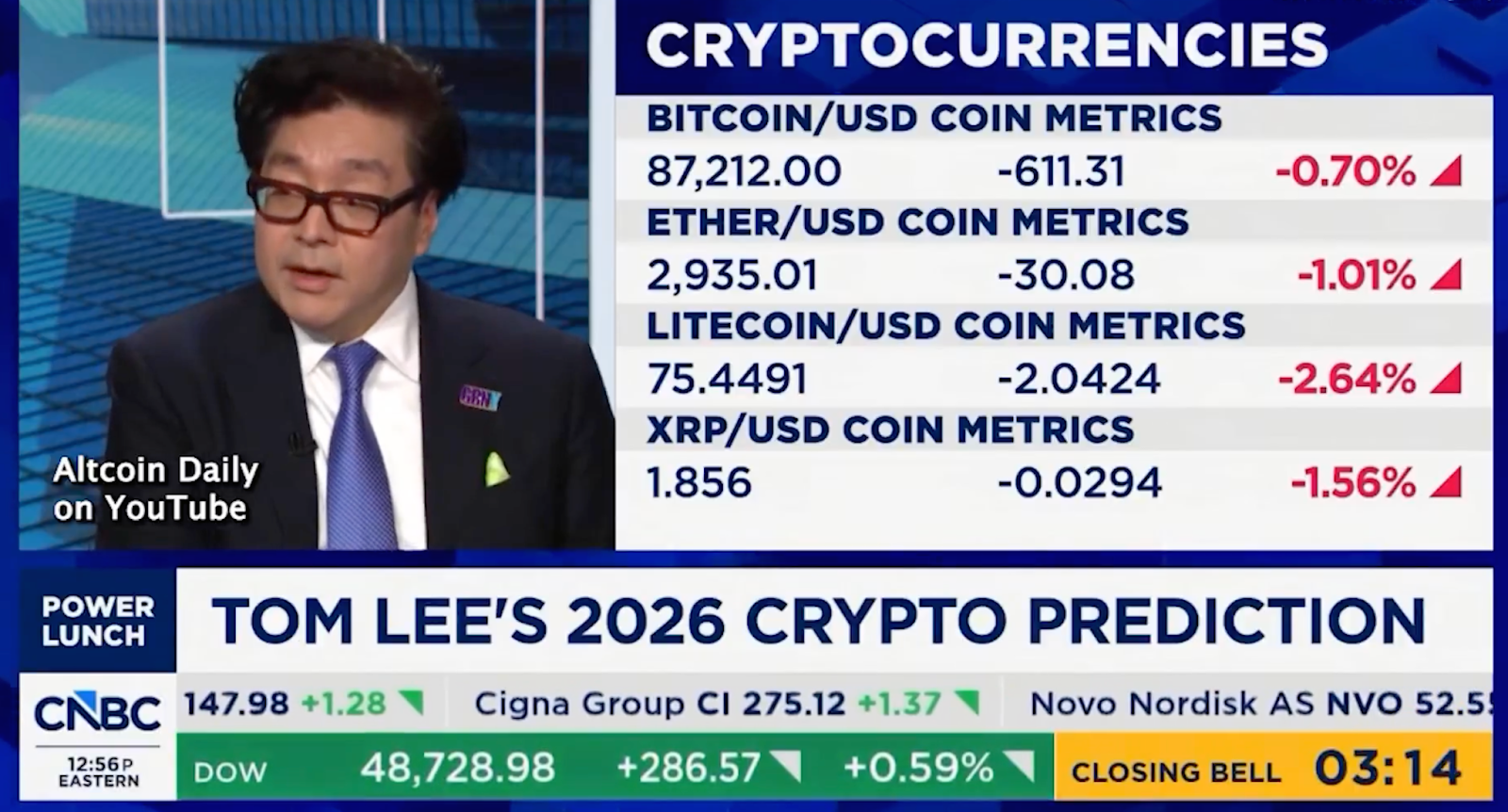
(Source: CNBC)
Current market consensus indicates that Ethereum is on the verge of a significant valuation reset. Analysts like Tom Lee note that as the ecosystem matures and real-world applications expand, ETH could reach between $7,000 and $9,000 in early 2026. Over a longer horizon, some projections even envision ETH at the $20,000 level.
These forecasts are not solely based on upgrade roadmaps or technical improvements. Instead, they reflect a shift in market perception, with Ethereum increasingly viewed as foundational financial infrastructure rather than just a public blockchain or application platform.
Tokenization of Real-World Assets as a Core Catalyst
Among various drivers, real-world asset (RWA) tokenization stands out as a pivotal factor. Ethereum is recognized as a leading platform for bringing traditional financial assets on-chain. Bonds, funds, and structured financial products can all be issued, settled, and traded through tokenization. This trend not only expands the scope of on-chain assets but also increases demand for ETH as both gas and settlement currency, shifting its value proposition from speculative narrative to functional utility.
Direct Competition and Collaboration with Traditional Payment and Settlement Systems
Beyond asset tokenization, Ethereum’s capabilities in payments and settlement are gaining traction in mainstream financial discourse. As Layer 2 solutions, stablecoins, and on-chain settlement efficiency advance, Ethereum is increasingly positioned to compete and collaborate with legacy payment systems. This evolution means ETH is being evaluated as part of the global financial network, not merely as a public chain token, fundamentally changing how its value is assessed.
Bitcoin: Extending the Long-Term Scarcity Narrative
By comparison, optimism around Bitcoin remains anchored in its fixed supply and inherent scarcity. Forecasts suggest that, given ongoing macroeconomic uncertainty, Bitcoin could plausibly reach $200,000 within the next year. In global asset allocation, Bitcoin is increasingly regarded as digital gold—a long-term store of value, rather than a vehicle for high-frequency trading.
On-Chain Activity as Evidence of Long-Term Conviction
Beyond market narratives and predictions, on-chain actions by institutions provide tangible evidence supporting these trends. Recently, several high-profile organizations have continued large-scale ETH staking, accumulating hundreds of thousands of ETH in a short period. Despite holding unrealized losses, these addresses have shown no significant strategy changes, indicating a long-term investment approach rather than short-term speculation.
To explore more Web3 content, click to register: https://www.gate.com/
Conclusion
Whether it’s Ethereum’s transformation into a foundation for real-world asset tokenization and financial infrastructure, or Bitcoin’s deepening role as a scarce store of value, the narrative around leading crypto assets is shifting from speculative trading to becoming vital components of the long-term financial system. Beyond price volatility, these perspectives and on-chain behaviors highlight the core logic driving the next phase of crypto market development.
Share
Content


Related Articles

2025 BTC Price Prediction: BTC Trend Forecast Based on Technical and Macroeconomic Data

Flare Crypto Explained: What Is Flare Network and Why It Matters in 2025

How to Use a Crypto Whale Tracker: Top Tool Recommendation for 2025 to Follow Whale Moves

Pi Coin Transaction Guide: How to Transfer to Gate.com

What is N2: An AI-Driven Layer 2 Solution