

Trade
Basic
Futures
Futures
Hundreds of contracts settled in USDT or BTC
Options
HOT
Trade European-style vanilla options
Unified Account
Maximize your capital efficiency
Demo Trading
Futures Kickoff
Get prepared for your futures trading
Futures Events
Participate in events to win generous rewards
Demo Trading
Use virtual funds to experience risk-free trading
Earn
Launch
CandyDrop
Collect candies to earn airdrops
Launchpool
Quick staking, earn potential new tokens
HODLer Airdrop
Hold GT and get massive airdrops for free
Launchpad
Be early to the next big token project
Alpha Points
NEW
Trade on-chain assets and enjoy airdrop rewards!
Futures Points
NEW
Earn futures points and claim airdrop rewards
Investment
Simple Earn
Earn interests with idle tokens
Auto-Invest
Auto-invest on a regular basis
Dual Investment
Buy low and sell high to take profits from price fluctuations
Soft Staking
Earn rewards with flexible staking
Crypto Loan
0 Fees
Pledge one crypto to borrow another
Lending Center
One-stop lending hub
VIP Wealth Hub
Customized wealth management empowers your assets growth
Private Wealth Management
Customized asset management to grow your digital assets
Quant Fund
Top asset management team helps you profit without hassle
Staking
Stake cryptos to earn in PoS products
Smart Leverage
NEW
No forced liquidation before maturity, worry-free leveraged gains
GUSD Minting
Use USDT/USDC to mint GUSD for treasury-level yields

More

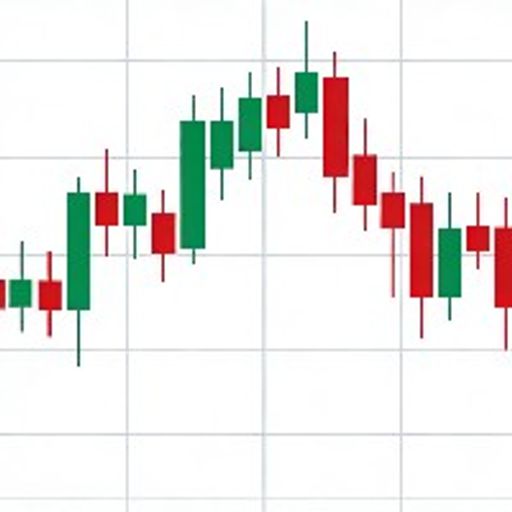




The reason why problematic tokens in contract trading become tools for retail investors to be exploited is fundamentally because the market makers hold absolute market dominance. Recent high-profile cases exposed in the market reveal four stages in the process of market makers attracting investors, locking in funds, and then unloading—each stage filled with deadly traps waiting for retail investors.
**Stage 1: False Prosperity Inducing Short Positions**
Market makers will artificially push the price of a coin to an unreasonable high level, creating the illusion that "it will definitely fall this time," thereby enticing a large number of short positions. Once the short positions are sufficiently concentrated, the market maker reverses course, injects funds to push the price up, causing all short positions to be liquidated simultaneously. Through this process, the market maker profits while clearing out opponents. The liquidity of problematic tokens is inherently poor, so a small amount of capital can manipulate the price.
**Stage 2: The Boiling Frog Effect of Funding Rates**
Some contract products settle fees on an hourly basis. Market makers control the price within a certain range, causing it to oscillate repeatedly, forcing traders to pay fees every hour. Holding long-term? Then your principal is gradually eroded by fees. Many investors find that the price hasn't dropped much, but they end up losing money due to continuous fee payments. This invisible harvesting is even harder to prevent than a sudden crash.
**Stage 3: Sudden Collapse to Zero**
These tokens lack real value support; once the market maker unloads, no one is left to take the other side. History is replete with cases where billions of dollars were drained within weeks, and the perpetrators simply ran away—leaving victims with tokens that cannot be liquidated. It’s common to see prices drop from $20 to $0.02 in Ponzi-like tokens.
**Stage 4: Platform Risk**
Problematic tokens are ultimately delisted by exchanges, leaving holders completely trapped.
These four traps are interconnected, from inducing entry to leaving investors with nothing. For retail investors, the best defense is to stay away from contract products with poor liquidity and abnormal trading activity.