

Trade
Basic
Futures
Futures
Hundreds of contracts settled in USDT or BTC
Options
HOT
Trade European-style vanilla options
Unified Account
Maximize your capital efficiency
Demo Trading
Futures Kickoff
Get prepared for your futures trading
Futures Events
Participate in events to win generous rewards
Demo Trading
Use virtual funds to experience risk-free trading
Earn
Launch
CandyDrop
Collect candies to earn airdrops
Launchpool
Quick staking, earn potential new tokens
HODLer Airdrop
Hold GT and get massive airdrops for free
Launchpad
Be early to the next big token project
Alpha Points
NEW
Trade on-chain assets and enjoy airdrop rewards!
Futures Points
NEW
Earn futures points and claim airdrop rewards
Investment
Simple Earn
Earn interests with idle tokens
Auto-Invest
Auto-invest on a regular basis
Dual Investment
Buy low and sell high to take profits from price fluctuations
Soft Staking
Earn rewards with flexible staking
Crypto Loan
0 Fees
Pledge one crypto to borrow another
Lending Center
One-stop lending hub
VIP Wealth Hub
Customized wealth management empowers your assets growth
Private Wealth Management
Customized asset management to grow your digital assets
Quant Fund
Top asset management team helps you profit without hassle
Staking
Stake cryptos to earn in PoS products
Smart Leverage
NEW
No forced liquidation before maturity, worry-free leveraged gains
GUSD Minting
Use USDT/USDC to mint GUSD for treasury-level yields

More



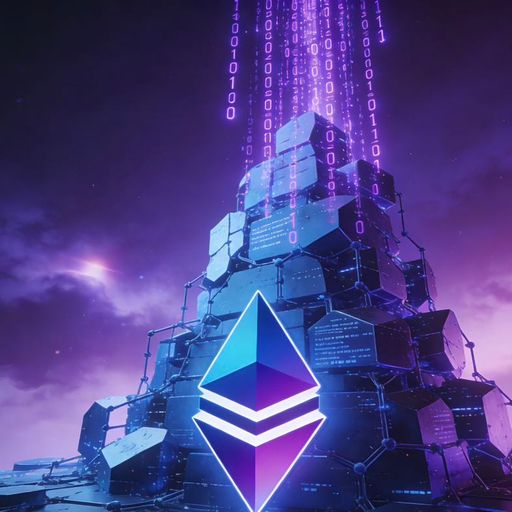



From Web1 to Web3: How Internet Architecture Is Reshaping User Control
The digital landscape has evolved dramatically over three decades, but today’s web infrastructure remains dominated by a handful of mega-corporations. Research shows that roughly 75% of Americans believe tech giants like Meta, Alphabet, and Amazon wield excessive influence over internet infrastructure, while about 85% suspect these companies monitor their personal activities. This concentration of power has sparked interest in an alternative approach: Web3, a decentralized framework designed to restore user autonomy and data ownership.
The Three Eras of Internet Evolution
Understanding Web3 requires tracing how the internet transformed from its simple beginnings to its current complex state.
Web1: The Static Information Age
In 1989, Tim Berners-Lee created the first iteration of the World Wide Web at CERN to facilitate information sharing between research institutions. Throughout the 1990s, as more organizations connected their servers and developers expanded the network, Web1 became increasingly accessible beyond academic settings.
Web1 operated as a “read-only” ecosystem. Users visited static pages filled with hyperlinks, similar to browsing a digital encyclopedia. Content creation belonged exclusively to technical experts, while everyday users passively consumed information. This phase established the internet’s foundational architecture but offered minimal user interaction.
Web2: The Interactive Revolution
By the mid-2000s, technological advances enabled a fundamental shift. Developers introduced dynamic applications that let ordinary users participate actively—commenting on posts, uploading videos, sharing thoughts through social platforms like Reddit and YouTube, or purchasing items on marketplaces.
This “read-and-write” model created massive engagement, but introduced a critical centralization problem. Big tech corporations retained complete ownership and control over all user-generated content hosted on their servers. They monetized user data through advertising, with companies like Google and Facebook capturing 80-90% of annual revenue from ad sales. Users created the content but possessed no true ownership or compensation rights.
Web3: The Ownership Revolution
Beginning in the late 2000s, blockchain technology—the system underlying cryptocurrencies like Bitcoin (launched in 2009)—introduced new possibilities. Bitcoin demonstrated that decentralized networks could operate without central authorities, using a distributed ledger system to validate transactions transparently.
In 2015, developers led by Vitalik Buterin launched Ethereum, introducing “smart contracts”—self-executing programs that automatically enforce agreements without intermediaries. These innovations enabled decentralized applications (dApps) to function on blockchain networks, performing complex operations like transaction verification and file storage through distributed consensus rather than corporate servers.
The term “Web3” emerged to describe this architectural shift: from big-tech-controlled platforms to community-governed networks where users maintain genuine control over their digital identities and content. The fundamental promise evolved from Web2’s “read-write” model to Web3’s “read-write-own” paradigm.
Comparing Web2 and Web3: Core Differences
The essential distinction lies in infrastructure. Web2 relies on centralized corporate servers where companies make all decisions; Web3 operates on distributed blockchain networks where thousands of independent nodes share processing power.
This architectural difference produces cascading effects:
Web2 Characteristics:
Web3 Characteristics:
Accessing Web3 Today
Despite its experimental nature, Web3 remains accessible to interested participants. Begin by downloading a cryptocurrency wallet compatible with your chosen blockchain. Ethereum users might select an Ethereum-compatible wallet, while Solana enthusiasts need Solana-enabled alternatives.
Once your wallet is configured, navigate to Web3 applications and locate their “Connect Wallet” function—typically positioned prominently on the homepage. Authorize the connection, similar to logging into traditional websites, and you’ll gain access to the application’s services.
For discovering opportunities, several dApp navigation platforms aggregate trending applications across different blockchains, organizing them by category: blockchain gaming, digital asset markets, decentralized finance protocols, and emerging sectors. This exploration helps new participants identify which Web3 protocols align with their interests and risk tolerance.
The Future of Internet Architecture
Web3 represents a fundamental reimagining of how digital networks operate and who controls the infrastructure. While challenges remain—particularly regarding user experience and scalability—the movement toward decentralized, user-centric web architecture continues maturing. As blockchain technology advances and adoption grows, Web3 increasingly offers a credible alternative to the centralized Web2 model that currently dominates internet experiences.
The choice between Web2 and Web3 ultimately reflects different priorities: centralized platforms provide convenience and speed, while decentralized networks prioritize ownership and user autonomy. Both will likely coexist, serving different use cases and user preferences in the evolving digital ecosystem.