


Introduction
In June 2025, Blockworks launched the Token Transparency Framework (TTF) to provide protocols with a standardized disclosure system, making it easier for the market to understand and compare different projects using consistent criteria. Each filing organizes key information around token structure, market structure, entity architecture, financial disclosures, protocol arrangements, and other essential details.
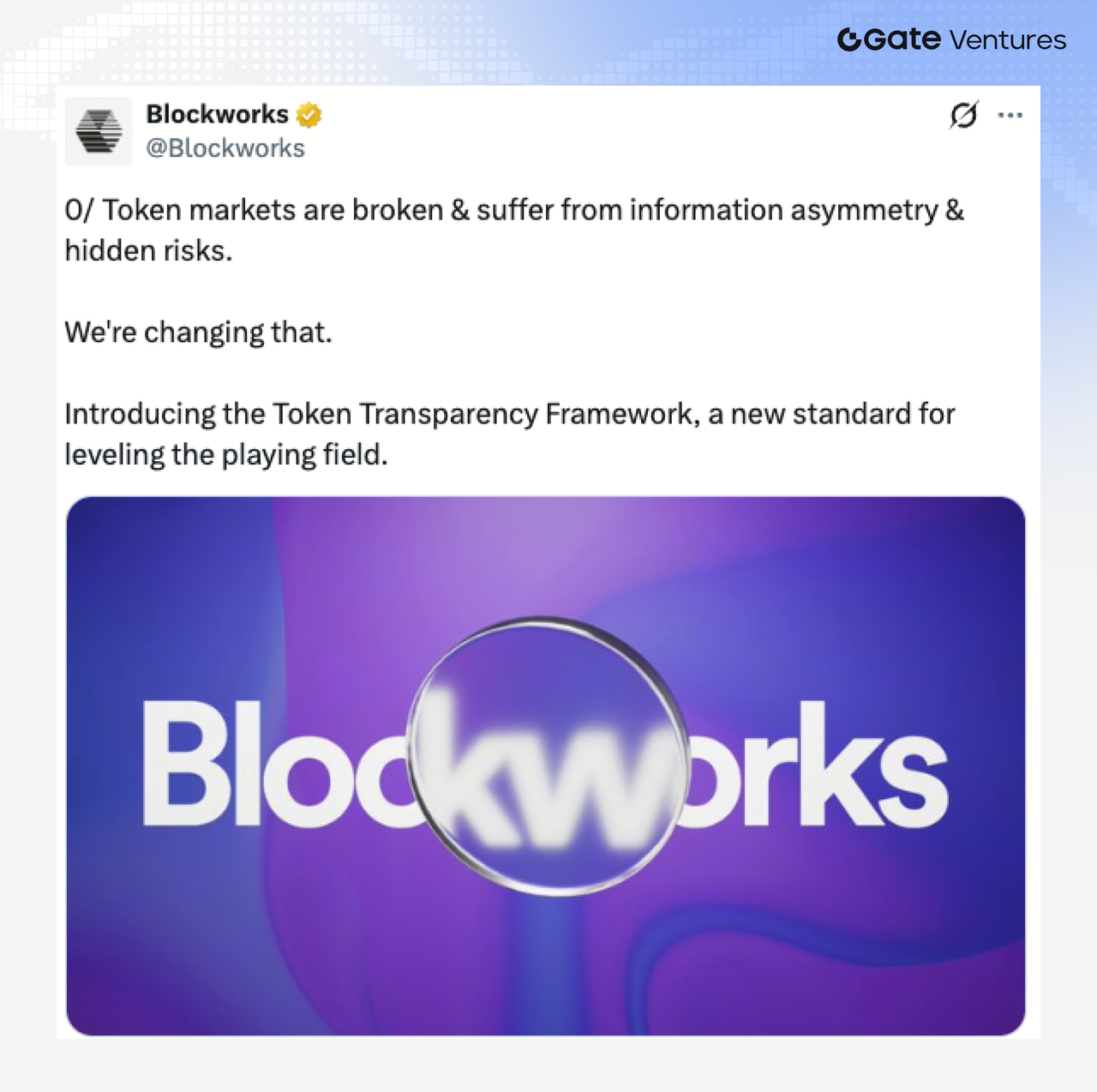
Source: X@Blockwork
In simple terms, TTF aims to serve as the crypto industry’s equivalent of the IPO S-1 filing, systematically disclosing the core information that the market needs to know about a project.
This is a significant step toward moving the token market beyond its earlier "wild west" phase. On one hand, token holders, as investors, naturally deserve greater transparency. In the past, basic information such as the founding team’s background or funding rounds might have been selectively disclosed by projects, but there were no mandatory requirements or industry-wide standards.
More importantly, information that directly impacts potential sell pressure—such as CEX listing allocations, market maker arrangements, token lock-up periods, and distribution—has rarely been disclosed in a standardized way.
On the other hand, for projects genuinely seeking to build public investor trust, the market has long lacked a referenceable industry disclosure standard. This has led to persistent information asymmetry and trust gaps between projects and investors.
Does the TTF Have Enough Credibility?
To become an industry-wide disclosure standard, a framework needs more than just robust design—it must also build long-term credibility and gain broad recognition from industry participants.
To that end, Blockworks has launched the Transparency Alliance, an industry group dedicated to promoting standardized disclosures, improving market integrity, and driving TTF adoption.
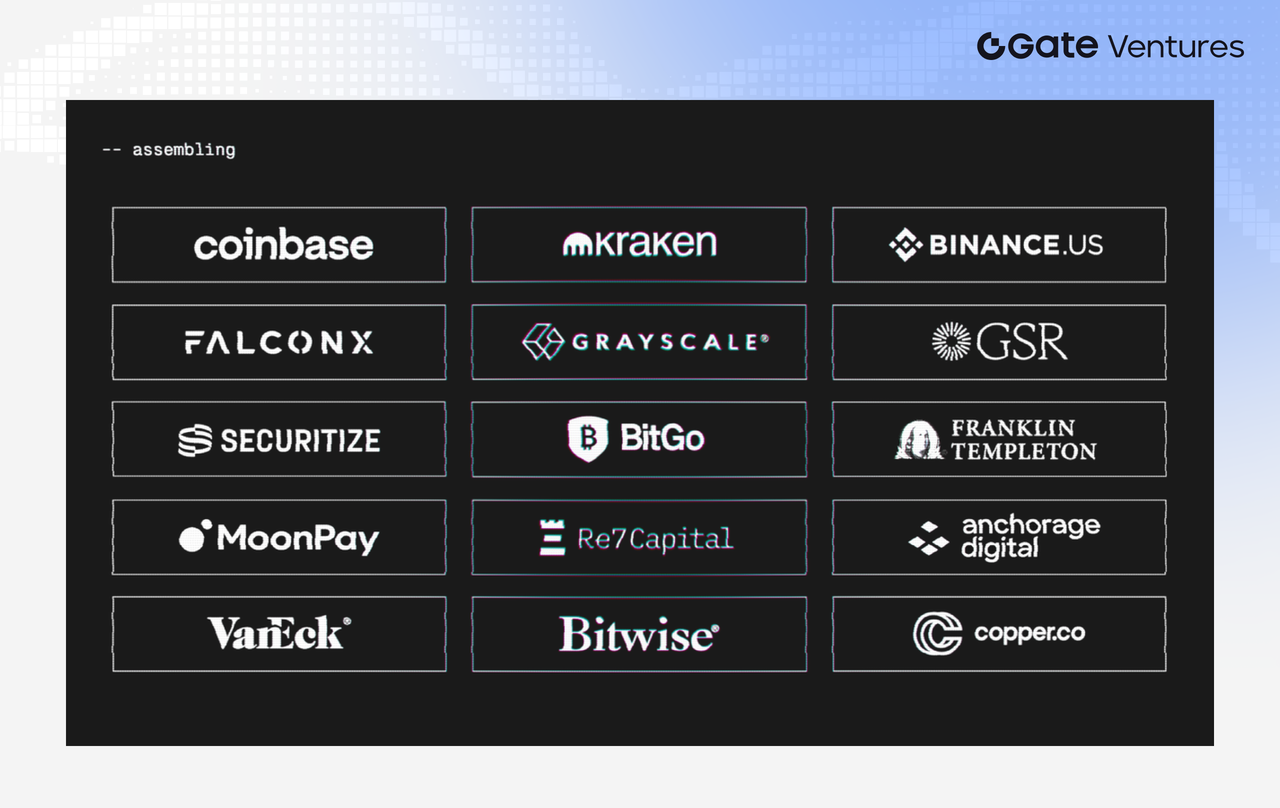
Source: Blockwork
Currently, TTF offers two types of filings:
B-1 Filing: A one-time disclosure document for Token Generation Events (TGE), essentially the digital asset equivalent of an S-1 filing.
B-2 Filing: An ongoing disclosure document for mature protocols, used to provide regular updates on key project information.
Notably, both B-1 and B-2 filings follow a "category-neutral" principle. The framework itself does not predefine or determine the legal status of tokens in any jurisdiction; instead, it focuses on enhancing transparency and disclosure quality.
The alliance includes participants from CEXs, market makers, vault curators, and various financial institutions. Collectively, they recognize TTF as a core reference in their due diligence processes and may contribute additional disclosure data and exclusive information in the future.
Of particular interest is the participation of CEXs and market makers. This suggests that, going forward, details related to CEX listing fees, token allocations, and market maker terms—such as retainers, token loans, and contract durations—will be disclosed more openly and in a standardized manner.
If these disclosures become industry practice, it will help reduce the information barriers that retail investors have long faced.
Currently, the B-1 and B-2 disclosure frameworks cover four main categories:
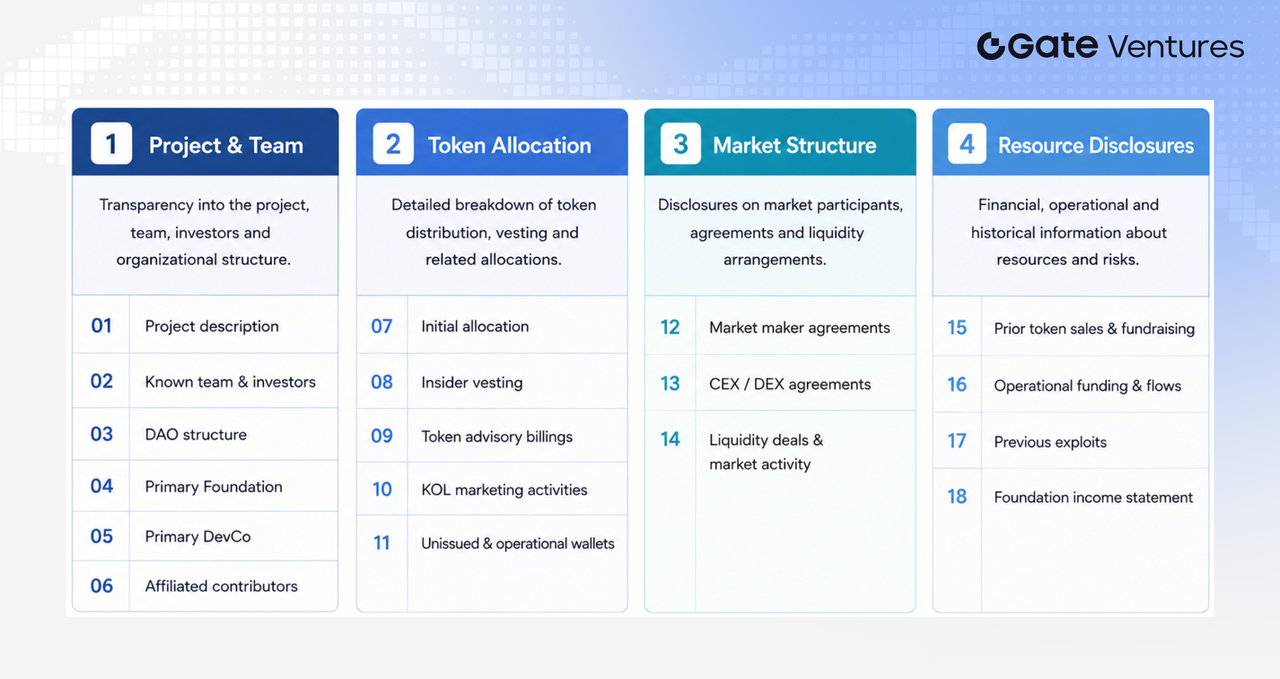
Project and Team Information
Includes project overview, core team and investors, DAO structure, foundation entity, development company, and other affiliated contributors.
Token Allocation Information
Covers initial token distribution, internal unlock schedules, advisor fees, KOL marketing campaigns, and the status of unissued tokens and operational wallets.
Market Structure Information
Includes market maker agreements, CEX/DEX partnership agreements, liquidity arrangements, and related market activities.
Resources and Financial Disclosures
Covers prior token sales and fundraising, sources and uses of operational funds, historical security incidents, and foundation income statements.
What Is the Current Adoption and Disclosure Progress of the Token Transparency Framework?
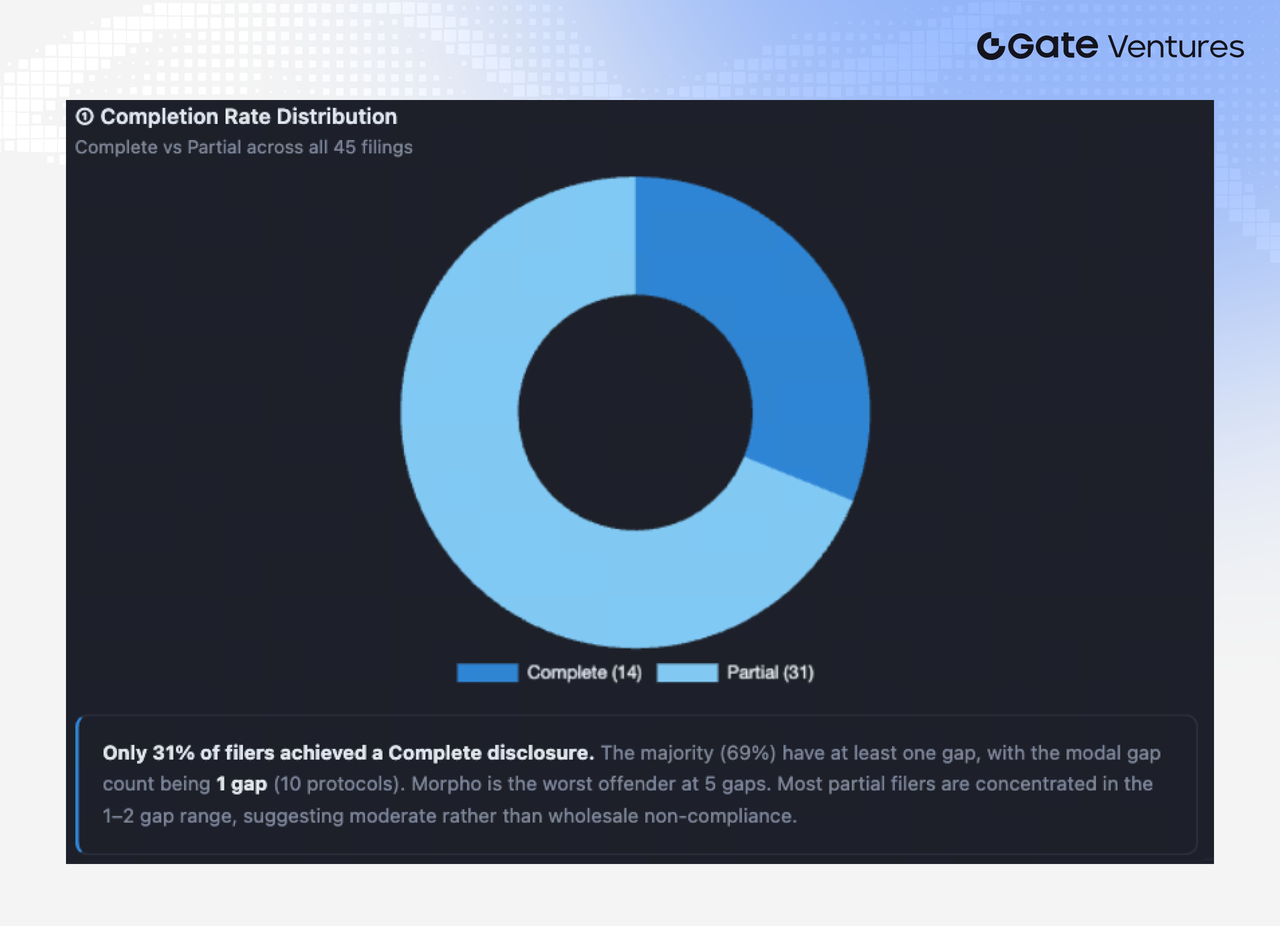
So far, 45 projects have voluntarily submitted token disclosures, but only 14 have provided full disclosure across all metrics, resulting in an overall completion rate of about 31%.
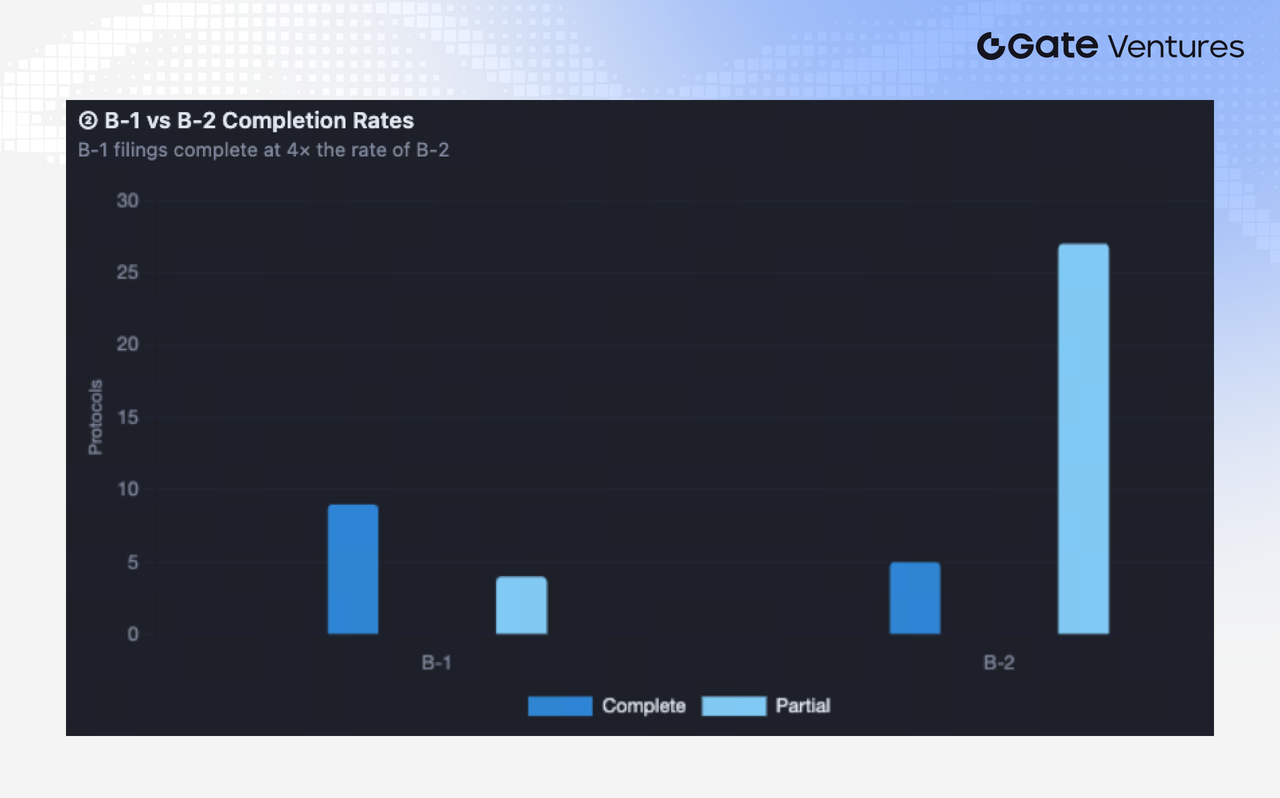
Breaking it down, B-1 filings have a 69% completion rate, significantly higher than the 16% for B-2 filings. There are structural reasons for this: B-2 filings focus on ongoing disclosures for post-ICO or already-issued tokens. Once tokens have been issued, projects have weaker direct incentives to maintain high transparency. Additionally, B-2 is geared toward larger, more mature protocols, making disclosures more complex and in-depth.
In contrast, B-1 filings are mainly for pre-launch or not-yet-issued tokens. Here, teams are more motivated to fully disclose information to build market trust, reduce information asymmetry, and lay a strong foundation for future token issuance and value discovery.
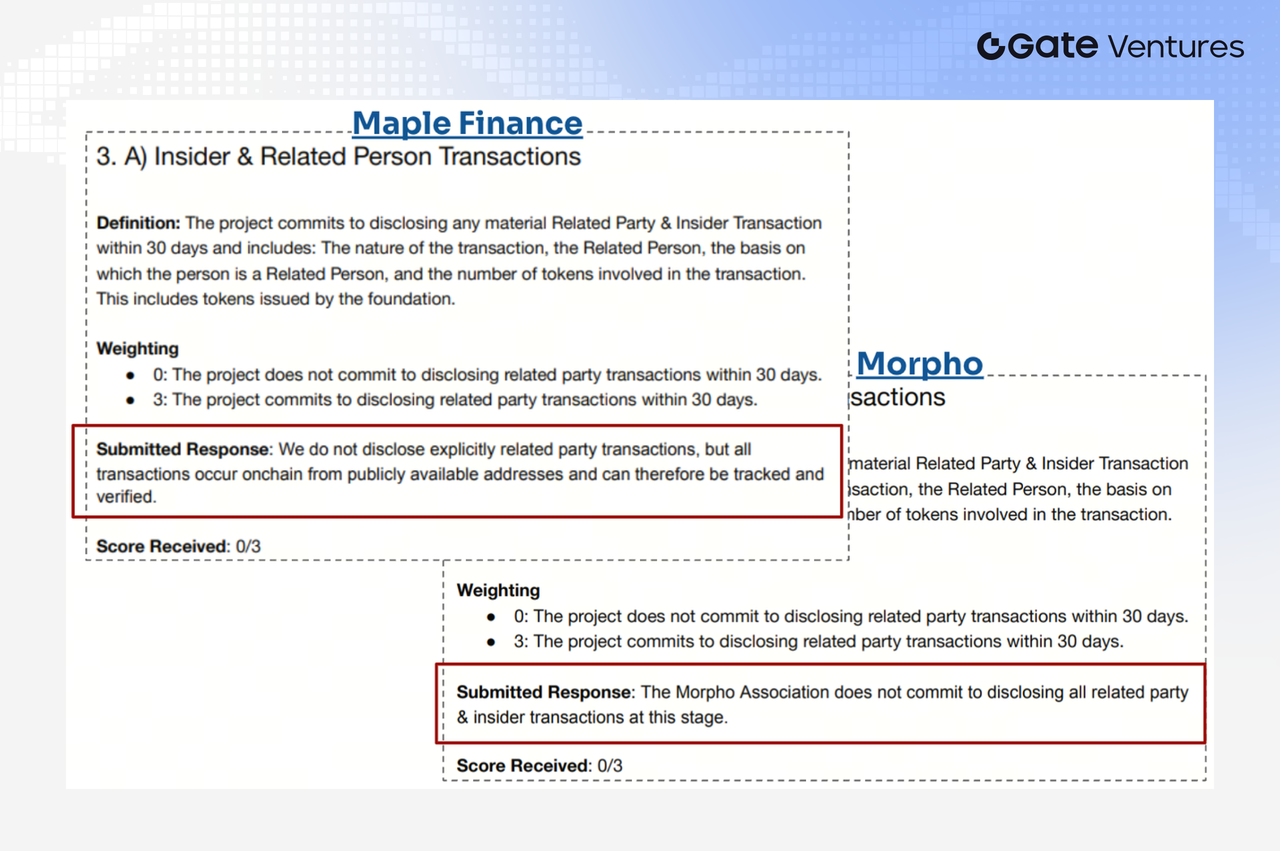
Source: Morpho, Maple Finance B-2 Filing
For projects with only partial B-2 disclosures, notable examples include major protocols like Morpho and Maple Finance. These projects share a common trait: they have not disclosed Insider & Related Person Transactions.
This metric requires projects to disclose any significant related-party or insider transactions within 30 days, including transaction type, identities involved, and the number of tokens. The scope also covers tokens issued or allocated by the foundation.
The likely reason is the high sensitivity of related-party transactions. Such disclosures often involve token movements between founders, foundations, early investors, advisors, market makers, or ecosystem partners. Once public, these can trigger concerns about insider cash-outs, conflicts of interest, or fairness in token distribution.
At the same time, projects may worry that such disclosures could put pressure on secondary markets. Even if transactions have legitimate business purposes, large token transfers by insiders, related parties, or foundation addresses could be interpreted as potential sell pressure, affecting token price and market confidence.
Currently, TTF remains a voluntary disclosure framework, lacking regulatory or exchange-level enforcement. As a result, projects are more likely to disclose information with lower sensitivity and minimal market impact, while avoiding content that could affect token price, governance trust, or perceived interests.
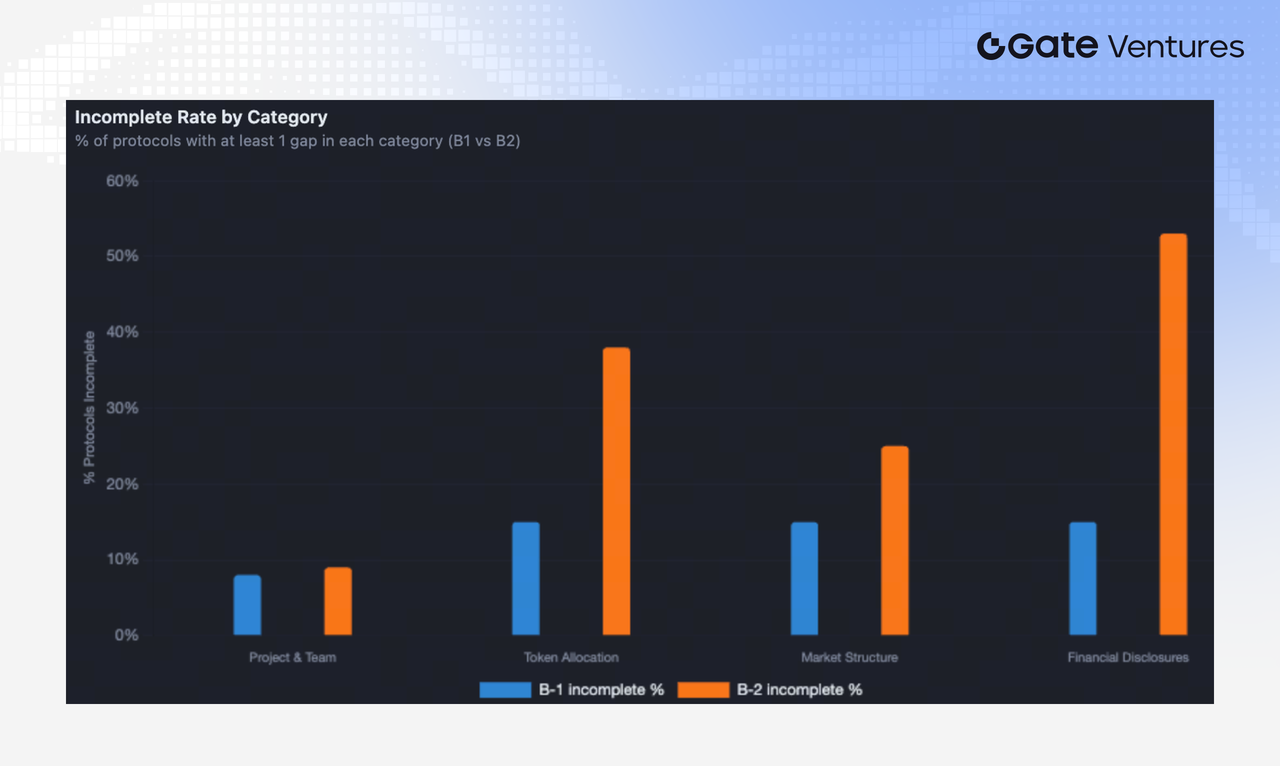
Gaps in Financial Disclosure
Among B-2 filing projects, about 53% have incomplete financial disclosures.
This often means that while treasury wallets are labeled, income and expenditure flows remain fragmented or incomplete. Standardized income statements are typically not provided, making it difficult for investors to systematically assess project revenues, operating expenses, working capital, and whether the project is profitable or running at a loss.
By project type, financial disclosure gaps are most common in Liquid Staking/Restaking and DEX/AMM protocols.
For Liquid Staking/Restaking, there are five protocols: Jito, Rocket Pool, Bifrost, Ether.fi, and Stride. For DEX/AMM, there are four: Aerodrome, Velodrome, Ekubo, and Gains Network. These two categories alone account for 9 of the 17 projects with incomplete disclosures.
A lack of financial disclosure does not necessarily mean a lack of transparency. A deeper reason may be that DeFi protocols have yet to establish widely accepted financial disclosure standards.
For Liquid Staking/Restaking protocols, revenue sources may include staking commissions, MEV earnings, restaking fees, and AVS income, while costs cover node operations, validator incentives, liquidity subsidies, security audits, team compensation, and compliance expenses.
The most debated issue is whether token emissions should be considered an operating expense. If counted, many protocols would show persistent losses; if not, financial performance would look significantly better. As a result, definitions of income and expenses vary widely, making standardized income statements difficult to establish.
For DEX/AMM protocols, the issue is even more structural. Most trading fees go directly to LPs, not the foundation or protocol entity, so the economic value generated by the protocol does not always align with the income it actually receives.
Additionally, many DeFi projects use a separated governance structure (DAO, Foundation, DevCo), raising the question of "who is the reporting entity?" Investors want to know the profitability of the entire protocol ecosystem, but projects often can only disclose the foundation’s finances, creating a significant gap.
Moreover, even if a project publishes its treasury wallet, this does not equate to full financial transparency. On-chain data can show balances but not employee compensation, advisor fees, marketing, market-making costs, ecosystem incentives, or other operating expenses. Fully disclosing this information is not only a massive undertaking but may also reveal the project’s true financial health.
For example, some protocols with billions in TVL may, after full financial disclosure, reveal that their revenues are far less than their expenses and that they rely heavily on treasury subsidies. Market-making, liquidity procurement, KOL incentives, and ecosystem subsidies are often the most sensitive information that projects are reluctant to disclose.
Thus, incomplete B-2 financial disclosure may not stem solely from a lack of willingness to disclose, but rather reflects that DeFi is still transitioning from "on-chain transparency" to "financial transparency." Especially in Liquid Staking/Restaking and DEX/AMM, protocols manage large assets and cash flows but lack traditional corporate revenue attribution and unified accounting standards, making standardized financial disclosure one of the most challenging aspects.
Gaps in Token Allocation Disclosure
From the token allocation perspective, about 38% of B-2 filings have disclosure gaps. The three most common missing items are:
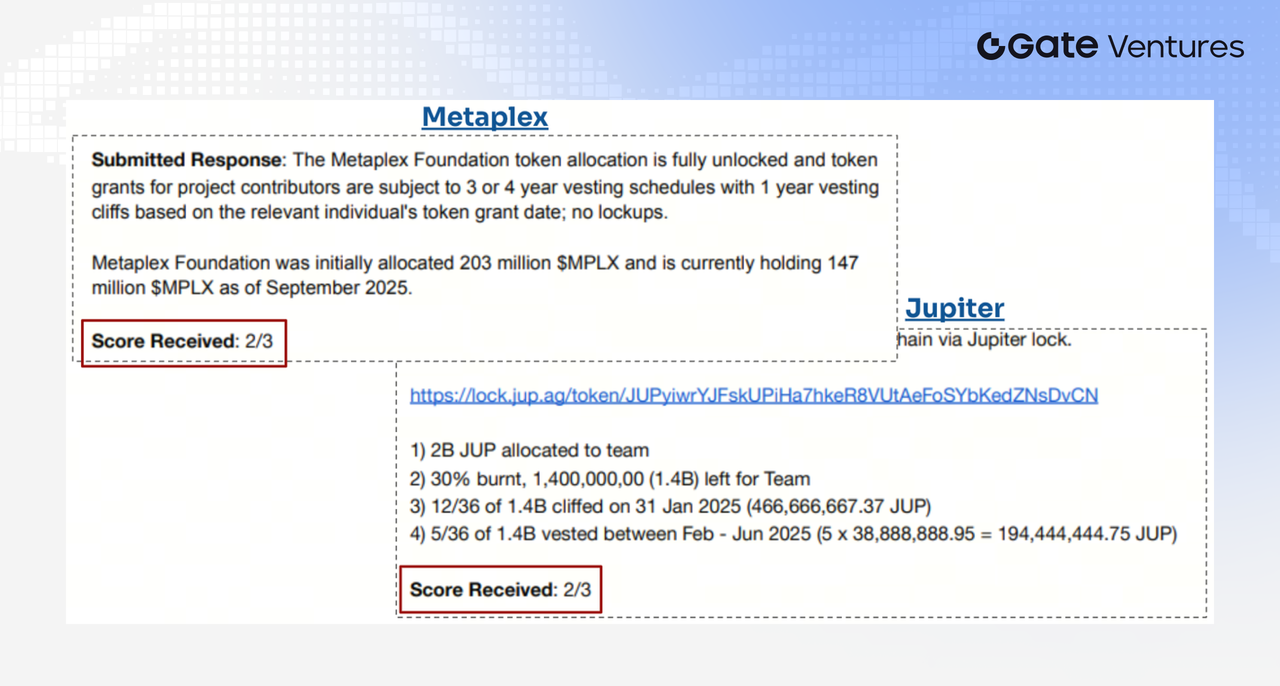
Vesting Insider Tokens: Four protocols—Jupiter, Metaplex, Raydium, and Marinade—have only partially disclosed this information. They scored 2/3, indicating they provided basic vesting schedules but lacked full on-chain verifiability, address labeling, or completeness.
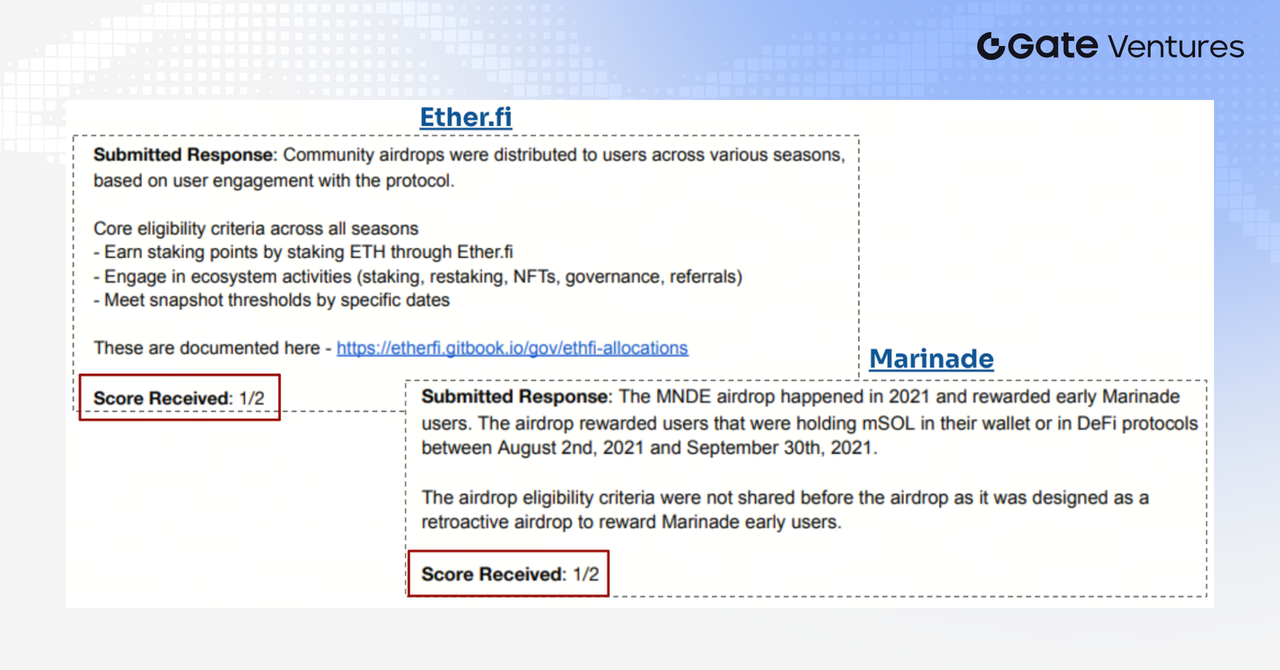
Airdrop Process: Four protocols—Ether.fi, Bifrost, dYdX, and Marinade—scored 1/2, meaning their airdrop criteria, allocation logic, eligibility screening, or final results were not fully documented and made public.
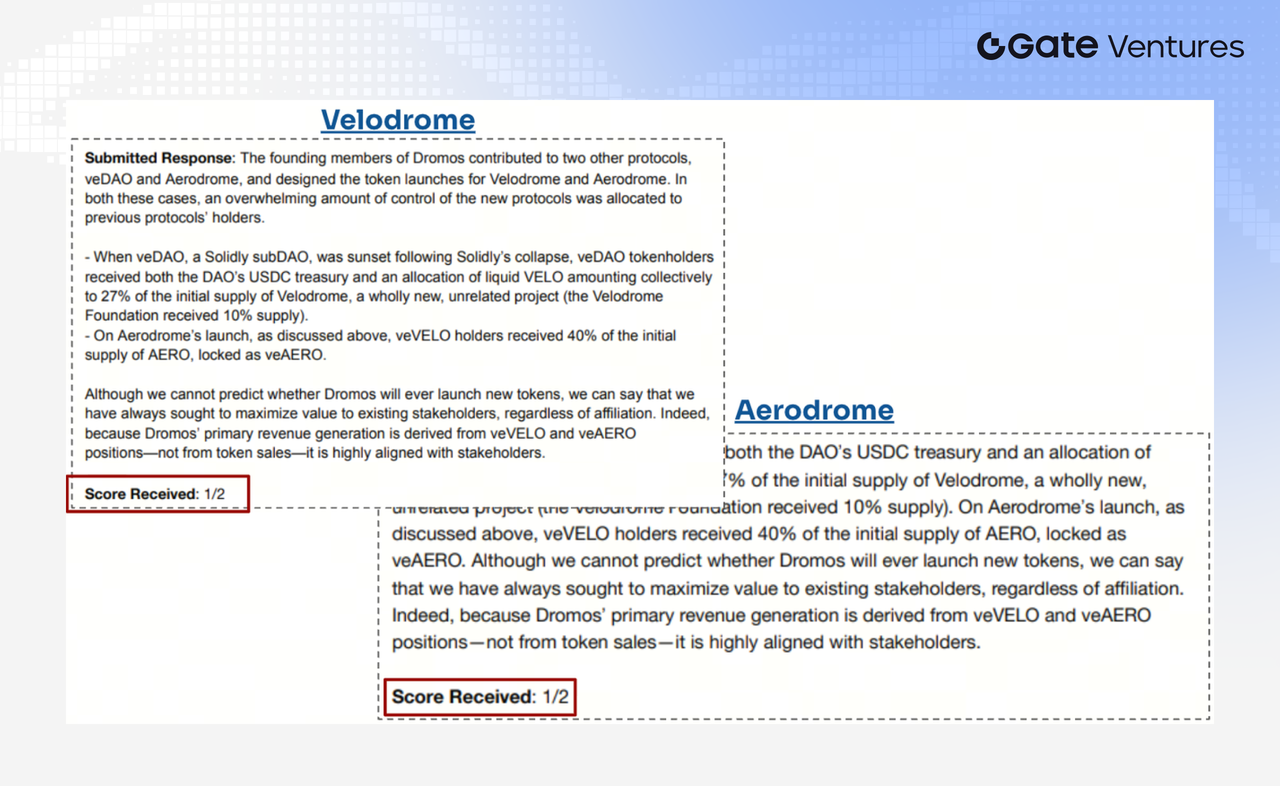
Future & Related Token Launches: Three protocols—Aerodrome, Velodrome, and Horizen—scored 1/2, reflecting incomplete disclosure on future token launches, related protocol tokens, ecosystem tokens, or potential secondary token designs.
These gaps are likely not just execution issues but involve highly sensitive information. Insider vesting requires teams to disclose unlock schedules for team members, investors, or early contributors. Without on-chain address mapping, the market cannot accurately gauge future sell pressure; but overly detailed disclosures may lead to premature pricing of insider sell pressure.
The airdrop process involves user eligibility, allocation fairness, and anti-sybil criteria. Projects may fear that excessive transparency could spark community disputes or expose their airdrop screening models.
As for Future & Related Token Launches, for projects that have already held a TGE, disclosure gaps often mean the team has not provided a full account of future token launches, related protocol tokens, ecosystem tokens, or other token-related arrangements. Such information directly affects market expectations for dilution, governance changes, ecosystem incentives, and potential sell pressure, so teams may prefer to keep things vague rather than make explicit commitments.
Equity vs. Tokens: How to Balance Value Distribution Mechanisms?
The core compliance debate around tokens today centers on this: If a project seeks to give tokens clear economic value through buybacks, dividends, revenue sharing, or governance rights, it risks being classified as a security and facing regulatory scrutiny. But if it deliberately weakens token value to avoid regulation, the token risks becoming a hollow points system or mere narrative tool.
From the TTF perspective, its core function is to prompt projects to clarify the relationship between equity and tokens: Which values, rights, and returns belong to company equity, and which functions, incentives, and governance mechanisms are carried by tokens? Standardized disclosures help reduce uncertainty for both the market and regulators.
Among the 32 B-1 filings, three main models emerge for handling the equity-token relationship:
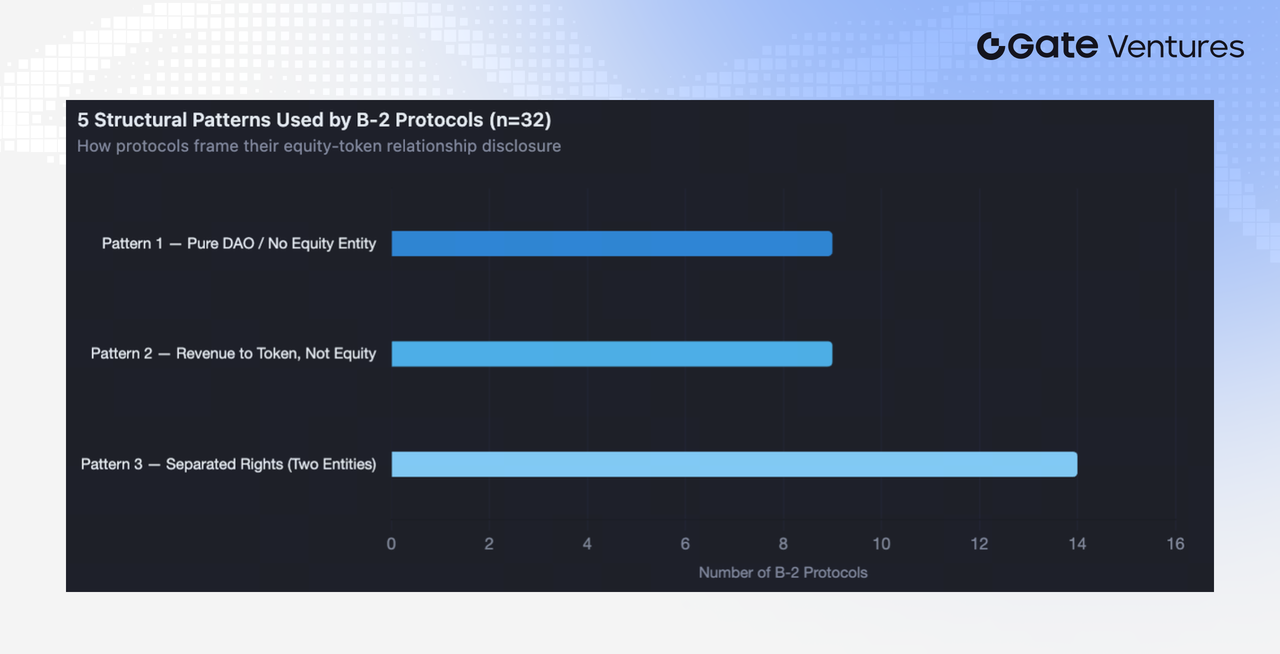
Model 1: No Equity Entity (10 Protocols)
Examples: Morpho, dYdX, Aerodrome, Gearbox, etc.
These protocols have no separate equity entity accumulating value; all protocol value flows directly to the DAO and token holders. With no separate shareholder interests, equity-token conflicts are eliminated. For instance, Morpho Labs acts as a development entity but has publicly committed that MORPHO tokens are its sole asset, making it functionally similar to a pure DAO structure.
Model 2: Revenue Accrues to Tokens, Not Equity (9 Protocols)
Examples: Raydium, Jito, Rocket Pool, Marinade, etc.
These protocols may have a development company or foundation, but protocol fee income is routed directly to token holders via buybacks, staking rewards, or fee sharing, not to equity holders. In this model, the equity entity handles development and operations, while tokens capture protocol-level economic value.
Model 3: Dual Entity Structure, Rights Separation (13 Protocols)
Examples: Jupiter, ZKsync, WalletConnect, Maple Finance, Ether.fi, etc.
This is the most common—and controversial—structure. The development company (equity layer) and the DAO (token layer) coexist. Shareholders have company-level voting and economic rights, while token holders have protocol governance and network-related rights.
The main controversy is: When protocol traffic, brand, and user trust are co-created by the token network, which revenues belong to the company and which to the DAO and token holders?
Aave is a textbook example. In December 2025, after Aave Labs integrated CoW Swap into its official frontend (app.aave.com), the community discovered that some swap fees were not flowing into the Aave DAO treasury but instead to external or Labs-related accounts.(1)
Aave Labs argued that since the frontend is developed, operated, and maintained by the company, frontend revenue belongs to the company. DAO representatives and token holders countered that Aave’s traffic, brand, and user trust stem from the protocol network, so related revenues should not bypass the DAO. This incident laid bare the core conflict in the dual-entity structure:
It highlighted the fundamental tension: Protocol value is co-created by the token network, but user access, product operations, and commercialization are controlled by the development company. Both sides may have different views on value attribution.
Market Maker Agreements and Exchange Listing Fees
Another crucial disclosure area is market maker agreements and exchange listing fees, as these directly affect a token’s circulating supply, potential sell pressure, and price discovery after launch.
Compared to publicly disclosed unlock schedules in tokenomics, market maker token loans, call options, liquidity incentives, and listing arrangements are often hidden in off-chain agreements. Yet these terms determine how many tokens are actually available for sale, the economic incentives for market makers at different price levels, and the structural sell pressure in the market.
Thus, this information often explains post-listing price behavior better than nominal circulating supply or unlock schedules. It is key to understanding a token’s market structure and true supply dynamics.
Among 32 B-2 filing projects, 84% (27 projects) disclosed three core pieces of information: the names of market makers and centralized exchanges, the token allocation ratios for each institution, and the contract duration or term.
Based on the disclosures, market maker and exchange arrangements fall into three main models:
Model 1: Token Loan Model
This is the most common, used by about 19 projects. The foundation lends a fixed number of tokens to market makers, who provide liquidity for a set period and return the tokens at maturity. For example, peaq lends PEAQ tokens to GSR, Keyrock, and Amber; Jito lent 2 million JTO to Amber, Auros, and GSR; Maple Finance aggregated about 2% of SYRUP’s total supply for multiple institutions.
Model 2: Cash Retainer Model
Used by Aerodrome and Velodrome. The foundation pays market makers in cash or stablecoins for services, without transferring any tokens. For instance, Aerodrome signed an annual renewal with Flowdesk for market making, but Flowdesk did not receive or borrow any AERO tokens.
Model 3: "No Agreement" Declaration
Some projects explicitly state they have no market maker or CEX agreements, such as Gearbox, dYdX, Gains Network, Ekubo, and Raydium. These are typically DEX-native protocols or DAOs that manage liquidity directly. Even without a market maker arrangement, clearly stating "no such agreement exists" is itself high-quality disclosure.
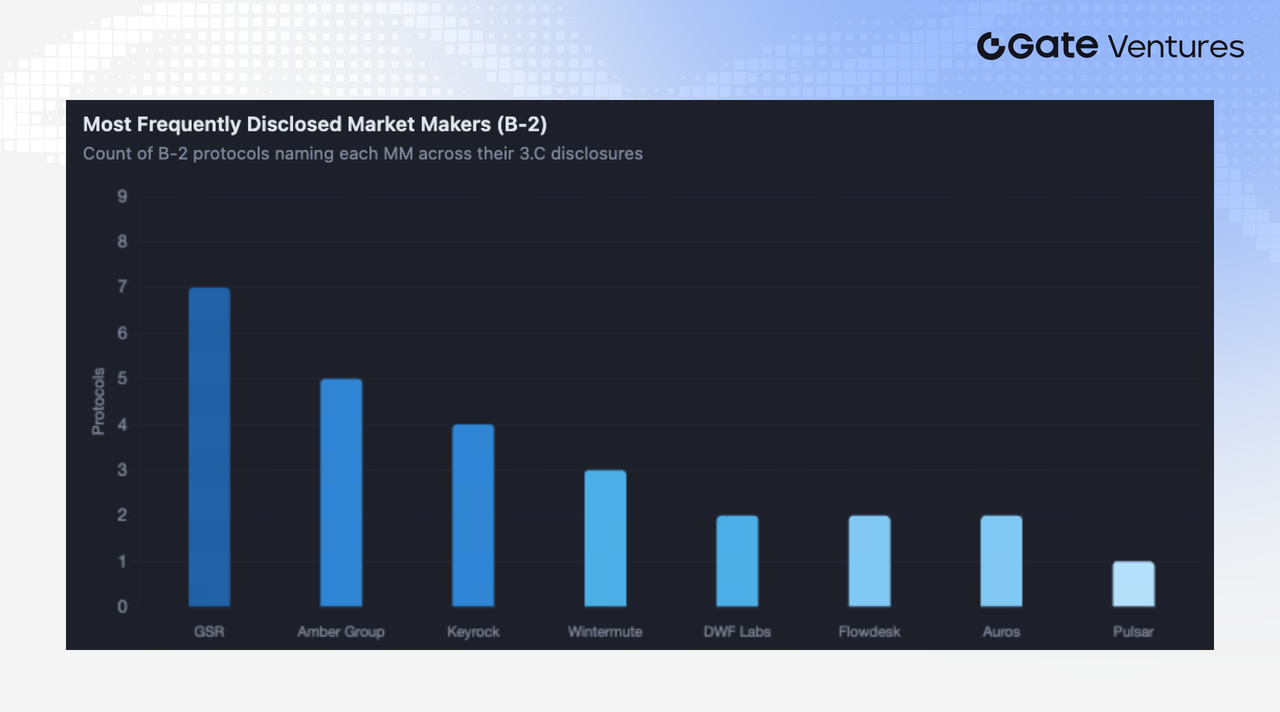
Among market makers, GSR is the most widely involved, appearing in 7 projects; Amber Group appears 5 times, and Keyrock 4 times. Overall, GSR, Amber, and Keyrock are the most common market-making service providers in the B-2 filing sample.
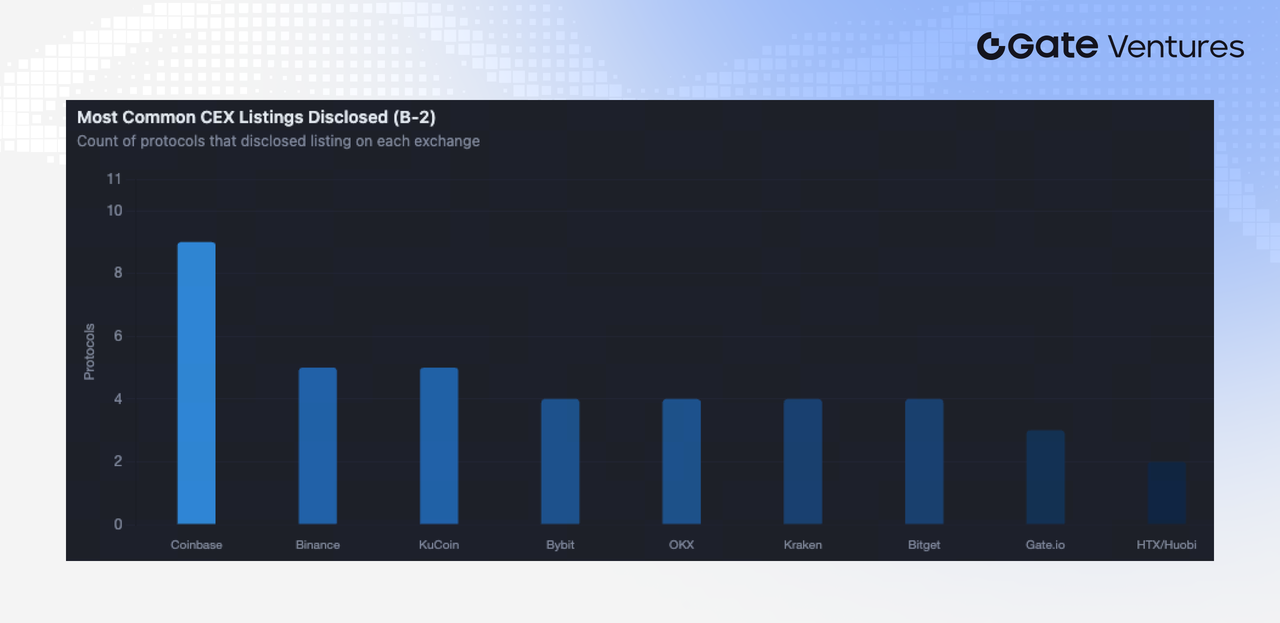
For CEX listings, Coinbase is the most frequently mentioned, appearing 9 times—well ahead of Binance, KuCoin, Bybit, and others. For projects seeking access to compliant institutional investors and US market liquidity, a Coinbase listing remains one of the most significant signals.
Market Maker Token Allocation: Smaller Protocols Pay Higher Costs
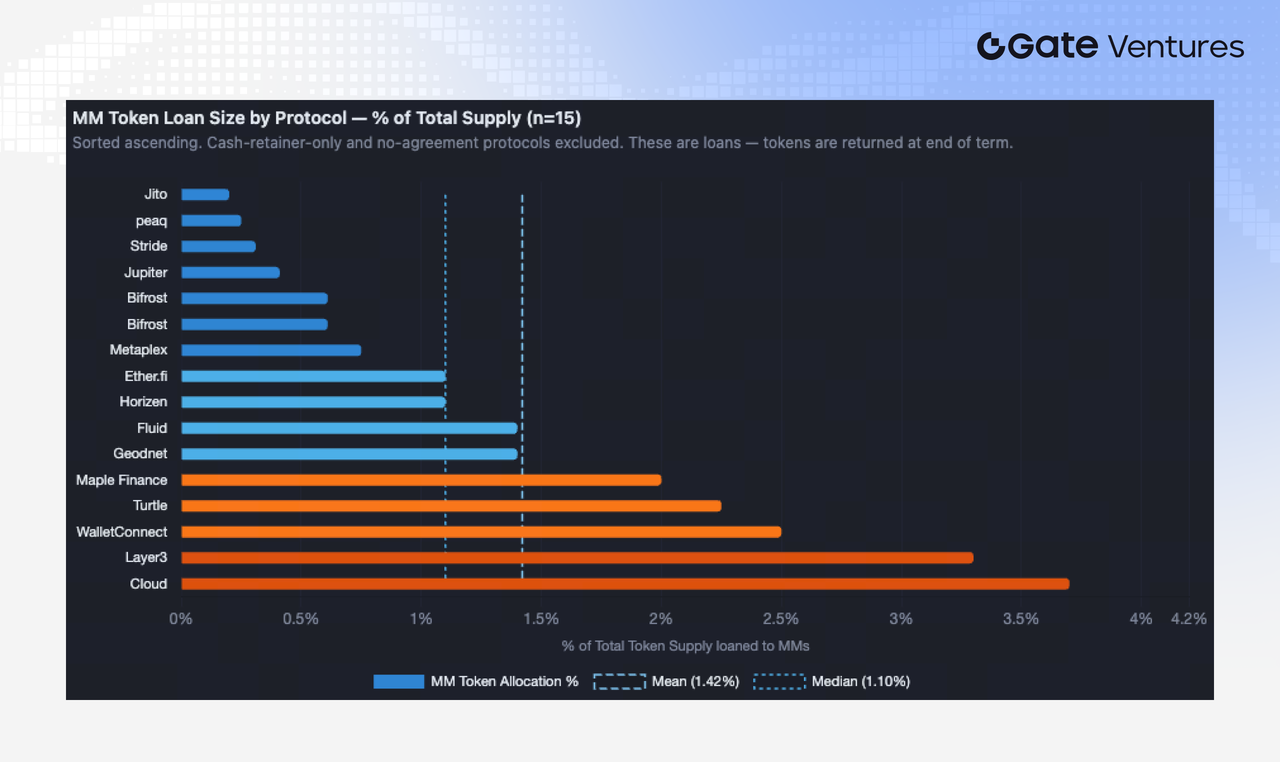
In the sample, market maker token loans range from 0.20% (Jito) to 3.70% (Cloud) of total supply—an 18x difference. The median is 1.10%, which can serve as a benchmark for typical market maker working capital needs.
The key trend: The larger and more liquid a protocol, the lower the percentage of tokens it needs to lend out. Jito (about $571 million FDV) and Jupiter (about $1 billion FDV) lent out only 0.20% and 0.41% of total supply, respectively, as their trading volumes already provide market makers with sufficient fee income and trading opportunities. In contrast, smaller protocols like Cloud, Layer3, and Turtle must lend a higher proportion to make market making economically attractive.
WalletConnect: One of the Highest Liquidity Infrastructure Costs
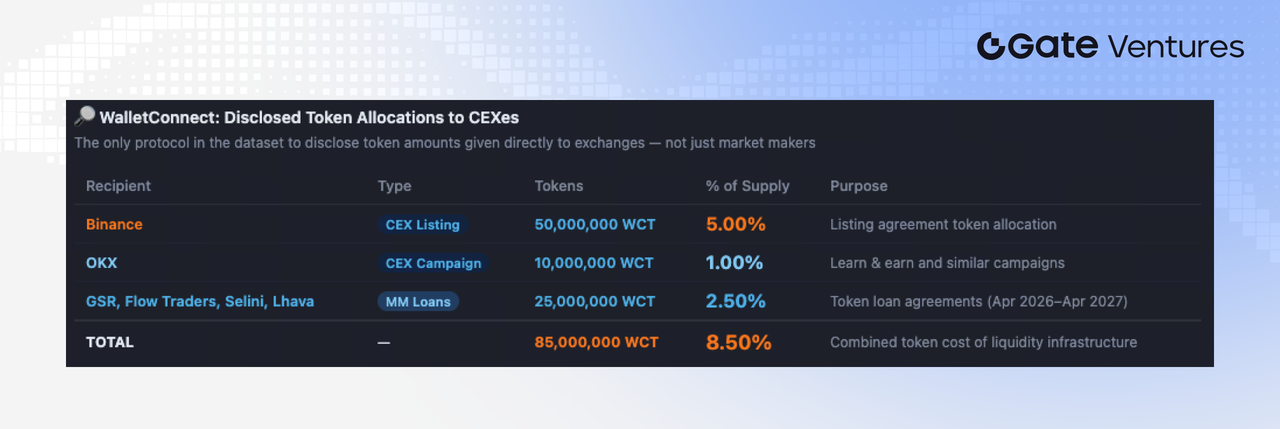
WalletConnect stands out in the sample. In addition to allocating about 2.5% of total supply to market makers, its B-2 filing disclosed token allocations for CEX listings:
Binance: 50 million WCT (about 5% of total supply)
OKX: 10 million WCT (about 1% of total supply)
Including market maker allocations, WalletConnect spent about 8.5% of total supply to secure liquidity and exchange listings.
More importantly, WalletConnect is the only protocol in the sample to explicitly disclose exchange token allocation arrangements. Such information has long been hidden in off-chain agreements, and its disclosure allows the market to quantify the actual cost projects pay for exchange listings and liquidity support. It also directly answers the long-standing question: "What does it really cost to list on an exchange?"
Does Full Disclosure Correlate with Higher FDV or TVL?
We further examined the relationship between disclosure gap count and FDV/TVL to see if greater transparency translates into higher valuations or asset scale. In theory, better-resourced and more prominent protocols should be better able to provide disclosures; at the same time, more complete disclosures might increase investor trust, leading to higher FDV or TVL.
However, the data does not support this assumption.
Gap Count vs. FDV
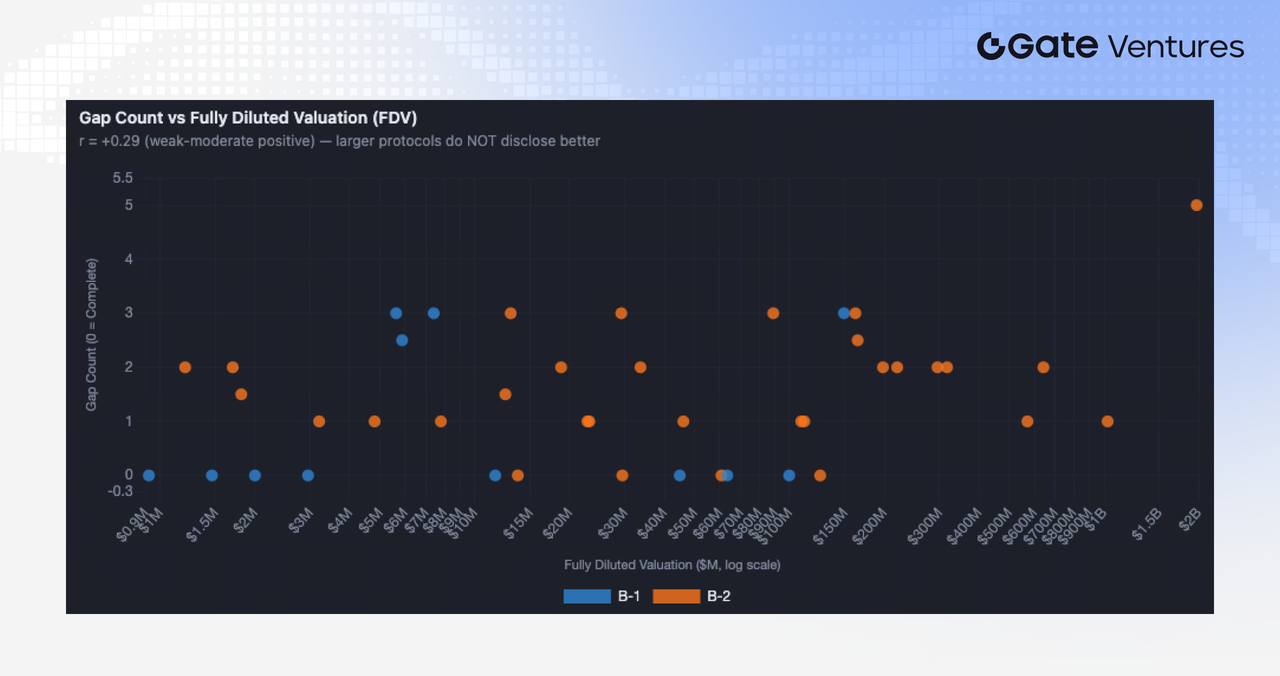
There is no significant relationship between gap count and FDV (r = +0.29, n = 43). The correlation is weak, and the sample size is limited. There is no evidence that "bigger protocols disclose better" or the opposite.
More importantly, the data does not show the expected negative correlation. If transparency were already priced in by the market, high-FDV projects should have fewer disclosure gaps. In reality, FDV and disclosure quality are largely uncorrelated. Outliers like Morpho (about $1.97 billion FDV, 5 disclosure gaps) may inflate the correlation. Excluding such outliers, the relationship would likely approach zero.
Jupiter (about $1.03 billion FDV, 1 disclosure gap) and Jito (about $571 million FDV, 1 disclosure gap) show that large protocols can achieve high-quality disclosure; Morpho demonstrates that high FDV does not guarantee transparency. Disclosure quality appears to be a governance choice, not a function of scale.
Gap Count vs. TVL
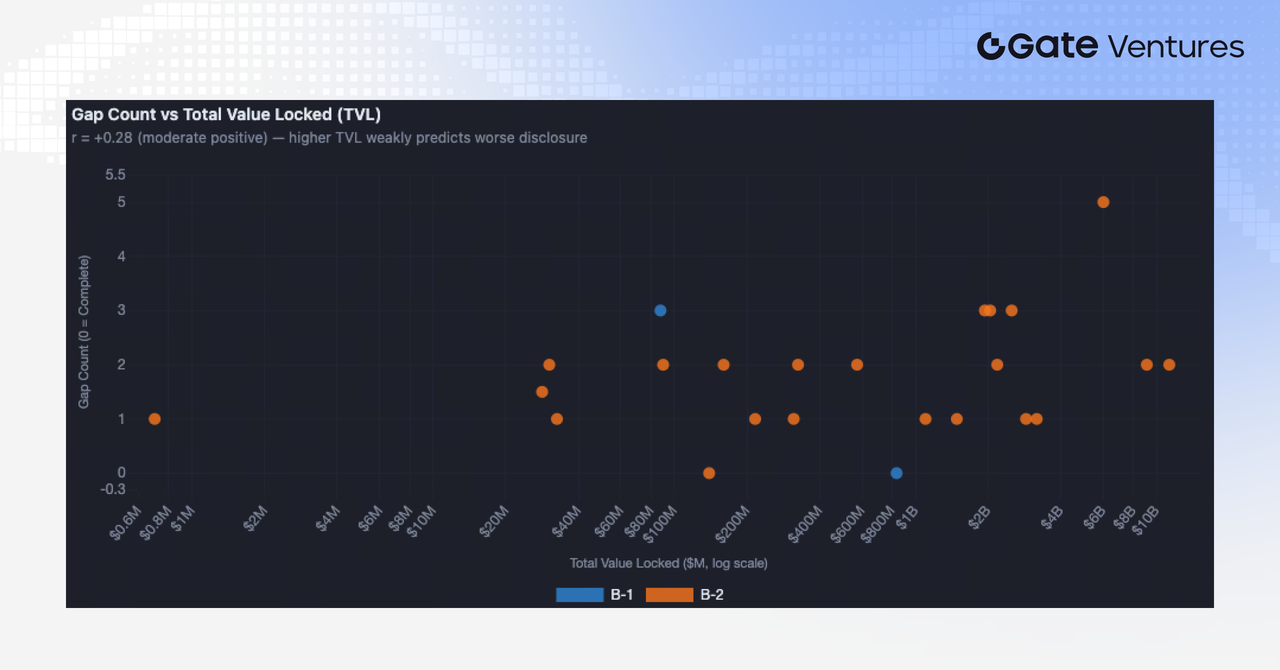
There is also no significant relationship between TVL and disclosure quality (r = +0.28, n = 23). With only 23 projects having available TVL data, this correlation is not statistically robust; such a low coefficient could be due to random fluctuations or a few outliers. Morpho (about $6 billion TVL, 5 disclosure gaps) and Spark (about $9.1 billion TVL, 2 gaps) may alone raise the correlation.
Current data does not support any conclusion that TVL influences disclosure behavior, positively or negatively. The real takeaway: high TVL does not equal high transparency.
Meteora (about $835 million TVL, 0 gaps) and Everclear (about $140 million TVL, 0 gaps) show that full disclosure is possible at scale; Morpho and Spark show that managing large user funds does not guarantee transparency.
Thus, the data does not support the idea that "more complete disclosure leads to higher FDV or TVL."
A more accurate conclusion: In the current sample, market size and disclosure quality are largely uncorrelated; transparency has not yet been consistently priced as a valuation or TVL premium.
Conclusion and Outlook
The Token Transparency Framework is still in its early adoption phase. Only 45 projects have participated so far—a tiny fraction of the total number of tokens in the crypto market. But TTF is moving in the right direction: making tokens more transparent as assets, reducing information black boxes, and especially lowering the information disadvantage for retail investors regarding token issuance, circulation, and value distribution.
Equity and Tokens
One of the most important TTF contributions is prompting projects to more clearly disclose the relationship between equity and tokens.
In the past, many protocols avoided profit sharing, revenue splits, or explicit value capture mechanisms to prevent tokens from being classified as securities, leading to a disconnect between token value and protocol value. As regulatory thinking shifts—exemplified by the CLARITY Act—market discussions are turning toward a more holistic evaluation of network decentralization, governance, disclosure quality, and token holder rights.
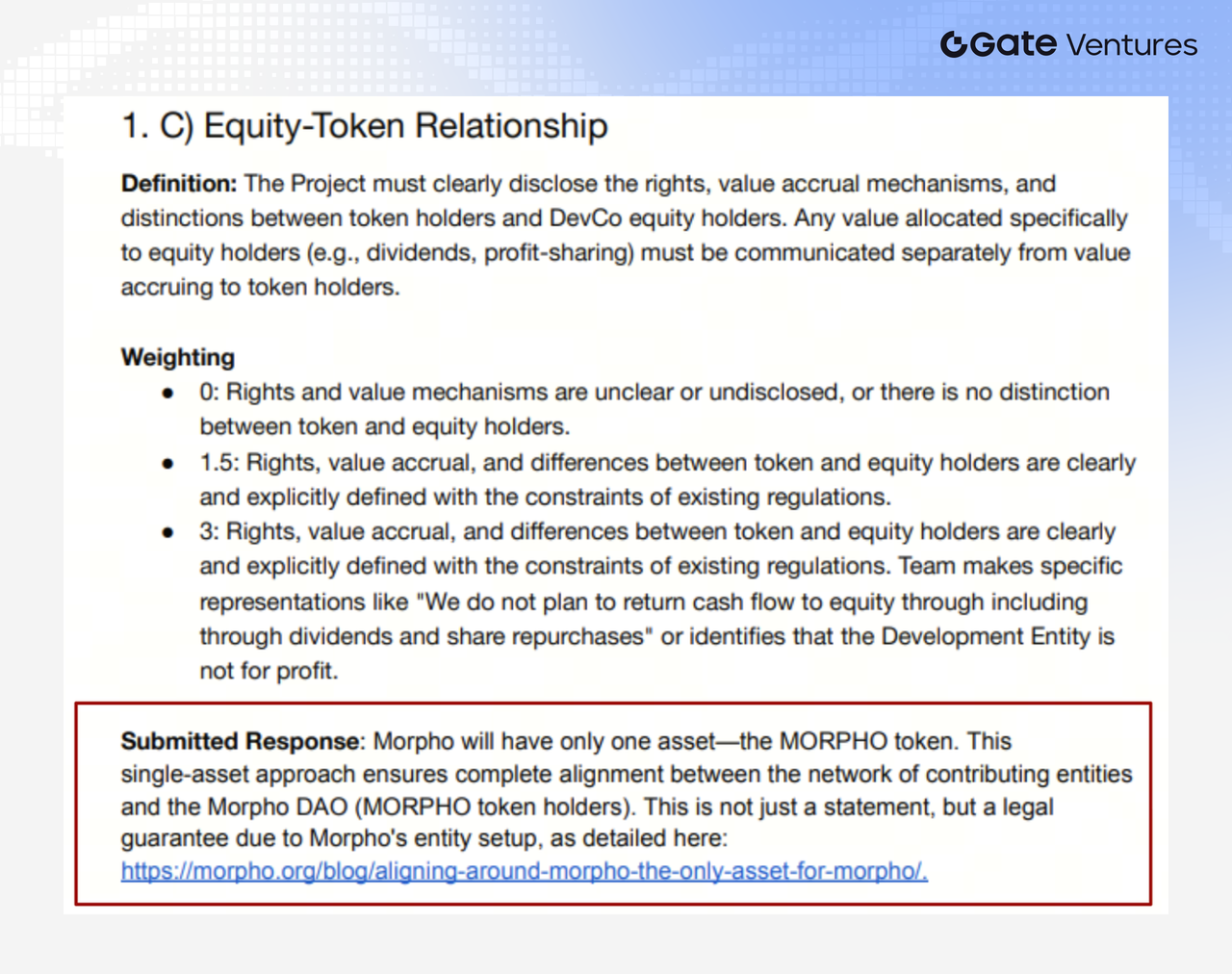
Projects like Morpho have already declared tokens as their sole core asset, rather than maintaining parallel equity and token value propositions. This could reopen the debate around token value capture and the concept of "token-as-asset."
Market Maker Loans and CEX Listings
Another key disclosure area is market maker loans and CEX listing arrangements.
Historically, these agreements were hidden in off-chain contracts. Retail investors only saw vague "liquidity allocations" or "market maker allocations" in tokenomics, without details on loan amounts, terms, strike prices, repayment mechanisms, or the real cost of exchange listings.
This information directly affects actual circulating supply, structural sell pressure, and price discovery after listing. It is also a major reason why many projects and retail investors face price pressure after TGE. By standardizing these disclosures, TTF is transforming the opaque world of market maker loans and listing fees into open variables that the market can analyze and price.
Thus, TTF is not just "one more disclosure document"—it is building a capital-market-grade information infrastructure for tokens. It fills longstanding gaps in disclosures about entity structure, token allocation, market making, exchange relationships, fund flows, and governance rights.
B-1 vs. Traditional S-1: The Disclosure Gap
Of course, TTF still differs significantly from the S-1 in terms of disclosure rigor and legal status.
First, financial disclosures.
S-1 filings typically run hundreds of pages, with audited financial statements, income statements, balance sheets, cash flow statements, executive compensation, shareholder structure, and detailed risk factors. In contrast, the B-1 filing is still much lighter and does not require full financial statements. For example, Meteora’s financial disclosure is closer to a brief statement than to the level of audited reporting required of public companies.
Second, legal framework. The S-1 is a statutory registration document filed with the SEC, carrying clear legal liability. False or misleading disclosures can trigger SEC enforcement, shareholder lawsuits, or securities fraud claims.
The B-1 filing, on the other hand, is a voluntary disclosure under the TTF/Blockworks transparency standard. It is not a statutory regulatory document and is not reviewed by the SEC. TTF is better described as a crypto-native market self-regulation standard, not a traditional securities registration regime.
Looking ahead, for frameworks like TTF to truly impact the market, they need to be integrated into trading and research infrastructure. For example, CEXs could require B-1/B-2 filings before listing tokens, or at least make them part of the listing review and investor information pages. Data platforms could, as Binance has done with Token Terminal, Token Unlocks, and RootData, combine TTF disclosures with project fundraising, team background, token unlocks, and on-chain data.
Over the long term, the B-1 filing could even become a quasi-mandatory standard for mainstream exchange listings, ensuring that before trading a token, the market can at least see the underlying entity structure, value attribution, and liquidity arrangements.
Appendix
https://blockworks.com/token-transparency


