


On June 26, 2026, the crypto market continued its downward trend. According to Gate market data, Bitcoin (BTC) was trading at $59,447.1, down 2.19% in 24 hours. Over the past seven days, Bitcoin has fallen 7.63%; over the past 30 days, 10.73%; and over the past year, 33.74%. Bitcoin’s market cap stands at approximately $1.19 trillion, with a dominance rate of 55.42%. During the session, it dipped to $58,106.9, briefly touching a low of around $58,030 before a minor rebound.
Ethereum weakened in tandem. According to Gate market data, Ethereum (ETH) was trading at $1,538.54, down 4.87% in 24 hours. Over the past seven days, it has fallen 7.38%; over the past 30 days, 20.92%; and over the past year, 31.14%. ETH’s market cap is approximately $185.676 billion, with a dominance rate of 7.19%. The intraday low reached $1,512.11. The ETH/BTC exchange rate continued to face pressure, hovering around 0.027.
Meanwhile, the S&P 500 closed at 7,358.22 points, while the Nasdaq Composite fell 0.43% to 25,476.63 points. The Crypto Fear & Greed Index dropped to 12, firmly in "Extreme Fear" territory.
Over the past 24 hours, more than 200,000 traders were liquidated across the market, with total liquidations totaling approximately $1.458 billion, of which long positions accounted for $1.16 billion. The quarterly expiration of approximately $10 billion in Bitcoin options further amplified market volatility. Sustained net outflows from Bitcoin ETFs and rising expectations of a Federal Reserve rate hike jointly weighed on risk assets.
This is not an isolated event. Since the start of 2026, Bitcoin has fallen more than 30%. The total crypto market cap has retreated significantly from its peak. During the same period, the stablecoin market cap reached a record high of approximately $314 billion to $322 billion; on-chain tokenized real-world asset (RWA) volume surged from around $5.4 billion at the beginning of 2025 to roughly $34 billion, a more than fivefold increase.
These data points point to a single conclusion: the era of single-asset allocation is over. High-net-worth investors no longer face the question of "whether to allocate," but rather "how to allocate systematically." Gate Wealth is the strategic solution that brings the traditional private banking service model into the crypto space. It marks Gate’s strategic upgrade from a digital asset trading platform to a global digital wealth management institution.

Why Has the Era of Single-Asset Allocation Ended?
Volatility divergence is the first signal. Bitcoin’s 90-day realized volatility remains high at 42%. On June 26, the intraday low reached $58,106.9. If the price falls further below the $58,000 support level, a large number of leveraged long positions will face liquidation risk. Liquidation volume across the market in the past 24 hours has reached $1.458 billion. For investors focused on wealth preservation, concentrating the majority of assets in a single high-volatility asset class essentially means taking on asymmetric risk exposure.
The macro interest rate environment is reshaping the pricing logic of all assets. On June 18, 2026, the Federal Reserve voted unanimously to keep the federal funds rate target range unchanged at 3.50% to 3.75%. The dot plot shows the median rate forecast for 2026 rising from 3.4% in March to 3.8% in June, shifting expectations from one rate cut to one rate hike within the year. Meanwhile, the 10-year US Treasury yield closed around 4.392% on June 24. A high-interest-rate environment means the anchoring effect of the risk-free rate is strengthening — cash and cash-equivalent assets become more attractive, while risk assets face persistent valuation pressure. With US inflation data showing resilience, the market expects the Fed to maintain a hawkish stance, and a stronger dollar further tightens liquidity for risk assets.
Cross-asset correlations are undergoing structural changes. The correlation between Bitcoin and tech stocks weakened in 2026 — Bitcoin fell over 30% year-to-date, while the Nasdaq, despite volatility, held up overall. Gold also fell during the same period, sliding to $3,989 per ounce on June 24. The traditional line between "safe-haven assets" and "risk assets" is blurring.
The data-driven conclusion: diversification is no longer an option; it’s a necessity.
A Three-Layer Asset Allocation Framework for Modern Wealth Management
Based on the macro judgment above, high-net-worth investors need to build a tiered framework for asset allocation. Gate Wealth’s asset allocation system is structured around this logic, covering three major directions: Web3 core assets, RWA compliant yield assets, and structured strategy tools.
Layer 1: Core Web3 Assets — Foundation Yields and Liquidity Anchors
This layer addresses the issue of "participating in digital economy growth." Core allocations include mainstream crypto assets like Bitcoin and Ethereum, as well as underlying yields from staking and lending protocols.
Bitcoin remains the most institutionally recognized digital asset in the current market environment. As of June 26, 2026, Bitcoin’s market cap was approximately $1.19 trillion, with a dominance rate of about 55.42%. Its leading position within the crypto asset class is unlikely to be shaken in the short term. The total net asset value of spot Bitcoin ETFs is approximately $73.87 billion, accounting for roughly 6% of Bitcoin’s total market cap.
Ethereum’s role is being reassessed. The ETH/BTC exchange rate continues to face pressure, reflecting the market’s repricing of the risk-reward ratio between the two assets — when risk aversion rises, capital tends to favor Bitcoin, the "digital gold." As of June 26, ETH’s market cap was approximately $185.676 billion, with a dominance rate of about 7.19%. Since June 1, Ethereum has fallen approximately 21%, dropping to a year-to-date low of $1,531.
At the underlying yield level, Gate Wealth’s flexible staking feature allows users to earn yields without locking up assets, covering mainstream tokens such as BTC, ETH, and GT. The system automatically snapshots holdings daily and calculates yields. Simultaneously, by integrating lending markets, structured derivatives, and on-chain native yields, it builds a comprehensive product matrix ranging from stable to high-yield.
Layer 2: RWA and Fixed Income Assets — Reducing Volatility, Enhancing Stability
This layer addresses the issue of "navigating cycles." When the crypto market experiences deep corrections, assets linked to the real economy can provide yield support and volatility buffers.
The explosive growth of on-chain tokenized RWAs is the most notable institutional trend from 2025 to 2026. As of mid-June 2026, on-chain RWA volume excluding stablecoins had climbed to approximately $34 billion, expanding more than fivefold from a base of about $5.4 billion in early 2025. The number of active tokenized RWAs grew by 589%. Tokenized US Treasuries and money market funds remain the largest category, with a size of approximately $17 billion, accounting for nearly 60% of the entire RWA market.
Within Gate Wealth’s product system, GUSD (Gate USD) is the core tool connecting traditional finance and the digital world. GUSD is an interest-bearing token certificate issued at a 1:1 ratio with USDT or USDC. Its yield comes from Gate ecosystem revenue, US Treasury RWA, and stablecoin-related asset returns. As a digital certificate backed by real-world assets (such as US Treasuries), GUSD offers an initial annual percentage yield (APY) of approximately 4.40%. When users allocate funds to GUSD, they essentially hold wealth management shares supported by real-world assets like US Treasuries.
This growth is not driven by speculation but by the combined forces of regulatory frameworks, infrastructure maturity, and institutional capital. For high-net-worth investors, RWA products like GUSD provide a channel to obtain traditional fixed income on-chain, without having to choose between crypto assets and traditional finance.
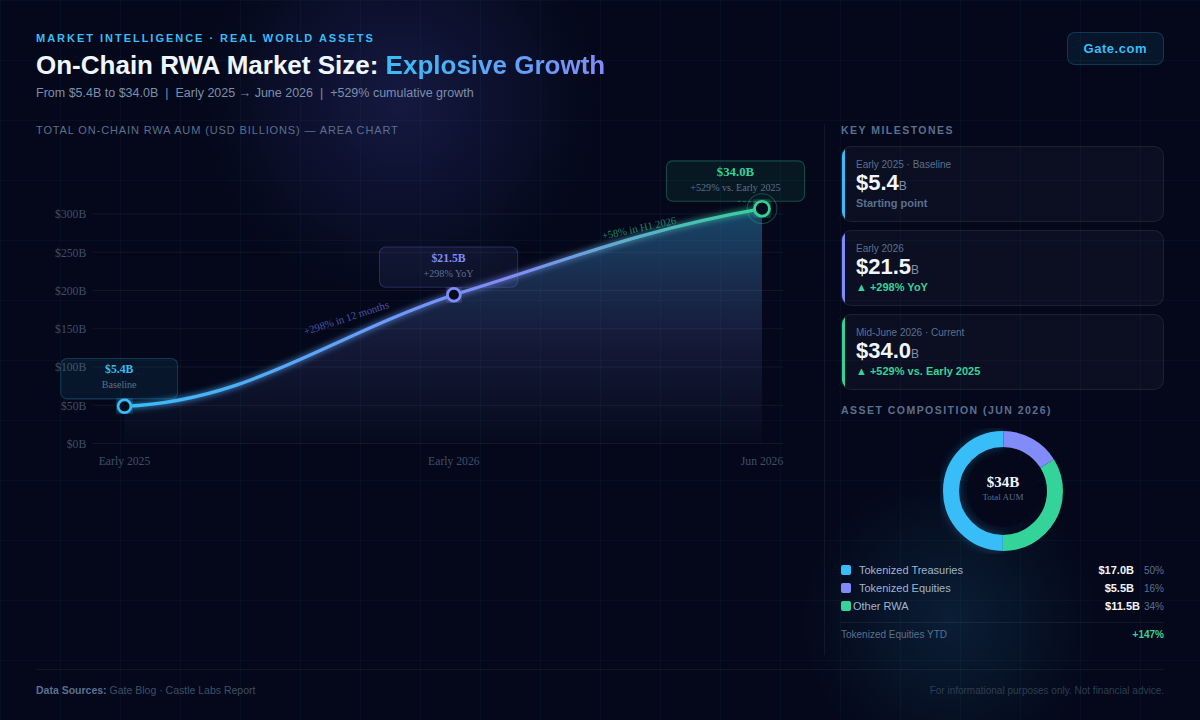
RWA track explosive growth trend chart
Layer 3: Structured Strategy Tools — Optimizing Risk-Return Profiles
This layer addresses the issue of "enhancing returns." On top of core assets and stable income assets, tools such as options strategies, dual-currency products, and range yield products optimize returns across different market cycles.
Dual-currency investment is a core tool within Gate Wealth’s structured product system. It is a structured wealth management product based on two cryptocurrencies (e.g., BTC and USDT). Users subscribe using one currency, and at maturity, the system automatically determines the repayment currency based on the settlement price relative to the target price. Essentially, investors sell short-term options through the platform, earning option premiums as income. The product features can be summarized as "interest-guaranteed but not principal-guaranteed" — users lock in the annual percentage rate (APR) at subscription, which is unaffected by subsequent market volatility. Dual-currency investment covers approximately 60 cryptocurrencies.
Range Yield (Shark Fin) is another principal-protected floating-yield product, where returns are positively correlated with the number of days the underlying asset price remains within a set range. The system observes the price at a fixed time daily during the observation period. Final yield = principal × (high annual rate × days within range + base annual rate × days outside range) / 365. Even if the price briefly breaks out of the range, the principal remains safe.
The logical progression of the three-layer framework is: Layer 1 provides growth potential, Layer 2 provides stability, and Layer 3 provides optimization space. Together, they form an allocation system that can maintain resilience across different macro scenarios.
The Breadth and Depth of Global Asset Allocation
Beyond the three-layer framework, high-net-worth investors must also consider the global dimension of asset allocation. The concentration risk of a single market, single currency, or single jurisdiction is just as concerning as concentration risk in a single asset class.
As of June 24, 2026, the S&P 500 closed at 7,358.22 points. While US equities have provided stable compound returns over the long term, their valuation levels and macro sensitivity in 2026 face dual tests from the interest rate environment and earnings growth. Extending allocations to global equity indices (e.g., via ETFs), commodities, foreign exchange markets, and fixed income markets in different countries can diversify risk across a broader range of asset classes.
Gate Wealth has a unique integration advantage in this regard. The platform has launched a TradFi trading API, enabling unified management of crypto assets and traditional assets (such as forex, precious metals, indices, and commodities) within a single account. Users no longer merely trade a single crypto asset; instead, they can allocate gold, crude oil, US equities, and crypto assets on the same platform. As of March 2026, Gate TradFi’s highest single-day CFD trading volume exceeded $20 billion.
Tokenized stocks are becoming an important trend connecting traditional equities with on-chain allocation. Since 2026, tokenized stocks have become one of the fastest-growing RWA sub-tracks, with growth exceeding 170%, significantly outpacing the approximately 60% growth rate of tokenized US Treasuries. The market cap of tokenized stocks jumped from $2.23 billion at the start of the year to $5.5 billion. This trend means that high-net-worth investors can hold Bitcoin, tokenized US Treasuries, and tokenized S&P 500 shares all in the same digital asset wallet.
Gate Wealth: A One-Stop Cross-Cycle Multi-Asset Management System
As the above framework moves from theory to practice, the core challenge lies in integration capability at the execution level. Gate Wealth is the global wealth management and private banking service system built precisely to address this pain point.

Source: Gate Wealth
Four Core Pillars of Capability
Security and Compliance Foundation. Gate Wealth holds trust and asset management licenses in multiple countries and employs a 100% transparent Proof of Reserves (PoR) mechanism. Gate Private Wealth Management has built an institutional-grade security architecture integrating multi-signature technology and Multi-Party Computation (MPC). The core tool, Gate Vault, deeply integrates multi-signature mechanisms with MPC technology. Clients can set transfer rules such as "2-of-3," "3-of-5," or even "4-of-7" based on internal governance needs. MPC technology splits the full private key into multiple independent shards, stored respectively on the user’s device, Gate’s secure servers, and independent nodes. All custodied assets of private wealth clients are strictly segregated from the platform’s operating funds. Gate entities have obtained authorization as a Digital Asset Service Provider (CASP) in Malta, registration as a Digital Currency Exchange Service Provider in Australia, a Virtual Asset Service Provider (VASP) license in Dubai, and approval for Digital Asset Business in the Bahamas.
24/7 Dedicated Custom Service. Gate Private Wealth Management is not merely an account upgrade; it is a comprehensive system integrating a dedicated advisor team, institutional-grade security architecture, and customized investment strategies. Professional account managers and research teams provide 7×24 global response. Entering 2026, Gate Private Wealth Management’s benefits system has evolved into a complete matrix covering trading, wealth management, and ecosystem empowerment. Private wealth clients enjoy institutional-level fees equivalent to VIP 15+, with spot maker fees as low as 0.000%. Clients can apply for customized lending services, supporting over 800 borrowable cryptocurrencies and more than 250 types of collateral assets. Loan interest rates can be negotiated individually based on overall asset size. Private wealth clients also have access to yield enhancement channels parallel to VIP levels: VIP 5–VIP 7 enjoy a stable USDT wealth management APY of 2.8% (regular users: 2.0%); VIP 8–VIP 11 rises to 3.2%; VIP 12+ exclusively enjoy a 4.0% APY.
Global Liquidity Network. Gate Wealth deeply integrates traditional multinational banking networks and top-tier crypto market makers, offering instant fiat-to-crypto conversion channels with zero slippage for large amounts. Leveraging Gate’s deep liquidity pool and a globally compliant OTC desk network, it provides high-net-worth users with channels for large fund transfers and financial leverage. Supports deep trading for over 50 fiat currencies and hundreds of crypto assets.
Asset Panorama Dashboard. One account, full control over crypto assets, fiat currencies, and structured derivatives. Gate Wealth provides a unified asset management view, enabling clients to manage crypto assets, fiat assets, and structured financial products within a single system for overall allocation and real-time management.
Scarce Assets and Exclusive Investment Channels
Gate Wealth unlocks global high-potential, high-barrier early-stage quality equity and digital financial assets for high-net-worth clients. Gate IPOs Tech Unicorn Pre-IPO Equity channel offers exclusive equity subscription opportunities only to Gate Wealth distinguished clients, enabling deep participation in frontier hard-tech sectors such as artificial intelligence (AI), commercial aerospace, and semiconductors. Additionally, Gate regularly designs non-public events for private wealth clients: the minimum investment for star quantitative private placement products is reduced from 1,000,000 USDT to 500,000 USDT; private wealth clients only need to maintain a minimum trading volume to share a token prize pool worth 30,000 USDT; GT holders with large positions enjoy priority reservation rights for Launchpad quotas, with winning rates more than 300% higher than regular users.
Family Trust and Wealth Inheritance
Addressing longer-term wealth management needs, Gate Wealth extends its services to family wealth inheritance and cross-generational planning. Digital asset inheritance planning faces unique challenges, including private key security management, multi-jurisdictional legal applicability, and tax optimization. Gate Private Wealth Management provides systematic family inheritance services, covering trust structure design, tax optimization strategies, and multi-generational education. Specifically for token assets held by project founders and early investors, the service offers dedicated liquidity unlocking plans and tax planning solutions. The service also includes a cryptocurrency education program for future generations, helping family members understand the characteristics and management principles of digital assets.
GT (Gate Token) plays a core role in the Gate Wealth system as a tool for expanding allocation limits and enhancing yields. Clients holding GT not only enjoy fee discounts but also receive HODLer airdrop bonuses and higher actual subscription limits when applying for high-yield exclusive wealth management products.
Conclusion
The market data from June 26, 2026 provides a clear snapshot: Bitcoin at $59,447.1, intraday low of $58,106.9, Fear & Greed Index at 12; Ethereum at $1,538.54, intraday low of $1,512.11; Fed rate at 3.50%–3.75%; 10-year US Treasury yield at 4.392%; RWA volume exceeding $34 billion. Over the past 24 hours, $1.458 billion in liquidations globally, affecting over 200,000 traders.
For high-net-worth investors, the question is no longer "Should I buy Bitcoin or US Treasuries?" but "How can I make Bitcoin, Treasuries, RWAs, global equities, and structured strategies each play their role within a unified framework?" What Gate Wealth provides is exactly that — a complete infrastructure from asset allocation to wealth inheritance, turning cross-cycle, multi-asset, global wealth management from concept into executable reality.
Gate Private Wealth Management services target four groups: high-net-worth individual investors, institutional investors, family offices, and Web3 elites and entrepreneurs. As the global financial system accelerates its evolution toward digitization and institutionalization, wealth management is shifting from single-asset allocation to cross-market, multi-asset, and full-lifecycle integrated management. In this process, investors who are the first to establish systematic allocation frameworks will be better positioned to achieve stable wealth growth and intergenerational inheritance amid complex macro cycles.
FAQ
Q: How should high-net-worth investors determine allocation ratios for the three layers?
A: Allocation ratios depend on the investor’s risk tolerance, investment horizon, and cash flow needs. Generally, the ratio of core Web3 assets should match the investor’s long-term confidence in the digital economy; the ratio of RWAs and fixed-income assets should be dynamically adjusted based on judgments about the macro interest rate environment; structured strategy tools should be limited to 10%–30% of total assets. Gate Wealth’s research team provides institutional-grade allocation recommendations and portfolio rebalancing support, incorporating market cycles, macro conditions, and client risk preferences.
Q: What is the core difference between GUSD and regular stablecoins?
A: GUSD (Gate USD) is an interest-bearing token certificate issued at a 1:1 ratio with USDT or USDC. Unlike regular stablecoins, GUSD’s yield derives from Gate ecosystem revenue, US Treasury RWAs, and stablecoin-related asset returns. As a digital certificate backed by real-world assets (such as US Treasuries), GUSD offers an APY of approximately 4.40% and supports flexible redemption. As of June 2026, tokenized US Treasuries have a size of about $17 billion, and GUSD is positioned within this rapidly growing track.
Q: How does Gate Wealth’s private banking service differ from traditional private banking?
A: Gate Wealth’s core differentiator is its dual capability to connect Web3 and traditional finance simultaneously. Traditional private banks cannot offer direct custody and execution for crypto assets, while pure crypto platforms cannot access traditional financial tools like tokenized US Treasuries, global equity ETFs, and family trusts. Through a unified asset management view and cross-asset liquidity network, Gate Wealth enables clients to complete full-category allocation — from Bitcoin to Treasuries, from RWAs to global equities — within a single system. Additionally, Gate has launched a TradFi trading API, enabling unified management of crypto and traditional assets in one account.
Q: What are the entry barriers for Gate Wealth?
A: Gate Private Wealth Management has strict access criteria, targeting four groups: high-net-worth individual investors, institutional investors (including investment funds, asset management companies, etc.), family offices, and Web3 elites and entrepreneurs. Eligible users can apply through the dedicated private wealth page on Gate’s official website and enter the exclusive service system after qualification review.
Q: How often should an asset allocation portfolio be rebalanced?
A: Rebalancing frequency depends on market volatility and the degree to which asset prices deviate from target weights. Generally, a systematic review is recommended quarterly, with ad-hoc assessments when a single asset’s price moves more than 20% in either direction. Gate Wealth’s research team provides dynamic asset allocation recommendations and portfolio rebalancing support based on macro cycle analysis and asset correlation research. Given the heightened market volatility in 2026, the frequency of dynamic rebalancing may need to be increased accordingly.


