Anonymity vs. Pseudonymity: Key Differences Explained
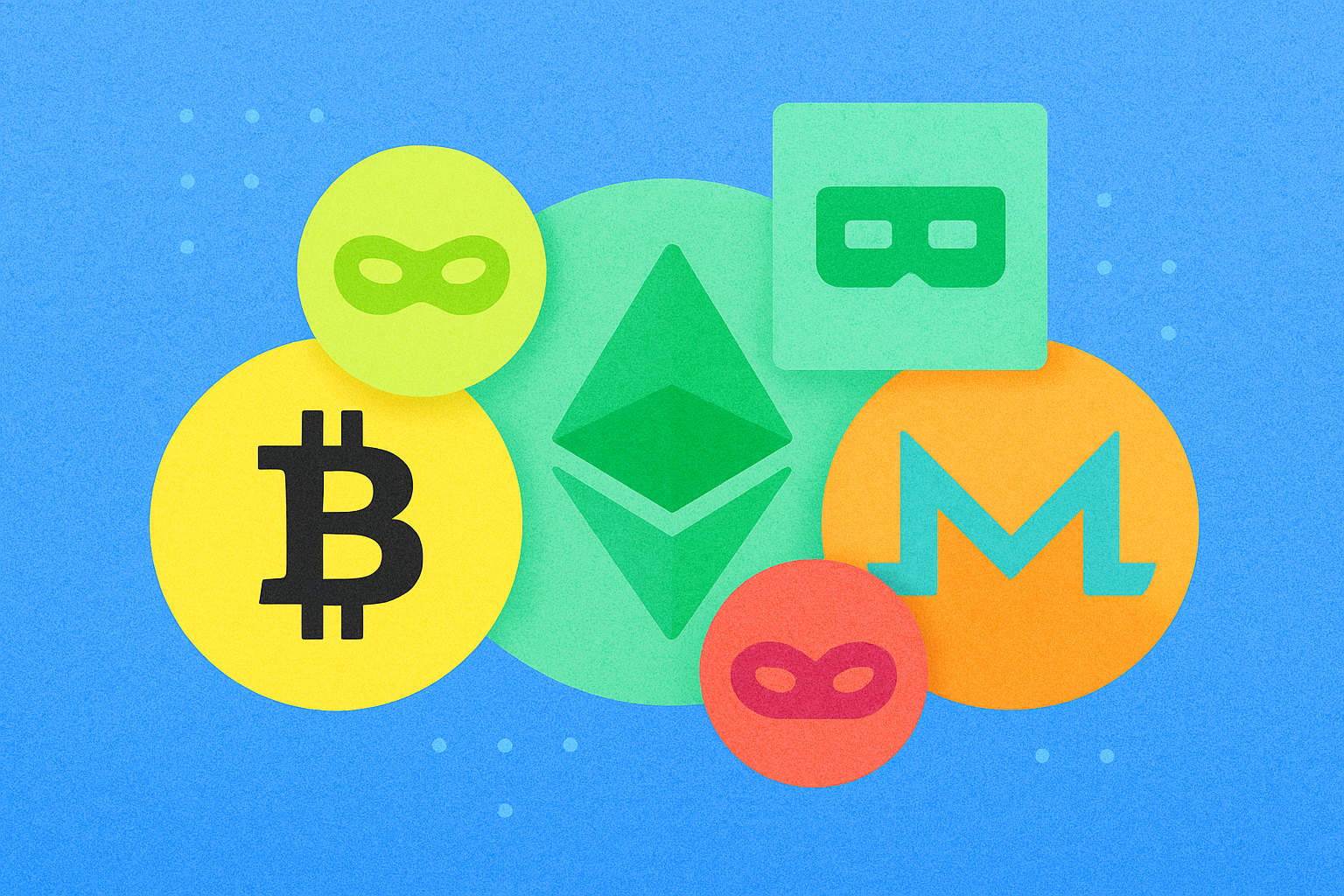
What Are Pseudonymity and Anonymity?
Everyone values privacy. Whether interacting on social media, shopping online, or conducting cryptocurrency transactions, we all sometimes prefer to avoid public scrutiny. Pseudonymity and anonymity are two powerful privacy mechanisms, each suited for different use cases.
Online anonymity means your identity is completely hidden; online pseudonymity involves a protected identity that can potentially be traced in certain contexts. The differences go deeper, though. Each approach has unique implications for privacy, security, and accountability within digital ecosystems, especially in blockchain and cryptocurrency environments.
Understanding Pseudonymity
Pseudonymity is simple: it's a privacy safeguard that lets you conceal your identity behind an alias or pseudonym. A pseudonym serves as a consistent mask, enabling individuals or activities to avoid revealing their true identities. Since a real person is still behind the pseudonym, pseudonymity balances accountability and privacy.
In blockchain, pseudonymity allows users to participate in decentralized ecosystems without directly exposing personal details. This is essential for privacy, while also preserving a verifiable digital trail to support transparency and network security.
What Are the Advantages of Pseudonymity?
Enhanced Internet Privacy
Pseudonyms allow users to transact more freely and securely. In cryptocurrency, pseudonyms are represented by cryptographic addresses, which identify users across blockchain explorers. These addresses aren’t directly linked to real names, making them highly effective at protecting privacy and minimizing data concerns.
This system adds another layer of protection: while blockchain transactions are public, the true identity of the address owner remains hidden. This enables transaction transparency without compromising personal privacy.
Encouraging Active Participation
Many people contribute actively to crypto communities and Discord channels dedicated to specific projects. By using pseudonyms, participation rises significantly, as open-source projects benefit from contributions by individuals who prefer not to participate publicly under their real names.
Pseudonymity creates a more inclusive environment, allowing people to share ideas, provide feedback, and help develop projects without fearing social or professional repercussions from public association with a particular crypto initiative.
Censorship Resistance
Pseudonyms are central to advancing decentralization. Without centralized control or clear individual presence due to pseudonym use, it’s easier to avoid censorship and restrictions on free expression.
Globally, some governments restrict access to certain information or financial services. Pseudonymity lets individuals continue participating in the global digital economy without fear of repression or discrimination.
What Are the Concerns?
Potential for Illegal Activity
Pseudonymous entities—especially in crypto—are more vulnerable to misuse for money laundering and other illegal activity. The ability to transact without revealing one’s true identity can be exploited by criminals to conceal illicit funds or conduct unlawful transactions.
Though blockchain is inherently transparent, pseudonymity can make it harder for law enforcement to identify and apprehend financial criminals—especially when extra techniques like mixing services or privacy coins are used.
Lack of Trust
While pseudonymity protects privacy, new transaction partners may struggle to trust the credibility of the counterparty. Without clear identity verification, building reputation and trust in business deals can be difficult.
This is especially problematic for high-value transactions or long-term partnerships, where parties may hesitate to engage with entities whose identities cannot be verified.
Legal and Regulatory Concerns
The global regulatory landscape depends on identity verification, particularly KYC (Know Your Customer)—which runs counter to pseudonymity. Regulators working to address AML (Anti-Money Laundering) and enforce tax and KYC standards are reluctant to adopt systems supporting full pseudonymity.
Many nations are developing rules requiring crypto exchanges and service providers to identify users, directly conflicting with the pseudonymity principle that underpins many blockchain projects.
Cryptocurrency Examples of Pseudonymity
Bitcoin and Ethereum have long embraced pseudonymity. Bitcoin transactions are linked to cryptographically obfuscated addresses, not to real-world identities. A more technical example is Polygon’s zkID—a feature that uses zero-knowledge proofs to privatize digital identity.
These projects show how pseudonymity can be implemented at scale, maintaining both blockchain functionality and security.
Understanding Anonymity
If pseudonymity is like wearing a mask, anonymity is like wearing layer upon layer of masks, making it almost impossible to link a digital footprint to a real-world identity.
In crypto and blockchain, anonymity requires advanced cryptographic tools to obscure every aspect of a transaction—sender and receiver details, amounts, user data, and more. This degree of privacy far exceeds what pseudonymity offers and demands more complex technology.
True blockchain anonymity leverages cryptographic techniques such as ring signatures, stealth addresses, and zero-knowledge proofs to ensure no part of a transaction can be traced back to an actual user identity.
Why Is Anonymity Needed?
Maximum Privacy
Anonymity delivers the highest level of privacy in digital transactions. This is especially useful for confidential donations or supporting causes without revealing one’s identity.
For example, supporting human rights organizations in repressive countries—full anonymity can mean the difference between safety and risk for donors and recipients.
Protecting Whistleblowers
Anonymity in digital operations protects activists and whistleblowers, allowing them to expose unethical practices without fear of retaliation. Those revealing corruption or rights violations often need strong identity protection to avoid threats to their safety.
Anonymity gives these courageous individuals the shield they need to act on conscience without risking serious personal consequences.
Handling Sensitive Transactions
If exposed, certain digital transactions could reveal sensitive details about companies or organizations. Complete anonymity is desired here to protect digital footprints, sensitive information, and user data.
Companies making large or strategic transactions may want to keep details secret from competitors or the public, and anonymity provides the needed protection.
What Is MakerDAO Doing?
MakerDAO, a leading DeFi collective, is considering a voting proposal to conceal identities for privacy protection. If passed, anonymity could become a DeFi standard rather than just an option.
This shows how top DeFi projects are exploring new ways to strengthen user privacy while upholding the transparency required for decentralized governance.
Are There Limitations to Anonymity?
Higher Abuse Potential
Anonymity can be exploited by bad actors to hide their identities completely, expanding the potential for misconduct. There is no way to track online activity—which may conflict with global data protection standards.
The inability to trace illegal transactions or identify criminals makes full anonymity controversial in regulatory and law enforcement circles.
Harder to Implement
Pseudonymity is common in blockchain, but true anonymity is much harder to implement properly. If not perfectly executed, advanced reverse engineering can de-anonymize transactions and expose user identities.
Effective anonymity requires deep cryptography and network security expertise, plus ongoing vigilance to address evolving threats.
Which Cryptocurrency Projects Focus on Anonymity?
- Monero: Uses stealth addresses and ring signatures to fully obscure transaction details.
- PIVX: Uses zK-SNARK protocols to protect transactions from external analysis.
- ZCoin: Implements a specialized ZeroCoin protocol and Merkle Tree Proofs for anonymity.
- ZCash: Focuses on transaction protection driven by zK-SNARK.
Other projects like Komodo, Verge, and more also offer technology and implementations to promote anonymity in their crypto ecosystems.
Anonymity vs. Pseudonymity: Key Differences
| Aspect | Anonymity | Pseudonymity |
|---|---|---|
| Privacy Level | High | Low to moderate |
| Security | Ideal for sensitive data or confidential transactions | Less secure for personal information |
| Traceability | Generally little or none | Greater potential for identification |
| Common Use | Protects activists and whistleblowers | Common for authors and artists |
Communication Needs
Whale accounts—unique cryptographic addresses frequently seen on blockchain explorers moving large sums—are pseudonymous entities that help build reputations in crypto without revealing personal details. Full anonymity prevents this, as there’s no way to develop a consistent track record or reputation.
The ability to build reputation while maintaining privacy is a core advantage of pseudonymity over full anonymity in business and crypto communities.
Accountability
Pseudonymity allows for accountability. Addresses not tied to real-world identities can still establish a presence in crypto and be held responsible for actions on the blockchain. With full anonymity, there’s no accountability since transactions can’t be linked to any entity.
This accountability is essential for a healthy ecosystem, enabling bad behavior to be identified and addressed, even if real identities stay hidden.
Security, Privacy, and Differences
Both anonymity and pseudonymity add privacy layers; anonymity, however, is more thorough in securing identities. In crypto, where immutability matters, pseudonymity still allows some traceability if proper on-chain forensics are used.
This distinction is vital when weighing maximum privacy against the ability to verify transactions or build ecosystem trust.
User Experience
Pseudonymity is one reason the crypto world remains somewhat traceable. From dashboards to account holders and exchange flows, pseudonymity enables credible on-chain analysis, helping analysts track tools, resources, and fund movements. Full anonymity makes this impossible.
The ability to analyze market trends, detect manipulation, and understand the ecosystem’s dynamics depends on the transparency pseudonymity provides.
Why Pseudonymous Entities Matter: Real-World Examples
While anonymity is desirable, in commercial crypto, pseudonymity strikes the optimal balance between accountability and privacy—making it better for broad adoption.
Privacy Takes Center Stage
Bitcoin employs a pseudonymous model for transactions. While some tracking is possible, BTC addresses are essentially obfuscated and suitable for routine transactions without directly exposing user identities.
This approach has proven effective, offering ample privacy for most use cases while maintaining the transparency required for network security.
DeFi Participation
Pseudonymous identities make it easier for people to engage in specialized DeFi activities. Whether opening lending positions, swapping, or pursuing yield farming, pseudonymity via protected addresses ensures privacy and the potential for passive income.
The DeFi ecosystem relies on pseudonymity to enable global participation without geographic or regulatory barriers tied to identity.
NFT Engagement
Obfuscated addresses help NFT creators move their work. From hosting to discreetly marketing NFTs, pseudonyms are a common and valued strategy for going public without exposing real identities.
Pseudonymous addresses can even be integrated with smart contracts to route passive royalties directly to creators’ wallets—something full anonymity cannot achieve, as there’d be no consistent royalty recipient.
Satoshi Nakamoto—the name behind Bitcoin—is also a pseudonym, with the true identity remaining a mystery.
The Rise of Pseudonymous Platforms
Pseudonymity is no longer a luxury; in modern blockchain, it’s a foundational privacy tool for both established and emerging projects.
Decentralized Social Media
Projects like Lens Protocol, Mastodon, Damus, and BitClout leverage pseudonymity to build anti-censorship platforms. These platforms promote free expression and user privacy in decentralized social environments.
They offer alternatives to traditional social media, which often monetize user data, providing individuals with greater control over their information.
Specialized Blockchains
Pseudonymity is becoming standard for new blockchains and projects. StealthEX, for example, enables non-KYC registration for asset swaps, allowing users to transact without identity disclosure.
Such projects demonstrate strong demand for services that respect privacy while providing full crypto transaction functionality.
As DeFi and NFT boomed in 2021, the next bull market may focus on decentralized social platforms and identity-centric services. The growth of AI-driven Discord groups, subreddits, and more has spurred a new wave of pseudonymity, helping users balance privacy with interaction.
The Future of Privacy Is Here
The debate between anonymity and pseudonymity will persist in the privacy-driven crypto space. While many view anonymity as sacred, pseudonymity is often more practical—and sometimes preferable—in today’s digital world.
Advances like zero-knowledge proofs continue to push boundaries and enable new pseudonymity-focused projects, though concerns about the misuse of anonymity remain. Ultimately, clearer regulation is needed to define how pseudonymity and anonymity will evolve in a decentralized future.
The future likely holds hybrid solutions: pseudonymity as the standard for most transactions and interactions, with full anonymity available for special cases needing maximum privacy. Striking the right balance between privacy, security, and regulatory compliance will remain a major challenge for the blockchain and crypto industry.
FAQ
What’s the core difference between Anonymity and Pseudonymity?
Anonymity completely hides identity, making tracing impossible. Pseudonymity replaces real names with aliases, but personal identification is still possible—pseudonymous info is still considered personal data.
Is full anonymity or pseudonymity safer online?
Full anonymity is safer, as it eliminates all traces of personal info; pseudonymity only swaps identities without fully removing the risk of identification.
When should I choose anonymity vs. an alias?
Choose anonymity for total identity concealment and maximum protection. Use an alias when you want partial privacy and a more flexible personal presence.
Can aliases be traced to real identities? What’s the risk?
Yes, aliases can be traced through data analysis, digital footprints, or user errors. Risks include identity theft, fraud, and privacy breaches if personal info leaks.
How are anonymity and pseudonymity used in social media, forums, and crypto?
Anonymity hides identity completely via technologies like zero-knowledge proofs and mixers. Pseudonymity relies on traceable aliases that don’t directly reveal real identities. In crypto, anonymity uses privacy protocols, while pseudonymity uses public addresses not linked to usernames.
What’s the legal difference between anonymity and pseudonymity?
Anonymity removes all personal data, while pseudonymity substitutes real info with an alias that can’t be directly identified but may be traced indirectly. Legally, pseudonymous data is still personal data; anonymous data is not.
How can pseudonyms stay credible and traceable while protecting privacy?
Use strict access controls and end-to-end encryption, keep identity mapping separate, maintain transparent audit logs, and clarify data processing agreements. Real identities should only be recoverable by authorities through rigorous verification, balancing user privacy with accountability.
What are the pros and cons of fully anonymous communication vs. pseudonymous accounts?
Anonymous communication offers maximum privacy but is difficult to manage and open to abuse. Pseudonymous accounts balance privacy and accountability but may be re-identified. Anonymity is better for whistleblowers; pseudonymity is more practical for verified identities.
Share
Content
How to Buy Cryptocurrency


Trending Cryptocurrencies



XZXX: A Comprehensive Guide to the BRC-20 Meme Token in 2025

What Is a Phantom Wallet: A Guide for Solana Users in 2025

Ethereum 2.0 in 2025: Staking, Scalability, and Environmental Impact
2025 Layer-2 Solution: Ethereum Scalability and Web3 Performance Optimization Guide

What is BOOP: Understanding the Web3 Token in 2025

Altcoin Season Index 2025: How to Use and Invest in Web3
7 Best Tron Wallets for Storing TRX

What is INFRA: A Comprehensive Guide to Infrastructure as a Service and Its Impact on Modern Business

What is DYP: A Comprehensive Guide to Understanding Decentralized Yield Protocols

2026 MLP Price Prediction: Expert Analysis and Market Forecast for Midstream Energy Infrastructure Growth

What is CRE: A Comprehensive Guide to Commercial Real Estate Investment and Development