March 2026 Metal Market Outlook: Valuation Swings Amid Geopolitical Shocks
As of March 2026, global metals markets are undergoing a period of extreme volatility. Precious metals, led by gold and silver, have seen sharp reversals after reaching record highs. Industrial metals like copper, aluminum, and tin are experiencing wild price swings due to surging costs and supply disruptions. Several recent key events are driving this heightened turbulence:
1. Geopolitical Tensions Escalate from “Underlying Risks” to “Material Shock”
From late February to early March 2026, escalating conflict in the Middle East and the announced closure of the Strait of Hormuz brought global shipping and energy trade nearly to a halt. This immediately triggered risk-off sentiment across markets:
- Gold and Silver: Spot gold surged past $5,400 per ounce, while silver’s year-to-date gains hit 180%. However, as multiple stock markets imposed circuit breakers or suspended trading, liquidity crunches led to frequent profit-taking at highs, resulting in the most pronounced precious metals volatility in recent years.
2. Cost Shock in the “Energy-Metals” Supply Chain
The pricing dynamics for industrial metals have shifted from demand-driven to supply-side cost surges.
- Aluminum/Copper: Soaring energy prices fueled by geopolitical turmoil have sharply increased the cost base for energy-intensive metals like electrolytic aluminum (for example, with prebaked anode prices spiking).
- Minor Metals (Tin/Tungsten): Tin prices have recently “broken through major resistance,” and tungsten product prices are up more than 40% from early last year. The industry faces severe imbalances: upstream miners profit from resource scarcity, while mid- and downstream firms are forced to cut output due to relentless “daily price changes” in procurement.
3. Global Growth Expectations Diverge Sharply
Market views on the 2026 economic outlook have become highly polarized. On one side, long-term demand for copper, aluminum, and lithium is anchored by AI infrastructure and the green energy transition. On the other, persistent inflation from geopolitical shocks is forcing the Federal Reserve to maintain high interest rates, sending capital swinging between a “resource supercycle” and “recession risk.”
Shifting Trading Needs in a Volatile Market
In fast-moving markets, traditional “buy-and-hold” strategies are increasingly inadequate: trading hours are limited, position adjustments are inflexible, and responding to real-time conditions is difficult. For most short-term and medium- to long-term traders, such volatility demands “rapid entry and exit,” “effective hedging,” and “risk control.” As a result, there is surging demand for flexible, multi-session, low-barrier trading solutions—fueling growth for derivatives trading platforms.
How Gate’s Metals Section Boosts Trading Efficiency
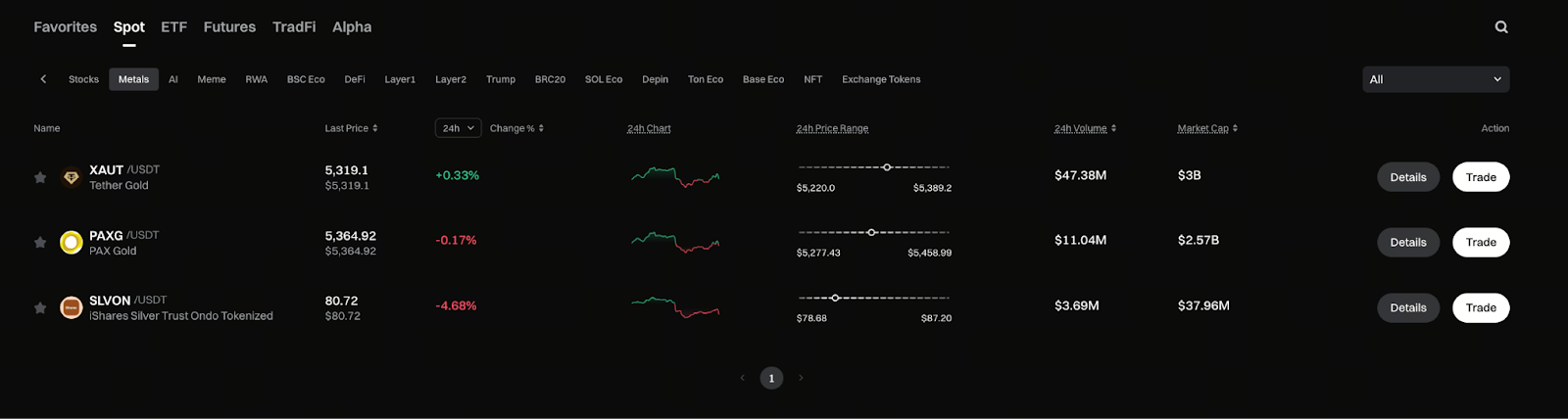
Chart: https://www.gate.com/price/category-metals
To address rising volatility in the metals market, Gate has launched a dedicated Metals Section, integrating gold, silver, and other assets as perpetual contracts within its trading system. This provides:
- Freedom from traditional market hour restrictions—users can trade 24/7;
- Fast asset switching, position adjustment, and strategy execution within a unified interface and account structure;
- USDT-settled contracts, reducing settlement complexity and boosting capital efficiency.
This model preserves trading opportunities from price swings while streamlining strategy execution.
Key Advantages of Gate’s Metals Section
- 24/7 Trading: The platform enables round-the-clock trading, so users can enter and exit positions during any market session and respond to fast-changing conditions.
- Unified Risk and Settlement System: Gate’s robust risk controls, margin system, and clearing logic provide a stable, secure trading environment even in volatile markets.
- Centralized Multi-Asset Management: Beyond gold and silver, the section aggregates multiple metal assets, letting users allocate and arbitrage across assets within a single system.
- Simplified User Experience: A unified account system and clear workflows lower the learning curve, enhancing both efficiency and speed of execution.
Practical Trading Strategy Guidance
In volatile markets, effective strategies must balance risk management with opportunity capture:
- Conservative: Use low leverage, strict stop-losses, and staggered position building.
- Trend Following: Trade breakouts, add to positions in increments, and use trailing stops to lock in gains.
- Hedging: Use metal contracts to hedge risks in your portfolio, reducing overall volatility.
- Arbitrage: Seek short-term opportunities by exploiting price differences and funding rate shifts between various metals.
Proper position sizing and disciplined risk rules are essential for steady trading in volatile conditions.
Conclusion: Flexible Tools for an Evolving Market
With global economic trends and capital flows in flux, precious metals market volatility is reaching new highs. Traditional trading approaches face clear limits during short-term turbulence, while Gate’s Metals Section offers users a flexible, efficient, and always-on way to engage with metal markets. Both short-term traders and long-term allocators can leverage this section for more adaptable trading strategies.







