Coinbase Global, Inc. (COIN) is a US-listed crypto trading platform stock on NASDAQ, trading under the ticker COIN. When trading COIN through Gate Stocks, you must confirm every operational detail directly on the platform: name, ticker, market, order type, available balance, fee structure, and trading status all require individual verification.
Coinbase (COIN) provides a foundational overview of COIN from three key perspectives: the company entity, business structure, and Gate’s trading process. Before placing an order, it’s essential to distinguish the company’s fundamentals from the platform’s trading rules. The Coinbase Stock Business Model details how trading revenue, subscription services, and the USDC ecosystem shape the overall income framework—these should not be conflated with order types, fee fields, or your available USDT balance.
A robust trading process starts by confirming that both your account and USDT are eligible for stock orders. Next, use the ticker COIN to search for Coinbase Global, Inc., then select your order type and review your trading history. The fintech sector includes several assets with similar names or overlapping business lines; verifying by ticker helps prevent mistakes such as selecting Robinhood Markets, Inc. (NASDAQ: HOOD) or other comprehensive brokers. For a direct comparison, COIN vs HOOD outlines key differences in revenue structure and regulatory exposure.
What Should You Prepare Before Buying COIN?
Before using USDT to buy COIN, ensure you’ve checked your account status, completed identity verification, enabled stock trading permissions, confirmed available USDT, and reviewed product availability and regional access requirements. Page rules may vary by account type and region, so always rely on the Gate Stocks interface for the most accurate information.
The purpose of the preparation phase is not to execute orders, but to eliminate basic obstacles such as trading ineligibility, unavailable funds, ticker confusion, or misinterpretation of fees. If any preparation step is unclear, you might encounter issues like “market data is visible but orders cannot be submitted” or “order amount does not match available balance.”
| Preparation Item |
What to Check |
Typical Impact |
| Account Permissions |
Are Stocks/US trading features enabled? |
Determines if you can place orders |
| USDT Funds |
Is available USDT transferred to your stock account? |
Affects order size and buying power |
| Product Availability |
Does the COIN page show tradable status? |
Determines if you can submit orders |
| Asset Identification |
Is the name, ticker COIN, and NASDAQ info consistent? |
Ensures you select the correct stock |
| Fee Rules |
Trading fee, minimum unit, settlement criteria |
Impacts execution and position records |
This checklist separates “page visibility” from “order submission capability.” Only after confirming account status, permissions, funds, product availability, and fee rules should you proceed with searching and placing orders.
Step 1: How to Prepare USDT and Your Stock Trading Account
Gate Stocks US equity trading requires you to verify your account status, complete identity verification, confirm stock trading permissions, and allocate USDT to your stock trading account. Your available USDT balance for stocks may differ from your spot account balance—ensure your funds are designated for stock orders before trading.
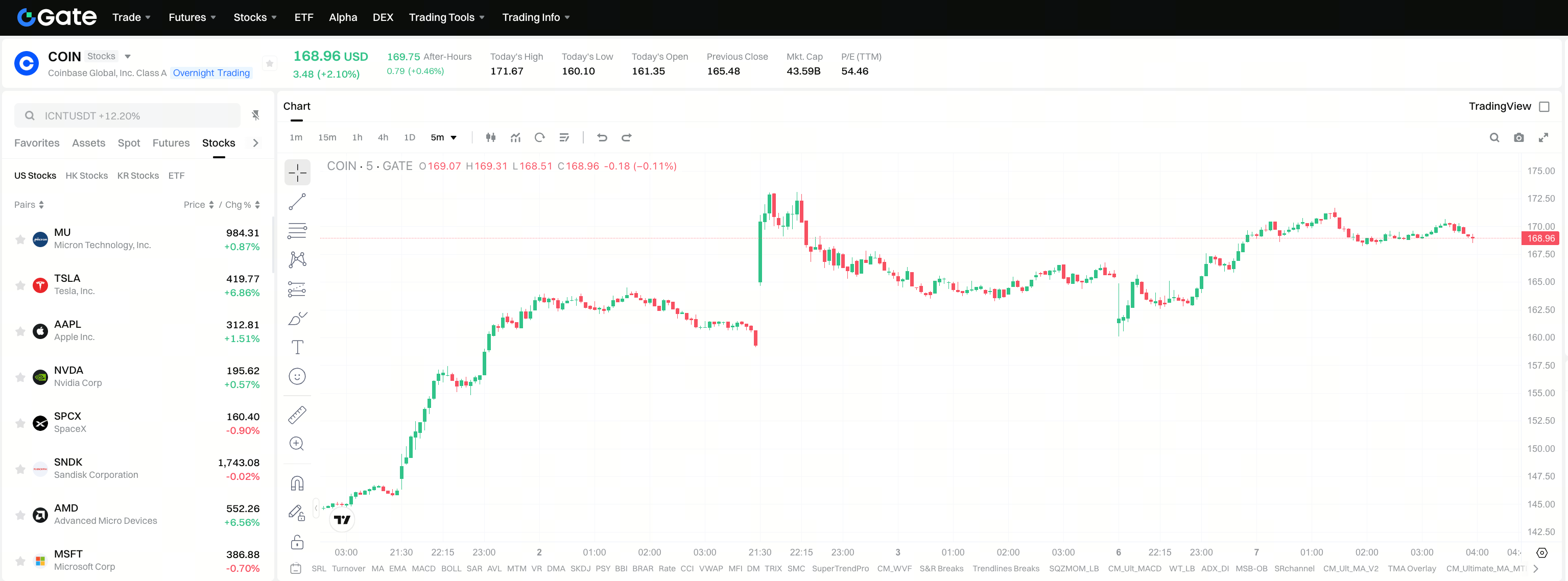
Fund preparation also involves monitoring network deposits, account transfers, available balances, and frozen amounts. If your USDT is pending confirmation, transfer is incomplete, or funds are reserved by other orders, the “buyable” amount shown may be less than your total account balance. Stock trading permissions and crypto spot trading permissions may be managed separately, so confirm that the Stocks feature is enabled before accessing the COIN trading page.
Step 2: How to Search for COIN on Gate Stocks
On the Gate Stocks page, enter COIN in the search bar. The interface should display Coinbase Global, Inc. or the corresponding stock name. Verifying both the ticker and company name is your first line of defense, especially since the fintech sector contains several companies with similar names or overlapping business.
If search results include Robinhood (HOOD), other crypto-related assets, or comprehensive brokers, always confirm by ticker and full company name. Do not confuse COIN with HOOD; these are fundamentally different fintech stocks with distinct business models and revenue drivers. Coinbase Global, Inc. is listed on NASDAQ—if only the ticker appears, cross-check with the company name and market information.
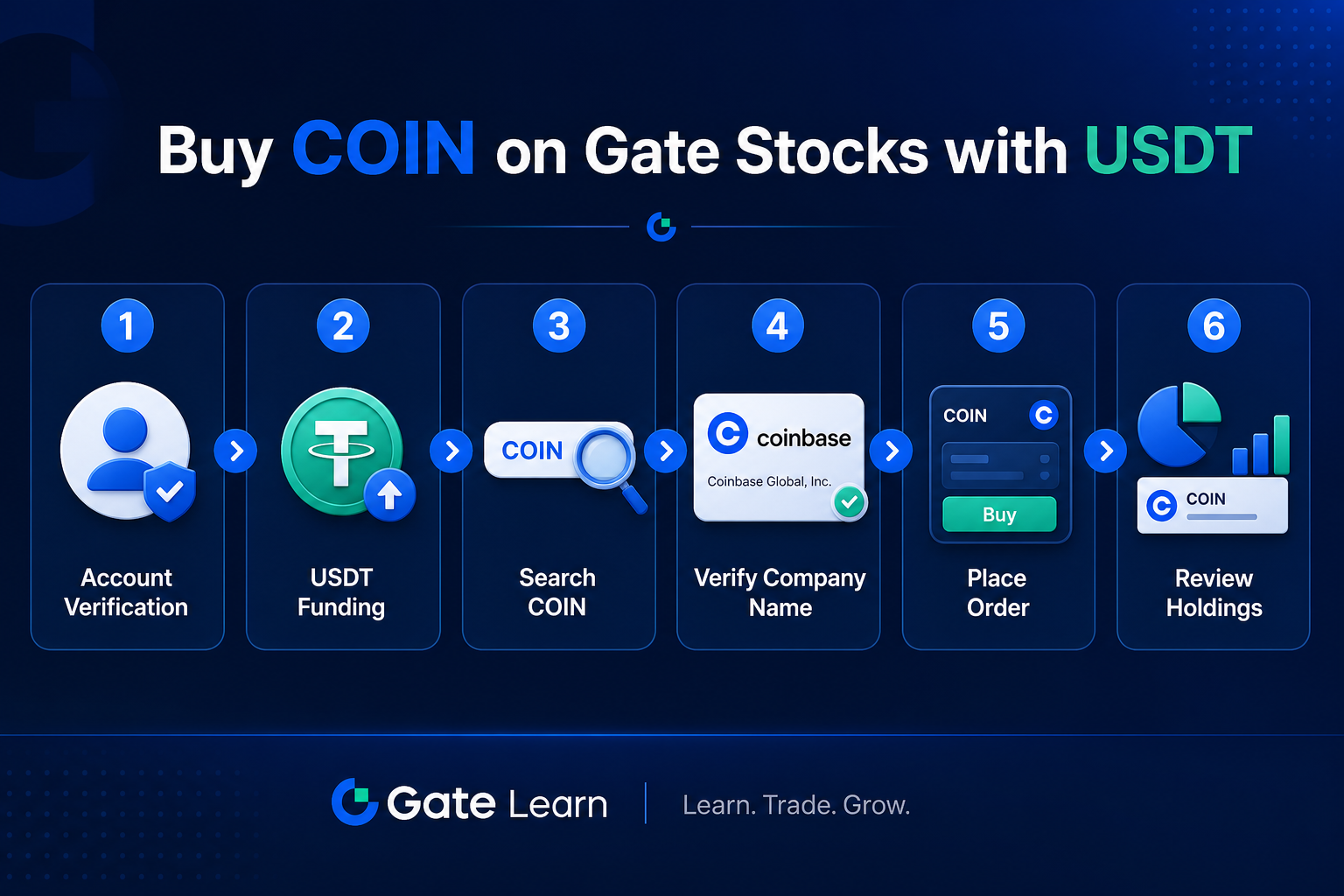
Figure 1. Gate Stocks COIN trading workflow: verify your account, transfer USDT, search for COIN, confirm Coinbase Global, Inc., select order type, and review your holdings.
Step 3: How to Place a Buy Order for COIN
Once on the COIN trading page, confirm the order side, order type, quantity or amount, estimated fill amount, trading fee, and available account balance in sequence. Before submitting, double-check the stock name and ticker to avoid misidentification in your trading history.
Common order types include limit orders and market orders. Limit orders allow you to specify price conditions; market orders execute at the best available price. Neither is inherently superior—the difference lies in execution logic, speed, and price control.
| Order Type |
Key Checks |
Possible Outcomes |
| Limit Order |
Price, quantity, order validity |
May not fill if price is not triggered |
| Market Order |
Available balance, liquidity |
Fill price may differ from estimate |
| Partial Fill |
Filled amount, remaining order |
Positions and balances update together |
This table clarifies the differences between order types and order status. Before submitting, use the confirmation dialog, fee notice, and order direction as your final checkpoints.
After submitting your order, review the status in open orders, trading history, or holdings, and verify that the average fill price, quantity, fees, and ticker COIN all match.
What Fees and Order Rules Should You Confirm When Trading COIN?
The stock trading interface typically displays trading fees, spreads, order execution price, minimum trading unit, trading hours, and related notices. Rules may differ by product and region, so always refer to the page display for fees and order rules.
Beyond trading fees, consider execution costs. Market orders may incur price slippage due to liquidity, while limit orders may remain unfilled if price conditions aren’t met. Review trading fees, spreads, minimum trading units, and trading hours alongside the fee and risk checklist in the next section.
What Risks Should You Know Before Buying COIN?
Trading process risks and company fundamentals are distinct. Trading risks include selecting the wrong ticker, misunderstanding order types, unclear fee rules, trading session restrictions, and liquidity fluctuations. Company fundamentals risks stem from crypto market cycles, SEC regulatory stance, trading revenue volatility, industry competition, and custody compliance costs. There may also be settlement or fee differences between USDT funding and stock prices. Before trading, consult the Coinbase Stock Business Model for revenue structure and cycle sensitivity, then verify available balances and fees according to the page.
| Checklist Dimension |
Key Items |
Purpose |
| Fees & Spread |
Trading fees, buy/sell price spread |
Confirm actual execution costs |
| Asset Identification |
COIN vs HOOD fintech tickers |
Avoid buying the wrong stock |
| Market Cycle |
Crypto volume and fee structure shifts |
Understand price volatility sources |
| Regulation & Compliance |
SEC litigation, state licenses, compliance costs |
Distinguish fundamentals from order steps |
This table consolidates fee rules, operational risks, and company fundamentals into a single checklist. As a publicly listed, pure-play crypto trading platform, Coinbase Global, Inc. should not be reduced to a generic “crypto exchange” label—conduct a thorough review.
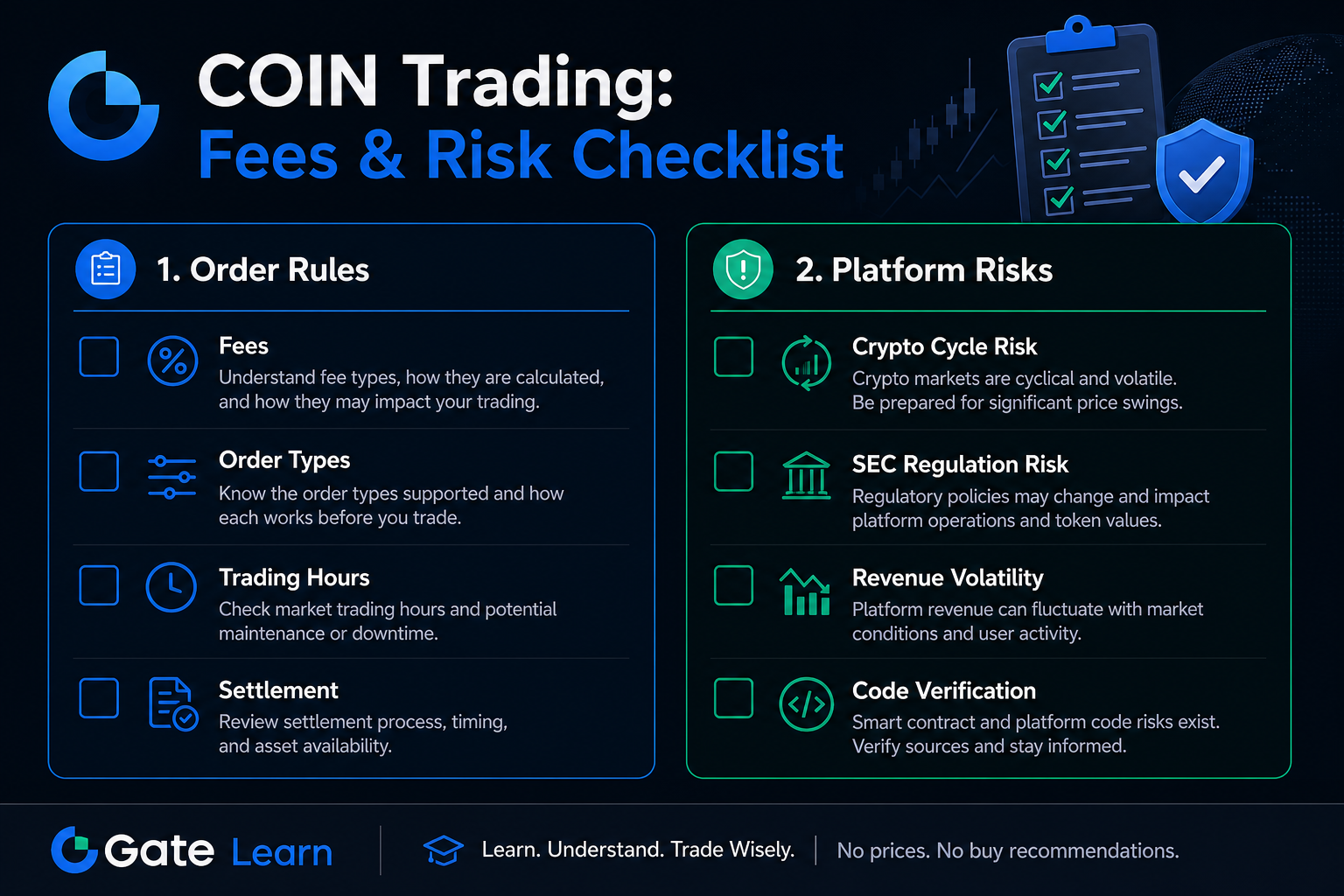
Figure 2. COIN trading fees and risk checklist: review order rules and risk factors such as crypto market cycles, SEC regulatory exposure, and revenue volatility separately.
Summary
Trading Coinbase Global, Inc. (COIN) with USDT on Gate Stocks follows a standardized process: prepare your account and USDT, search for the COIN ticker, verify stock details, select the order type, confirm fee rules, and review your holdings after execution. The trading interface addresses operational steps; the business and risk checklist addresses your understanding of the asset. Handle both aspects independently.
FAQ
How do I use USDT to buy Coinbase stock on Gate?
First, confirm your account has Stocks trading permissions and that your USDT has been transferred to your stock trading account. Then, search for the COIN ticker on Gate Stocks and verify both Coinbase Global, Inc. and NASDAQ information. After selecting your order type and submitting, review your holdings and order records to confirm the ticker, quantity, and fees.
What is the ticker symbol for COIN stock?
COIN is the ticker symbol for Coinbase Global, Inc. listed on NASDAQ. Gate Stocks users can search for COIN and verify the company name and market information displayed on the page to avoid confusion with brokers like HOOD.
How do I search for COIN on Gate Stocks?
Enter the COIN ticker in the Gate Stocks search bar. The page should display Coinbase Global, Inc. and NASDAQ information. If HOOD or other fintech stocks appear, confirm by ticker and full company name to avoid selecting a different company.
What fees should be confirmed when trading COIN?
Trading fees, buy/sell spreads, minimum trading units, and trading hours are all governed by the COIN trading page. Market orders may incur price slippage due to liquidity, while limit orders may remain unfilled if the price is not triggered. Each has a distinct cost structure.
How does trading COIN differ from traditional brokers?
Gate Stocks uses platform accounts and USDT funding for trading; traditional brokers typically use local securities accounts and fiat currency systems. Product rules, fee structures, and rights arrangements should be based on Gate’s interface, not on traditional broker practices.
What are the risks of Coinbase stock?
Principal risks include a high correlation between trading revenue and crypto market cycles, regulatory uncertainty from the SEC, intensifying industry competition, and rising costs for custody security and compliance. On the execution side, be alert for ticker selection errors, order type issues, and fee rule misunderstandings.