Abstract:
- The depreciation of the USD is the combined result of declining real purchasing power, the growing dominance of fiscal policy, and long-term shifts in real interest rates and the cost of holding dollars.
- Regulatory, capital, and risk-weight constraints within the traditional banking system have created offshore demand for USD, which stablecoins are increasingly absorbing.
- Differences in regulation and business positioning have led to divergent collateral structures across stablecoins, forming an implicit internal credit hierarchy.
- Collateral quality, transparency, and issuer credibility are becoming the key variables determining stablecoins’ price stability, liquidity priority, and long-term capital preference.
- As stablecoins reach sufficient scale, they have begun to act as a structural force influencing short-term interest rates.
- Looking ahead to 2026, stablecoins are more likely to function as a “reservoir” and distribution layer for USD, with their reserve-driven demand for short-term Treasuries in turn reshaping the dollar’s own pricing structure.
1. Introduction: USD Is Depreciating, but Not Exiting
In recent years, discussions around the USD have become increasingly complex. On one hand, the FED has gradually shifted toward rate-cut expectations since 2024, with real interest rates peaking and rolling over. On the other hand, persistent fiscal deficits and elevated Treasury issuance have kept long-term fiscal sustainability under the spotlight. Against this backdrop, narratives such as “a weaker dollar,” “dilution of dollar credibility,” and “accelerating de-dollarization” have gained traction, creating a sense of consensus that the dollar is approaching a major structural inflection point.
At first glance, this assessment is not without basis. Inflation continues to erode the dollar’s real purchasing power; expanding deficits and debt weaken its certainty as a long-term store of value; and rising geopolitical frictions and the frequent use of financial sanctions have encouraged some countries and institutions to consciously reduce direct reliance on the traditional dollar system. From macro indicators as well as political and institutional perspectives, the dollar does appear to be weakening.
However, shifting the lens away from macro narratives and toward actual capital behavior and usage patterns reveals a less intuitive but critical reality: the dollar has not been abandoned. On the contrary, it continues to dominate global pricing, settlement, and safe-haven functions. Notably, on-chain dollars represented by stablecoins have not contracted in recent years; instead, they have expanded steadily.
Across crypto trading, DeFi collateralization and liquidation, cross-border transfers, and everyday payments in emerging markets, dollar usage has not declined alongside discussions of dollar depreciation. Rather, it has increasingly bypassed the traditional banking system. This gives rise to a core contradiction worth examining: if the dollar is depreciating, why does the world continue to chase it? If dollar credibility is under pressure, why is its usage expanding—albeit in a different form?
This paper starts from that contradiction and moves beyond the binary framing of “strong or weak” and “exit or stay.” It reexamines the true flow of dollar demand in the context of dollar depreciation heading into 2026, with a particular focus on how stablecoins—as an extra-systemic form of the dollar—are absorbing marginal dollar demand displaced by traditional financial structures.
1.1 Dollar Depreciation Is More Than a Concept
When discussing dollar depreciation, the most intuitive interpretation is often a weakening of the dollar against other currencies, or a decline in exchange rates. In reality, this view is too narrow. Dollar depreciation is better understood as an ongoing structural process. It does not necessarily manifest as an immediate, sharp decline in the dollar’s value, but instead gradually and persistently alters the true cost of holding dollars through multiple channels.
The first layer is the erosion of real purchasing power. Even if the dollar remains stable in nominal terms—or even appreciates against other currencies—persistent inflation steadily eats away at the real wealth of dollar holders. From an economic perspective, nominal price stability does not equate to purchasing-power stability. For example, the same one dollar may buy an apple in one country, but an entire meal in another.
The second layer is the increasing dominance of fiscal policy. When a country runs sustained fiscal deficits and continuously expands government debt, monetary policy independence becomes structurally constrained. In such an environment, monetary policy increasingly serves debt sustainability—rate cuts become a means of suppressing financing costs and creating fiscal breathing room. Once monetary policy assumes the role of backstopping fiscal operations, the long-term value anchor of the dollar naturally comes under pressure.
The third layer involves long-term shifts in real interest rates and holding costs. When nominal rates are suppressed while inflation remains elevated, real interest rates tend to be low or even negative. This implies an implicit cost to holding dollars, whereby savers effectively subsidize debtors. In this context, the dollar may remain the world’s most important currency, but the question of whether holding dollars is economically attractive becomes increasingly salient.
1.2 FED Policy and the Dollar: How Policy Cycles Create Space for Stablecoins
Monetary policy determines the pace and channels through which these dollar-depreciation mechanisms transmit into the real economy. Different policy phases directly shape the dollar’s strength and its cost of use.
2008–2014: The Era of Quantitative Easing—Passive Dollar Weakness
Following the global financial crisis, the FED launched multiple rounds of quantitative easing, aggressively expanding its balance sheet and suppressing interest rates to repair the financial system. Dollar supply expanded rapidly, real rates remained low for an extended period, and dollar scarcity declined sharply. Dollars were abundant, but not necessarily “useful,” with liquidity largely trapped within the banking system and financial assets.
2015–2018: Gradual Rate Hikes—Structural Dollar Strength
As the U.S. economy recovered ahead of others, the Fed initiated rate hikes and balance-sheet normalization. Global capital flowed back into dollar assets, putting pressure on emerging markets. During this phase, the dollar reasserted itself as the global monetary anchor, becoming less accessible and more expensive to use, with its financial attributes significantly strengthened.
2019: Policy Pivot—The Dollar’s Peak Begins to Loosen
Against a backdrop of global economic slowdown, the Fed implemented preemptive rate cuts. The dollar index consolidated at high levels, with some easing of strength but no fundamental reversal.
2020–2022: Pandemic Shock and Aggressive Tightening—A Super Dollar Cycle
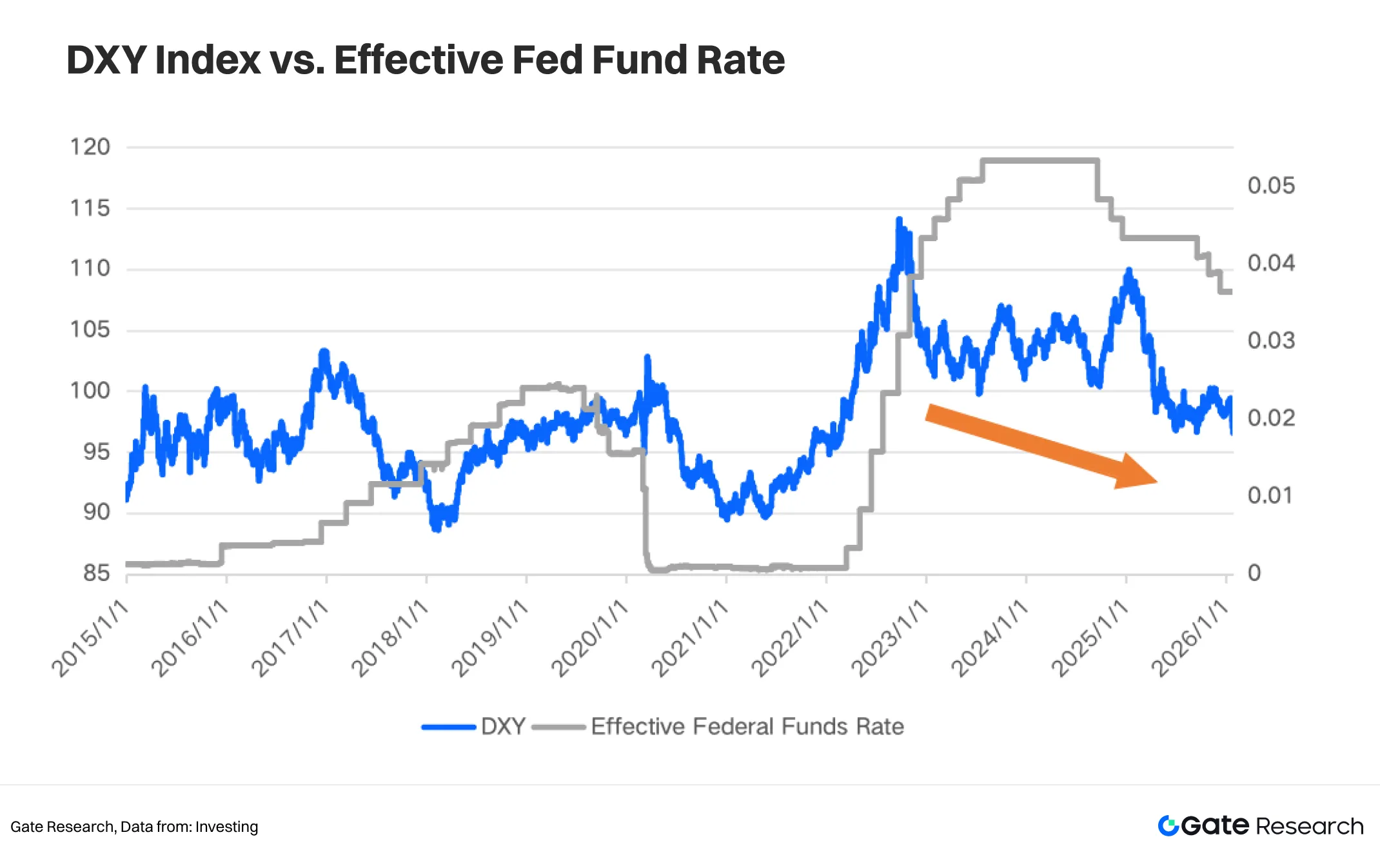
During the pandemic, the Fed deployed unlimited QE and near-zero rates, unleashing unprecedented dollar liquidity. Surging inflation soon followed, forcing the Fed into the fastest tightening cycle in history. The dollar index reached a 20-year high, but this episode also undermined confidence in the dollar’s long-term value.
2023–2025: Rising Rate-Cut Expectations—Structural Dollar Pullback
As inflation cooled, markets began pricing in a rate-cut trajectory from 2023 onward. While the dollar remained elevated, marginal tightening had ended, and fiscal deficits, debt levels, and the long-term rate environment increasingly dominated the dollar narrative. It was during this phase that a key shift emerged: the dollar was still in demand, but dollars within the traditional system became slower, costlier, and more constrained.
2. Traditional Dollar Deceleration: How Stablecoins Absorb Spillover Demand
As monetary policy shifts and fiscal constraints tighten, the traditional banking system has proactively contracted its USD balance sheets under regulatory, capital, and risk-weight constraints. At the same time, stringent AML requirements, cross-border compliance rules, and account access thresholds have excluded a large number of non-core users and marginal capital from the traditional dollar system, creating structural spillover demand for USD. Stablecoins have stepped into this gap, absorbing demand by providing quasi-dollar liquidity with lower friction, and becoming an important vessel for off-system dollar circulation.
2.1 Dollar Depreciation ≠ Declining Dollar Usage: The Counter-Cyclical Expansion of On-Chain Dollars
A common intuition when discussing dollar depreciation is that declining purchasing power and questioned credibility should lead to a simultaneous contraction in dollar usage and demand. Reality has proven otherwise. Over the past several years—particularly after interest-rate shocks, heightened banking risks, and sharp volatility in risk assets—on-chain dollars in the form of stablecoins have not shrunk. Instead, they have shown signs of recovery and even expansion across multiple dimensions.
First, in terms of aggregate size, the total market capitalization of stablecoins stabilized and rebounded after cyclical drawdowns. By early 2026, total stablecoin market cap had surpassed $309 billion, reaching a new all-time high. While market structure has shifted and market shares among individual stablecoins have adjusted, dollar-denominated stablecoins as a whole have not been marginalized. This alone indicates that concerns over the dollar’s long-term outlook have not led the market to abandon dollar-denominated instruments.
Second, at the usage level, stablecoin activity has risen markedly. In full-year 2025, total on-chain stablecoin transaction volume reached approximately $33 trillion, representing year-over-year growth of around 70%. During the same period, USDT and USDC dominated stablecoin transactions. USDC processed roughly $18.3 trillion in on-chain transfers, while USDT accounted for about $13.3 trillion, together capturing the vast majority of transaction flow.
On a monthly basis, stablecoin transfers on major chains such as Ethereum at times reached volumes of approximately $850 billion, underscoring their central role in trading, cross-chain liquidity, and pricing.
In other words, even as macro-level risk preferences toward the dollar shift, stablecoins have not retreated to the margins of crypto markets. Instead, they continue to serve as critical instruments for liquidity provision and settlement.
2.2 Stablecoins as “Shadow Dollars”: Absorbing Demand Crowded Out of the Banking System
In recent years, frictions in cross-border dollar settlement have continued to intensify. Dollar transfers within the traditional banking system often involve multiple intermediaries, complex compliance reviews, and high time and financial costs. Against the backdrop of rising geopolitical risk, issues such as account freezes, payment channel disruptions, and sanctions compliance have made the use of dollars increasingly non-neutral.
In this environment, stablecoins have begun to assume a role akin to that of shadow dollars. They do not challenge the dollar’s unit-of-account status; rather, without altering the dollar standard, they reduce institutional friction and satisfy marginal demand. For many cross-border merchants, the primary appeal of stablecoins lies not in yield, but in accessibility, transferability, and settlement certainty—specifically: no reliance on local bank accounts, no operating-hour constraints, and near-instant cross-border transfers.
It is important to note that stablecoins are fundamentally dollar liabilities issued by private entities. The value of a stablecoin held by investors does not derive directly from sovereign credit, but from trust in the issuer’s balance sheet. To sustain this trust, major stablecoin issuers typically allocate a large portion of their assets to short-term U.S. Treasuries and Treasury-backed repo instruments.
In 2024, stablecoin issuers purchased $40 billion in U.S. Treasuries—an amount comparable to the largest domestic government money market funds and exceeding the purchases of most foreign investors.
This structure not only maintains the peg between stablecoins and the dollar, but also allows stablecoins to preserve the dollar’s settlement function while remaining outside the public financial system’s credit hierarchy. Stablecoins can satisfy persistent dollar demand without increasing the burden on the banking system. For issuers, they represent off-balance-sheet liabilities; for users, they are a form of dollar holdings and transfers that do not require bank accounts. This is not the disappearance of dollar credit, but rather its migration.
That said, stablecoins are not necessarily safer than traditional dollars, nor are they inherently superior in risk management. They lack a central bank lender-of-last-resort function and deposit insurance, and may still experience volatility or de-pegging under confidence shocks. From a usability perspective, however, stablecoins are often more convenient—lower access barriers, faster transfers, and fewer usage restrictions.
2.2.1 Divergent Collateral Structures Driven by Regulatory and Business Positioning
On the surface, different stablecoins exhibit stark differences in asset allocation: some are almost entirely backed by cash and short-term U.S. Treasuries, while others still include loans, crypto assets, and other non-standard assets. In reality, these differences reflect the long-term effects of regulatory environments, business objectives, and risk preferences faced by issuers.
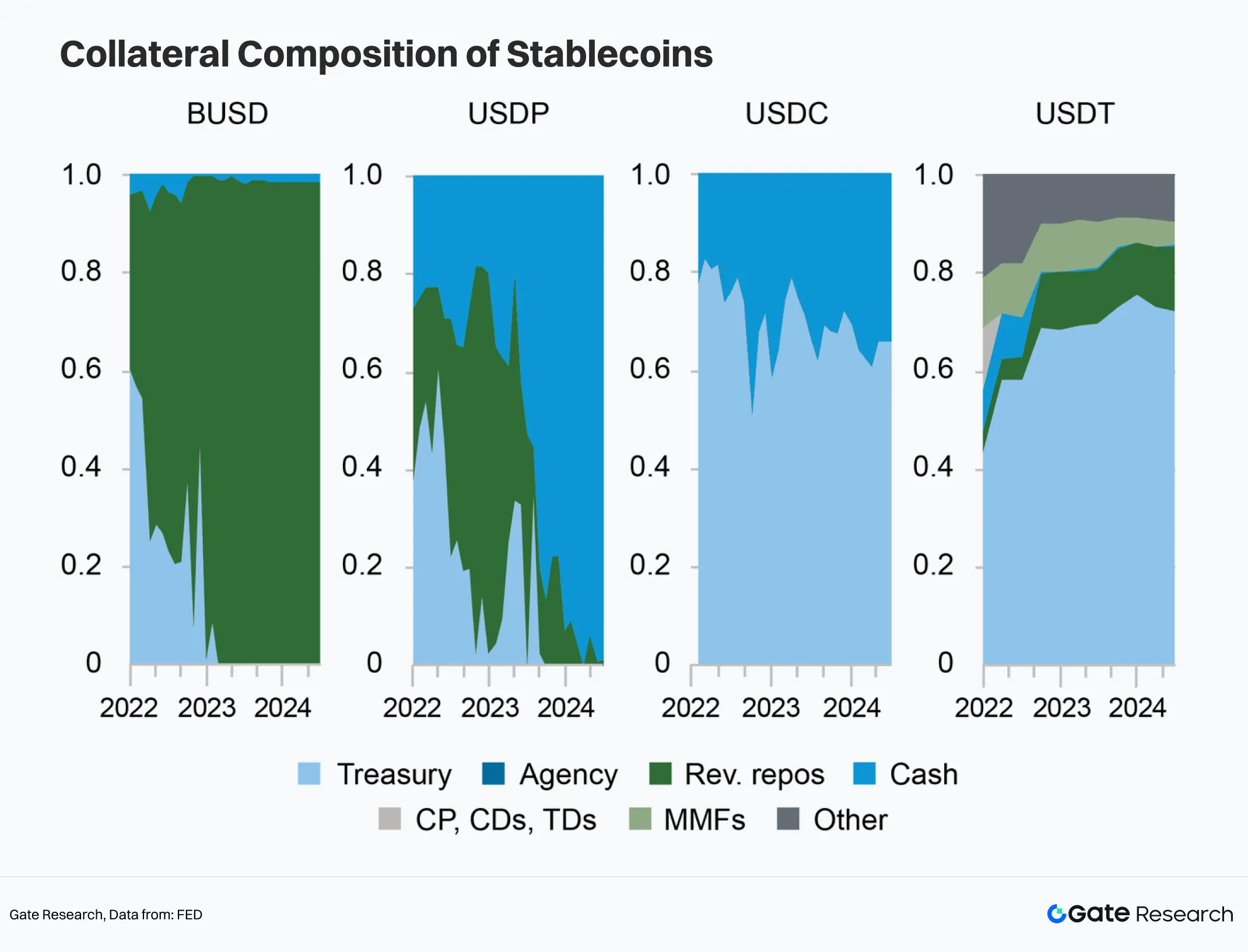
Regulatory constraints are the most fundamental dividing line. Stablecoins such as USDC, BUSD, and USDP are issued by entities operating within highly regulated jurisdictions. This severely limits asset-allocation flexibility, effectively confining reserves to the “cleanest” and most regulator-friendly asset classes.
In practice, cash, Treasury-backed reverse repos, and ultra-short-term Treasuries dominate their reserves. These assets may not offer the highest yields, but they feature clear structures, explainable risks, and strong liquidity, making it easier to demonstrate redemption capacity under stress scenarios.
By contrast, USDT operates in a more offshore regulatory environment. Historically, it has faced looser direct regulatory constraints and lower disclosure transparency, granting it greater flexibility in asset allocation. Moreover, USDT has long played a “market-oriented” role rather than positioning itself as a strictly compliant financial product. As a result, its reserves historically included commercial paper, loans, and even non-stablecoin crypto assets.
Differences in business positioning further amplify this structural divergence. USDC and USDP have a clear core objective: minimize the risk of de-pegging. To achieve this, they are willing to sacrifice some yield in exchange for liquidity and transparency. Under this model, stablecoins function more like passive monetary tools. USDT, by contrast, prioritizes scale, usability, and global reach. At various stages, its reserves have not only passively supported redemptions but also been used for lending, supporting exchanges and market makers, and even allocating into non-stablecoin crypto assets. Functionally, this brings USDT closer to a shadow bank with financial intermediation characteristics, rather than a simple payment instrument.
2.2.2 Stablecoins Are Not Homogeneous: “Safety Tranching” Begins to Drive Pricing
In the early days of crypto markets, stablecoins were largely treated as functional tools—if they were pegged to the dollar and traded near one, they were assumed to be equivalent. This “homogeneity assumption” held during stable periods, but successive systemic shocks have gradually dismantled it.
The Terra collapse marked the first true inflection point. UST’s failure in 2022 did not stem from external financial shocks, but from the rapid breakdown of its own structure under a reversal of confidence. This event made it clear that nominal stability is meaningless without real asset backing: in stress environments, such stablecoins are almost inevitably prone to de-pegging or collapse. From that point on, the presence of real, liquid dollar assets became the first threshold for assessing stablecoin safety.
The FTX collapse later in 2022 reinforced a second layer of judgment: assets alone are insufficient—transparency and issuer credibility matter just as much. Although FTX was not itself a stablecoin issuer, its commingling of funds and opacity quickly evolved into a liquidity crisis, severely damaging trust in centralized financial intermediaries. This indirectly reshaped stablecoin risk pricing, shifting the question from “are there assets?” to “are the assets trustworthy?”
The event that fully brought safety tranching to the forefront was the 2023 Silicon Valley Bank (SVB) crisis. During this shock, USDC temporarily lost its peg due to partial reserves held at SVB, with secondary-market prices falling to around $0.86. At the same time, USDT—perceived as having no direct exposure—traded at a premium in certain venues. The contrast was highly symbolic: for the first time, stablecoins were explicitly differentiated by the market into “relatively safe” and “relatively unsafe” dollars within the same time window, with prices directly reflecting that distinction.
This stratification was not limited to centralized exchanges. In DeFi systems, automated mechanisms amplified risk transmission. Take MakerDAO’s Peg Stability Module (PSM) as an example: DAI and other stablecoins maintain 1:1 convertibility with USDC through the PSM. When USDC de-pegged, arbitrage rapidly drained PSM liquidity, causing price volatility in stablecoins such as DAI and USDP that had no direct exposure to SVB risk. Technical modules designed as connectors became accelerators of risk under stress.
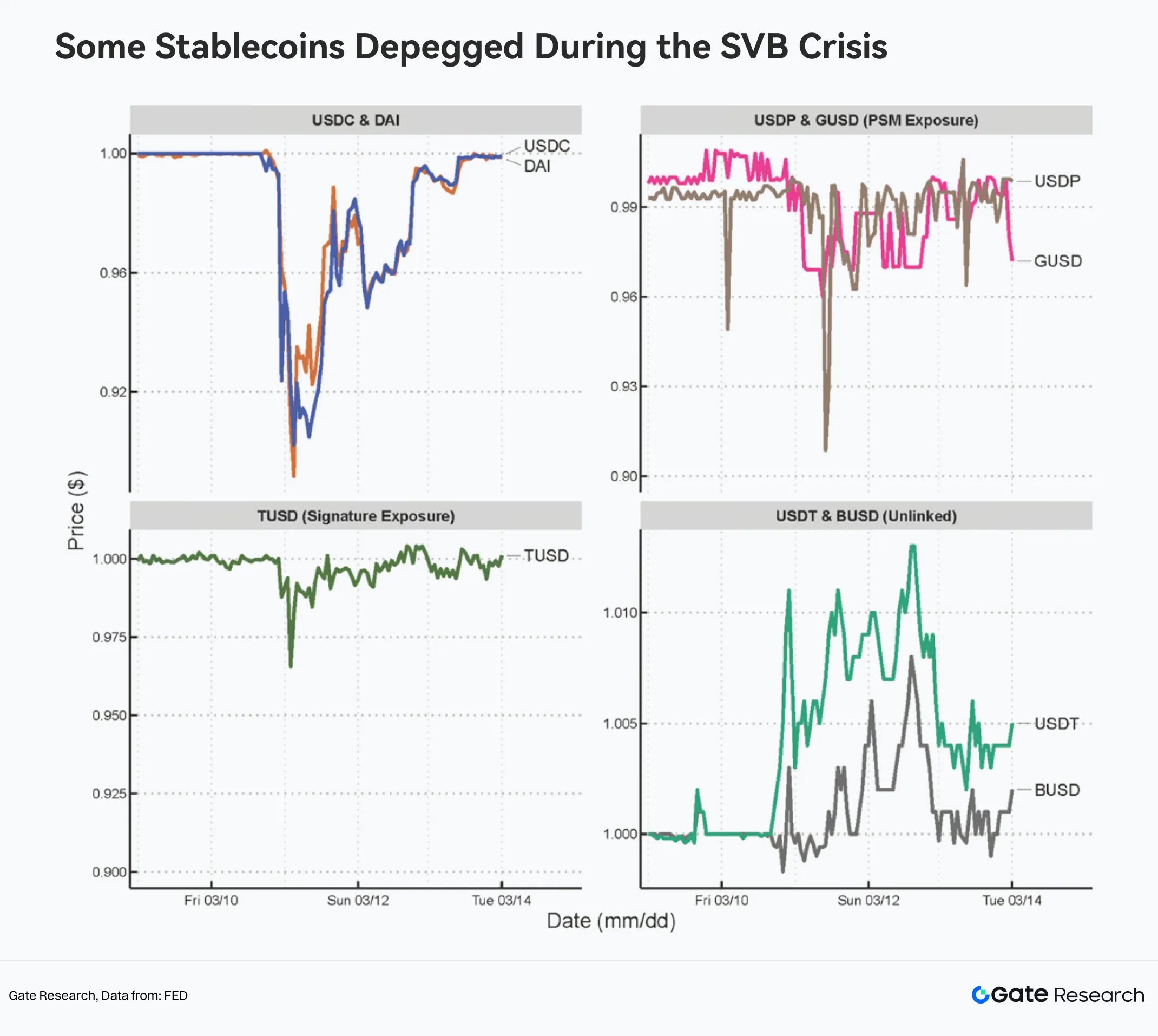
Taken together, these events point to a clear conclusion: the market no longer views stablecoins as a single, homogeneous dollar substitute. Instead, an implicit internal credit hierarchy has emerged. Collateral quality, transparency, and issuer credibility are becoming the core variables determining price stability, liquidity priority, and long-term capital preference.
3. Stablecoins Are Beginning to Feed Back into U.S. Short-Term Funding Prices
Some academic studies, drawing on monetary system theory, propose what is often referred to as a “hybrid monetary ecosystem model.” Within this framework, stablecoins are not shadow assets operating outside the dollar system, but rather privately issued digital dollars that, together with central bank money and commercial bank deposits, form a layered USD system. In this system, stablecoins are not passively embedded; instead, through their interactions with regulatory rules, central bank policy, and traditional financial markets, they materially participate in liquidity allocation and the functioning of the payment system.
3.1 From Data to Conclusions: The Inverse Relationship Between Stablecoin Expansion and Short-Term Treasury Yields
Against this backdrop, the role of stablecoins naturally extends beyond payments and settlement. As their scale and depth of use continue to expand, stablecoins have begun to generate feedback effects on the dollar system itself—most visibly in short-term funding markets. They are no longer merely recipients of dollar liquidity; in recent years, they have evolved into an important marginal force capable of influencing short-term dollar funding prices from the opposite direction.
Empirically, the reserve assets of major stablecoins such as USDT and USDC are heavily concentrated in highly liquid instruments, including short-term U.S. Treasuries, reverse repos, and cash. This is not accidental, but rather an intrinsic requirement of the stablecoin issuance model: reserves must ensure on-demand redemption while generating some yield under compliant and risk-controlled conditions. As stablecoin issuance continues to grow, this allocation structure implies that stablecoin issuers are becoming long-term, stable buyers of short-term dollar assets.
This phenomenon has now been systematically validated by recent academic research. A recent study published on arXiv shows that stablecoin issuers—represented by USDT—have already become among the world’s largest non-sovereign holders of short-term U.S. Treasuries. More importantly, the study finds that changes in stablecoins’ share of the Treasury market have a statistically significant impact on short-term interest rates: for every 1 percentage point increase in stablecoins’ share of the Treasury market, the 1-month Treasury yield is significantly compressed by approximately 14–16 basis points. By early 2025, the cumulative effect of this structural influence had exceeded 20 basis points.
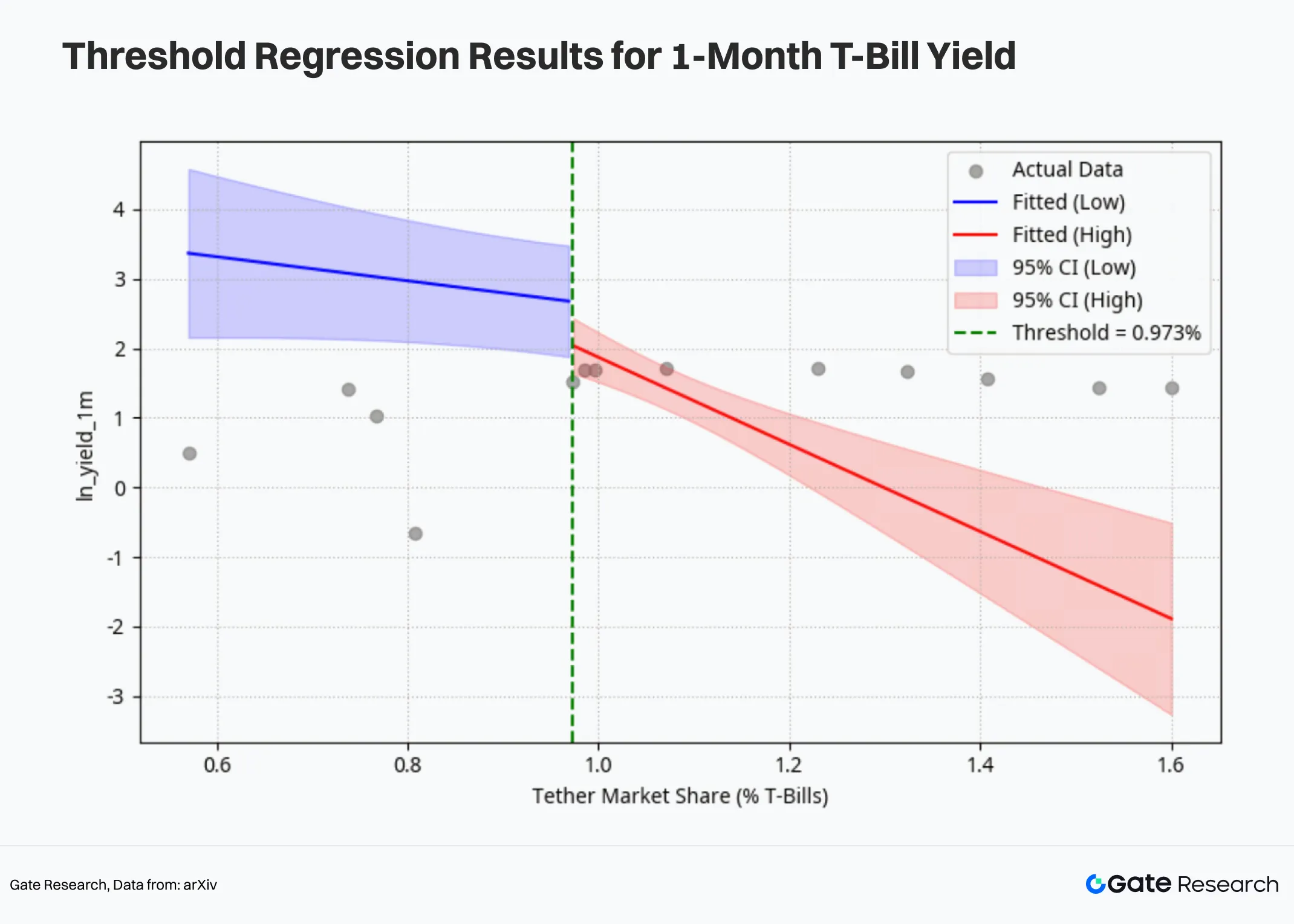
The figure above presents results from a threshold regression model designed to capture the nonlinear impact of changes in USDT’s share of the short-term Treasury market on 1-month Treasury yields. The x-axis shows USDT’s share of the Treasury market, while the y-axis plots the logarithm of the 1-month Treasury yield. Using a grid search, the model identifies an optimal threshold at approximately 0.97% (green dashed line), dividing the sample into low-share and high-share regimes. The results indicate that when USDT’s market share is below the threshold, its expansion has a relatively limited effect on short-term yields. Once the share exceeds the threshold, further increases in USDT holdings are significantly negatively correlated with the 1-month Treasury yield, with a much larger magnitude of rate compression. This demonstrates that stablecoins’ influence on short-term funding prices exhibits clear scale effects and nonlinear characteristics. The blue and red solid lines represent fitted values on either side of the threshold, the shaded areas denote the corresponding 95% confidence intervals, and the gray dots are observed data points. Overall, the results suggest that once stablecoins reach a certain scale, they become an important structural force shaping short-term dollar interest rates.
3.2 Top-Down Fed Policy vs. Bottom-Up Stablecoin Interest Rate Channels
This implies that stablecoins are no longer merely “using dollars”, but are actively reshaping the supply–demand structure of short-term dollar funding. As stablecoin scale expands, issuers continuously absorb short-term Treasury supply, creating a form of marginal demand that is weakly correlated with the macro cycle but highly stable, thereby exerting downward pressure on short-term interest rates.
This logic stands in sharp contrast to the traditional FED policy transmission mechanism. Conventionally, the central bank influences interest rates in a top-down manner: policy rate adjustments → financial market repricing → transmission to the real economy. Stablecoins, by contrast, operate through a bottom-up channel: expansion in on-chain dollar demand → changes in stablecoin reserve allocation → rebalancing of money market supply and demand → movements in short-term interest rates.
For this reason, stablecoins cannot be understood simply as a policy tool. They are not variables that central banks can directly calibrate, but rather a structural force emerging from outside the banking system—one that is not driven by policy rate guidance, yet meaningfully participates in the flow and pricing of short-term dollar liquidity. It is precisely here that stablecoins begin to serve as a critical interface linking on-chain dollars with the traditional dollar system.
3.3 Closing the Loop: Rate Cuts → Stablecoins → Short-Term Yields → Dollar Reallocation
Viewed within a broader macro framework, stablecoins are now embedded in a complete dollar reallocation mechanism. The logical starting point is the coexistence of rate cuts and fiscal constraints. When central banks enter an easing cycle, nominal financing costs decline; at the same time, however, fiscal deficits and debt levels continue to expand, and regulatory constraints on bank balance sheets tend to tighten rather than loosen. In such an environment, the banking system does not expand dollar supply without limit, but instead becomes more inclined to reduce risk exposure and compress its capacity to serve cross-border and marginal dollar users.
As a result, the dollar does not disappear, but its channels of supply change. Portions of dollar demand that previously relied on the banking system—including cross-border payments, crypto trading, market-making margin, and on-chain settlement—are pushed outside the system, creating spillover demand at the margin.
Stablecoins absorb this demand precisely at this juncture. By bypassing bank accounts, geographic restrictions, and operating-hour constraints, they can rapidly take in off-system dollar demand. As stablecoin scale expands, the corresponding reserve funds do not sit idle in accounts, but are systematically allocated into short-term Treasuries and repo markets.
This behavior has direct consequences at the money market level: stablecoin issuers’ continuous and stable purchases of short-term Treasuries effectively create a new structural bid for short-term dollar funding, exerting downward pressure on short-term yields. Lower short-term rates, in turn, further reinforce the low-risk asset allocation logic underpinning stablecoins.
The end result is a closed loop: rate cuts and fiscal pressure → contraction of dollar supply via the banking system → stablecoins absorb spillover demand → reserves flow into short-term Treasuries → short-term yields are compressed → the role of stablecoins as a dollar “reservoir” is continuously reinforced.
4. Looking Ahead to 2026: Stablecoins Amid Rate Cuts, Dollar Depreciation, and the De-Dollarization Narrative
Viewed from a longer-term perspective, what the USD is experiencing is not merely a cyclical exchange-rate fluctuation, but a set of structural changes gradually taking shape against the backdrop of rising rate-cut expectations and increasing geopolitical uncertainty. Persistently elevated debt levels, a structurally low real interest rate environment, and a tilt toward accommodative monetary policy have led markets to reassess the dollar’s long-standing assumption of “unconditional safety” as a store of value.
By 2025, U.S. M2 had expanded to approximately $22.4 trillion, reaching a historical high, while total Treasury debt surpassed $38 trillion—clear signals that fiscal flexibility is narrowing. Together, these trends point to a common reality: dollar credibility is shifting from something taken for granted to something that must be continually validated. It is against this backdrop that stablecoins have absorbed marginal dollar demand that the traditional system struggles to serve. They do not create new dollar credit, but they reshape how dollars are accessed.
In absolute terms, stablecoins remain small; in directional terms, however, the shift is already underway. Stablecoins account for only about 1.3% of M2, which precisely indicates that they are not yet in a substitution phase, but rather in an absorption phase—taking in dollar demand pushed out by banking regulation, higher costs, and frictions. Relative to global money supply and total dollar demand, stablecoin penetration remains extremely low, implying substantial room for marginal growth. USDC’s share of total M2, for example, is currently around 0.35% (based on M2 of roughly $22.4 trillion and USDC supply of $72.4 billion), underscoring how early the stablecoin expansion phase still is. If stablecoins continue to penetrate payments, cross-border settlement, and store-of-value use cases, marginal dollar demand may increasingly migrate to on-chain channels. Using USDC as an example, its reserve structure—built around short-term Treasuries and cash—has already formed an internal mechanism that balances liquidity and yield, illustrating that stablecoins are not merely passively holding dollars, but are creating new modes of dollar circulation at the system’s periphery.
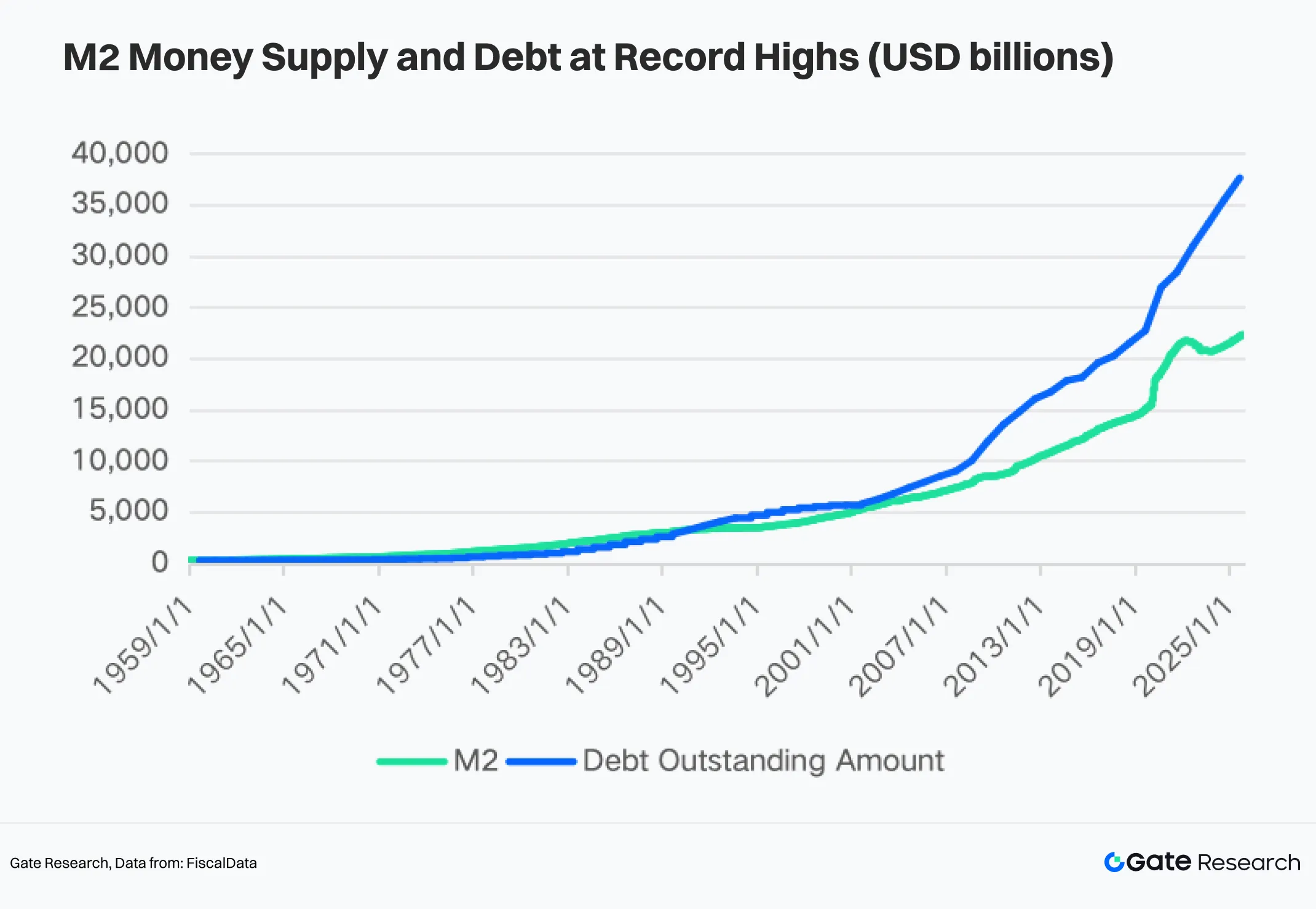
Looking ahead to 2026, stablecoins are unlikely to act as eroders of dollar credibility or leaders of de-dollarization. Rather, they are more likely to become part of the dollar’s extended architecture. As constraints within the traditional financial system intensify, stablecoins provide the dollar with a new “reservoir” and distribution layer, allowing dollar demand that would otherwise be constrained by the banking system to persist and be efficiently absorbed. As stablecoin scale continues to expand, the steady demand their reserves generate for short-term Treasuries has already begun to exert marginal downward pressure on short-term dollar funding rates, feeding back into the dollar’s own pricing structure.
Consequently, while the strength or weakness of the dollar will remain a central topic in medium— to long-term macro discussions, the more important structural question is increasingly how dollars are used, through which channels they are held, and how they circulate. Stablecoins sit at the center of this transition: extending the dollar’s radius of use while quietly reshaping the mechanics of short-term dollar funding markets.
References
Gate Research is a comprehensive blockchain and cryptocurrency research platform that provides deep content for readers, including technical analysis, market insights, industry research, trend forecasting, and macroeconomic policy analysis.
Disclaimer
Investing in cryptocurrency markets involves high risk. Users are advised to conduct their own research and fully understand the nature of the assets and products before making any investment decisions. Gate is not responsible for any losses or damages arising from such decisions.