A demanda contínua por treinamento de modelos de IA em GPU, computação em nuvem e recursos de data centers está redefinindo a estrutura de receita e a avaliação de mercado da Microsoft. Azure, Copilot e o ecossistema OpenAI tornaram-se variáveis centrais na trajetória de crescimento de longo prazo da MSFT.
MSFT — Os principais motores de crescimento atuais da Microsoft concentram-se nos serviços de nuvem Azure, na comercialização de IA empresarial, na expansão de data centers e no fluxo de caixa do software corporativo. Os gastos com infraestrutura de IA, a dinâmica de oferta de GPU e o cenário competitivo de computação em nuvem também moldam o desempenho de mercado da empresa.
O que impulsiona o crescimento da ação MSFT?
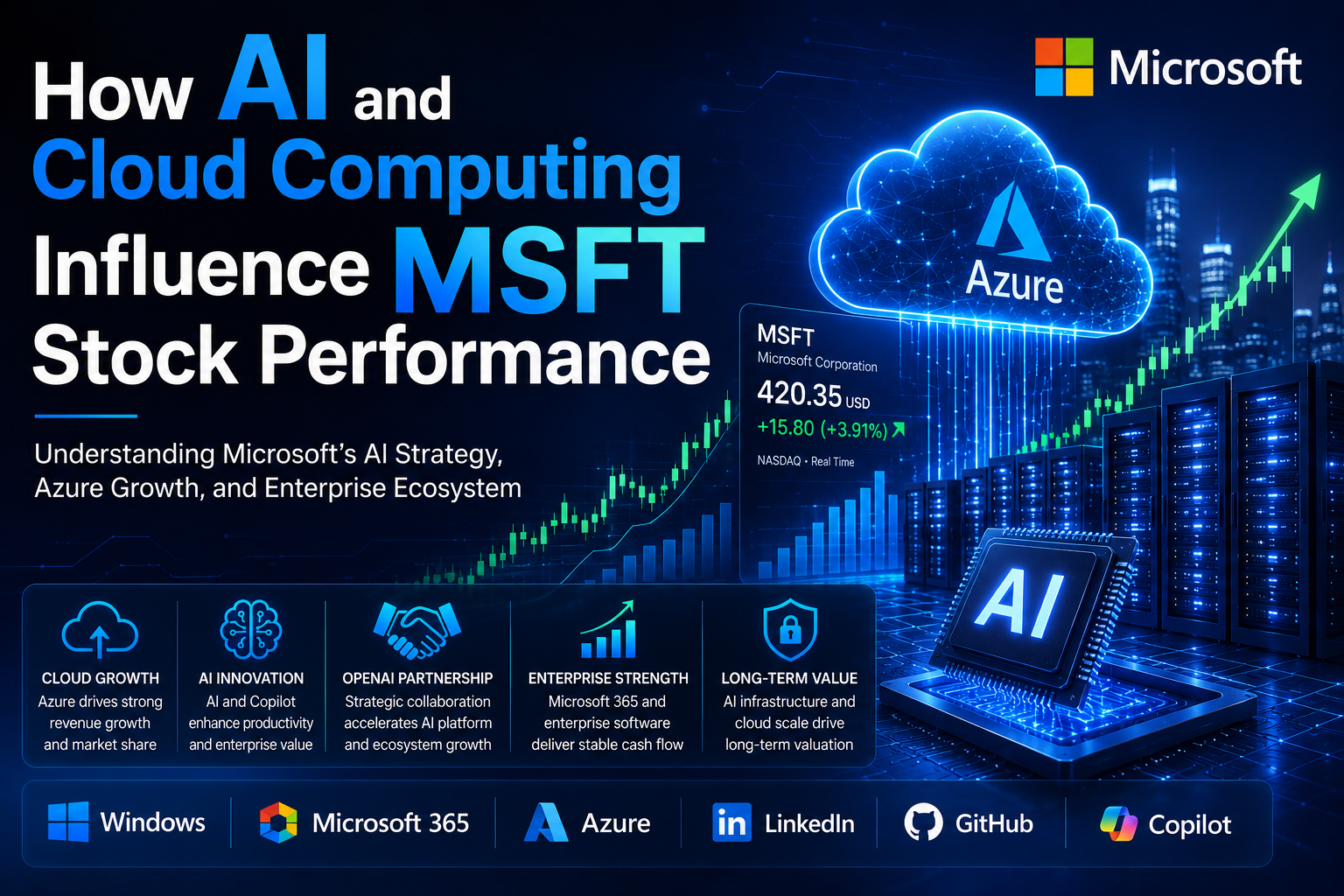
A tese de crescimento da ação MSFT baseia-se em uma sinergia entre software empresarial, computação em nuvem e uma plataforma de IA. A Microsoft migrou de um modelo tradicional de licenciamento de software para um motor de receita recorrente ancorado em assinaturas e serviços em nuvem.
O Microsoft 365, o Teams e as ofertas de segurança corporativa geram fluxo de caixa previsível. Uma vez que as empresas se integram ao ecossistema Microsoft, dificilmente saem, o que garante forte estabilidade de receita.
O Azure funciona como o motor de crescimento do negócio de nuvem da Microsoft. À medida que as empresas transferem dados, cargas de IA e sistemas corporativos para o Azure, a Microsoft captura receita contínua de nuvem.
A plataforma de IA aprofunda ainda mais a aderência ao ecossistema. Copilot e Azure OpenAI vão além de simples adições de funcionalidades, pois representam a estratégia da Microsoft de incorporar a IA diretamente nos fluxos de trabalho empresariais.
Essa estrutura faz com que a MSFT deixe de ser avaliada puramente como uma empresa de software para ser vista cada vez mais como uma plataforma de infraestrutura de IA.
Como a receita do Azure impulsiona o desempenho de mercado da Microsoft
O Azure é um dos segmentos de crescimento mais importantes da Microsoft. As tendências de receita do Azure impactam diretamente o sentimento do mercado em relação às perspectivas de crescimento da MSFT.
O valor central do Azure está em fornecer recursos de computação, banco de dados, IA e armazenamento para empresas, permitindo implantação rápida em nuvem sem a necessidade de uma infraestrutura de servidores massiva.
O crescimento do Azure sinaliza aumento da demanda empresarial por nuvem. Treinamento de modelos de IA, serviços de IA corporativa e análise de dados ampliam ainda mais o consumo de recursos do Azure.
Abaixo, um resumo do papel do Azure no ecossistema Microsoft:
| Módulo |
Função Central |
Impacto na MSFT |
| Azure Compute |
Recursos de Computação em Nuvem |
Impulsiona o Crescimento da Receita de Nuvem |
| Azure AI |
Serviços de Modelos de IA |
Eleva as Expectativas de Avaliação de IA |
| Azure Storage |
Armazenamento de Dados |
Aumenta a Aderência Empresarial |
| Azure Security |
Segurança Empresarial |
Estabiliza Assinaturas de Longo Prazo |
A importância do Azure vai além da receita. Ele também serve como infraestrutura fundamental para o ecossistema de IA da Microsoft e para a execução dos modelos OpenAI.
Como a IA remodela a avaliação da Microsoft
O negócio de IA da Microsoft está transformando a forma como a MSFT é avaliada. Plataformas de IA, serviços de IA corporativa e capacidades de data centers tornaram-se métricas essenciais de avaliação para empresas de tecnologia.
O Copilot é um ponto de entrada importante para a comercialização de IA da Microsoft. O Microsoft 365 Copilot auxilia na geração de documentos, resumos de reuniões e análise de dados.
O Azure OpenAI oferece modelos de IA de nível empresarial. As empresas podem acessar modelos GPT por meio do Azure para criar sistemas de suporte, busca e automação.
Diferentemente de atualizações tradicionais de software, os serviços de IA exigem um valor de assinatura mais alto. O mercado foca no potencial de receita de IA de longo prazo, não nas vendas de software de curto prazo.
O significado estratégico do avanço da Microsoft em IA está em incorporar a IA nos fluxos de trabalho empresariais e na nuvem. Uma integração mais profunda da IA fortalece a aderência ao ecossistema.
A parceria da Microsoft com a OpenAI é central para sua estratégia de IA. Uma relação profunda de infraestrutura conecta os data centers do Azure à arquitetura de modelos da OpenAI.
O treinamento de grandes modelos de linguagem exige enormes recursos de GPU e nuvem. Os data centers do Azure lidam com grande parte da carga de trabalho de treinamento e inferência.
A Microsoft integra modelos GPT ao Microsoft 365, GitHub Copilot e Azure AI. As capacidades de IA agora permeiam ferramentas de escritório, desenvolvimento e colaboração.
Essa relação posiciona a Microsoft não apenas como investidora da OpenAI, mas como provedora de infraestrutura de IA, criando fortes sinergias entre modelos, nuvem e software empresarial.
Comparada a empresas de IA independentes, o ecossistema empresarial da Microsoft é sua maior vantagem. Azure, Windows e Office aceleram a adoção de IA nos mercados corporativos.
Como o software empresarial sustenta o fluxo de caixa da Microsoft
O software empresarial continua sendo a base do fluxo de caixa da Microsoft. Microsoft 365, Teams e serviços de segurança geram receita de assinatura confiável.
O Microsoft Office é um padrão global de produtividade empresarial. Excel, Outlook e Teams continuam sendo ferramentas diárias essenciais para inúmeras organizações.
Sistemas de segurança corporativa e verificação de identidade reforçam ainda mais a aderência à plataforma. Grandes empresas raramente trocam de suítes de escritório e segurança, garantindo retenção de clientes de longo prazo.
Esse modelo de assinatura é vital para a expansão da IA. Os data centers do Azure, as GPUs de IA e a infraestrutura de nuvem exigem capital contínuo.
O fluxo de caixa estável permite que a Microsoft financie investimentos em IA e nuvem sem depender de financiamento de curto prazo.
Como a expansão de data centers afeta os gastos de capital
A Microsoft está expandindo seus data centers de IA do Azure. A crescente demanda por treinamento e inferência de IA está elevando os gastos de capital.
Data centers de IA exigem clusters de GPU, redes de alta velocidade e sistemas avançados de refrigeração. A IA generativa demanda significativamente mais recursos de data center do que a nuvem tradicional.
A aquisição de GPU é uma despesa importante na infraestrutura de IA da Microsoft. A oferta de GPU da NVIDIA impacta diretamente a velocidade de expansão do Azure AI.
A Microsoft também precisa construir mais data centers regionais para oferecer serviços globais de IA. A concorrência depende cada vez mais da escala da infraestrutura.
A longo prazo, embora a expansão dos data centers aumente o capex, ela também fortalece o fosso de IA da Microsoft. Uma infraestrutura Azure maior eleva os custos de troca para as empresas.
Principais riscos de IA e nuvem para a MSFT
Os principais riscos da MSFT decorrem dos custos de IA, da oferta de GPU e da concorrência em nuvem.
O treinamento e a inferência de IA consomem enormes recursos de GPU, elevando os custos operacionais dos data centers. GPUs, energia e refrigeração são grandes componentes de custo.
Amazon, Google e Meta também estão intensificando suas estratégias de plataforma de IA. A corrida global de tecnologia agora gira em torno de modelos de IA, GPUs e recursos de data centers.
A eficiência da comercialização de IA é uma variável crítica. A demanda empresarial por IA está crescendo, mas os custos de inferência ainda permanecem altos.
A Microsoft precisa equilibrar os investimentos em IA com as margens. Se os gastos com infraestrutura superarem a receita, o mercado pode questionar o crescimento de longo prazo da MSFT.
A concorrência em IA e nuvem passou do software para uma disputa abrangente por GPUs, data centers e plataformas de IA.
Conclusão
A lógica de crescimento da MSFT agora gira em torno da computação em nuvem Azure, plataformas de IA e do ecossistema de software empresarial. A Microsoft está evoluindo de uma empresa de software tradicional para uma plataforma global de infraestrutura de IA e data centers.
O crescimento da receita do Azure, a parceria com a OpenAI e a monetização do Copilot estão impulsionando mudanças na avaliação de longo prazo. As assinaturas de software empresarial fornecem o fluxo de caixa necessário para financiar a expansão da IA.
Ao mesmo tempo, a Microsoft enfrenta pressões de custos de IA, oferta de GPU e concorrência global em nuvem. A disputa pela dominância em IA e data centers é um fator determinante para o desempenho de mercado de longo prazo da MSFT.
Perguntas Frequentes
Por que a ação da MSFT está atrelada ao negócio de IA?
O negócio de IA da Microsoft abrange Azure AI, Copilot e OpenAI. O crescimento da receita da plataforma de IA influencia diretamente as expectativas do mercado quanto à lucratividade de longo prazo da Microsoft.
Por que a receita do Azure é tão importante?
O Azure é a principal plataforma de nuvem da Microsoft. O crescimento da receita sinaliza aumento da demanda empresarial por nuvem, impactando diretamente as expectativas de crescimento da MSFT.
Como a OpenAI afeta o ecossistema Microsoft?
A Microsoft fornece data centers Azure e poder computacional de GPU para a OpenAI, ao mesmo tempo que integra modelos GPT no Office, Copilot e Azure AI.
Por que a Microsoft está expandindo data centers?
O treinamento de IA e os serviços em nuvem exigem enormes recursos de GPU e servidores, o que demanda investimento contínuo em data centers Azure.
Quais são os principais riscos de IA e nuvem para a MSFT?
A MSFT enfrenta riscos decorrentes do aumento dos custos de IA, restrições na oferta de GPU, concorrência em nuvem e pressões de gastos de capital com data centers.