In recent years, the sharing economy has become a major global model for resource utilization, spanning cars, accommodations, and everyday items, with more services matched through digital platforms. Traditional sharing platforms are typically managed by centralized corporations overseeing transactions, identity verification, and user data, resulting in higher fees, centralized data storage, and trust-related costs.
As Web3 technology advances, blockchain is increasingly integrated into the sharing economy to enhance transparency in asset management, identity verification, and transaction processes, while empowering users with greater control over their data and assets. ivault is a Web3 sharing platform launched to address these needs, leveraging blockchain verification, peer-to-peer (P2P) transactions, non-custodial wallets, and a dual-chain architecture to create a fundamentally new operating model. This article explores ivault’s core mechanisms and the technologies supporting its sharing ecosystem.
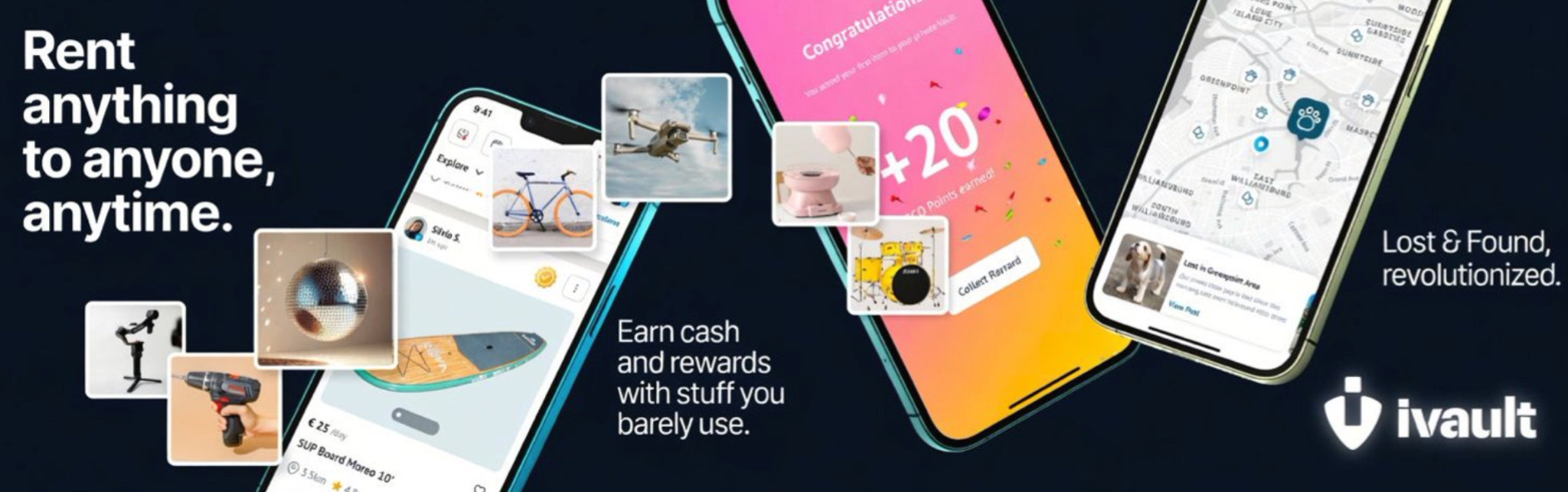 (Source: ivaultapp)
Traditional sharing platforms are built by single companies using centralized systems to store transaction records, manage member data, and handle rental processes. While convenient, these platforms control significant user information and act as intermediaries for all transactions. Web3 sharing platforms aim to transfer trust mechanisms to blockchain, using immutable ledgers to record key data and integrating digital wallets and smart contracts so users can directly share assets and exchange value.
ivaultivault follows this philosophy. Rather than using blockchain solely for payments, it extends blockchain to item verification, identity management, asset records, and ecosystem operations, building a more transparent and secure sharing environment.
How Does ivault Start a Sharing Transaction?
On ivault, sharing transactions typically begin with item creation. Users wanting to rent out or sell items can use the mobile app to create listings, including type, images, description, and rental terms. Once the listing is complete, the platform generates a corresponding blockchain verification record, forming the foundation for subsequent transactions. This verification mechanism does not disclose all details, but establishes a verifiable and tamper-resistant digital record to enhance trust between parties. After item creation, the listing enters the platform’s marketplace, where other users can search and rent.
How Does the P2P Rental Mechanism Work?
ivault utilizes a peer-to-peer (P2P) sharing model, allowing owners and renters to connect directly through the platform without traditional rental companies as intermediaries. Renters can browse and search for nearby or suitable items, submit requests, and complete transactions upon mutual agreement. Compared to traditional platforms, P2P emphasizes direct community interaction. The platform provides information display, identity verification, and transaction environments, while item management remains with users, enabling more efficient resource reuse.
How Does Blockchain Verification Enhance Security?
A major challenge for sharing platforms is building trust between transaction parties. ivault applies blockchain technology to item verification and transaction records to minimize the risk of tampering or forgery. Blockchain’s immutability ensures important information is preserved transparently. The platform does not expose all user data, but securely stores necessary verification information on blockchain while protecting privacy. This approach fosters greater trust during sharing and reduces the risk of personal data exposure.
What Role Do Non-custodial Wallets Play?
Beyond item sharing, digital asset management is a core Web3 feature. ivault integrates a non-custodial wallet, meaning users—not the platform—control their private keys and assets. This model contrasts sharply with centralized platforms, where accounts and assets are managed by the platform. In a non-custodial framework, users hold their own wallets and manage platform-related assets and tokens, embodying Web3’s principle of autonomy.
To optimize efficiency and interoperability, ivault employs a dual blockchain architecture. The ecosystem includes a dedicated platform blockchain and a token system on a public blockchain, integrated via the TEOS management engine for seamless value exchange. Dual-chain architecture allows the platform to process data according to specific needs—some information managed by the platform chain, while tokens circulate in the public blockchain ecosystem. This maintains operational efficiency and ensures interoperability across blockchain networks.
How Does IVAULT Token Connect the Sharing Ecosystem?
Beyond sharing functions, the IVAULT Token is a core element of the platform. Serving as the ecosystem’s value medium, it enables transactions, payments, incentives, and asset circulation under a unified mechanism. User participation—whether interacting, completing sharing transactions, or joining ecosystem activities—involves token usage. The unified value exchange medium links different services, making IVAULT Token foundational infrastructure rather than just a payment tool.
The sharing economy’s essence is maximizing resource utilization, and Web3 offers a new approach to trust. Unlike traditional platforms relying on centralized management, ivault leverages blockchain verification, non-custodial wallets, and P2P architecture to grant users greater autonomy and reduce the platform’s intermediary role. The platform also promotes sustainable sharing, encouraging renting over buying to increase item utilization and reduce resource waste. Web3’s value lies not only in blockchain adoption, but in redesigning platform-user interactions.
What Is ivault’s Future Direction?
In addition to its current sharing platform features, ivault continues to expand its technology stack. The platform has joined the Google Cloud Startup Program and is enhancing its cloud, security, AI, and data analytics capabilities to scale globally. ivault plans to integrate more AI features to improve user experience and sharing processes. As Web3 technology matures, sharing platforms may incorporate intelligent services like AI recommendations, digital identity verification, automated matching, and cross-chain asset management, evolving from a single rental platform into a comprehensive Web3 application ecosystem.
Summary
ivault brings blockchain technology to the sharing economy, redesigning platform operations from item verification, P2P matching, and non-custodial wallets to dual-chain architecture. Blockchain establishes trusted verification mechanisms, while Web3 empowers users with asset autonomy. ivault aims to create a new generation of sharing platforms that combine transparency, security, and privacy protection. As sharing economy, AI, and blockchain converge, Web3 platforms are poised to expand into everyday scenarios, shaping the future of digital asset and physical resource sharing.
FAQ
Q1: How does ivault operate?
ivault verifies item information using blockchain and employs a peer-to-peer (P2P) sharing model to connect owners and renters. It integrates non-custodial wallets and dual-chain architecture for secure and transparent sharing transactions.
Q2: Why does ivault use blockchain verification?
Blockchain preserves immutable verification records, enhancing transparency and credibility in sharing transactions, while safeguarding user privacy and mitigating trust issues common to centralized platforms.
Q3: What are the benefits of non-custodial wallets for users?
Non-custodial wallets let users manage their private keys and digital assets independently, rather than relying on the platform. This grants greater asset control and aligns with Web3’s principles of decentralization and autonomy.







